
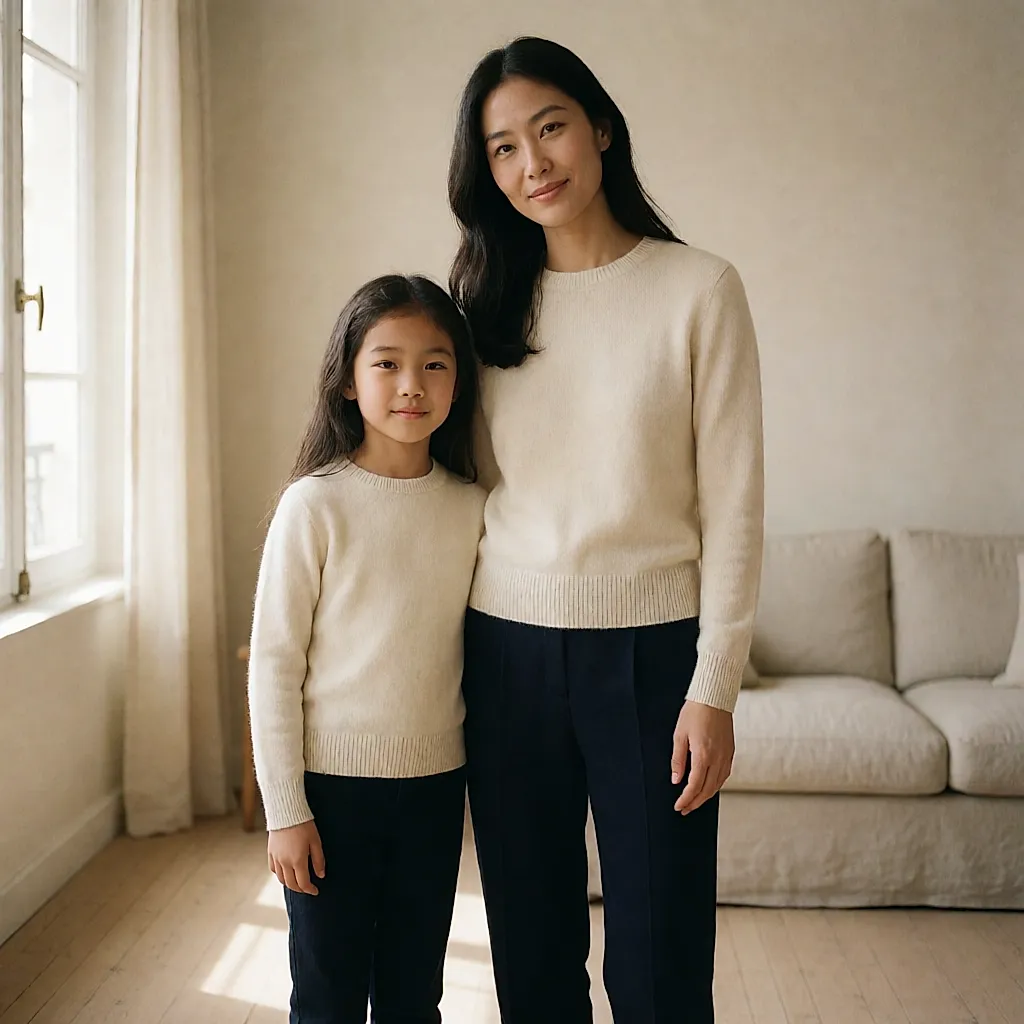
You know the scene. Last Saturday, I spent a good ten minutes hunting for my old Breton jumper before finding my seven-year-old daughter inside it, sleeves pushed up to her elbows. Her verdict, delivered with total seriousness: 'We're twins now.' Since then, I've looked at the mother-and-daughter duo differently. Not to play dolls at life-size — but because several brands have built a good part of their wardrobe offer around this idea.
The mini-me is now a proper collection strategy
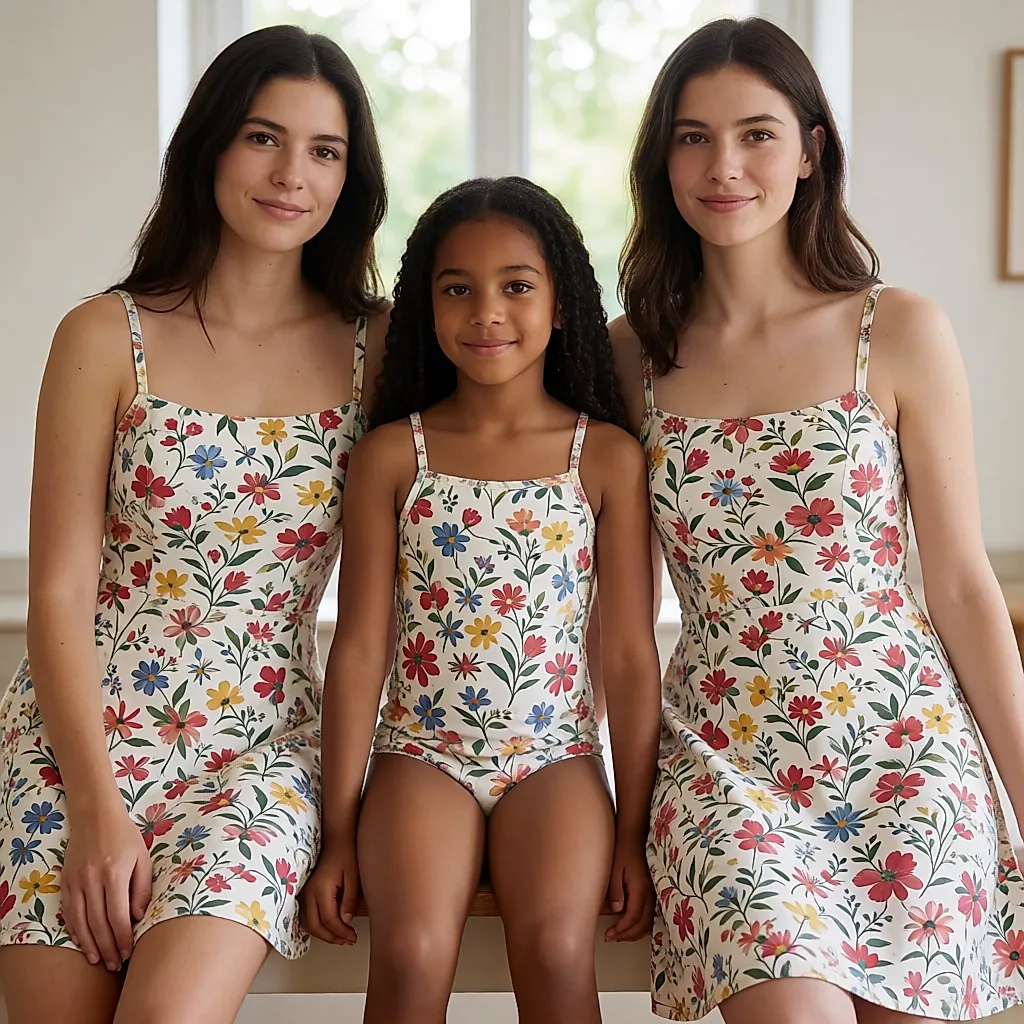
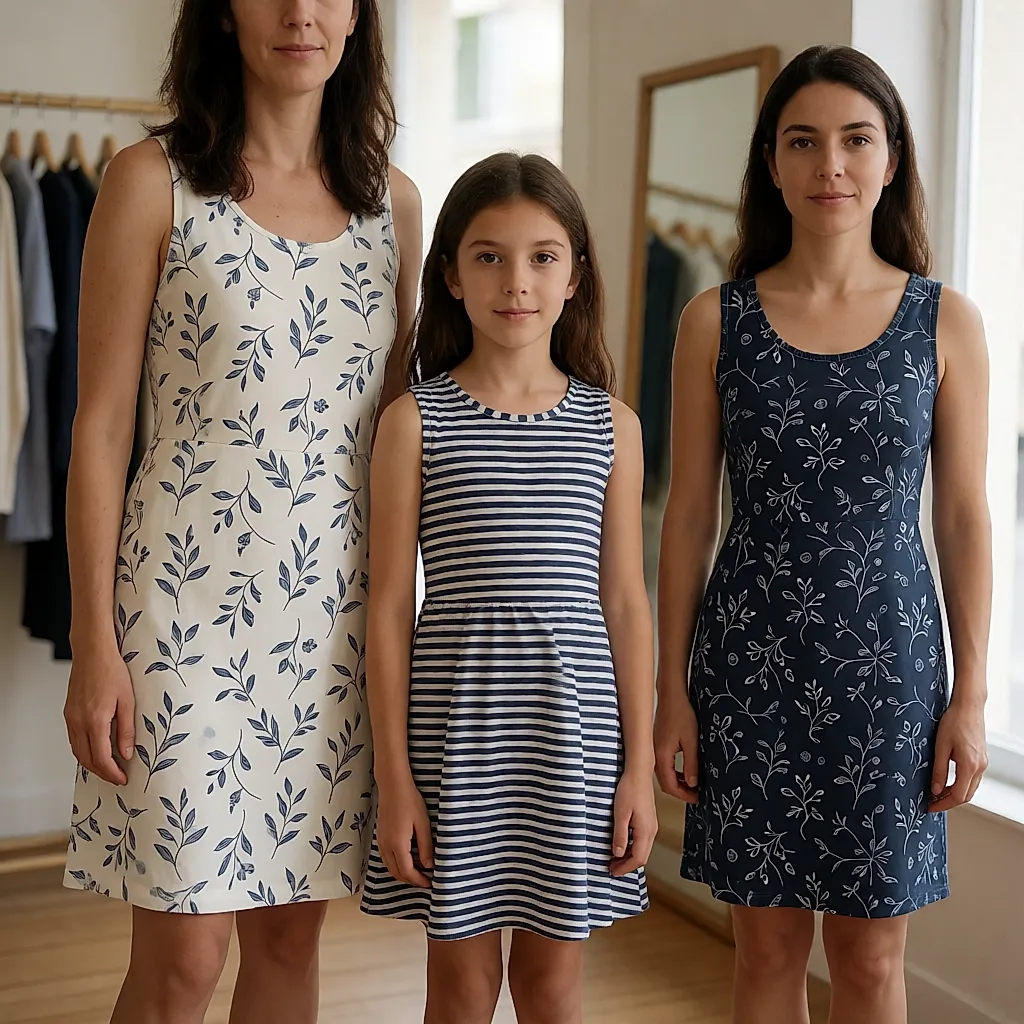
Comptoir des Cotonniers made this pairing its signature for years, with mother-and-daughter castings in its catalogues. The mechanics have since become commonplace: Cyrillus, Petit Bateau, Bellerose, Kiabi and Zara offer pieces in child and adult sizes. Petit Bateau's cotton Breton top comes in both child and adult sizes, and so do its cotton briefs. At Cyrillus, women and children share the catalogue, often with the same prints and straight cuts.
In the UK, availability differs from France: some of these labels are easier to find online or through selected stockists than on the high street, so check delivery and returns before committing to a matching pair.
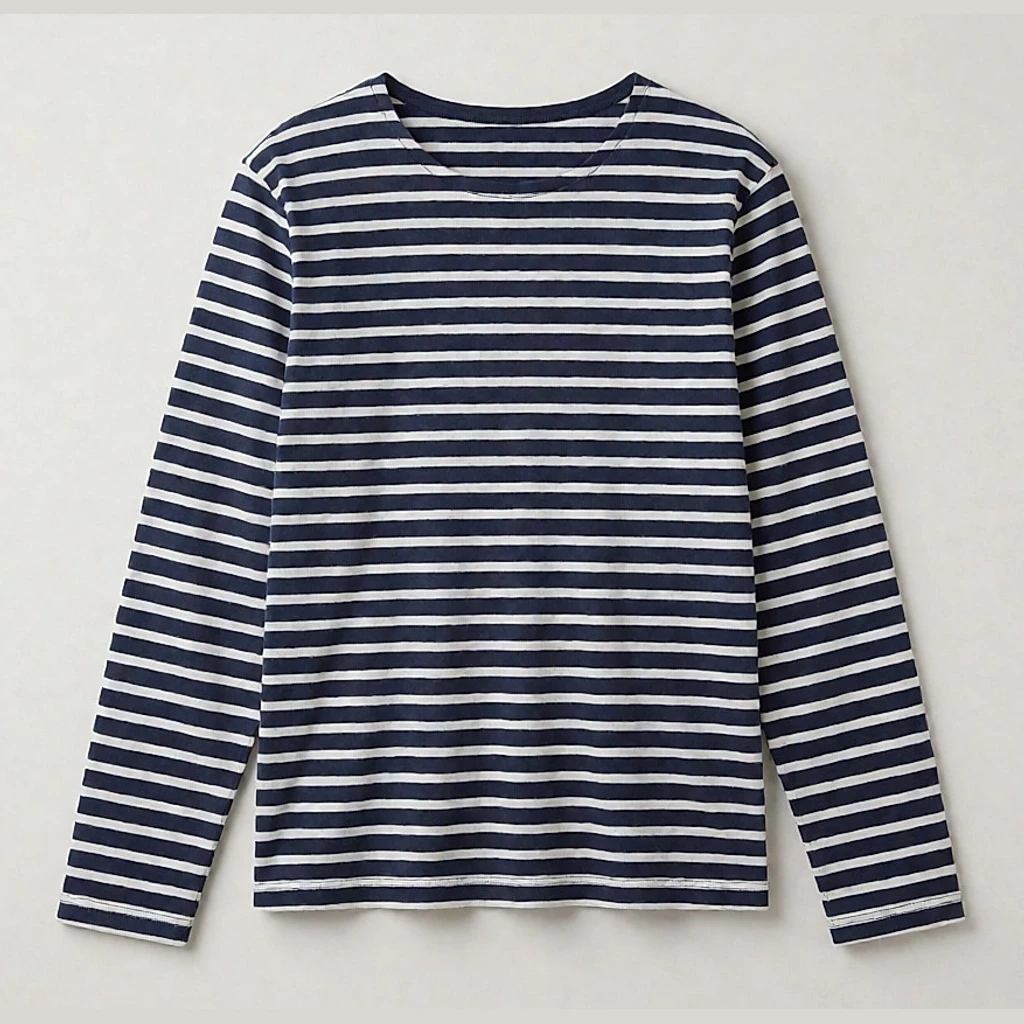
The shift isn't new, but the vocabulary has changed. No one talks about a 'carbon copy' any more; it's family wardrobe and coordinated silhouettes.
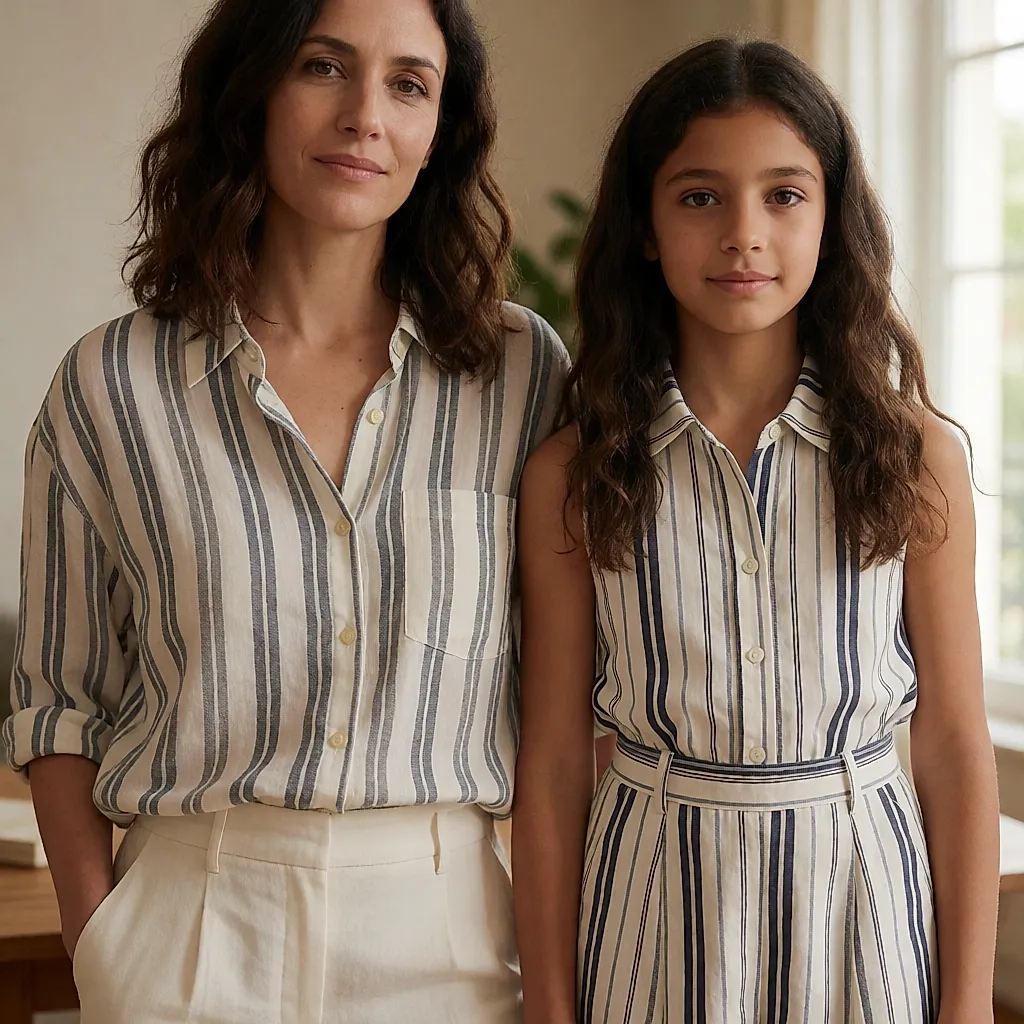
Coordinating without slipping into costume
In reality, a fully matching look can tip into fancy dress surprisingly fast. What works is the echo: same fabric, same colour family, different proportions. A fine knit drapes differently on an adult silhouette and on a body that is still growing.
Three routes that work:
- play with texture rather than print: a chunky knit for one, a fine jersey for the other;
- layer up, with a poplin shirt under a jumper in both sizes;
- keep the statement piece for one of you and the other's accessories simple.
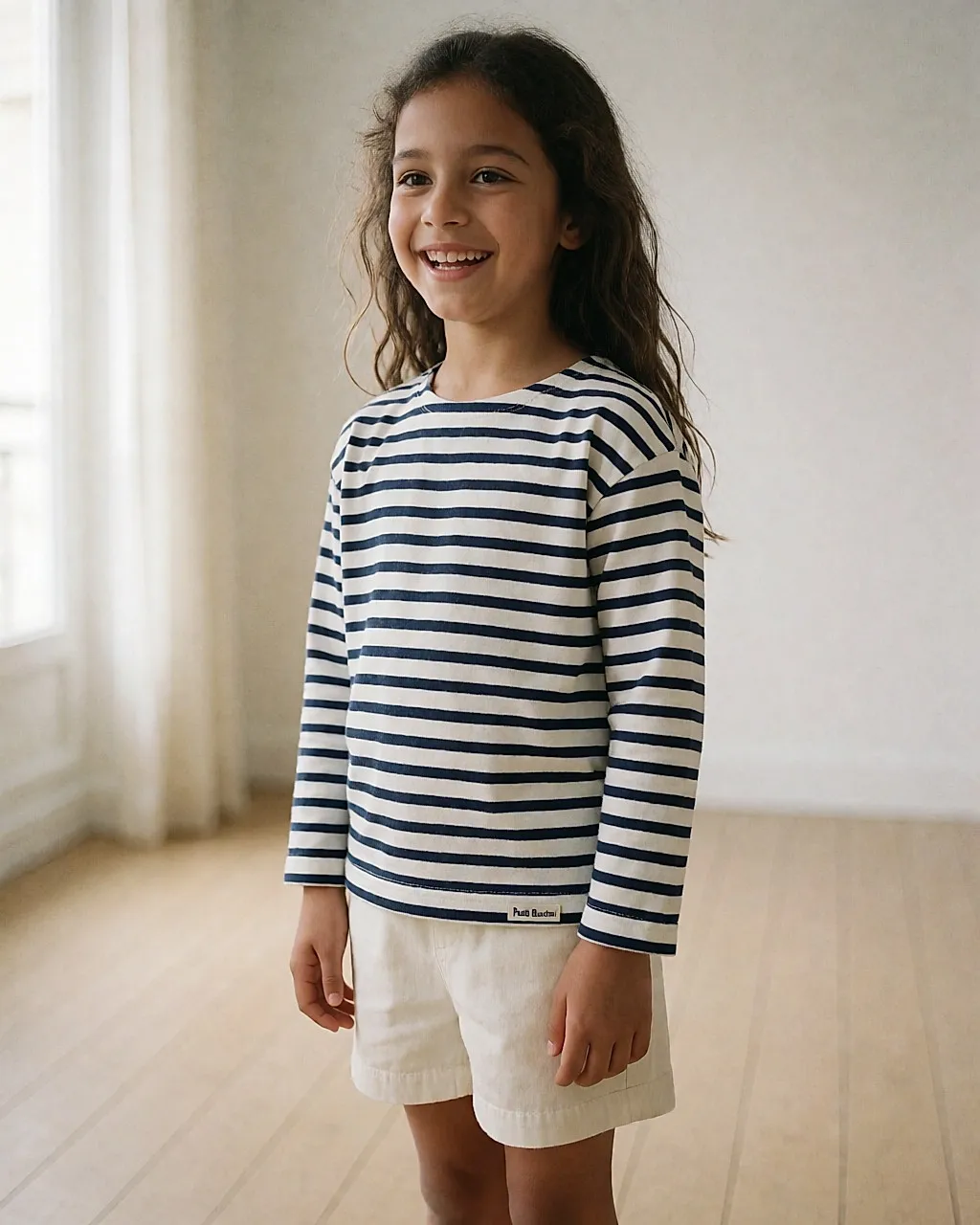
The fabric matters more than the label
Children grow fast, so composition matters more than the logo. Two markers help you sort the good from the rest. The GOTS label covers organic cotton throughout the processing chain, with environmental and social criteria; for the 'organic' claim, it requires a very high proportion of organic fibres, as set out in its official reference document. OEKO-TEX Standard 100 tests for unwanted substances in the finished product, but says nothing about where the fibre came from. The two together are worth more than either alone.
At the end of a garment's life, second-hand remains a practical option: Vinted, eBay, charity shops. Children's pieces often go for a few pounds, and a good adult knit often resells well.
Wardrobe test before buying a duo: if the adult piece doesn't work for you on its own, it may not stay in your rotation for long. The child's version may well be too small before then.
What it costs
At a specialist label, budget roughly £20 to £35 for a child's Breton top, and about double for the adult version. A child's cotton shirt sits between £30 and £50, against £60 to £100 for women. At premium brands, a child's dress can pass £100; at a high-street generalist, a full set can come in under £40.
These gaps come from the fabric — certified organic cotton or a blend — where it is made, and when you buy. End-of-line stock, outlets and sales change the bill. Second-hand is often the cheapest route: £3 to £10 for a child's piece, £15 to £40 for a good adult knit. You'll find pieces in brand stores, department-store concessions, resale platforms and charity shops.

Comments
Your opinion matters: rate the article, react and reply to comments.
Comments are moderated; AI-assisted comments are flagged. Text emoticons (8-), :-), <3…) are automatically shown as images.