

The black jumper is lying on the bed, almost touching the returns box, and under the sleeve there's a constellation of small grey bobbles. The knit is intact, the collar still holds its shape, the colour is fine — and yet the piece looks as if it has been through three winters. The question isn't whether you still love it, but whether a few minutes can make it wearable again. In other words: keep it, save it or send it back?
A bobble is not a death sentence
Where do they come from, exactly? A bobble is a fibre that has escaped the knit, twisted around itself and formed a tiny ball. Nothing dramatic, then: friction makes them, not a hidden fault. Look at where they appear — under the arms, on the sides, inside the sleeves, where the strap of your cross-body bag has been pressing since October. These are the areas that move, the ones that live with you.
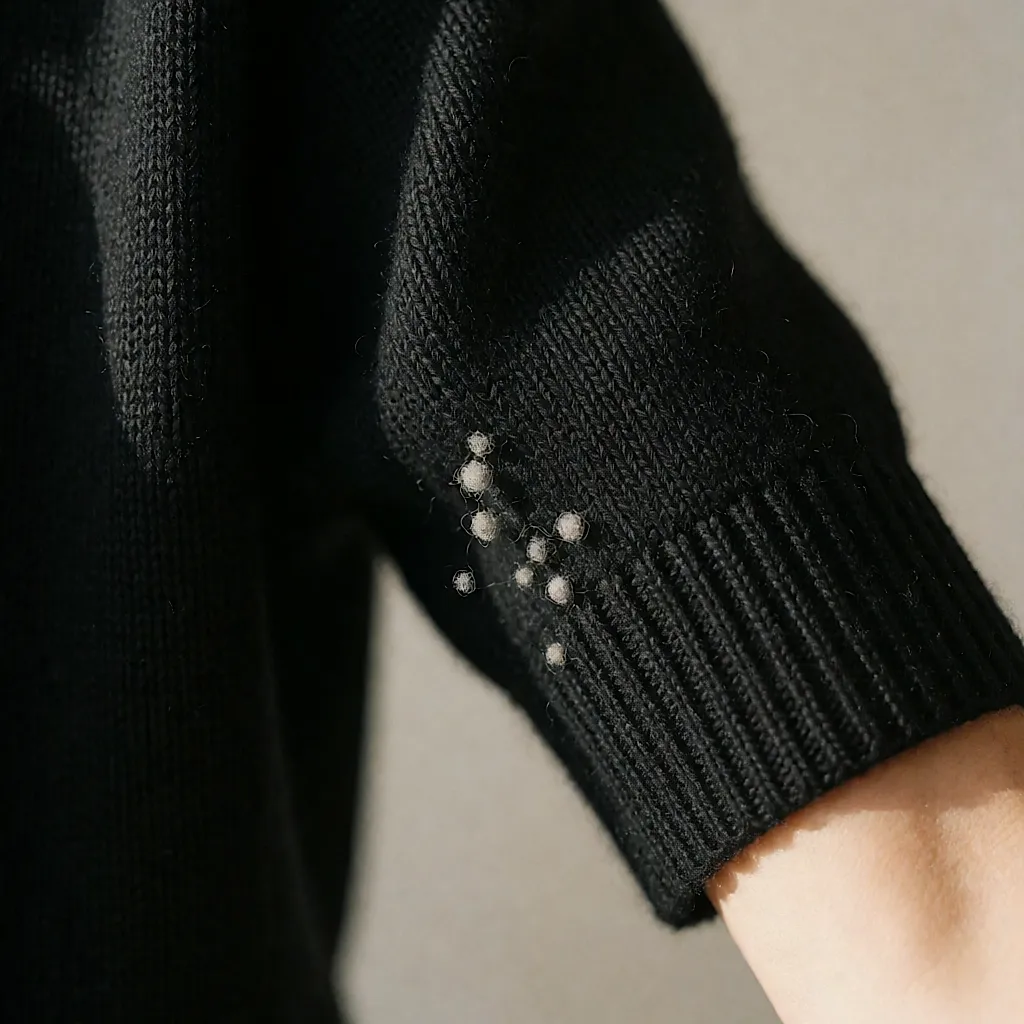
On the material front, short fibres and blends are usually the first to bobble, which is why it's worth checking the label in the changing room and looking at the synthetic fibre content before falling for a jumper that may not wear well. But a piece that bobbles is not a bad piece. Soft wool, fine cashmere: these fibres often need more care, especially on everyday pieces. In a wardrobe, real luxury is care far more than the label.
Shave, don't pull
The saving move comes down to three words: shave, don't pull. An electric bobble shaver — the little grille-covered trimmer, not the manual razor from the bathroom — is passed over a piece laid flat, dry, without pressing. Work in small movements, lift the device regularly to check, and stop before you create a bald patch. No need to spend the afternoon on it: a few minutes per piece, and a ten-year-old jumper can regain a cleaner drape.
If you don't have the tool to hand, a fresh manual razor can do the job on a thick knit, provided you have a very light touch. But don't pull at a bobble with your nails: it's the best way to stretch the knit and make a hole. For a snagged thread, ease it back inside with a needle, from the inside — never cut it.
Inside out, cold, flat
With a machine, two habits make all the difference. First: wash the piece inside out, cold, on a wool or delicate cycle, with minimal spin, using a gentle detergent and no fabric conditioner — on wool, conditioner tends to weigh the fibre down rather than help it. Second: give up the hanger for drying. A wet knit is heavy; hung up, it can stretch at the shoulders and lose its shape.
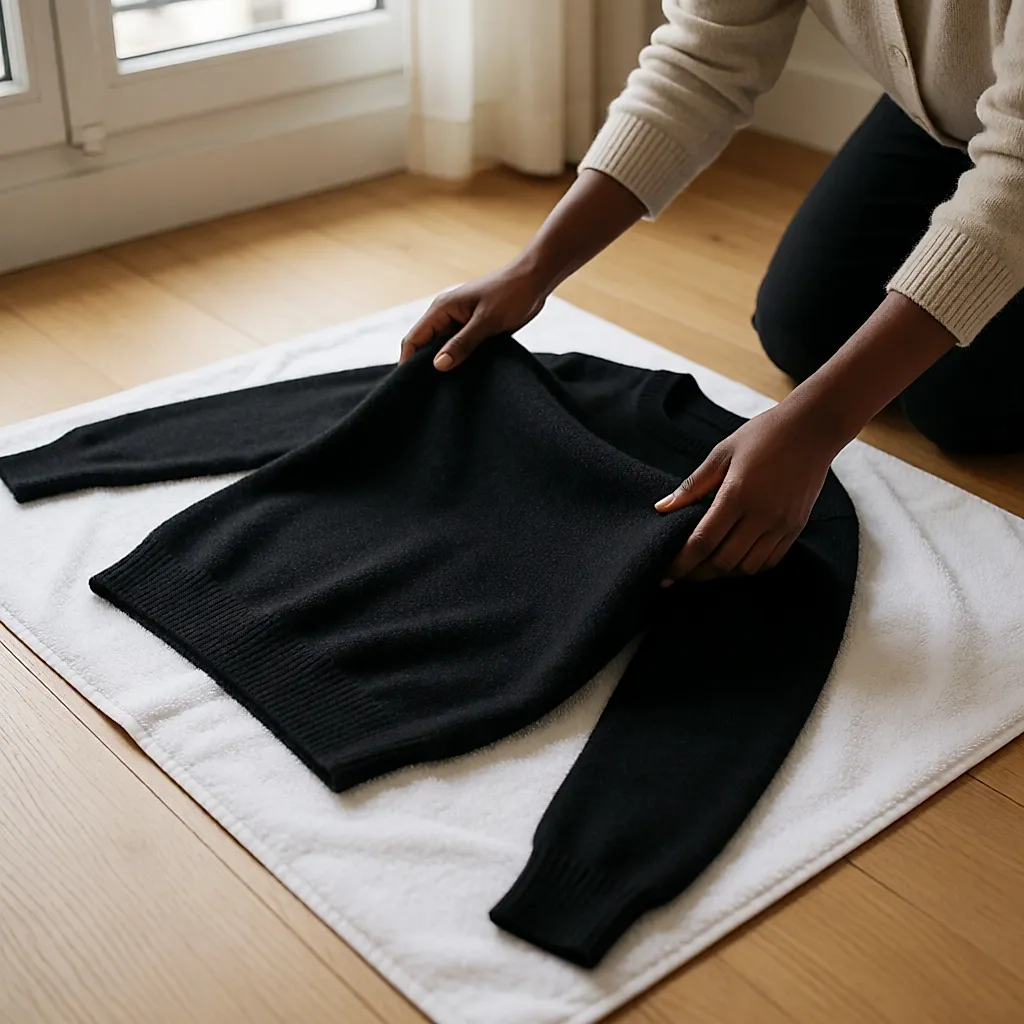
Drying flat, on a towel on the floor or on a drying rack, is a forgiving habit. Reshape the piece by hand to bring back its original width and let the air do the rest. And the tumble dryer? Frankly, it's knitwear's worst enemy, especially wool. A spell in the air is better than a turn in the drum.
Fold, never hang
Storage matters as much as washing. A heavy knit on a thin hanger can mark the shoulders and stretch out season after season; that's especially true of cashmere and chunky wools. Fold it instead, in a drawer or on a shelf, without piling anything too heavy on top. For the most delicate pieces, a sheet of tissue paper slipped into the folds can help limit creasing.
Before putting anything away, air it. A while over the back of a chair in a dry place is often enough to freshen clothes you've worn — much better than washing every time, which wears the fibre with every drum cycle. A soft brush for dust, a neat fold, and you're done.
When shaving can't save it: if the knit is felted (the piece has shrunk and gone compact after a wash that was too hot), if there are holes, or if the knit is so stretched that it won't stay on the shoulder, the shaver will only be a cosmetic fix. Two honest options in that case: alterations by a professional, or a second life as something for the home — a cushion, a throw, a cover.

What it costs
You don't need a wildly expensive device to save a knit: expect to pay in the region of £10 to £30 for a decent bobble shaver, from a supermarket, a haberdashery or online. At that price, the finish, power source and number of cutting heads change a lot — and models with replaceable heads are worth seeking out. An anti-bobble comb sits between £5 and £15; a fresh manual razor, between £1 and £5, remains the cheapest way to test the technique on a piece you're not sure about.
Do the sums before the returns label
There's no getting around it: shaving, washing inside out, drying flat and folding are four extra steps in an already full week. But compare that with the alternative: buying yet another jumper that may well bobble in the same way before long. Caring for clothes is also a way of choosing them: fewer, better made, kept for longer.
Next time your knit starts to bobble, do the sums: a few minutes with a shaver, a wash inside out, a flat dry — against the price of a new jumper, and the balance soon tips the right way. Your favourite jumper may not last forever, but it still has a few winters in it. That's reason enough to keep its place in the drawer.



Comments
Your opinion matters: rate the article, react and reply to comments.
Comments are moderated; AI-assisted comments are flagged. Text emoticons (8-), :-), <3…) are automatically shown as images.