
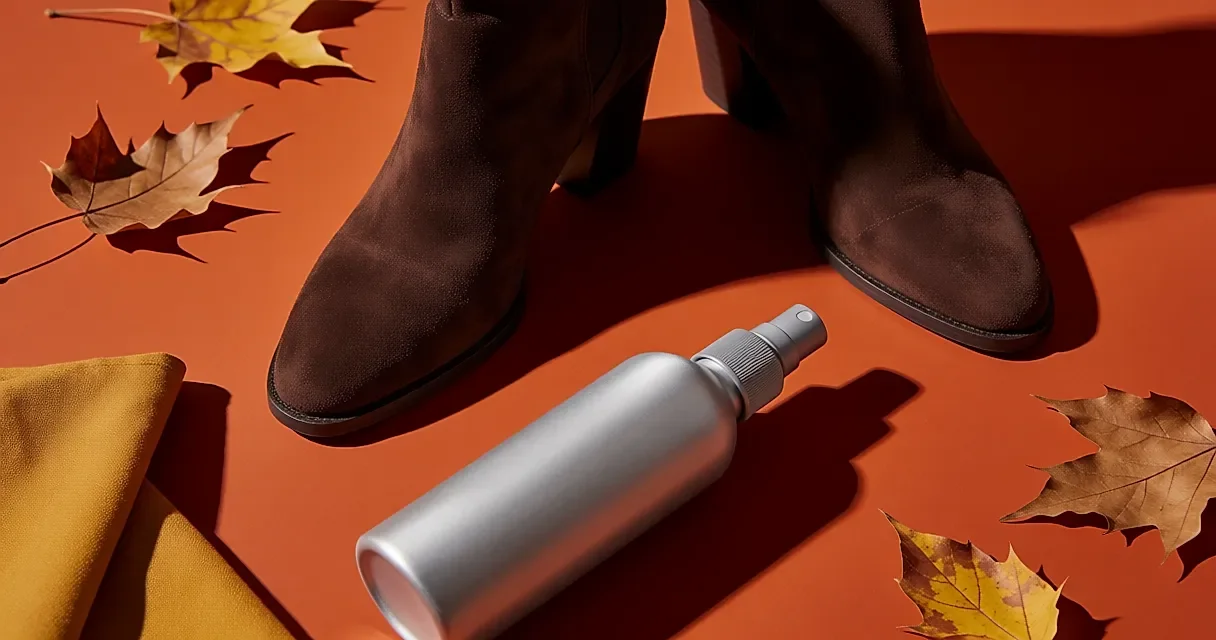
The word "waterproof" on a pair of suede boots describes a finish, not the hide itself. It's a distinction you rarely see at the till, and yet it explains why some pairs come through three winters while others are stiff and scuffed by 1 November. Suede drinks water by nature — it's one of the things we like about it.
What the label actually promises
Suede sold as "waterproof" or "water-repellent" has had a surface finish applied, either at the tannery or at the end of manufacture: an invisible barrier that makes drops bead up instead of sinking in. That barrier isn't in the fibre, it sits on top of it. Hence the difference between two words that get muddled all the time: water-repellent (water runs off and the material stays almost dry) and waterproof (water doesn't get through at all, which is rare on genuine suede and usually means a technical boot with a membrane instead).
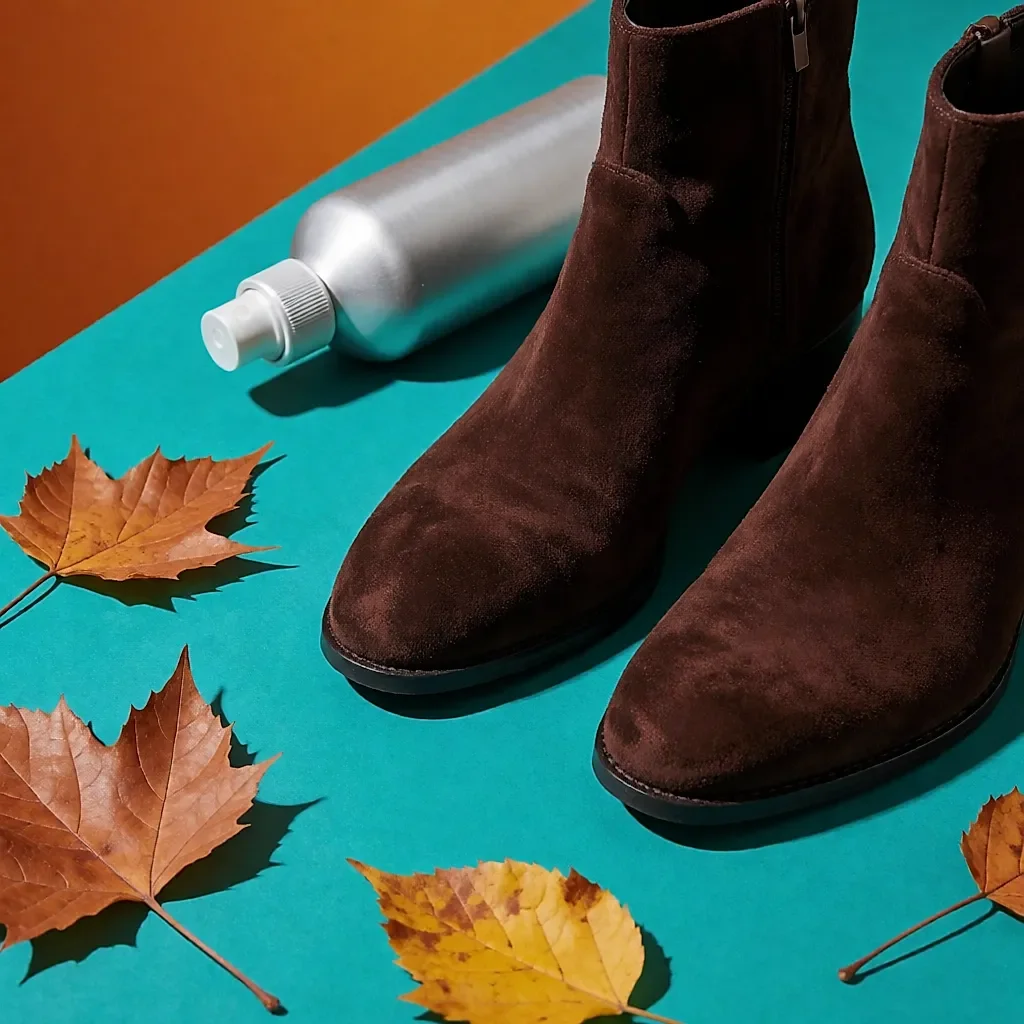
So you aren't buying a boot that stays watertight for life; you're buying a boot with a protective layer — and that layer works, rubs and wears. Price doesn't tell the whole story either: a £120 pair and a £350 pair may both have had the treatment, while some houses prefer a lightly waxed finish, rougher, more hard-wearing, but far more matte.
Why the finish wears off so fast
The protection goes with friction: the crease at the ankle, the heel scuffing the ground, the hem of your trousers brushing the upper. It also goes with cleaning — an over-wet sponge, a harsh stain remover, and the coating lifts off along with the mark. In practice it's generally reckoned that a refresh is due every autumn, before the first proper rain, then again mid-season if you wear the pair several times a week.
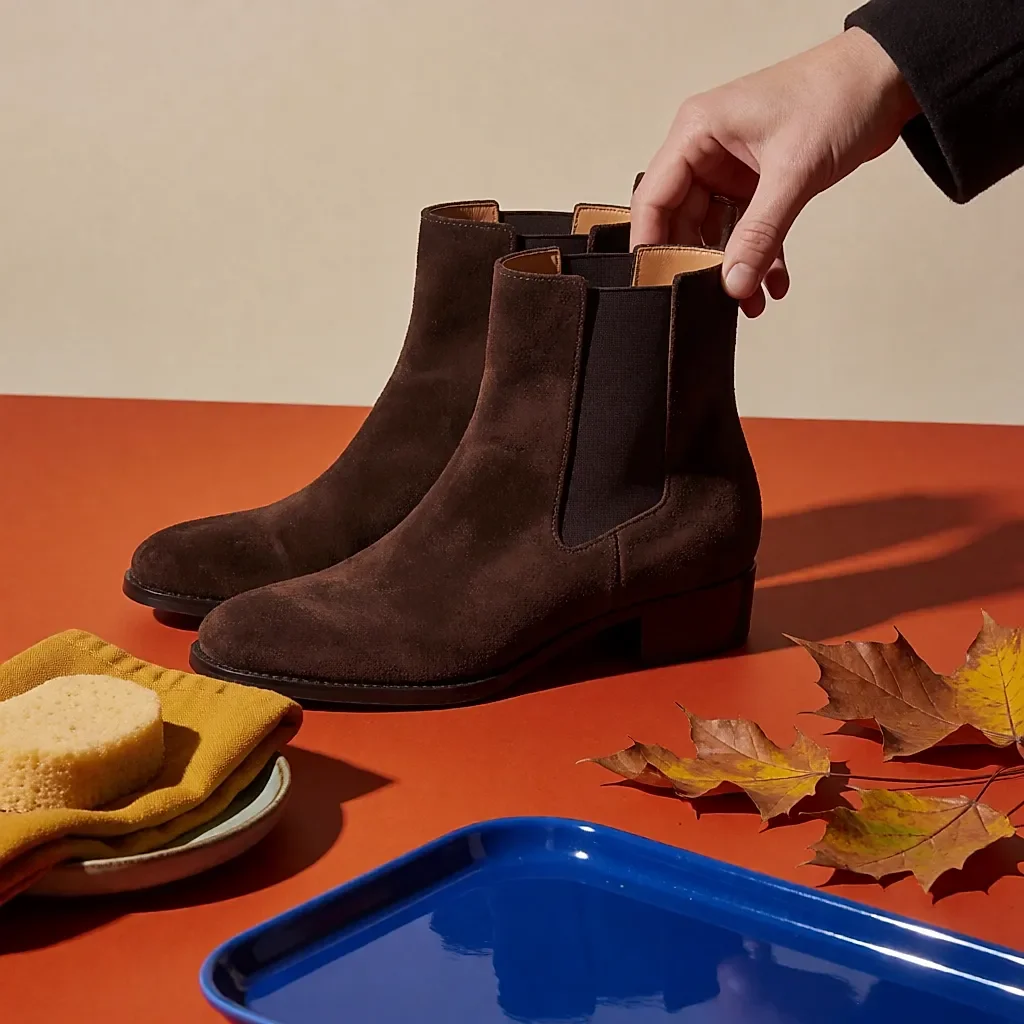
The real problem isn't the drop that beads, it's the one that soaks through. Suede swells, the fibres stick together and the boot dries stiff. Does that mean giving up on suede in November? No — but a wet boot dried badly keeps a rigidity you feel with every step, and no spray rescues damaged fibre at that point.
Brush first, then spray
The classic mistake? Spraying dusty suede. The product locks the dust into the fibre and you're left with a grey, slightly cardboardy surface. So start dry, with a suede brush (dense, supple bristles) worked in one direction, without pressing: it lifts the nap, takes off the dull film and opens the material up so the spray spreads instead of sitting on top.
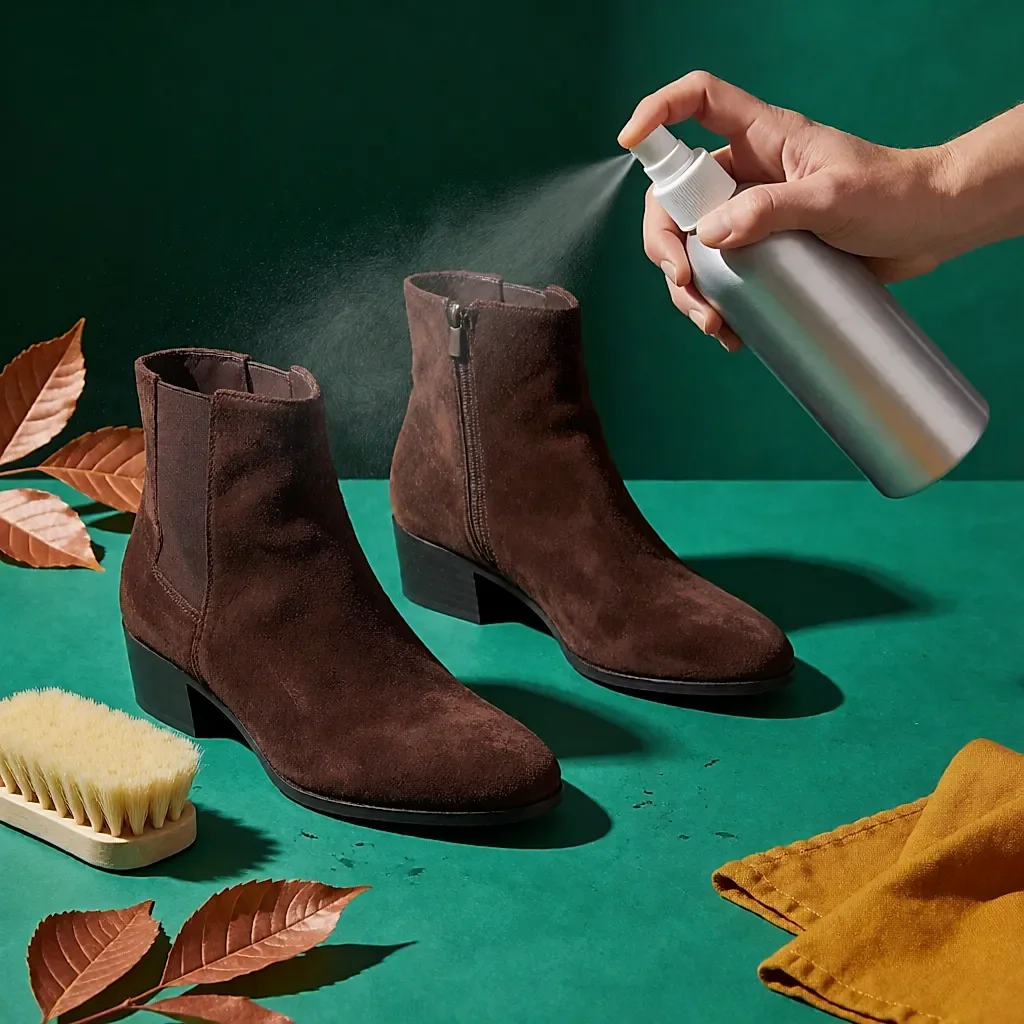
Then the product. Hold the can 20–30 cm away, in fine crossing coats, in a well-ventilated room, on a clean, dry pair: two light passes beat one soaking. Dry in the air, well away from the radiator — heat sets creases and hardens the hide — then a gentle brush to finish. Always test on a discreet patch first: very pale suede can darken slightly where the product lands.
And if the pair has already been caught in the rain? Stuff the inside with newspaper, change the soggy paper, dry in the shade, brush once dry. The radiator remains suede's worst enemy: you never regret avoiding it.
The sequence to remember: suede brush on dry suede, spray in two thin coats, air-dry, brush again. A spray applied to damp suede protects nothing at all — let it dry before adding another coat.
What it costs
Money-wise, we're in sensible territory. A protector spray for suede and nubuck costs around £10–£25 in supermarkets or pharmacies, more like £15–£30 in shoe shops or at a cobbler's, where they'll steer you towards the right one for the exact material. A suede brush is £8–£20 and usually outlives several pairs.
If you'd rather hand it over, budget £15–£40 for a full clean and protect at a shoe repairer, depending on the town and the state of the pair. When you next buy a spray, glance at the ingredients: PFAS-free (fluorine-free) formulas are the better choice where they're offered, and a glass or refillable bottle cuts down on packaging. Nothing dramatic, but these details add up.
The verdict
Well-protected suede ages better, and a pair that ages better is a pair you keep — which is the whole point of a restrained wardrobe. You don't need three different products: one spray, one brush, one annual ritual, and most pairs get through the season without drama.
For a boot worn every other day, this two-piece kit at around £30 is a good autumn buy. For an occasional pair, in practice plenty of people find two applications a season is enough. And if suede genuinely wears you down, grained leather asks for far less ceremony — which is another way of shopping sensibly.


Comments
Your opinion matters: rate the article, react and reply to comments.
Comments are moderated; AI-assisted comments are flagged. Text emoticons (8-), :-), <3…) are automatically shown as images.