

A suede brush looks like a hairbrush that has gone wrong: short handle, dense brass bristles, slightly severe expression. Yet it is the thing that decides whether your boots make it through winter or end up at the back of the wardrobe behind the gym bag. The waterproofing spray only comes into play afterwards, and it is the order of the steps that matters.
The nap first, the spray second
Suede is a leather with a velvety surface; nubuck is made from the outer grain, lightly sanded. The surface of suede is nap: short, dense and flattened by the slightest touch. Dry brushing does more than remove dust: it raises the nap, dislodges grit caught between the fibres and gives the material back its velvet rather than its old-carpet look. Use a soft brush on fine suede and brass bristles on nubuck or thick suede, always working in the same direction in short strokes, without pressing as if you were rubbing out a mistake.
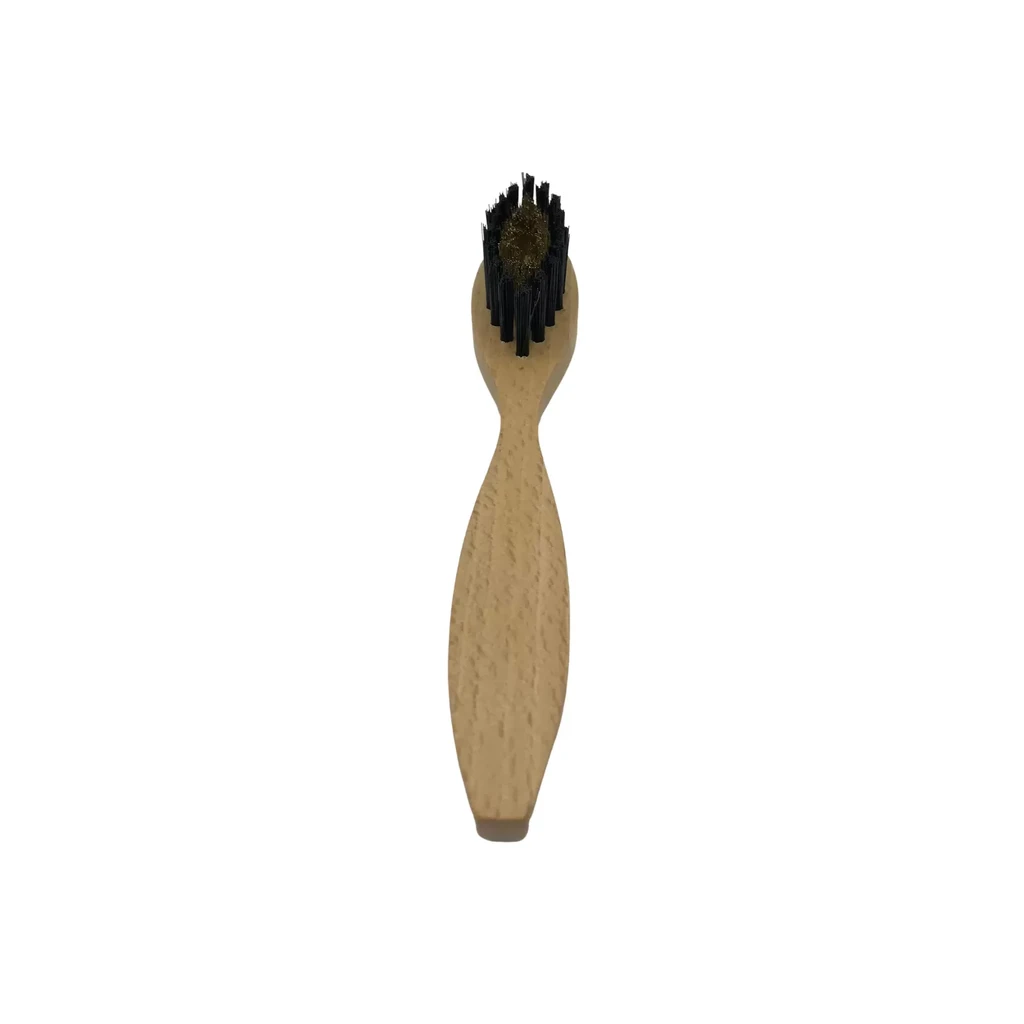
Wetting suede before brushing is a well-meant mistake: the nap lies flat and dust turns into a fine mud that settles into the material. And if you spray waterproofing onto a surface that is still dusty, you trap the dust under the protection. The result is suede that squeaks, marks at the touch of a finger and loses colour in patches. Hence the rule: brush, cloth, dry, and only then protect.
Have you ever sprayed a pair that was still white with dust? We've all done it on a rushed morning. The good news is that regular brushing — once a week in season, more often if you walk a lot — means you rarely have to rescue anything.
Heat is the enemy you don't see coming
Wet suede doesn't need help; it needs air. Dry it at room temperature, in the shade and away from any heat source — radiator, hairdryer, oven (no judgement, just a warning). Heat sets the skin, the leather hardens, the nap turns rough, and the water stain becomes a neatly drawn ring, as if outlined in felt-tip.

While they dry, stuff them with crumpled newspaper or shoe trees: the boot keeps its shape, the lining can breathe and no crease sets across the instep. For protection, apply the waterproofing spray to clean, dry suede, in thin layers, from a sensible distance, in a well-ventilated room. In practice, that often means one or two applications a season if you wear the pair every day: it isn't a permanent varnish, and that's no bad thing.
A quick note on ingredients: fluorine-free sprays exist and avoid one family of chemicals that persist in the environment. They are not magic, though; trust what is printed on the can rather than the word 'natural' printed in green.
What can be saved and what can't
A grease stain is a test of nerve. Don't rub or soap it: dust it with talcum powder or Fuller's earth, leave it overnight, then brush. On a fresh mark, this often works very well. On last week's butter stain, be realistic: the result will be partial.
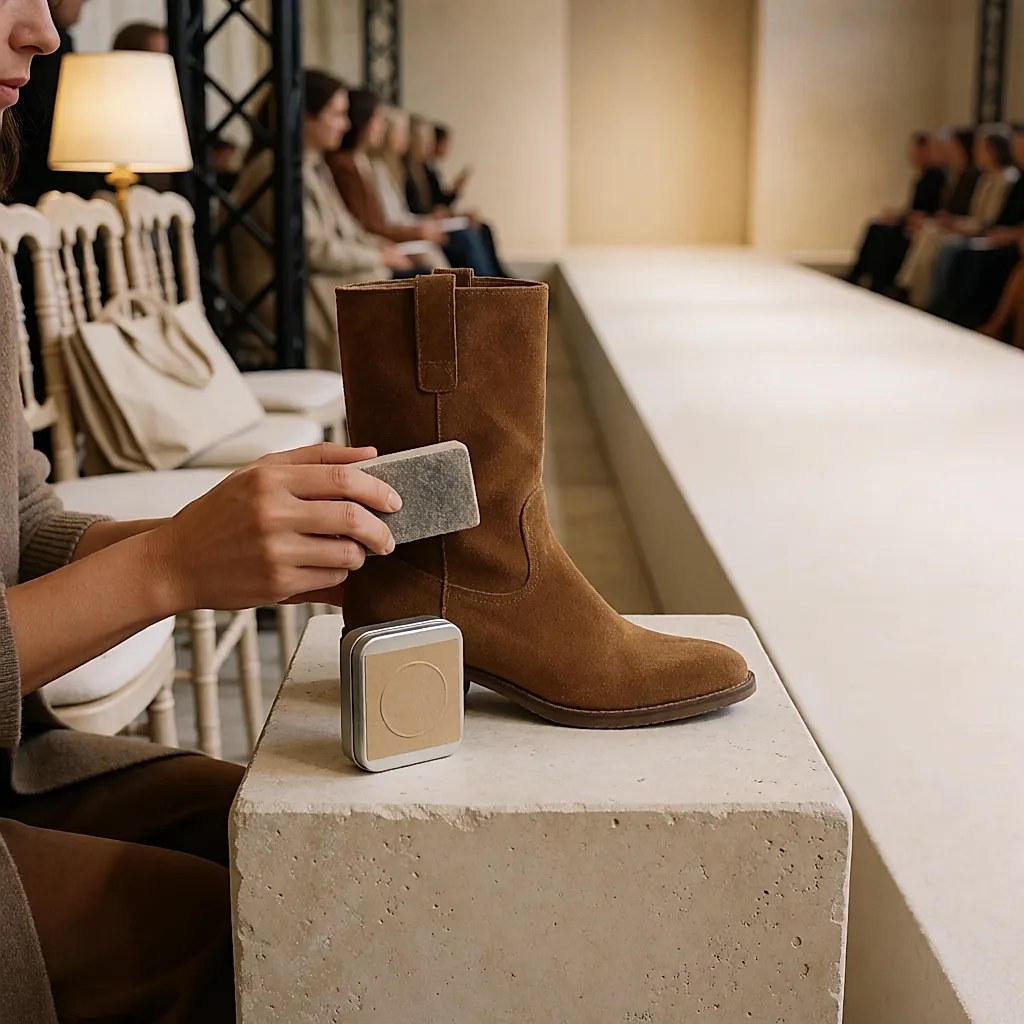
A rain mark is a mixture of water, dust and mineral salts. Start with dry brushing, then use a suede eraser on the pale areas in short motions. If the ring still resists, some people try to even out the whole surface with a barely damp cloth — with no guarantee, and at their own risk. Then there are the cases beyond repair: suede scorched by heat, nap pulled out, an old oil stain, obvious discolouration after a summer in the sun. For those, a good cobbler can work wonders; last-minute DIY much less so.
The habit that saves you: keep a suede brush in the hallway, next to your shoes. Two minutes of dry brushing after each wear and there will be almost nothing to rescue. The spray stays in the cupboard for two or three times a season.
Budget
As a rough guide, expect to pay £8–£25 for a decent brush — brass bristles are what make the difference — and £10–£25 for a waterproofing spray, aerosol or pump. A suede eraser and a tin of talcum powder cost a few pounds and last for years. You'll find them in hardware shops, at a cobbler, in supermarkets and from online shoe retailers; prices rise with the size of the can, and pump formats work out cheaper over time.
If you'd rather delegate, a full cobbler service typically costs £15–£40 depending on the item, and specialist cleaning more like £20–£45. That is only worth it on good pairs: for cheap boots, a brush and talcum powder are more than enough. And the best investment remains the same — rotating two pairs limits wear and extends their life.
Suede isn't fragile, it's temperamental: it dislikes standing water, heat and being brushed the wrong way. Brush it dry, let it breathe, protect it last. Your boots will repay you, and next year you'll be able to bring them out without pretending not to notice them.



Comments
Your opinion matters: rate the article, react and reply to comments.
Comments are moderated; AI-assisted comments are flagged. Text emoticons (8-), :-), <3…) are automatically shown as images.