
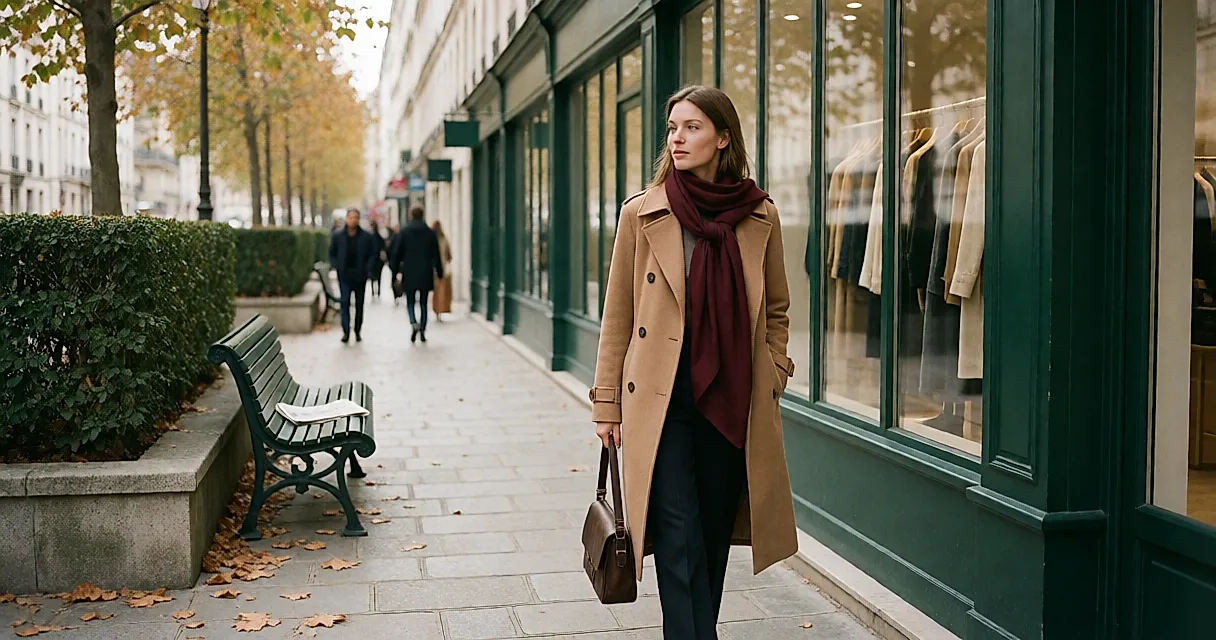
Some scarves make you reach for your card without flinching, while others end up as a glasses cloth long before Bonfire Night. The difference is not obvious under shop lights: it plays out three millimetres from the edge, between thumb and forefinger. So before you fall for one, turn it over, weigh it in your hand, look at the reverse — and everything starts to show. No product edit here: this guide gives you the markers to judge the piece itself.
The edge, the detail that sets the price
A hand-rolled hem is something you recognise by touch before you see it. The edge is rolled over itself, stitched by hand across two or three millimetres, and forms a soft little roll, almost alive. Run a finger along it: it should glide without snagging. Look closely: the stitches are not perfectly even, and that is a good sign. A perfectly straight, thicker, slightly stiff edge is a machine hem — neat, robust, but without the same suppleness.
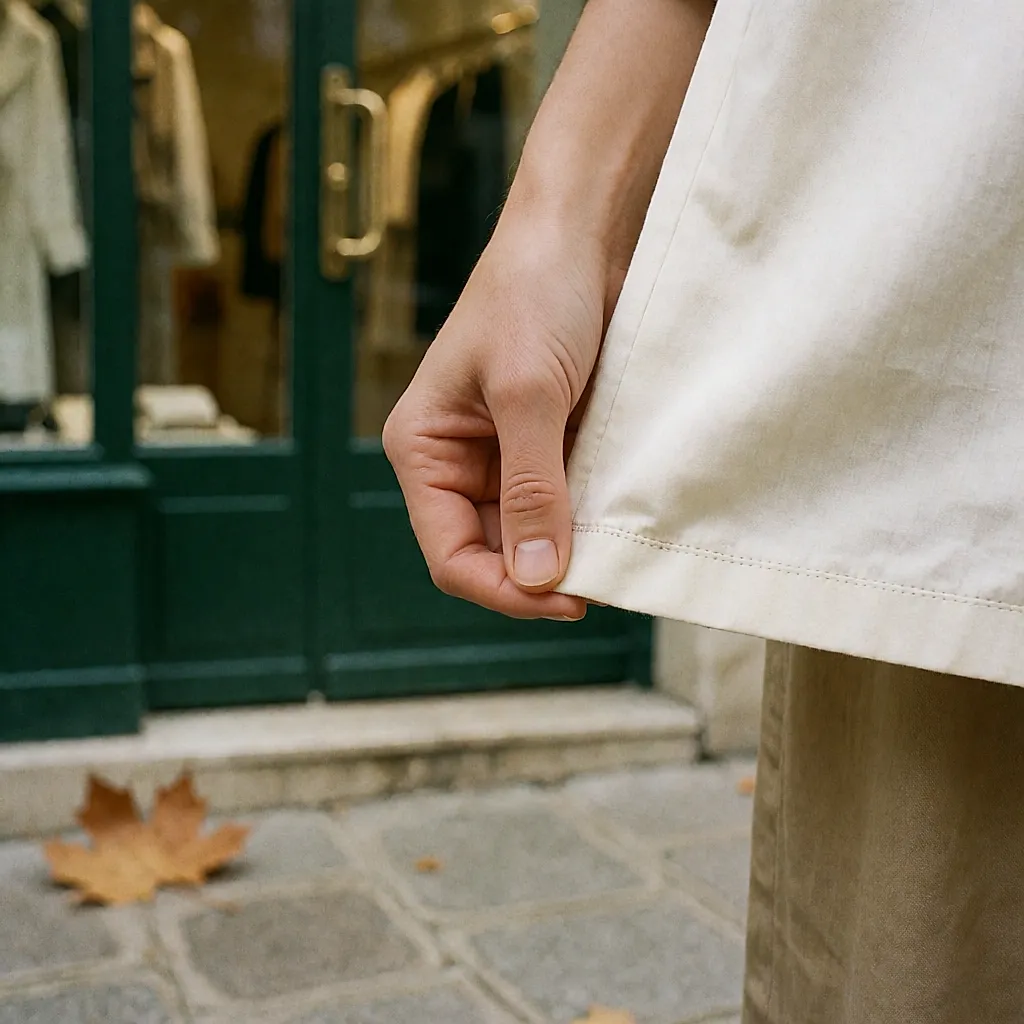
Why does this detail cost so much? Because it is human time, on all four sides, with corners folded without bulk. On a 90 cm square, there is just over three metres of edge to roll. On a single piece it sounds like nothing; across a production run it becomes a serious undertaking. That is why a hand-rolled hem marks the dividing line between an accessory and an object — the scarves of heritage houses, Hermès chief among them, have made it their signature.
That said, a machine hem is nothing to be ashamed of. Under £55, it is very common, and it holds up well. You are simply not paying for the same thing — worth knowing before you compare two prices that are not remotely comparable.
Turn it over and read the reverse
The test everyone forgets is the reverse of the print. A well-printed scarf keeps crisp outlines, clean whites and colours that do not bleed. If the pattern looks slapdash, with blurred areas and misaligned edges, that is where costs were cut.
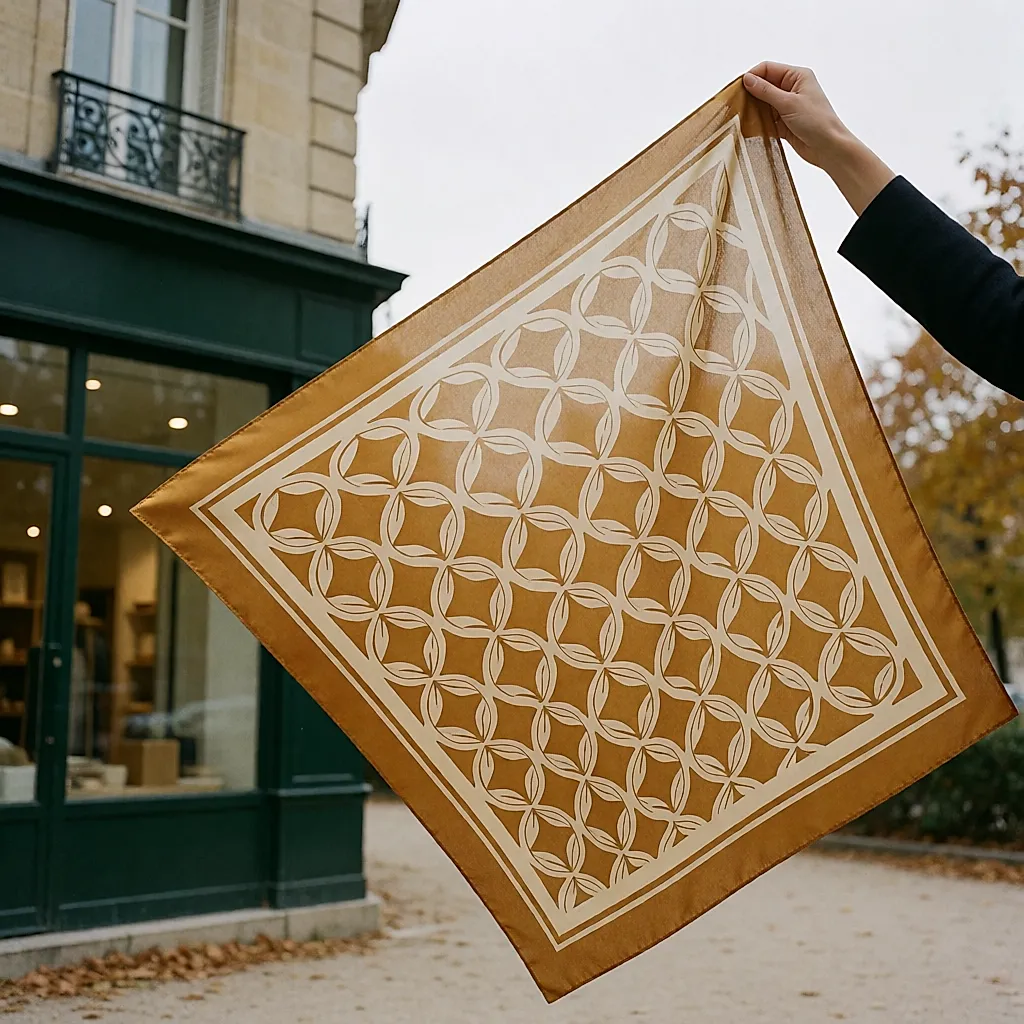
Beware one trap: a print where the ink penetrates the fabric gives a tinted, slightly blurred reverse. This is not a fault but a technique — the pattern is the same on both sides, just less sharp. A washed-out reverse on a surface print, with outlines that bleed, however, points to a budget set-up.
Online, everything rests on the product page. Look for a close-up of the edge, a view of the reverse, a mention of the hem. If the retailer never shows any of these details, that is already an answer. You can email customer services: the precision of the reply tells you plenty.
The weight, and why some scarves hang like a tea towel
Silk is measured in momme, a unit of weight. In practice, scarves often sit between 8 and 16 momme: the higher the number, the denser, more structured and more opaque the silk. A light scarf will be fluid, airy and a little flighty — it lifts, slips, and the knot takes patience. A dense scarf holds a fold and keeps a crisp line on a coat collar in November.
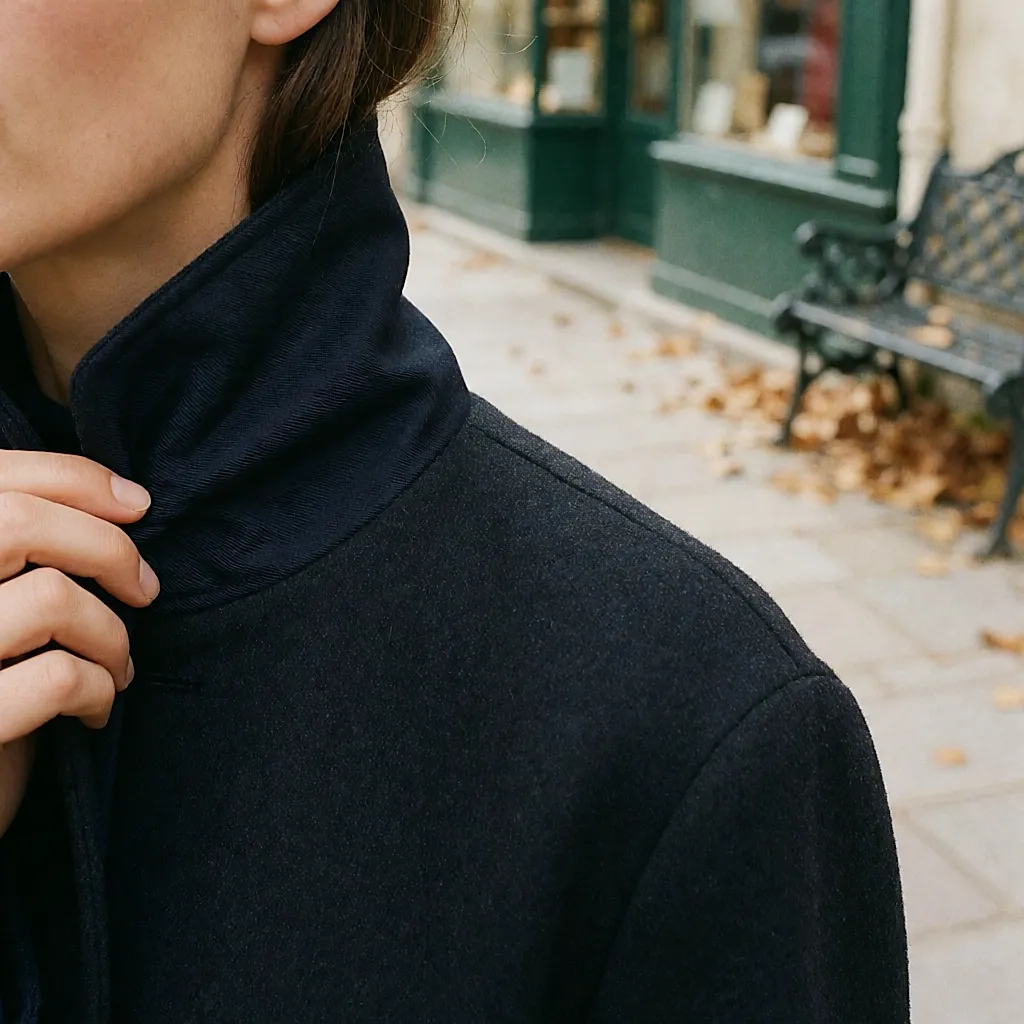
The weave matters just as much. Twill, matte and structured, holds knots well and ages cleanly; satin, glossy and smooth, makes more of an impact but creases. A matter of taste, not a hierarchy. One gesture settles it: scrunch a corner in your palm, then release. The silk should spring back without holding a sharp paper-like crease.
How much you need to spend for the price to make sense
As a rough guide on the UK high street, under £35 you can find perfectly good printed scarves for everyday wear — just check the label: silk is often only a small part of the blend, and the hem is machine-rolled. Expect £50 to £100 for 100% silk, a neat machine hem and a clean print: the most sensible zone for a first proper scarf. From £130, you are often into hand-rolled territory, with denser silk and a more closely checked print — the price is justified mainly by the making. Above £300, you are also paying for the house, the edition and the design.
Below £130, a hand-rolled hem is rare: at £40, ask to see the edge close up. As for where to shop, department stores and brand boutiques remain useful benchmarks; private sales and pre-owned luxury can bring a hand-rolled hem within reach for the price of a new mid-range scarf — provided you check the condition of the edges, which are hard to repair.
The thirty-second check: turn the scarf over and study the reverse (are the outlines crisp?); run a finger along the edge (soft or stiff?); scrunch a corner (does the silk spring back?); tie it at your neck (does it hold or slip?). Four gestures, and the verdict lands before you reach the till.
That leaves the question you ask in front of the mirror: are you buying it for the print or for the make? If it is the design that stops you, a £70 scarf will do the job beautifully. If it is the handwork, the fabric, that way of falling exactly right over a trench coat, then a hand-rolled hem is worth the extra — and it will stay with you far longer than a November whim.
Comments
Your opinion matters: rate the article, react and reply to comments.
Comments are moderated; AI-assisted comments are flagged. Text emoticons (8-), :-), <3…) are automatically shown as images.