
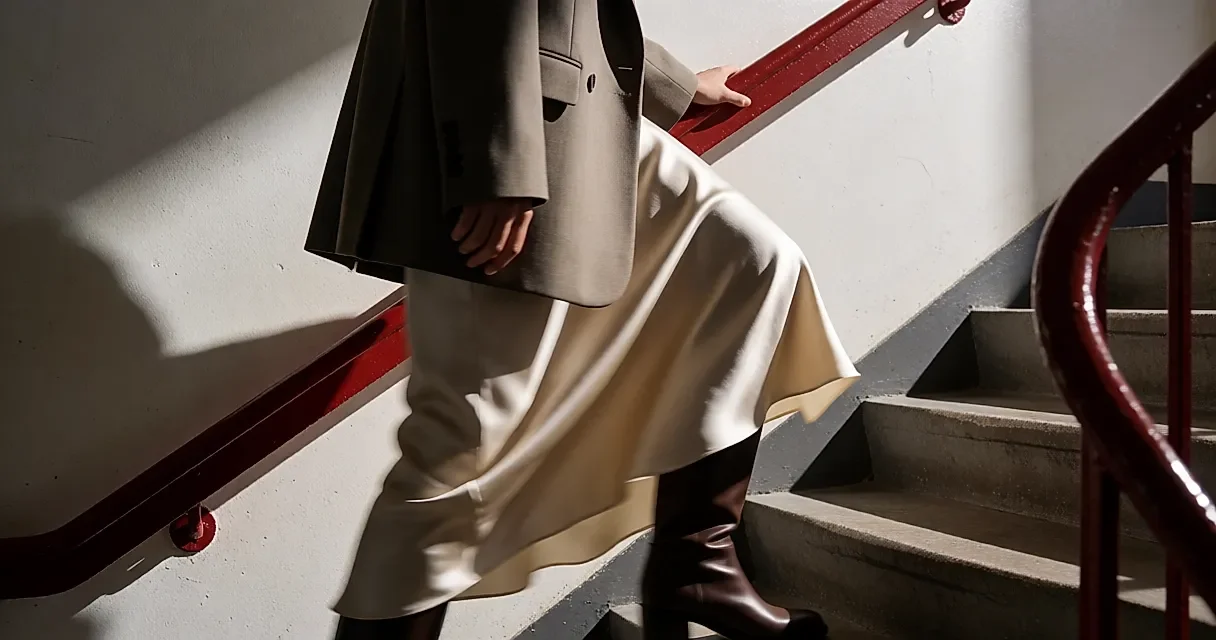
A star's look rarely comes down to a rare piece: it comes down to a contrast. A sharp shoulder above fabric that pours, a gold piece of jewellery next to matte wool, a fine shoe under wide trousers. Dua Lipa is one of those whose outfits get taken apart piece by piece, and you can see why: the whole thing looks considered without looking like a costume. Chasing an exact outfit demands the precise piece and a lot of luck; copying the logic behind it is easier, and it works with what you already own.
Three roles, not three pieces
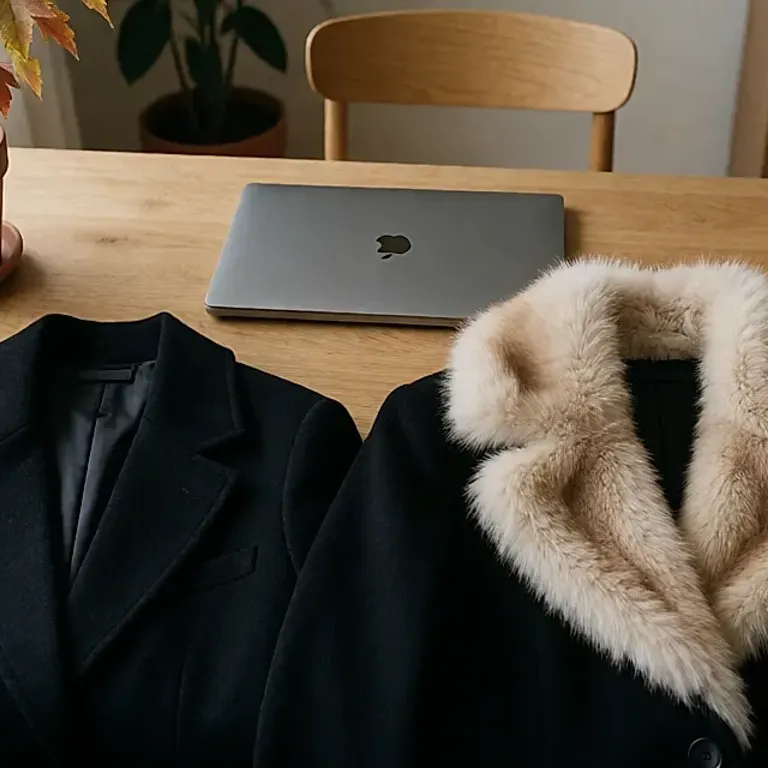
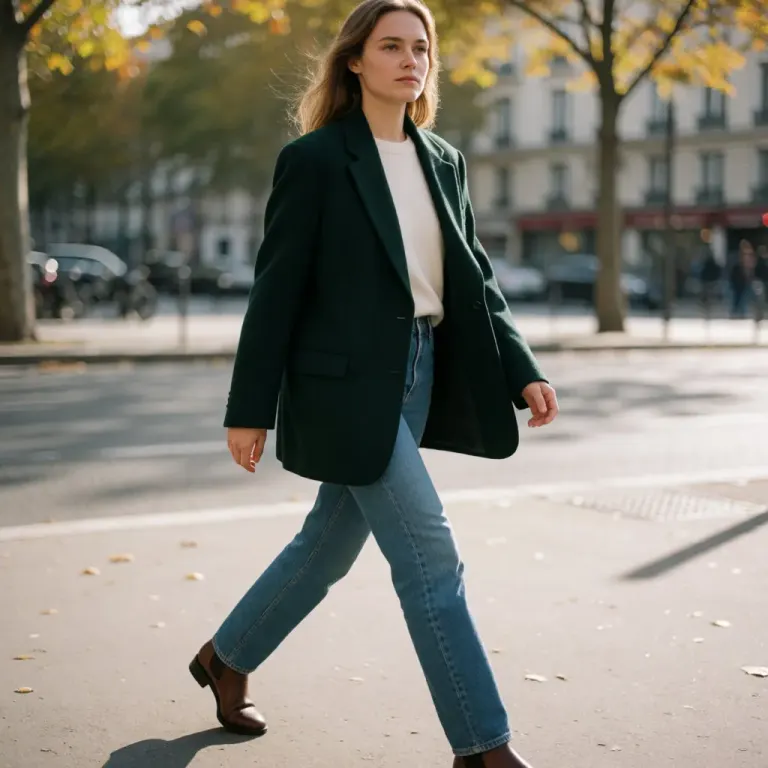
The first role goes to the structured piece: a blazer with defined shoulders, a wool jacket that holds its shape, pleated trousers. It provides the frame, holds the upper body and stops the whole look slumping. The second is played by a fluid material — a silk skirt, a washed-linen top, fine wool crêpe trousers — which brings movement and light. The third is the accessory that cuts against the rest: a belt, a fine-heeled sandal, a piece of jewellery just too big to be discreet.
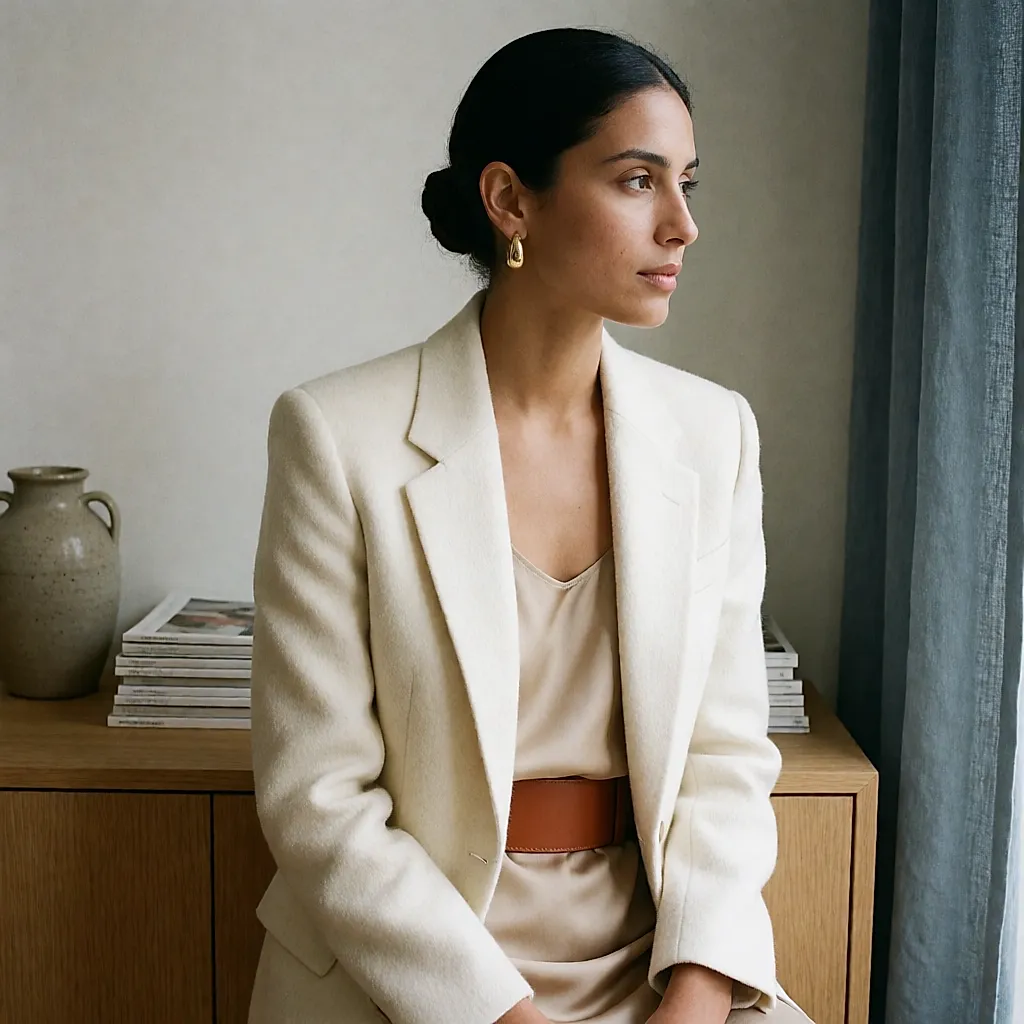
Thinking in roles rather than in pieces has one advantage: your wardrobe may already cover all three. That blazer bought for an interview? Structured. That fluid skirt that never gets an outing? It was waiting for a jacket. And those inherited earrings you decided were 'too much' for the office? They may be exactly what the outfit was missing. Good news: before you buy anything, take stock of what you have. Which of the three roles are you genuinely missing?
How it hangs does half the work
A look is judged on the vertical first. If the top is rigid, the bottom can flow; if the bottom is wide and soft, the top has to hold. The classic mistake? Two soft pieces together — a soft cardigan over fluid trousers — which leaves a silhouette with no spine. Two stiff pieces, on the other hand, turn you into a uniform. The whole balance rests on a contrast in weight between top and bottom.
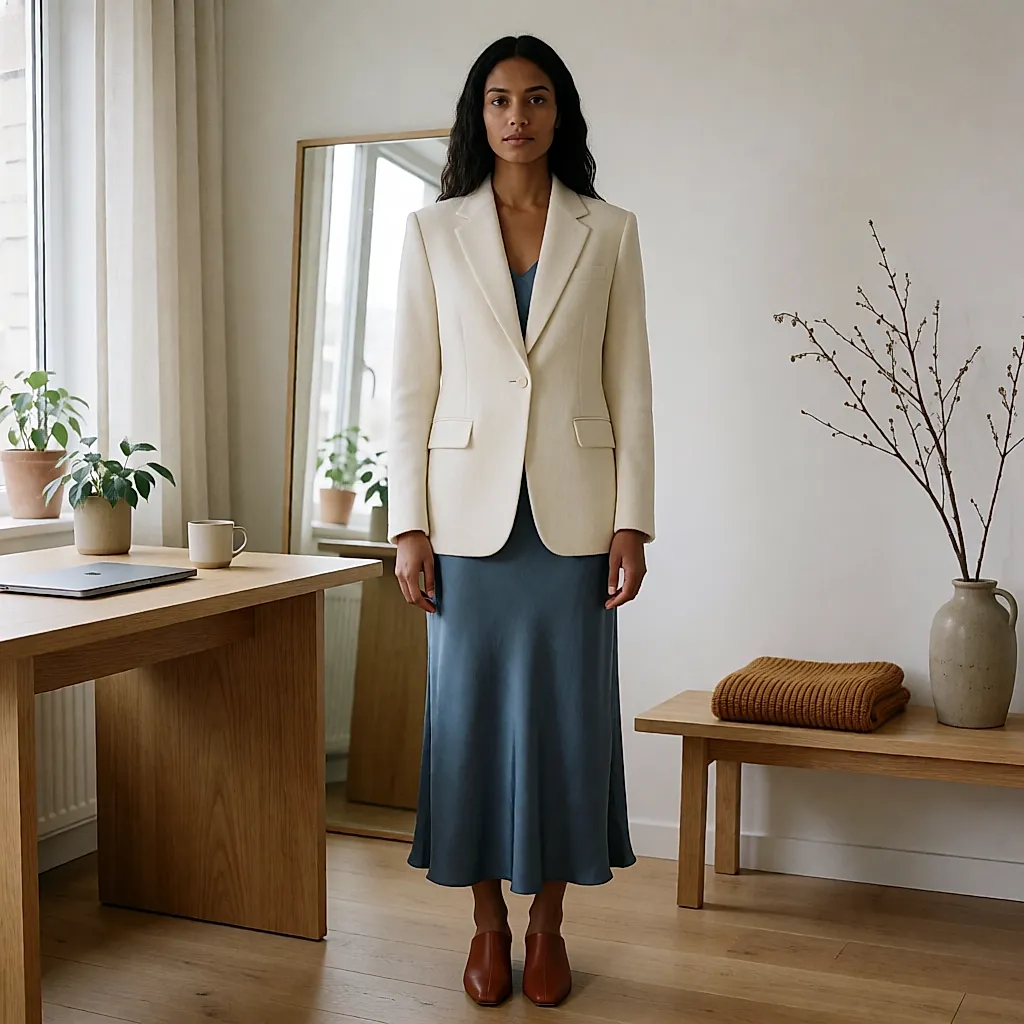
Stand three steps back from the mirror. Does the garment fall straight, or does it catch? Drape shows from far away, not up close. A hem that breaks in the wrong place, a shoulder that rides up: those are the details that separate 'dressed' from 'in fancy dress'. A few centimetres taken in or up — hem, waist, sleeve — often costs £10 to £25 at a local alterations shop, and changes more than a new purchase would.
The accessory that cuts against it
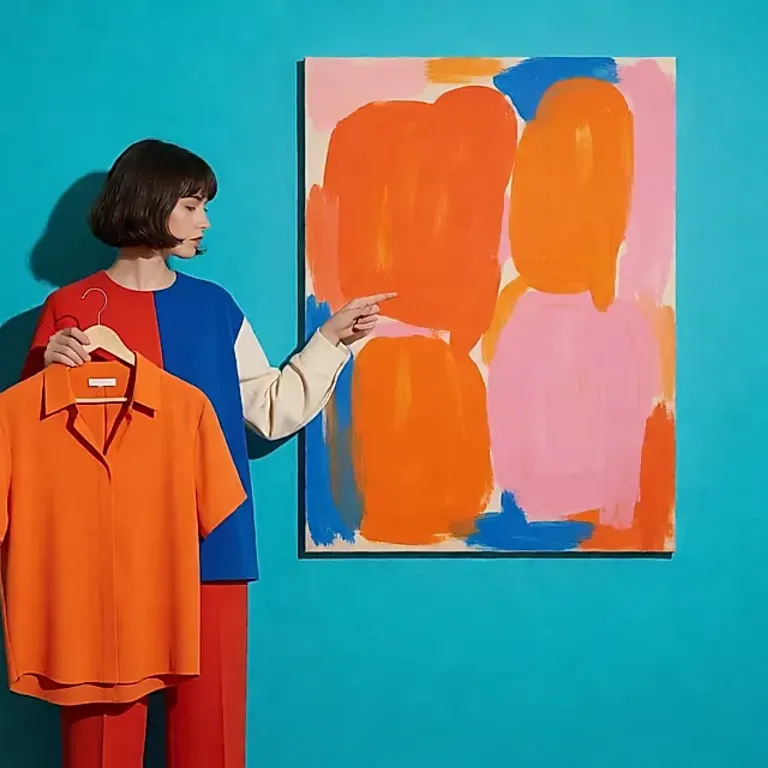
Contrast isn't only about colour. It can set materials against each other (smooth leather against bouclé wool), volumes (a neat little bag against an oversized jacket) or eras (an old piece of jewellery with a contemporary cut). Look for the gap, not the perfect match: a head-to-toe monochrome look works when one single piece breaks the rules on purpose.
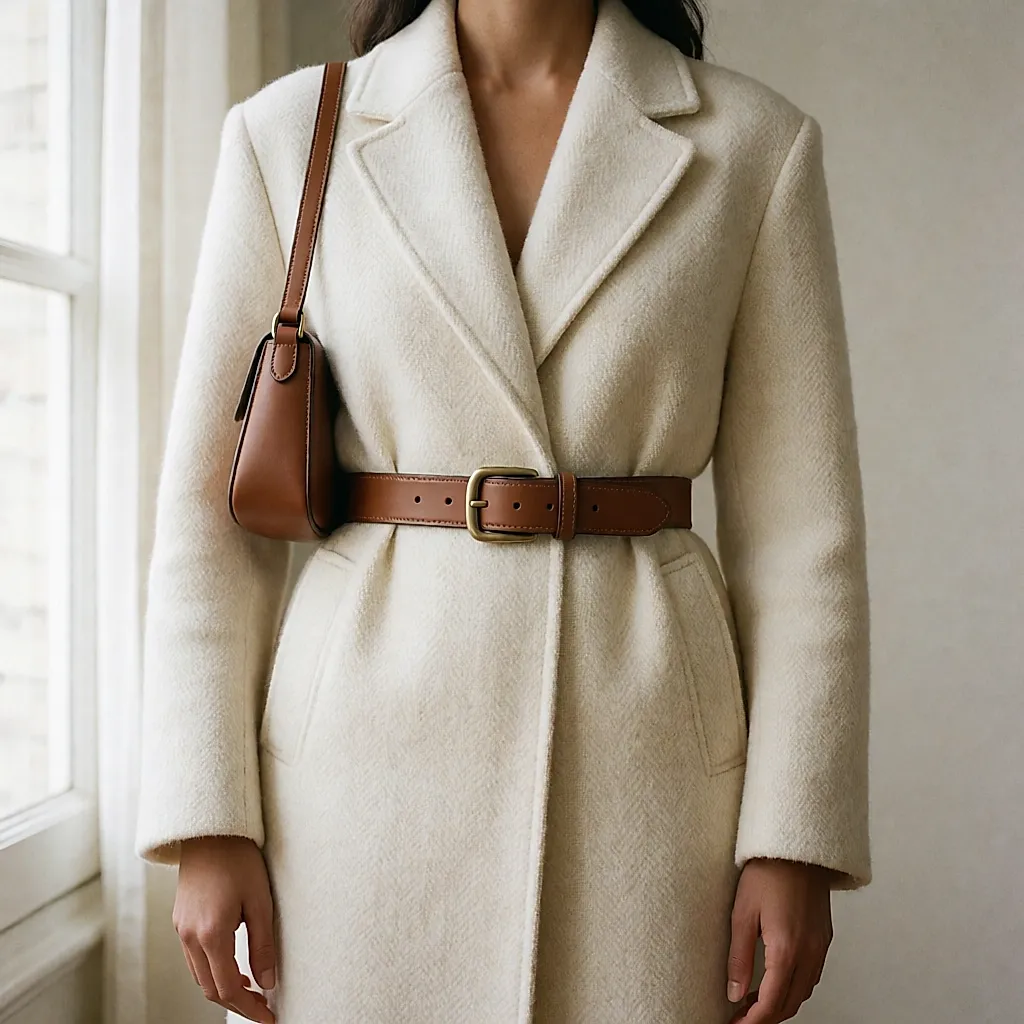
And if the accessory doesn't cut against it enough? It's usually a question of scale. A fine chain disappears under a collar; the same necklace, two sizes up, holds the neckline. In the evening, a fine-strapped sandal lightens wide trousers; during the day, swap it for a loafer or a leather trainer and keep the jewellery. The principle stays, the intensity changes.
The three-second test: squint at your reflection. If you can make out nothing but one mass and one bright point, the silhouette reads. If everything blurs together, take one piece off — never two.
Two settings, from daytime to evening
The same base works in both places. During the day, keep the structured jacket and the fluid bottom, then add something practical: a structured bag, flat leather shoes, a scarf. The contrast then comes from texture rather than shine. In the evening you don't change the outfit, you change the tempo: a fine heel, a bolder gold piece, a lipstick you mean.
There is a limit, though, and it's worth saying. This kind of look needs pieces that hang properly: on a fabric that pills or a seam that pulls, contrast saves nothing. And if you don't like heels, nobody is forcing you — a pointed-toe ankle boot does the same job for the line of the leg. Star styling is not an endurance test.
Budget
If the trio is already in your wardrobe, the budget is zero, and that's the best version. If a piece is missing, invest in the structured one, the piece people see first: expect around £30 to £70 in charity shops or on resale platforms, £100 to £220 new on the high street. The fluid half is easy to find between £45 and £130 depending on the fabric — silk climbs, washed linen stays reasonable.
For the accessory, it all depends how far you want to go. Gold-tone costume jewellery costs £12 to £35 in department stores or online; gold-plated, which lasts longer, sits more like £55 to £120 from a jeweller. A leather belt can be found for £20 to £70 and can stay with you for years, depending on quality and care. The sensible reflex: check the synthetic fibre content before you pay, and favour what you'll wear at least twice a month.
In the end, star style is a matter of proportions set right and one single detail that dares. Bring out the three pieces, try them on, step back three paces — and if the mirror smiles at you, keep the lot. The rest belongs to the red carpet, and nobody will send you the bill.
Comments
Your opinion matters: rate the article, react and reply to comments.
Comments are moderated; AI-assisted comments are flagged. Text emoticons (8-), :-), <3…) are automatically shown as images.