
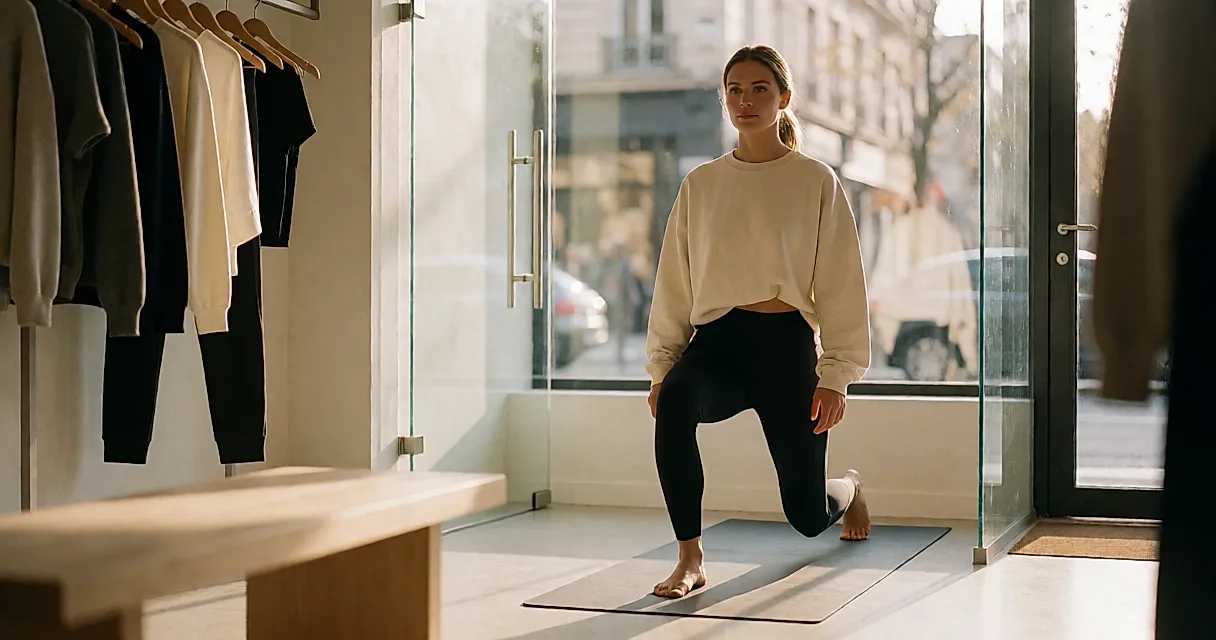
You go in for a pair of black leggings and walk out with a Pilates class booked for 7.30am on Tuesday and a herbal tea in your hand. Welcome to the new-look sports shop, where the technical kit is your entry ticket and the studio is the real shop window. The question is what all that atmosphere changes when it comes to paying — and to taking something back.
The fitting room has moved
In the newer stores, the mirror at the back is no longer the last stop before the till. It sits next to a glass-walled studio, sometimes a recovery area with mats and low seating. People stretch between the rails in whatever they're trying on, and nobody bats an eyelid. Kit is no longer judged standing still, arms by your sides.
The idea is simple: leggings can be perfect upright and a menace in a squat. So you're invited to test them in motion, during a taster class. Depending on the shop, the trial session is sometimes cheap, sometimes free — and it isn't always advertised, so ask before you book a slot. It's the kind of detail that saves you from getting home with a sports bra that was never going to survive the cardio section.
Leggings are no longer the product — they're the entry ticket
Technical basics have gone mainstream: we all know what black leggings that hold you in without cutting you in half look like, and prices have flattened out. The difference isn't in the flatlock seam any more; it's in everything around it.
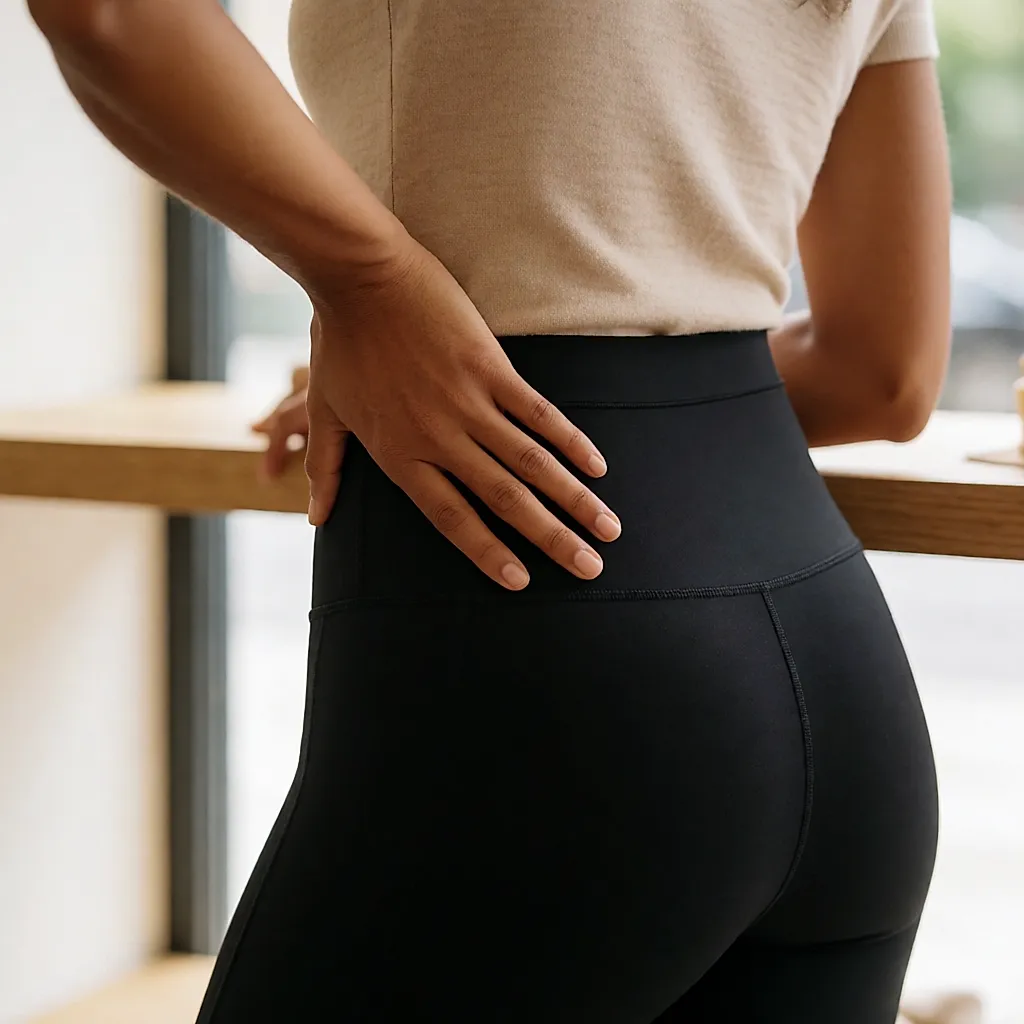
What the shop is selling now is the schedule: the Tuesday slot, the teacher who knows your back, the herbal tea afterwards and the person on the next mat you end up saying hello to. The kit becomes the entry ticket to a habit — excellent news for your consistency, less good for your budget if you don't keep an eye on it. An outfit you love gets worn at least once a week; a forgotten membership, never.
What does trying it on in motion actually change?
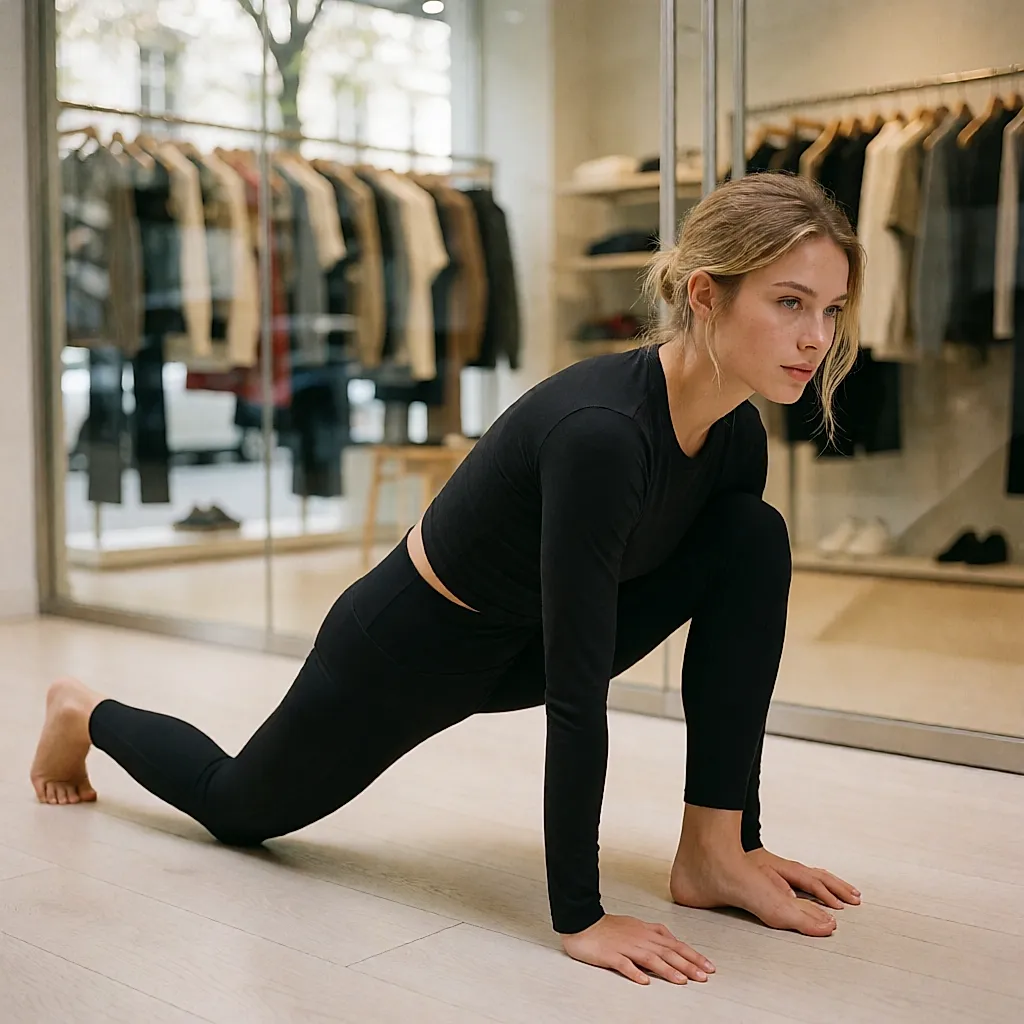
Three moves are enough: a full squat, a lunge, a forward fold. That's where you see whether the waistband rolls, whether the gusset seam pulls, whether the fabric goes see-through in daylight rather than under the flattering spotlights of a cubicle. Drape matters too: a slightly firmer jersey holds the silhouette; a very soft one forgives less than you'd think.
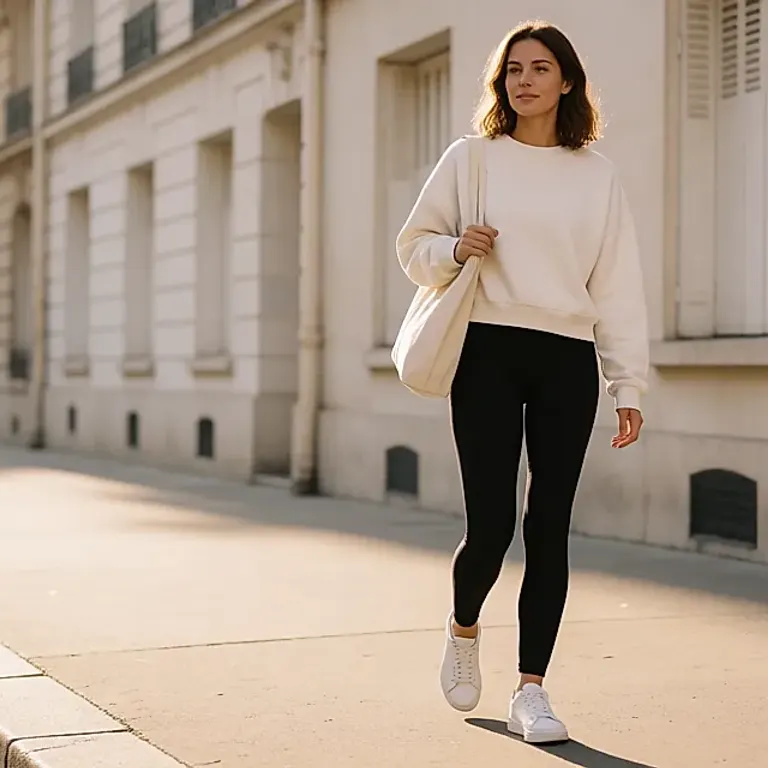
On materials, keep it simple: a jersey with some organic cotton or recycled fibres, a merino piece for cold-weather classes, a cut that doesn't dig in at the hips. And read the label: a proportion of synthetic fibre is common in sportswear, so it's worth knowing. The best buy is the one you also wear outside the studio — leggings, an organic cotton sweatshirt, clean trainers: a full sporty look that goes from mat to café without a detour.
The small print on that membership
A studio membership isn't a purchase; it's a relationship. Before you sign, look for three lines: the minimum term, the freeze conditions (travel, injury, a quiet month) and the notice period for cancelling. Some packages release you with a click; others want a letter — and that difference costs you in irritation.
Ask too whether the taster class comes off your first month, and whether unused sessions roll over. A 12-class-a-month membership when you'll make four isn't a bargain; it's a subscription to guilt.
Taking it back is where it gets murky
Returns on a piece worn once for a class aren't always accepted, and the class itself has already been used up. Which is why it's worth asking at the till, not three weeks later with a crumpled receipt at the bottom of your bag. Retailers don't all have the same policy, and those selling a service alongside the clothing may be stricter.
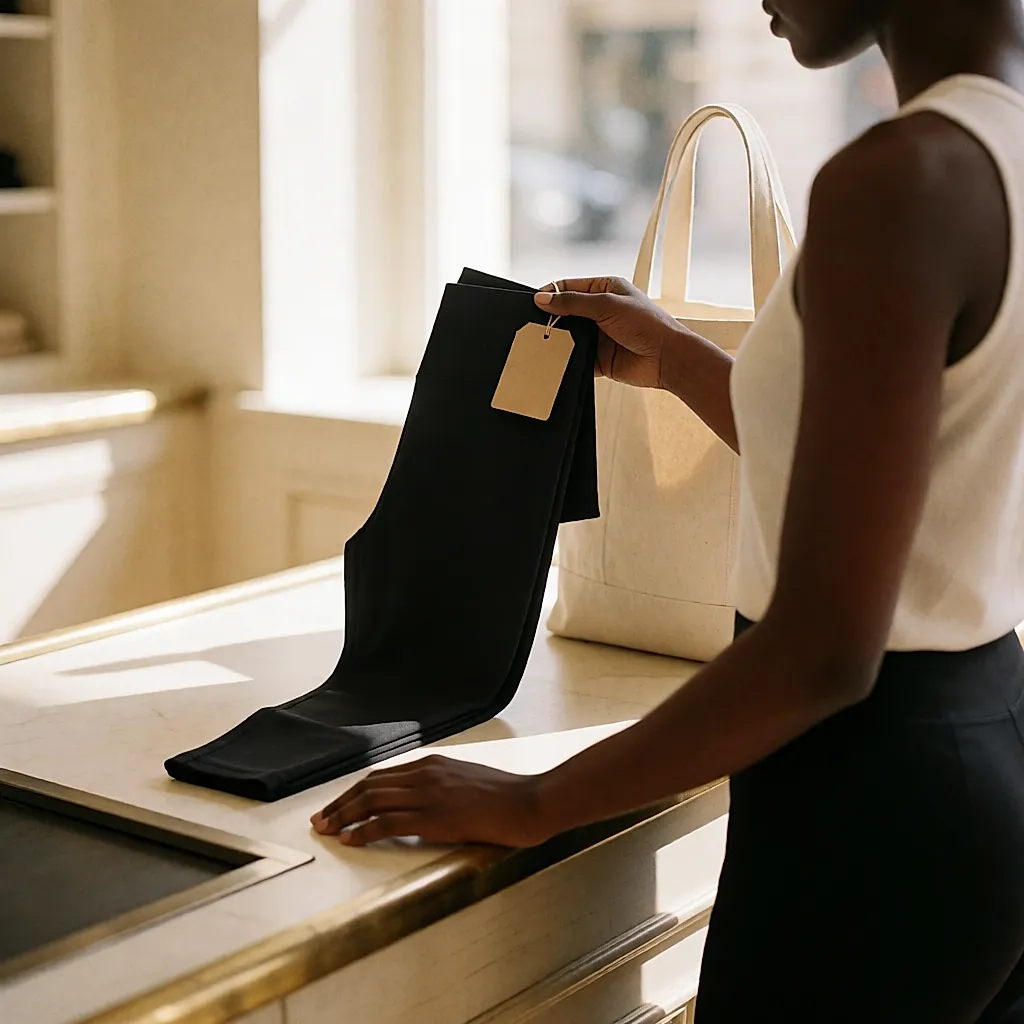
The reflex that saves you: keep the tag on, note the deadline and try things on when the shop is quiet. If you're between two sizes, take the more comfortable one — the waistband that digs in at the fitting won't miraculously soften in your first class.
Budget
Expect roughly £15–£30 for a single studio class and £50–£130 a month for a membership, depending on the city, the package and how many classes are included. In London the upper end is standard; elsewhere in the UK, £50–£80 is more usual. Classes run by shops themselves are sometimes cheaper, or bundled into a loyalty scheme — worth checking case by case.
For kit, a well-made pair of technical leggings sits between £40 and £90, a sports bra £30–£55, an organic cotton sweatshirt £55–£120. Second-hand, budget £15–£35 for a barely worn piece. Where to buy: in store so you can try it in motion, online for restocking basics, charity shops and resale platforms for the extras.
The try-on that doesn't lie: put the kit on, do three squats and a lunge, then sit down for thirty seconds with your legs crossed. If you have to hoist the leggings back up as you stand, they'll end up at the back of the drawer. And if the piece itches after two minutes, it will itch through the class too.
One question is left to settle before the card comes out: do you want an outfit or a habit? If it's the outfit, the sensible budget is one well-cut piece you'll wear three times a week. If it's the habit, start with a single class — and buy the leggings afterwards. In that order, the spending feels more like a choice than a promise.
Comments
Your opinion matters: rate the article, react and reply to comments.
Comments are moderated; AI-assisted comments are flagged. Text emoticons (8-), :-), <3…) are automatically shown as images.