

There are jewels you spot before you can name them. A bangle that catches the light on a stranger's wrist, a curb-link bracelet with ridged links slipping out of a shirt cuff, a gold snake coiled around a slender hand. That little click of recognition, when you realise that several pieces you've crossed paths with over the years come from the same house, is where Boucheron's story becomes interesting. Because beyond the name, there is a very particular way of working the material — and pieces that move through the seasons without falling out of fashion.

From a 14-year-old apprentice to Place Vendôme
Frédéric Boucheron began his apprenticeship at 14. In 1858, he opened his first shop under the arcades of the Palais-Royal, at a time when fashion favoured rather massive jewels designed to make an impact. He did the opposite: finesse, gold threads worked like lace, rock crystal, pieces that followed the body instead of showing off volume. The gamble paid off — a gold medal at the 1867 Exposition Universelle, and a grand prix in 1889.
In 1893, he installed the house on Place Vendôme, in the former Hôtel de Castiglione. He led the way: other great jewellers followed, and the area became the home of Parisian high jewellery.

The innovations that changed the genre
Two innovations are attributed to him. The first concerns presentation: instead of laying jewels flat on a display tray, he stood them on small mounts. The piece could then be seen in three dimensions, as an object in its own right, rather than as merchandise spread out. The second is a wristwatch for women, at a time when watches were still worn suspended from a chain.

When he died in 1902, his son Louis took over: an address in New York, another in London, an ultra-thin watch design, and princely commissions for the royal and industrial clients of the early 20th century.

The Boucheron wardrobe, contemporary side
What matters in the end are the pieces. Let me be upfront: I haven't worn them long-term, so I can't give you a wear-and-tear report. What follows comes from the house's official documentation and specialist press.
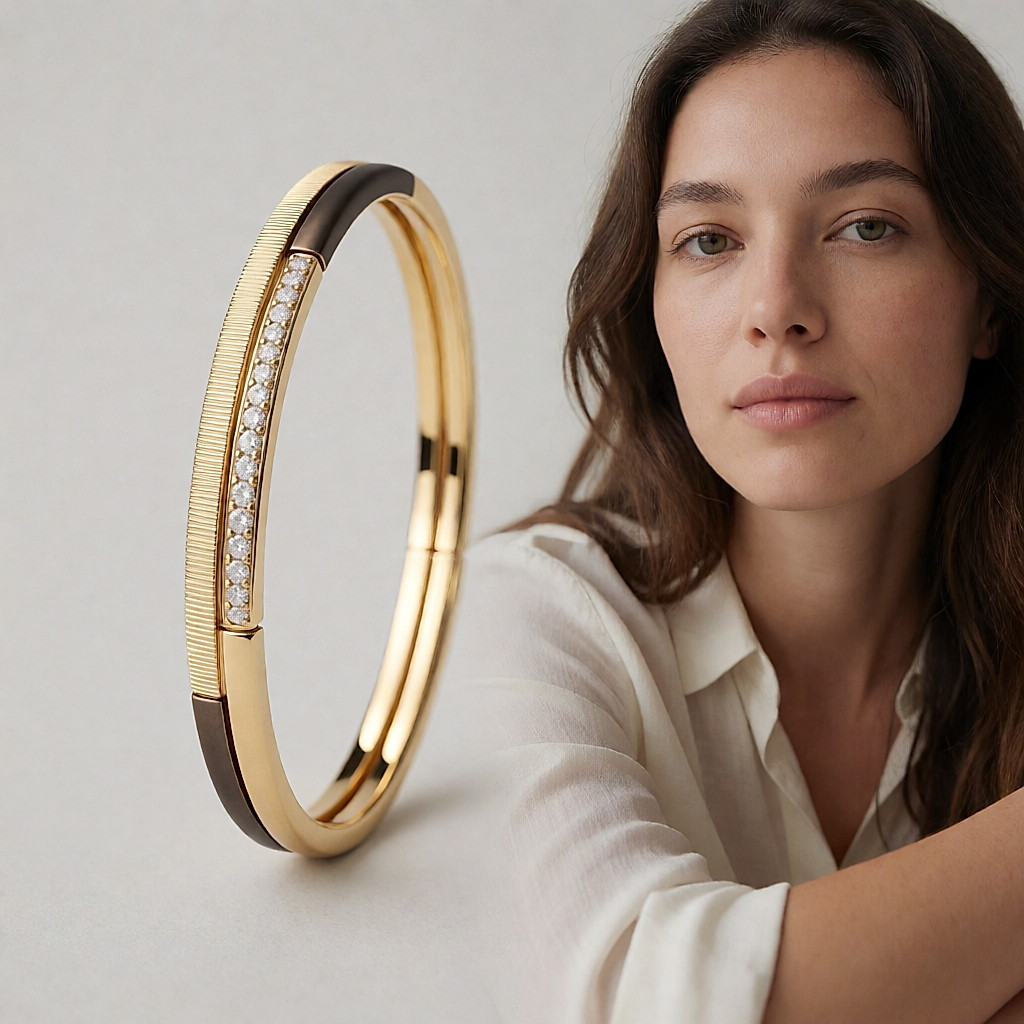
The most recognisable remains the Quatre. Four codes combine on the same ring or bangle: the Clou de Paris, the double godron, the diamond line and a grosgrain motif. It's an ideal playground for layering: you stack rings, you go for a total look by accumulating rings and bracelets, and the texture works just as well on a slim finger as on a larger hand.
Another signature is Serpent Bohème. Drop-shaped links, originally worn to ward off the evil eye, have become a statement piece over the decades. It comes in yellow gold, white gold and diamond-set versions. On a shirt sleeve, it elongates the line of the hand; on a bare wrist in high summer, it does all the work on its own. You'll also find Jack de Boucheron, a cord of precious beads that breaks the solemnity, and Plume de Paon, whose stones move gently on a spring system, like a feather on its stem.

How to accessorise without overdoing it
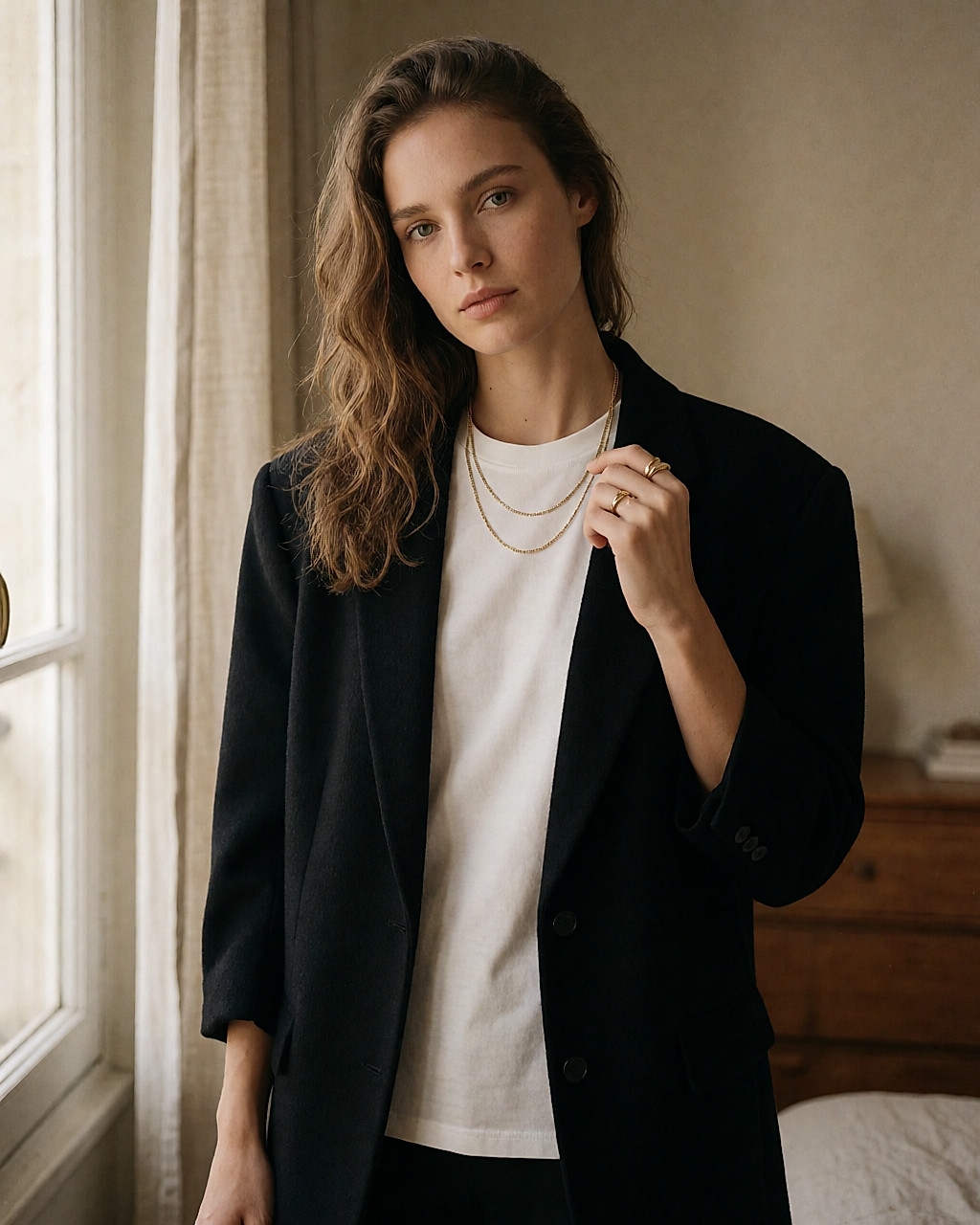
In jewellery, everything comes down to the balance of volumes and material. One strong motif — the nail, the snake, the feather — and around it, almost nothing. If you stack, keep to one metal colour: yellow gold, rose gold or white gold, but not all three at once.
Think about how the piece falls. A ring that is too wide weighs down a slim hand; a very thin bangle disappears under a long sleeve. The gesture that changes everything: light up one area of the body. If the hand wears the statement piece, the neck stays bare. That is exactly what separates a composed look from an accumulation.

The eco-responsible trade-off
Jewellery is not a market of natural products, and there is no 'organic' here. In reality, what matters on the material side is traceability. Recycled gold has the same qualities as mined gold; it is its origin that changes. Boucheron belongs to the Kering group, a member of the Responsible Jewellery Council, which requires its houses to follow a framework on sourcing raw materials.
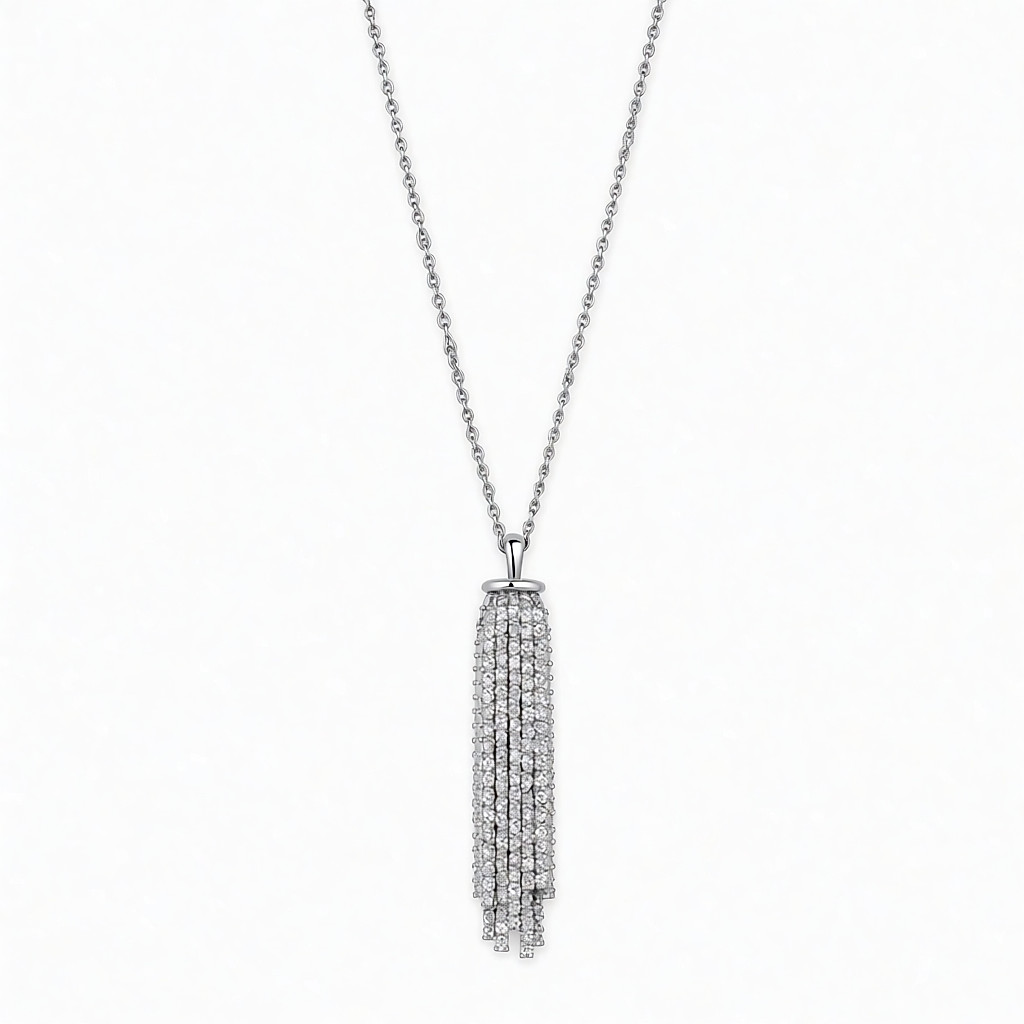
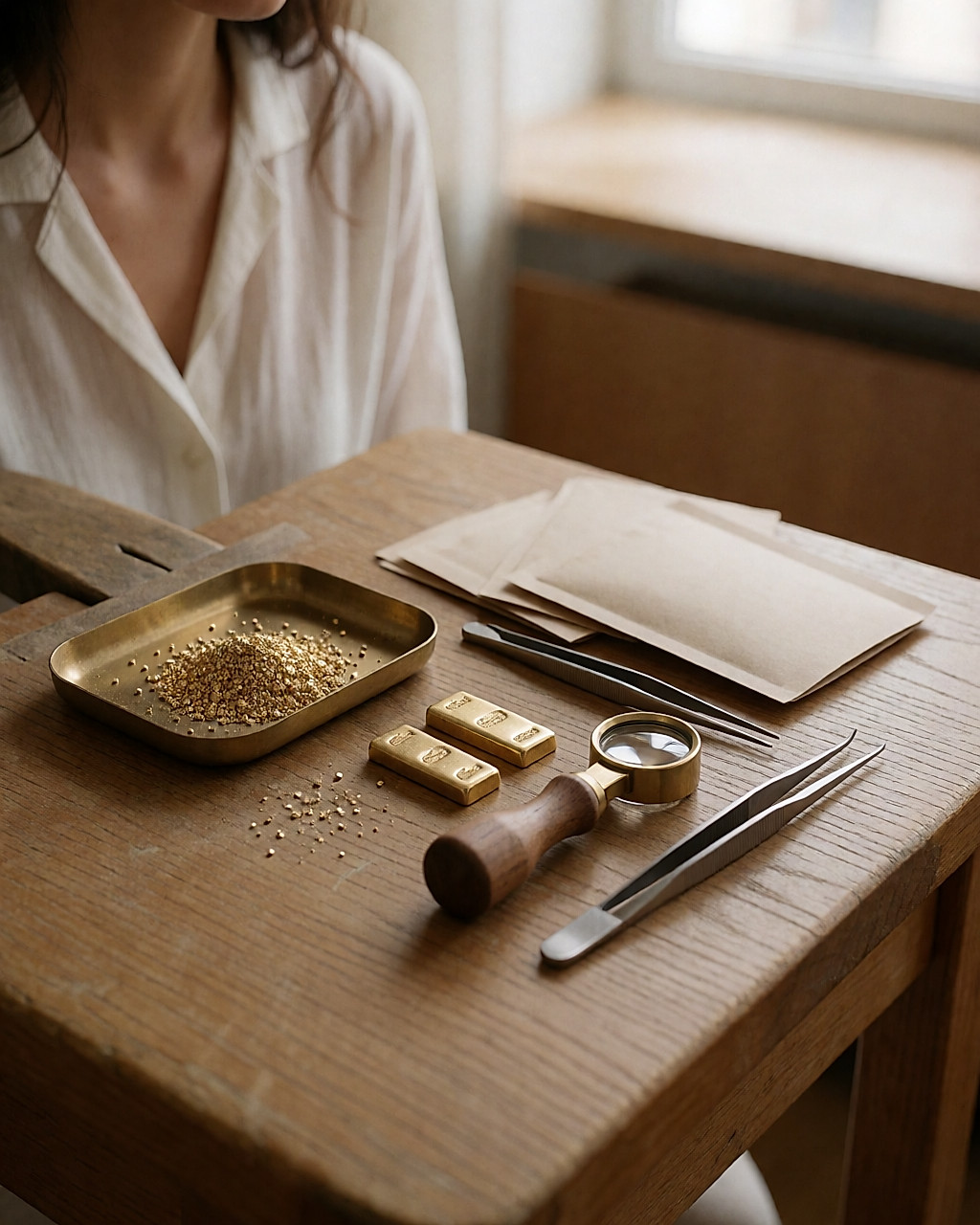
For diamonds, the Kimberley Process has regulated international trade since 2003, with the aim of excluding conflict diamonds. For coloured stones, transparency mostly depends on suppliers: a conversation in-store remains the best way to get precise answers.
To recognise a Boucheron from a distance, look at the edge of a ring or bracelet: the Clou de Paris is those small, regular ridges in relief, and the Quatre lines up four motifs. The signature is engraved inside. When buying second-hand, have the piece authenticated by an expert or by the house before you buy.

Budget
A Boucheron piece isn't an impulse purchase, and the price gaps are dizzying. At entry level, expect around £1,700 to £4,300 for small Quatre rings and certain pendants, depending on size and whether diamonds are present. More elaborate, gem-set or limited-edition models quickly rise to between £8,500 and £25,500. As for high jewellery, it is quoted on request, often at six figures.
What moves the price: the material (gold or platinum), the quality and number of stones, the craftsmanship, and whether the piece is a standard collection piece or made to order. On budget, too, where you buy depends on what you are looking for: Boucheron boutiques, including the historic address at 26 Place Vendôme, selected Paris department stores, and the official website for part of the range. In the second-hand market, you'll tend to go through specialist platforms or auctions, with serious authentication as part of the deal.


Comments
Your opinion matters: rate the article, react and reply to comments.
Comments are moderated; AI-assisted comments are flagged. Text emoticons (8-), :-), <3…) are automatically shown as images.