

A black derby, thin sole, rounded toe, and absolutely nothing to prove. It is gently reclaiming the spot in the hallway that the buckled boot used to own. Boots feel less central now, though they haven't gone anywhere. After a decade of trainers worn with absolutely everything, proper shoes seem to be settling back in as a base layer of the wardrobe — except we now ask far more of them than looking good in a photograph.
Boots feel less central, and the derby is stepping forward
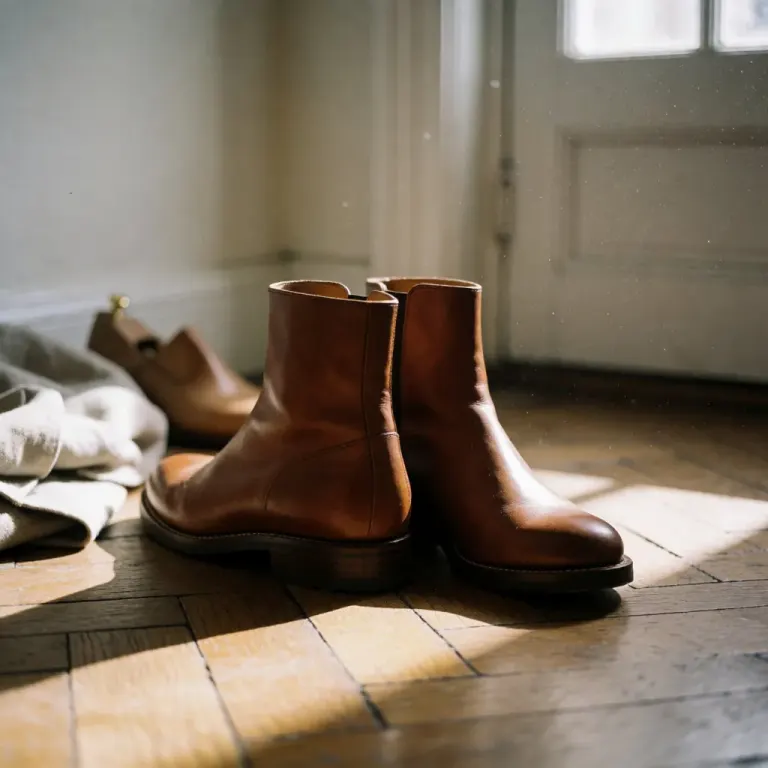
This isn't a collapse, more a shift in how we look at things. Polished shoes are gaining visibility: the military boot, which held the pavement for years, feels less central. Nobody is throwing their boots out, though. They're just moving up a shelf.
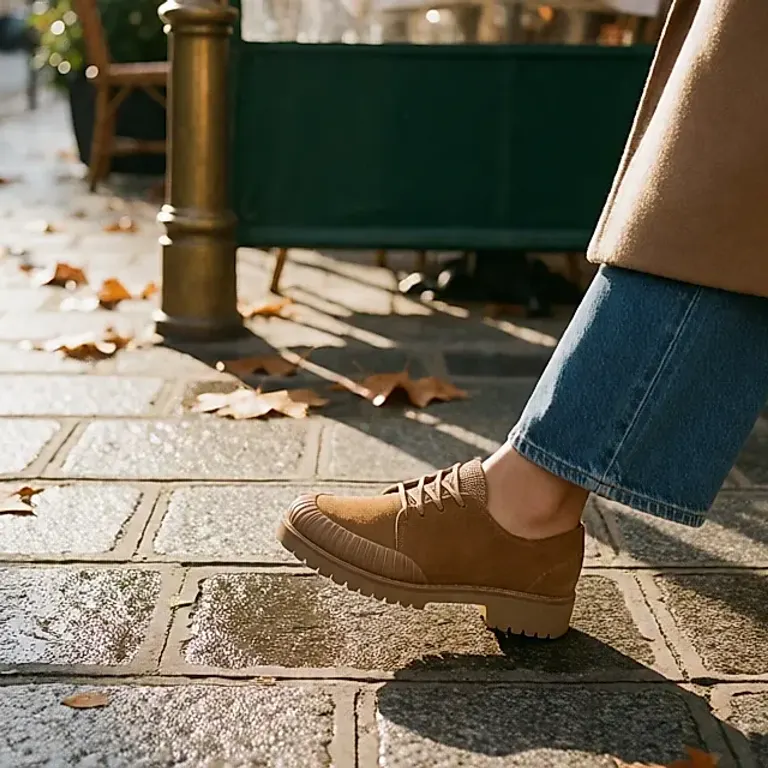
What's changing is the definition of "dressed". Forget the stiletto and the court shoe you can only wear sitting down. The pair on the rise is flat, or nearly: derby, tassel loafer, a slightly sturdy ballet flat, a block-heel ankle boot. Dressed no longer has to mean painful — and that is probably what makes it wearable again.
The silhouette changed, and the shoe followed
Look at the bottom of your trousers. Skinny cuts have receded, wide and straight have taken their place, and a shoe that's too chunky under a fluid trouser makes it look as if the feet belong to somebody else. A fine derby, supple leather, a clean line: the leg finishes rather than simply stops. It sounds obvious, but it changes the whole drape.
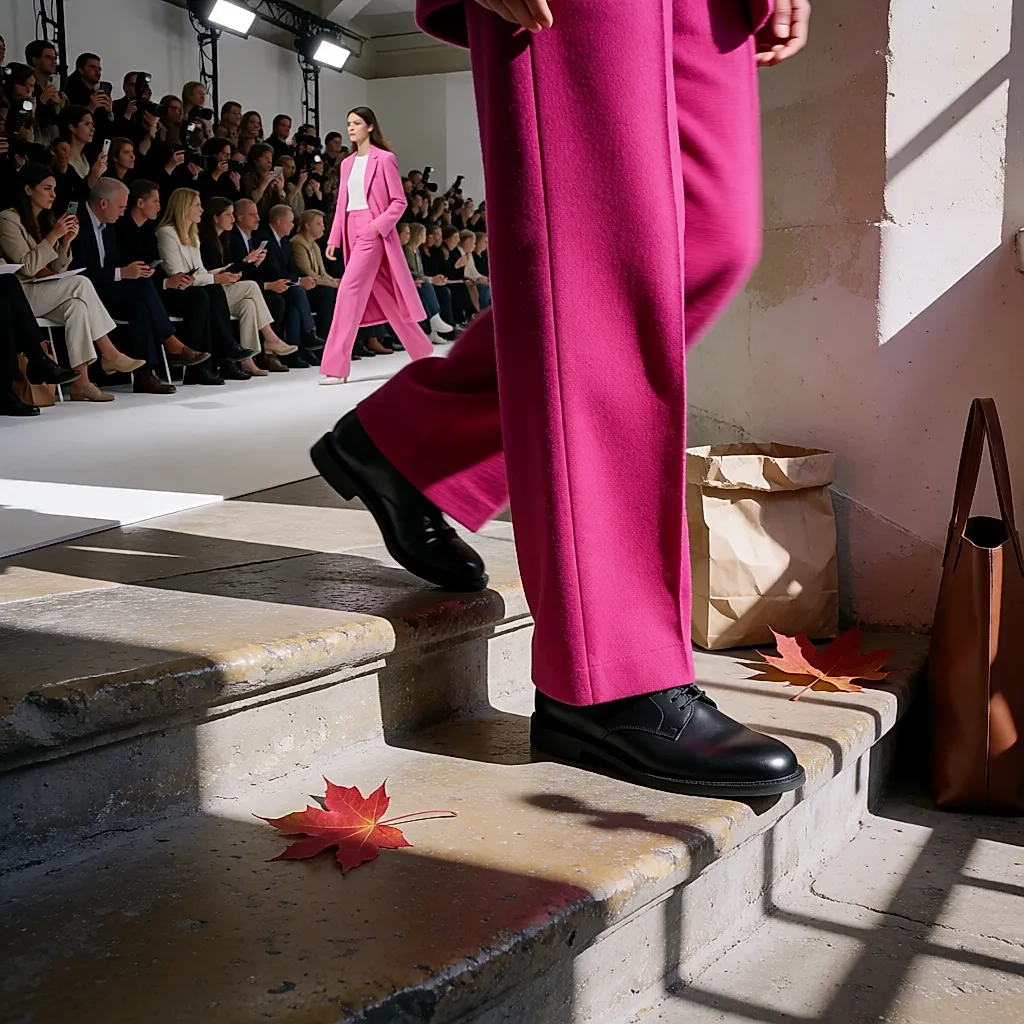
There's also a certain tiredness. Ten years of ultra-thick soles, logos and full streetwear looks leaves you wanting something quieter. Not more sensible — quieter: raw denim, a blazer, a derby, and you look like you've thought about it. Which, let's be honest, is excellent value for money.
The real brief: staying upright
The city shoe is back, but nothing gets forgiven any more. You need to walk to the Tube, stand through a meeting, go out in the evening without wanting to end up barefoot in a taxi. A smooth leather sole on wet ground? Very handsome, very slippery. A stiff leather that needs breaking in? Charming, provided you have the time to spare.
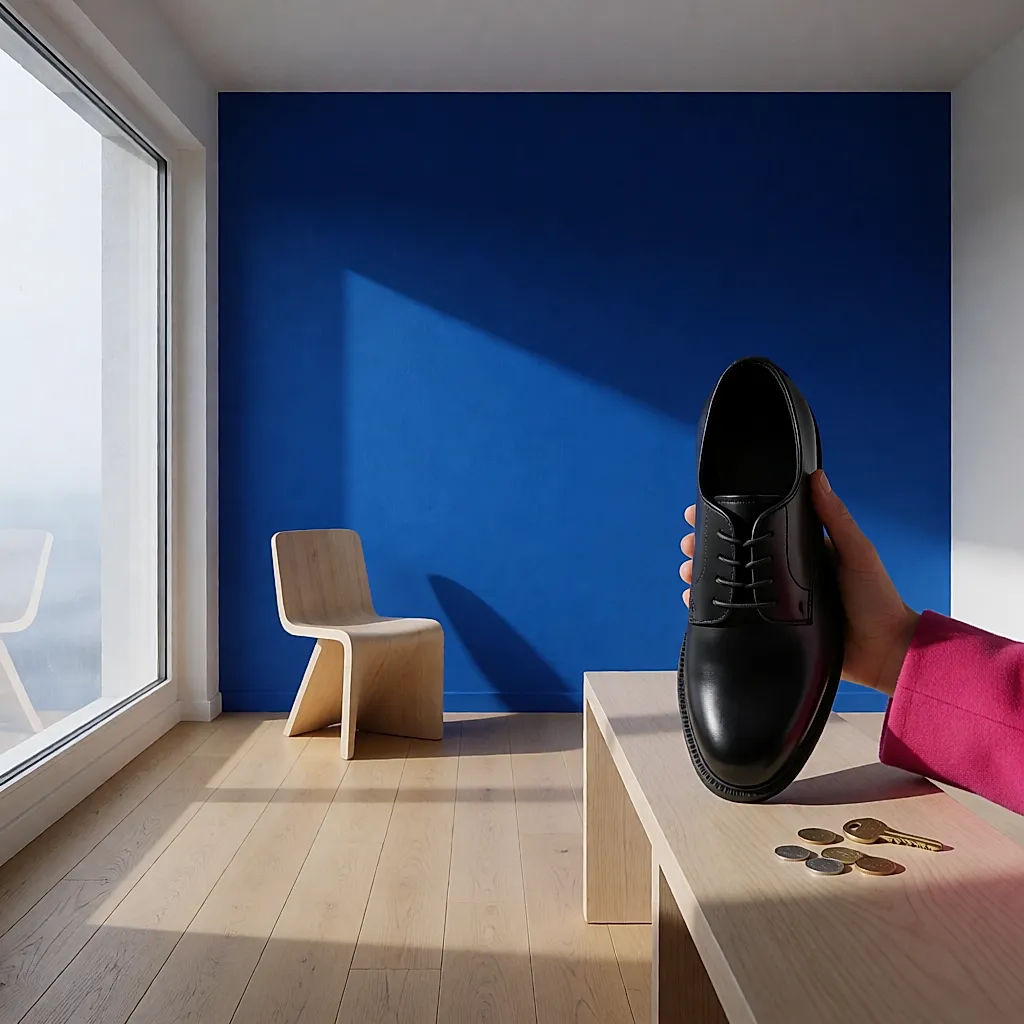
The thing to watch is the sole and the weight. A thin rubber sole keeps a fairly understated look while gripping the pavement; a leather sole can be resoled for years but needs a bit of attention. Conversely, be wary of "comfort" styles where a thick layer of foam spills over the top: you gain softness and lose the line.
And let's be honest, this isn't for everyone. If you walk ten kilometres a day, if your feet are wide and your toes get pinched in anything remotely pointed, or if your shoe budget has already gone on trainers you love, keep them. A plain leather trainer works perfectly well under tailored trousers — in fact it's the most economical trick of the lot.
How to choose without getting it wrong
On materials, look for full-grain or vegetable-tanned leather, a leather lining rather than textile, and check the synthetic fibre content on the label: a quick check has never ruined a purchase. On fit, try shoes at the end of the day, when your feet have done some work, and walk on a hard floor — not just the shop carpet.
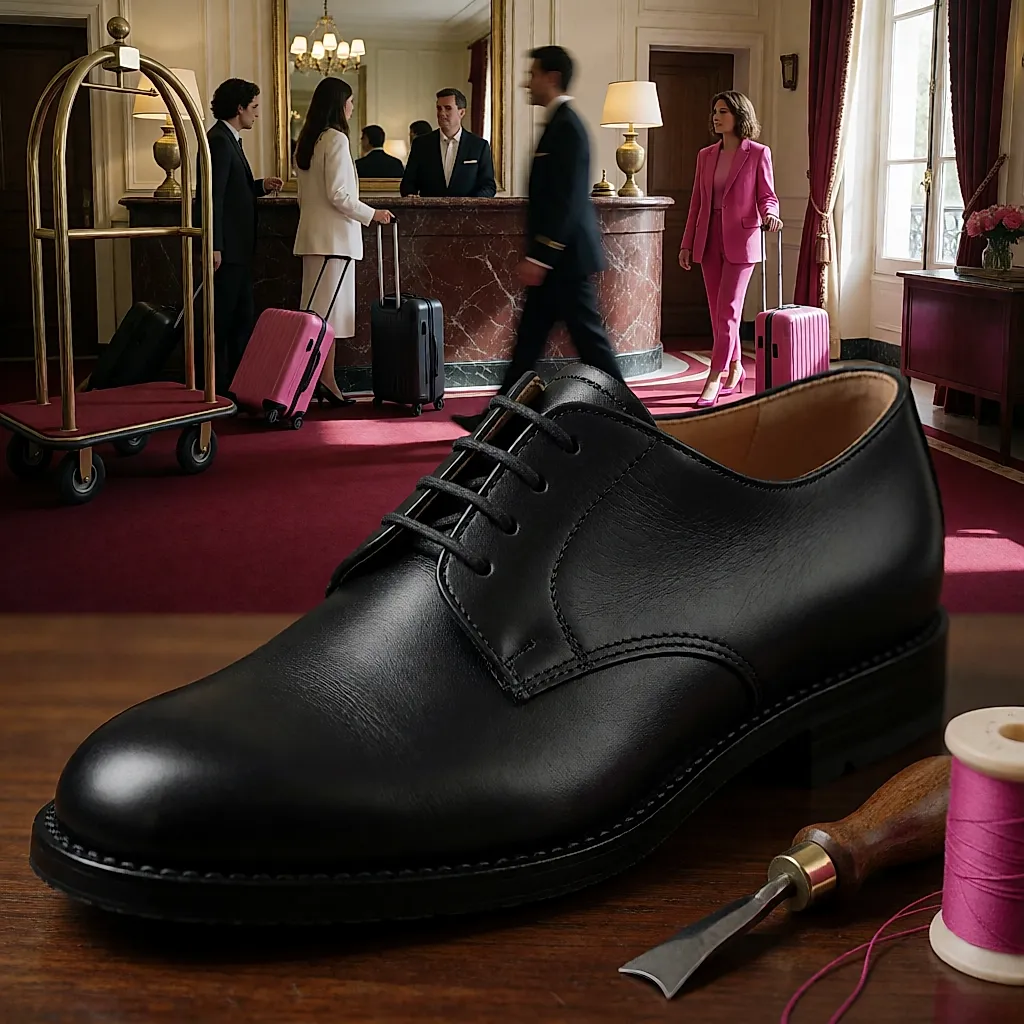
The last habit, and the most underrated: resoling. A good city pair can be repaired, polished and kept. It's the quietest form of shopping there is — wearing what you already own instead of adding yet another pair to the pile.
Budget
Expect to pay £85 to £170 for a decent leather derby or loafer, on the high street or from a mid-range brand. Between £180 and £350, you're into full-grain leather, proper stitching and resoling potential — an investment spread over years. Secondhand, reckon on £25 to £60 for a decent-quality pair, plus a repair cost to check with the cobbler.
Before you pay, three checks that take a minute. Bend the shoe with your hands: it should flex where your foot flexes, not in the middle. Look at the stitching on the sole, which is what makes repair possible. And walk a few moments on a hard floor with your heel down — if they already rub in the shop, better to be wary.
The city shoe doesn't replace everything, and there's no need to play the leather martyr. It's simply back because it does something a trainer can't: it finishes a silhouette. Pick your side — or, more likely, keep both.
Comments
Your opinion matters: rate the article, react and reply to comments.
Comments are moderated; AI-assisted comments are flagged. Text emoticons (8-), :-), <3…) are automatically shown as images.