

They sit in the shop window with a sole as thick as a mattress, in a colourway built to brighten up a Monday morning, and on the label there's that line: "the pair that won the marathon". The shop assistant adds an impressive finishing time; you silently ask yourself: so what? Your schedule is two runs a week, one of them in November rain. Are you buying them anyway?
What a winner's shoe actually tells you
Credit where it's due: these shoes aren't decorative objects. A race model is designed for one specific pace, held over 26.2 miles — not for a Sunday stroll. Saying a champion ran in this pair tells you about the champion first: their speed, their consistency, the way their foot lands. The shoe follows a stride that already ticks like a metronome; it didn't invent it.
And there's a detail the shop window tends to leave out. At the very top of the sport, the pair rarely arrives by chance: it often comes with a sponsorship deal, a whole season of development, a contract. You, in the shop on a Saturday afternoon between two appointments, have one question in mind — does it fit me? Race models answer a very specific brief, and that brief is not your Wednesday jog.
What it won't fix (spoiler: a lot)
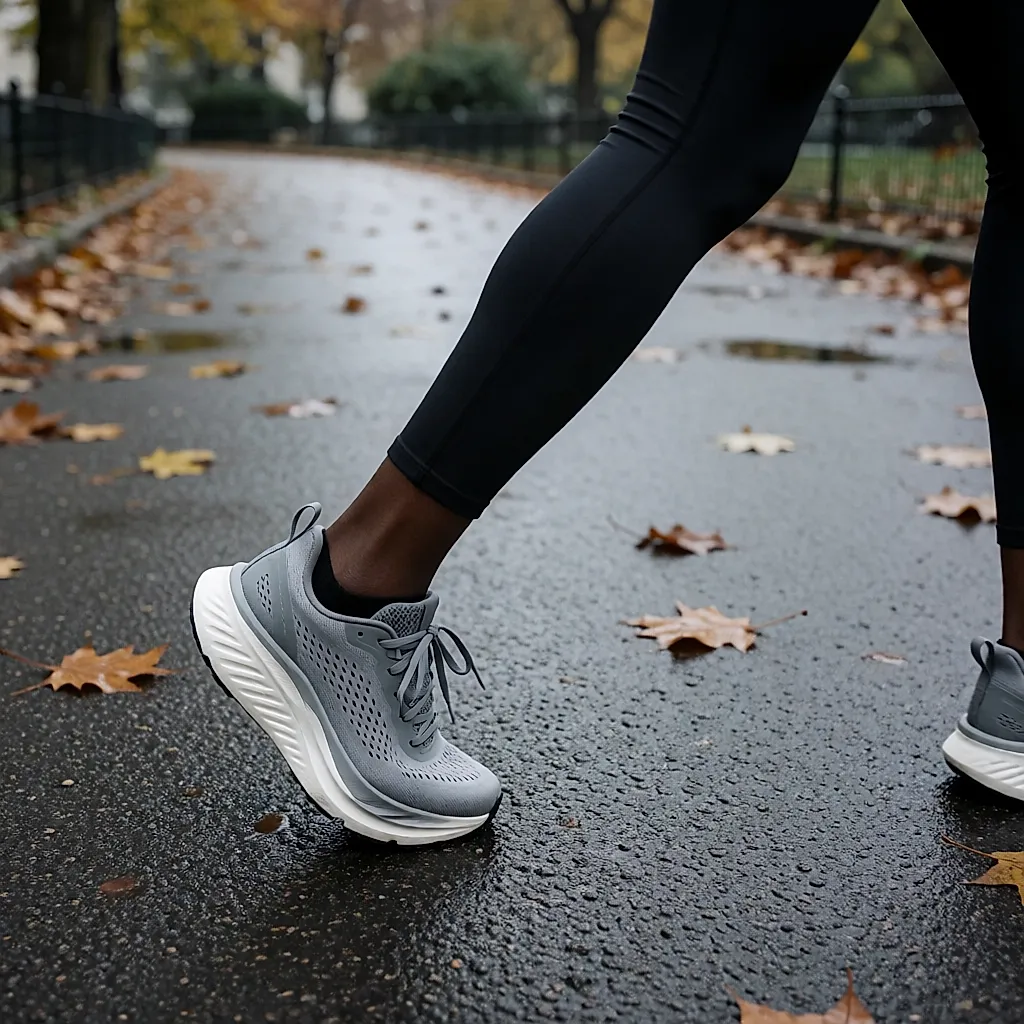
First point, and it's a big one: these models are built for a quick rhythm. High stack, forward-rolling geometry, generous foam — the whole thing makes you want to speed up, which is charming over 10K and markedly less charming when you're shuffling round a recovery run with your shopping list in your head. Some pairs seem to decide for you. It's a thrill for 30 seconds and exhausting over time.

Second point, less glamorous: stability. A thick, stiff sole isn't known for its balance, especially if your stride is still finding its confidence. Before you pay, take a few steps, then a few strides down the aisle — yes, in front of everyone — and listen to your ankles. They have an opinion, and it's usually franker than the sales assistant's.
Then there's lifespan. A race shoe is cut for performance, not for swallowing daily tarmac: the outsole is thinner, the foam is tuned for speed. If it's your only pair, it is likely to wear out long before you've had your money's worth. Across running ranges, racing and training serve different purposes — that's not a marketing detail.
And with jeans?
On the style front, credit where it's due: these silhouettes have left the tarmac for the city. The chunky sole, the technical mesh that lets the foot breathe, the colourways that dare — worn with wide-leg jeans and a well-cut wool jacket, they make a fully committed sporty look. The rule: one statement piece at a time, everything else kept quiet. Two loud elements and it tips into overload.
Honesty demands a note on use. For an easy jog, a gym session or a day on your feet, these aren't the most comfortable: the plate and the foam are tuned for a pace, not for queueing at the till. Save the racer for the days you've actually planned to go fast, and keep a softer pair for everything else.
Budget: what speed really costs
Expect £180 to £250 for a plated race shoe, depending on brand, version and when you buy. That's the price of a technical tool, not an accessory: the foam, the plate and the upper construction all explain the bill. End-of-line stock from last season's model remains the classic smart buy — same feel, gentler price, provided you can find your size.
By contrast, a decent training pair generally sits between £90 and £150, and that's the one that will do the groundwork. If you're only buying one pair this season, buy that one. You'll find them in specialist running shops, sports retailers and online; in store, ask to try them on with your running socks, not the ones you happened to put on that morning.
Three questions before you pay
- Are you already running at the pace this pair is built for?
- Do you have a second pair for your easy runs?
- Can you take them back if they hurt you after two runs? Returns policies vary from shop to shop — check before, not after.
The last word, no stopwatch required
A marathon shoe is a bit like a cocktail dress for running: gorgeous, cut for one specific occasion, and faintly ridiculous in the supermarket on a Saturday. If you're training for a time goal and your training is holding up, it can make sense. If you run twice a week, it is unlikely to make you faster on its own — but it might well make you want to get out of the door, and that's not nothing.
So, in order: an all-round pair first, the racer second, when the urge for a PB properly kicks in. And if the fluoro pink is calling your name — well, treat yourself to the fluoro pink.
Comments
Your opinion matters: rate the article, react and reply to comments.
Comments are moderated; AI-assisted comments are flagged. Text emoticons (8-), :-), <3…) are automatically shown as images.