
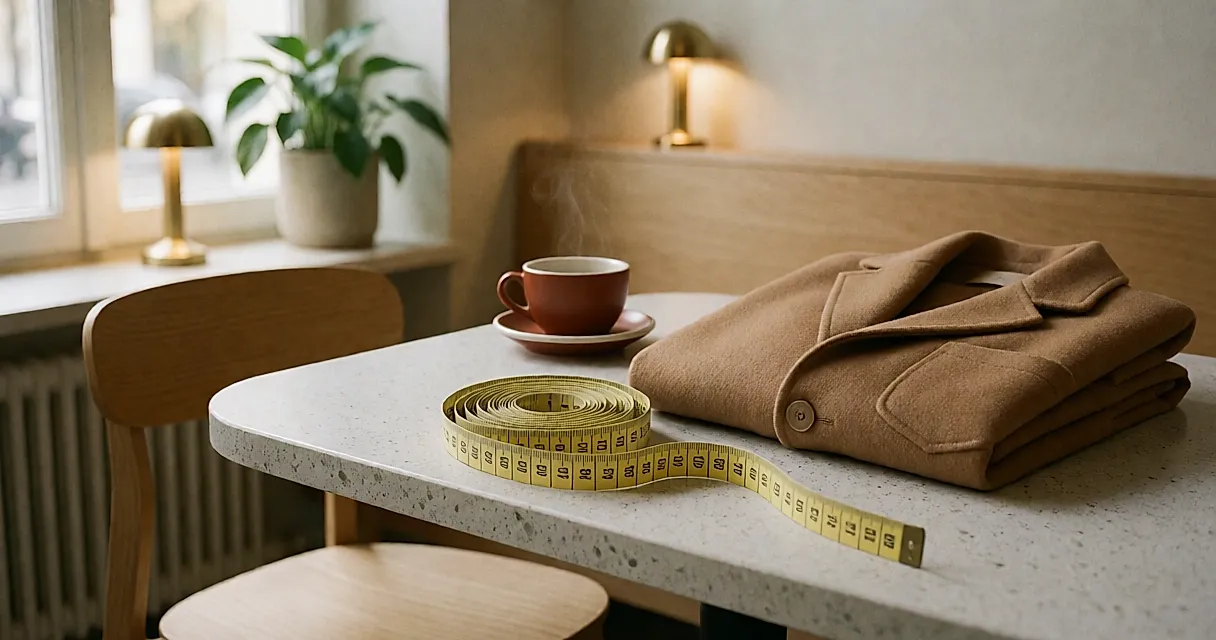
A size 12 isn't a measurement, it's a label. From one shop to the next it can mean a narrow bust or broad shoulders, and it's exactly that gap that decides whether a jacket buttons up or pulls across the shoulder blades. It's rare for anyone on a live sale to hand you a tape measure. Which means you need to know what to ask for — and when to call it a day.
What the camera doesn't show
Live shopping has real charm: the presenter walks, sits, turns, and the fabric comes alive in front of you. You see the drape, the way a sleeve falls, all the things no still product shot can capture. It's what makes the whole thing so addictive, along with the countdown and the "only three left".

Except that much of what happens during the try-on stays out of shot. The dart at the back, often tacked in a hurry so the piece looks fitted. The sleeve quietly pushed up. The collar smoothed down between takes. There's usually nothing dishonest in it; it's just staging. Then there's the lighting: between the studio, your screen and the piece in daylight, a pale camel can tip into mustard, a grey can look warmed through with pink. As for the inside of the garment — lining, topstitching, hem — it barely ever appears.
Three questions, asked politely
Start with the flat measurement: pit to pit, garment laid flat and buttoned, not stretched. Add the total length, and the inside leg for trousers. Then dig out your favourite piece of the same kind, lay it on the bed and compare: two centimetres more across the shoulders and it's a different jacket. A sales assistant who answers in numbers, without hesitating, tells you more than a size chart ever will.
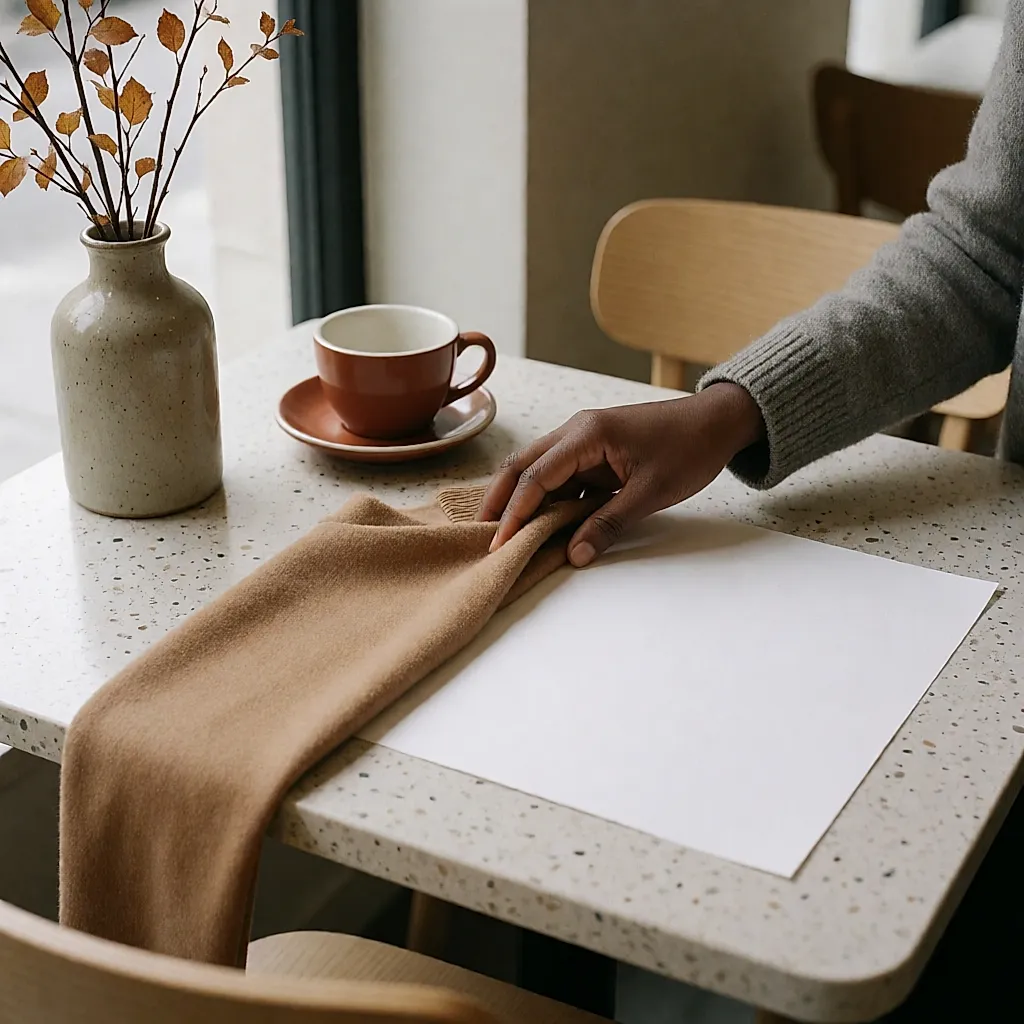
Second question: the colour in neutral light. A shot by the window, no filter, with a sheet of white paper in frame as a makeshift calibration card. Ask the daft question: "Does it lean more yellow or more grey?" The answer is often more honest than what's written on the product page.
Third: the lining and the repairs in close-up. Ask to see the inside, the hem, the zip, how the buttons are attached. A seam running off at an angle, a hem that's too short, a button hanging on by a single thread: a few seconds of zoom can settle it. While you're there, check the synthetic fibre content on the label — a basic in wool or organic cotton often ages better than a shiny piece that can start to itch by the second wash.
The moment to walk away
"It fits true to size" isn't an answer, and neither is "it's the size the model's wearing". If the measurement never arrives, if the reply is copy-pasted from the product page, if you're promised a close-up that never materialises, you have your verdict. A seller who can't produce a tape measure is worth a second thought if you might need to return something.

And honestly, walking away is nothing like sulking. Better to let a piece go than spend three weeks chasing a returns label. A bargain that ends up at the back of the wardrobe is still a bad buy.
The reverse is true too: measurements sent quickly, colour shown at the window, clear returns terms — that's when live shopping is at its best, a fitting at a distance almost as chatty as the changing room.
Budget
Returns first: some retailers offer free returns, others charge a few pounds, and some waive the fee above a certain spend — check the terms before you order. Alterations next, if the piece is nearly right: expect roughly £12 to £20 for a simple hem, £25 to £45 to take in a jacket at a local seamstress, and more at a designer boutique.
A soft tape measure, meanwhile, costs £3 to £8 from a haberdashery or online, and earns its keep all year. To try an unfamiliar brand, start small — a T-shirt, a pair of straight-leg trousers — rather than a coat, and look at second-hand before you splurge on a statement piece.
The comment that works, ready to copy and paste: "Hi, before I order, what's the flat measurement, pit to pit, for a size 12? And could you show the lining and the hem in close-up, by the window? Thanks!"
Three lines posted in the comments and you're better equipped than a model under studio lights. Next time a live sale catches your eye, keep the tape measure within reach and your curiosity switched on: a piece you really know is a piece you really wear. The rest is theatre — and theatre is perfectly good to watch without reaching for your card.


Comments
Your opinion matters: rate the article, react and reply to comments.
Comments are moderated; AI-assisted comments are flagged. Text emoticons (8-), :-), <3…) are automatically shown as images.