
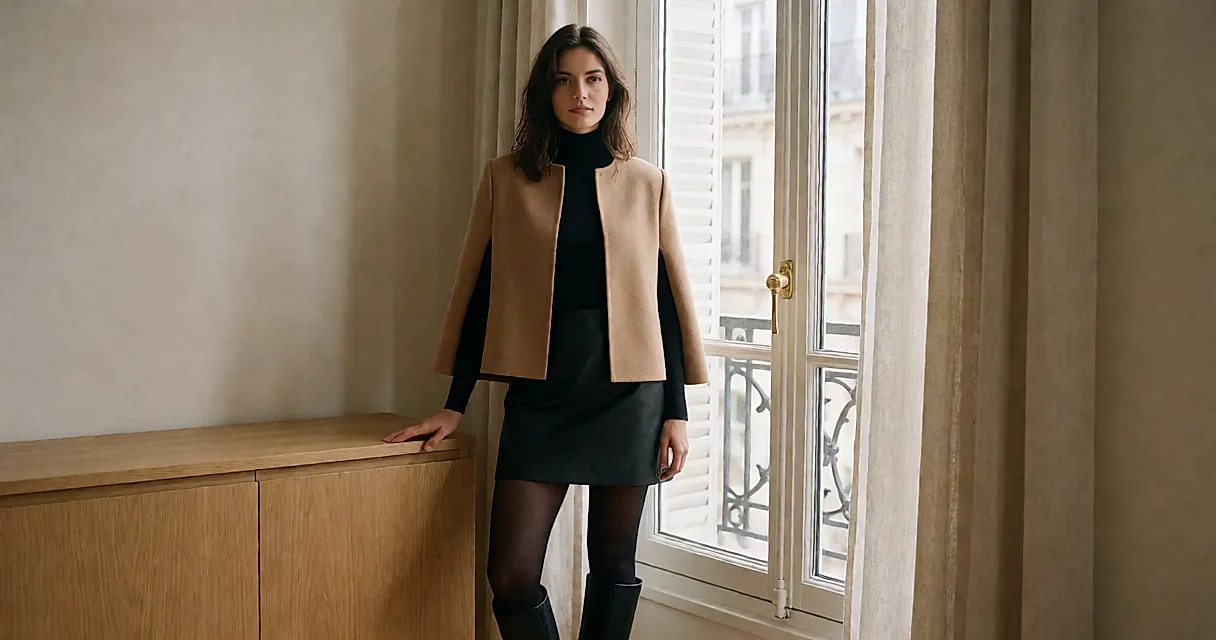
It has been raining since Monday, long coats are trailing through puddles, and the thought of putting on a ceremonial cape to nip out for a loaf is almost funny. Yet this is where the layering shift is happening: the cape has got shorter. It stops at the hip, sometimes a little above, and has settled into the everyday wardrobe as an alternative to the long coat. Which leaves the real question, the one you ask in front of the mirror at 7.50am: what do you wear underneath?
The cape moves into everyday life
For a long time, the cape was formalwear: brought out for the theatre, a wedding, an evening when you knew you'd be standing. Full length, solemn drape, and that sweeping-the-floor business that doesn't survive the commute. The short version changes everything because it changes the job it does. It frees your legs, can be worn open over a jumper, slung over one shoulder on a café terrace, and copes very well with Monday's rucksack.

More importantly, it redistributes the silhouette. A cape naturally adds volume up top: the shoulders look broader, the bust rounder, the whole line more generous. If that volume continues to the ankle, you disappear under it. If it stops at the hip, it leaves space below, and the skirt takes over. In other words, a short cape does not do the job of a long coat, and that is precisely the point: it covers the top half, the mini defines the line, and the eye travels down instead of stopping.
The hemline is everything
It all comes down to a few centimetres. A hem that falls right on the widest part of the hips makes them look broader; the same hem five centimetres lower skims them without marking them. A simple check: in front of the mirror, the bottom of the cape should either stop cleanly above the hip bone or sit clearly below it. The in-between is the real trap.
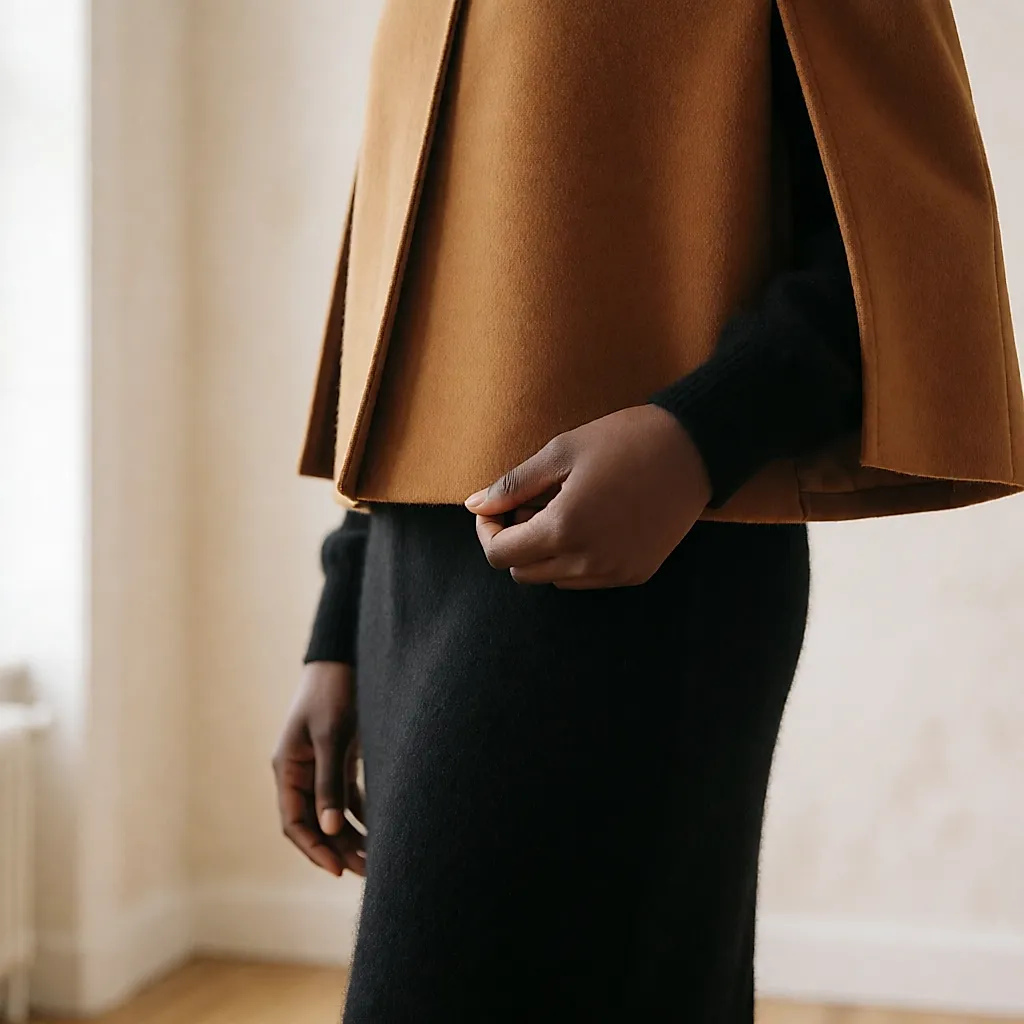
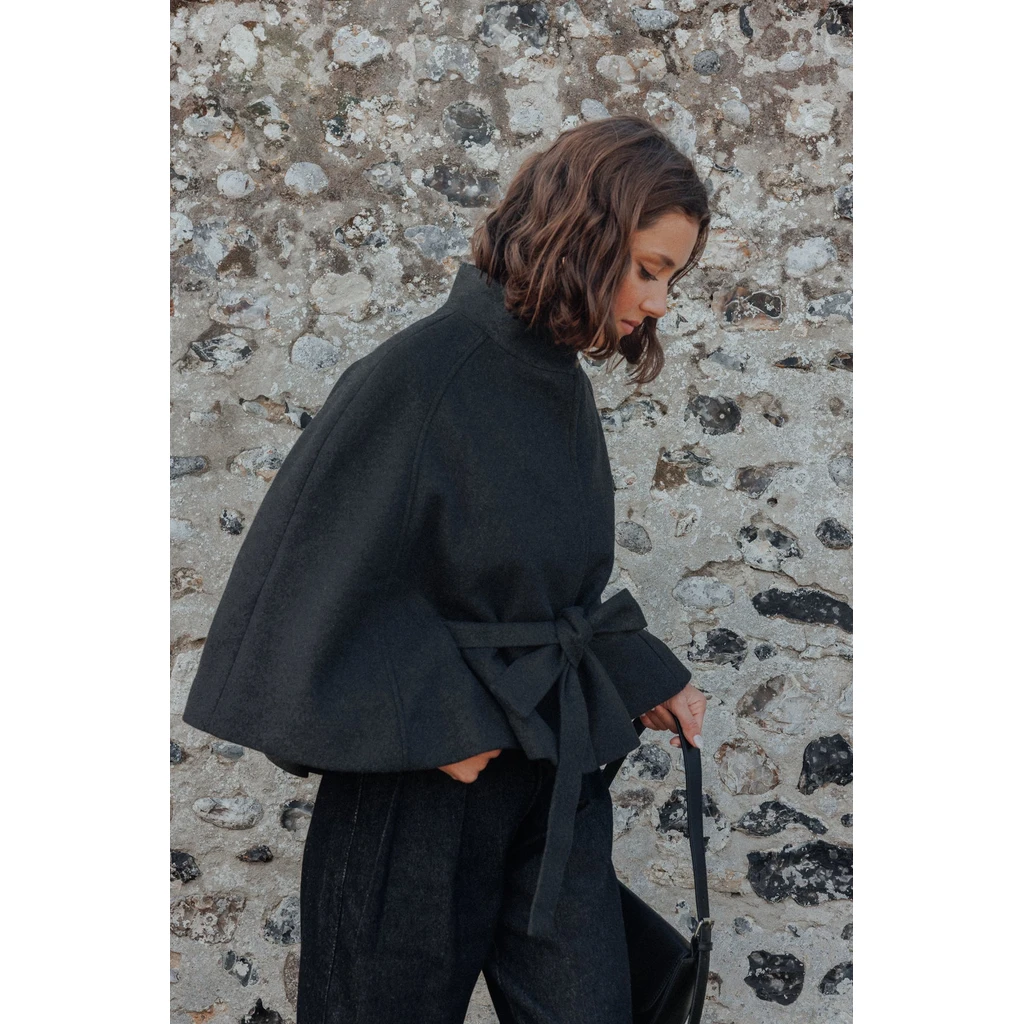
The second check is the fit at the waist. A short cape cut generously can swallow a petite frame, so look for a slightly shaped cut or a soft fabric that follows the shoulders. If you are curvier through the hips, on the other hand, a straight, stiff cape creates an unflattering horizontal line at the widest point; choose a gently flared cut, or a style with arm slits that lets your hand through and avoids the bell effect. And for anyone who carries a cross-body bag every day, those slits are not a detail; they are what makes the cape wearable.
The fabric decides everything else
A short cape in wool coating is the version that stands up on its own: it gives the shoulders structure, keeps you warm without a puffer, and ages well if you take the trouble to brush and air it rather than wash it. Tweed, being more textured, does the work of a print without any pattern. Cotton gabardine gives you a lighter option for days around 12°C, as long as you accept it won't replace a proper coat in January.
Before you buy, check the composition label. A cape with a high acrylic content can pill under bag straps and can lose its shape in the first winter; it's not a bad fibre, just a bad calculation on cost per wear. Check the lining too: it is what lets the cape slide over a jumper without catching, and if it's missing you'll pay for it in irritation every morning.
Underneath, the skirt leads
This is the fun part. Because the top half is loose and covering, the bottom half can afford to be short, fitted, colourful or shiny; the cape acts as the moderator. A wool or leather mini, opaque tights and knee-high boots: the silhouette reads clearly, your legs get some air, and you don't feel as if you've stepped out in 1974 fancy dress.
The trap is piling it on. A loose cape + a chunky roll-neck + a knitted scarf = three volumes fighting over the shoulders. Choose one volume and keep the rest close to the body: a fine merino roll-neck, a poplin shirt, a heavyweight T-shirt. One last trick that works surprisingly often: **a tonal look**, with cape and skirt in the same colour family, and your legs look longer.
What to budget
As a rough guide, expect to pay around £70 to £140 on the high street for a properly lined cape, £220 to £400 for a dense wool coating that should last several winters, and £25 to £60 in charity shops or second-hand shops. That's where you find some of the best drape, as long as you try things on. Miniskirts follow a similar scale: £25 to £60 in a wool blend, £90 to £180 in leather or pure wool. Prices are approximate and vary by retailer. And if a cape found online arrives too long, alterations by a seamstress often cost around £25 to £55: the kind of spend that saves a piece you would never have worn.
Before you head to the till, do three things in the fitting room: raise your arms (the cape should move with you without pulling at the shoulder), sit down (the hem shouldn't ride up to your waist), and take three steps with your usual bag (are the slits in the right place?).
The real test, anyway, is a wet Tuesday morning. If the cape gets you out of the door without a second thought, it's yours. If not, keep your long coat and treat yourself to the mini: that won't let you down.



Comments
Your opinion matters: rate the article, react and reply to comments.
Comments are moderated; AI-assisted comments are flagged. Text emoticons (8-), :-), <3…) are automatically shown as images.