
On the top shelf, your down jacket has been sleeping in a vacuum bag since March. When you take it out, it looks like a soufflé left in the oven: flat, a little limp, and yet perfectly salvageable. The down isn't finished yet - it just needs loosening up.
What down doesn't like
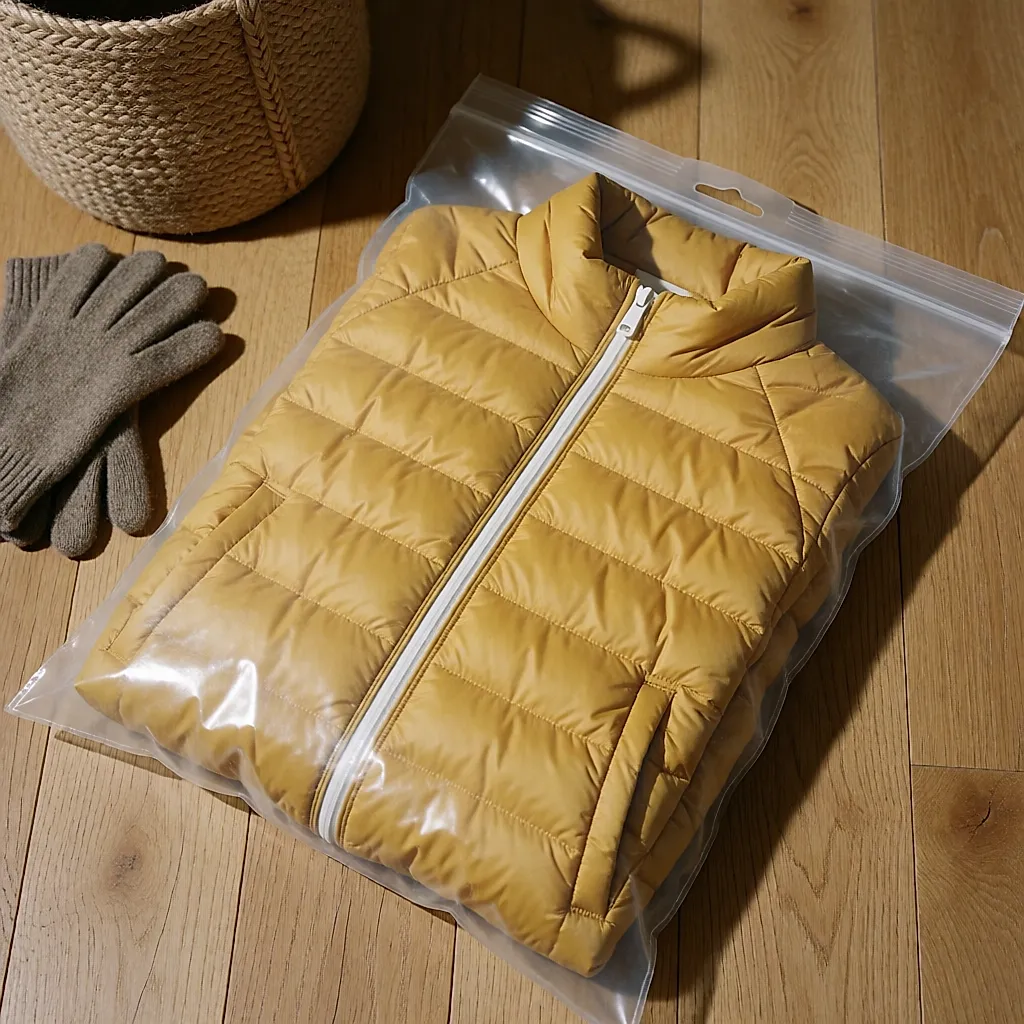
A down jacket owes its shape to one simple principle: feathers filled with air, divided into channels. When those channels empty, the jacket sags at the shoulders and loses its drape. Two things flatten it: trapped damp and prolonged compression. So the vacuum bag that's so handy for a move is no friend to a jacket stored in it for a whole season.
Where does that flattening come from? Usually from a rushed wash, too strong a spin or drying it flat. The down then dries in clumps, and the jacket keeps the memory of those lumps. The good news: it can be undone.
Washing it without the fuss
First, check the care label. Not every down jacket can go in the machine, and some membranes or surface treatments need dry cleaning. If the symbol allows it, choose a delicate programme at 30°C maximum, with only a little liquid detergent - excess suds get trapped in the channels and weigh the jacket down.

Before you close the door: zips done up, pockets empty, and wash the jacket on its own or with light items - never with a pair of jeans with rivets. Skip fabric conditioner, which coats the feathers instead of freeing them, and bleach, obviously. An extra rinse won't hurt if your machine offers one.
The spin cycle you'll regret
A strong spin to get it over with faster? That's the quickest way to end up with an accordion of a jacket. At full speed, the channels get battered and the down ends up in compact blocks. Choose the gentlest programme, even if it means two short spins rather than one at full tilt.
And resist the urge to wring the jacket out over the bath: the shell marks and the seams suffer. A jacket that still drips a little isn't a problem - the tumble dryer will finish the job.
Drying on low heat with two balls
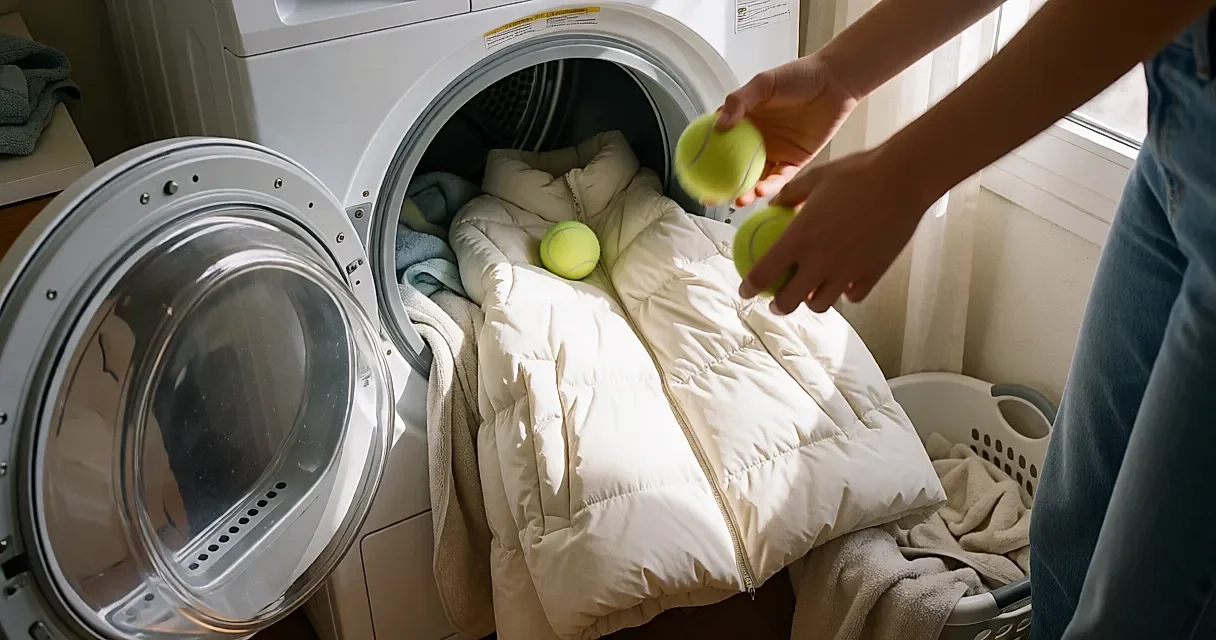
This is the heart of it. Use a warm, not hot, setting, and put two clean balls in the drum: wool dryer balls, or tennis balls if that's what you have. As they turn, they hit the jacket, open the channels and keep the down moving instead of letting it clump together.
In practice, it's often better to run two or three short cycles rather than one endless one. Between each cycle, take the jacket out, shake it by the shoulders and feel for any areas that are still dense. It's tedious, but this is where the result is won.
Light-coloured shell and tennis balls: slip each ball into a clean sock before tumble-drying. They agitate just as well without leaving grey marks.
Check it before you store it
Before it goes back in the wardrobe, three checks. Lift it: it should feel light and puffed up, not heavy on one side. Pinch the channels near the seams: there should be no lumps under your fingers. Smell the inside: a musty, cellar-like smell means it isn't completely dry and needs another warm cycle.
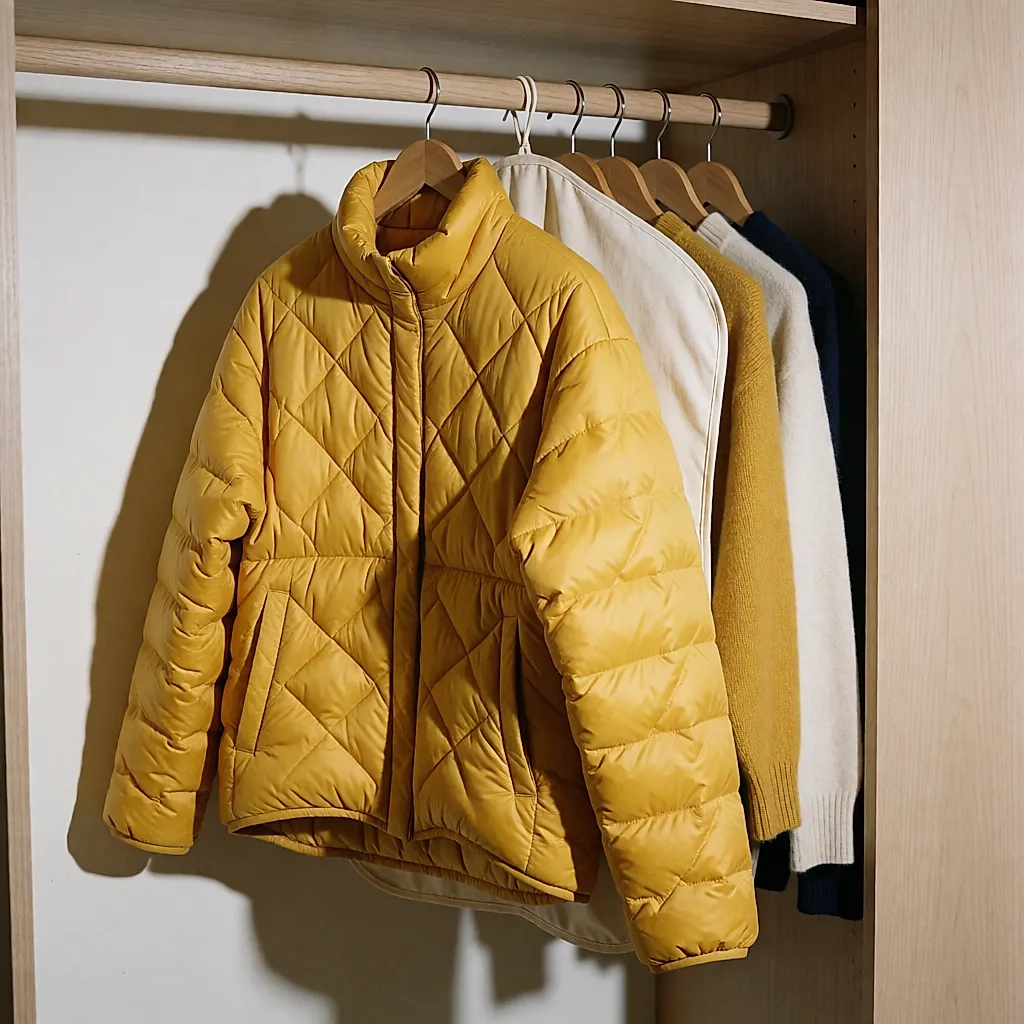
Storage matters as much as washing. Never vacuum-packed, never squashed under three jumpers: a wide hanger in a dry place will help the jacket keep its volume from one season to the next. If space is tight, a large breathable cotton bag will do the job.
What it costs
You don't need lab equipment, but it's worth budgeting for the basics. A set of three to six wool dryer balls usually costs around £12-20 from a household shop or online, and a tube of tennis balls is about £5-8 at a supermarket. Do you really need a special down wash? If you insist, expect to pay around £8-15 a bottle - a gentle ordinary detergent does the job perfectly well.
At a dry cleaner, cleaning a down jacket often costs around £20-40, depending on length, city and service. Useful if the label demands it; unnecessary if it allows machine washing. The smart move here comes down to two steps: two balls and a warm programme.
That leaves the real question: how many down jackets die every winter because of a badly chosen vacuum bag? Yours doesn't have to join them. A little patience, a well-filled drum, and it will head into another season with the volume you remember.


Comments
Your opinion matters: rate the article, react and reply to comments.
Comments are moderated; AI-assisted comments are flagged. Text emoticons (8-), :-), <3…) are automatically shown as images.