
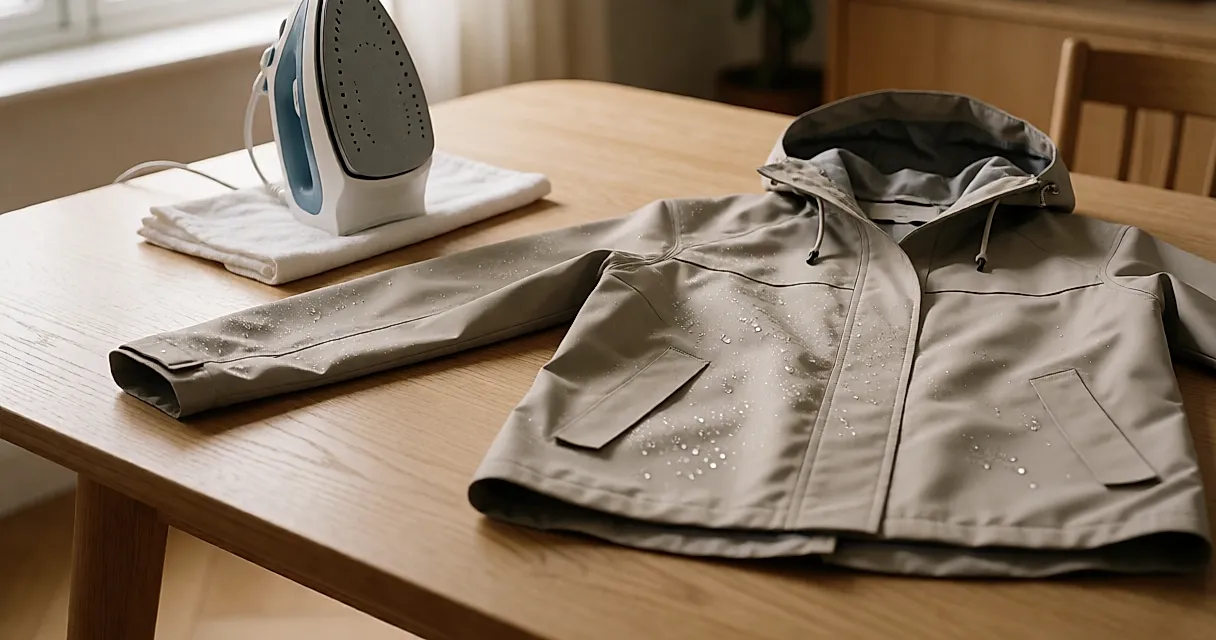
The first time water got through your jacket, it wasn't up a mountain or in a storm. It was a Tuesday, on a pavement, in a fine drizzle that didn't seem to be doing anything – and the jacket soaked up the drop like a distracted sponge. The fabric itself is intact. What failed was the invisible layer sitting on top of it.
The beading effect comes from a coating, not the fabric
Water repellency – the pros call it DWR, for durable water repellent – is a surface treatment applied to the outside of the fabric. It isn't the fibre that pushes water away, it's this film: it lowers the surface tension and makes droplets roll off instead of spreading. Hence the famous beading on a brand-new sleeve, which people happily mistake for proof of waterproofing. The two are actually separate things: waterproofing comes from a membrane or a coating built into the inside; repellency is just the outer layer. A jacket can be perfectly waterproof and have stopped repelling water altogether.
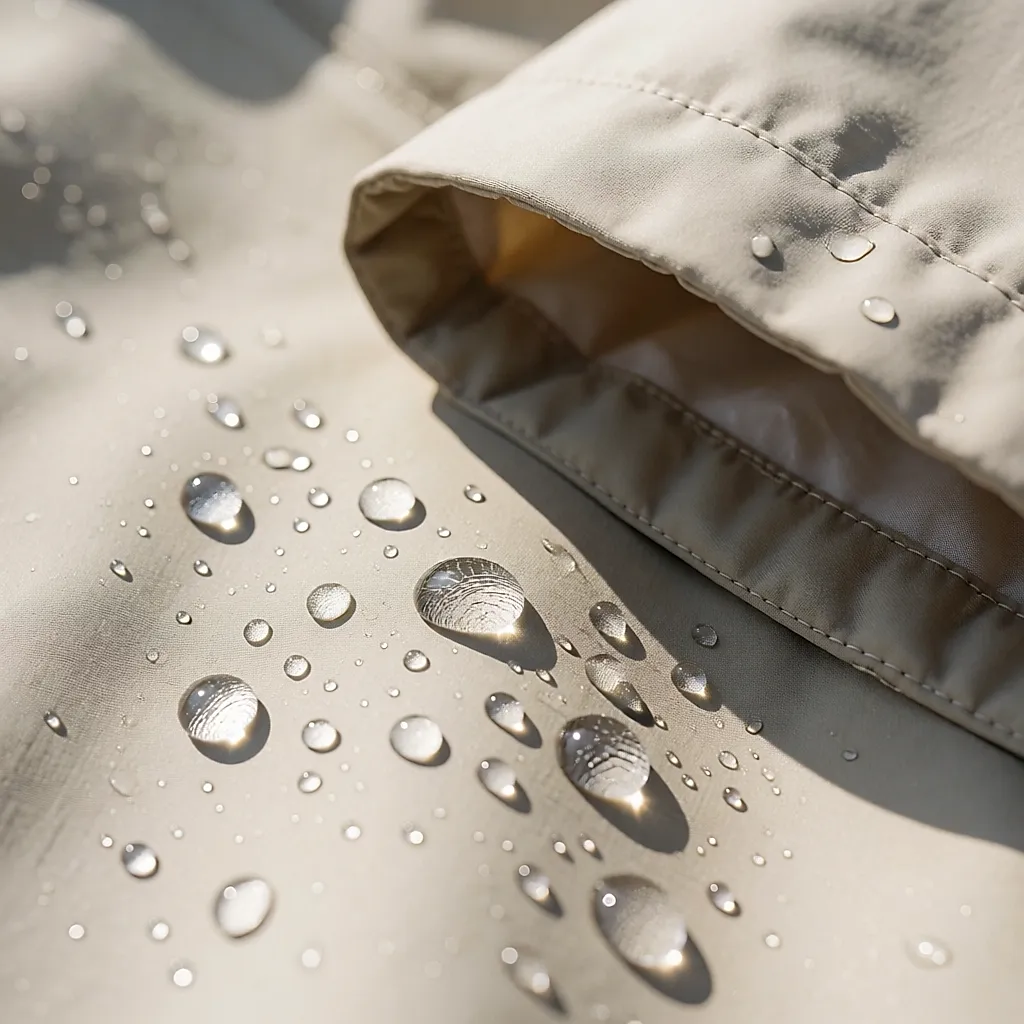
So why does it matter? Because a fabric soaked in water breathes less: moisture vapour from inside struggles to escape, you feel clammy, and a technical piece loses much of its point. On the formula side, older treatments were fluorinated – effective, but part of the PFAS family, which is increasingly regulated in Europe. Fluorine-free alternatives, based on wax or polyurethane, have become widespread. You can see where I'm going with this: reactivating what's already there saves you adding another layer of product whose ingredients you don't always know.
What kills water repellency (hint: it isn't the rain)
The first culprit is in your cleaning cupboard. Ordinary detergent leaves a film of surfactants on the fibres, which masks the treatment; fabric softener does worse, coating the fabric in a film that attracts water. Two washes without softener, then a third with it, and the loveliest jacket in the world starts soaking up water. Add dust, the sebum from your cuffs, last summer's sunscreen and the chafing of rucksack straps: all of this grime is oily, and an oily surface has nothing repellent left about it.
Hence a counter-intuitive rule: a clean jacket repels water better than a dirty one. Washing doesn't necessarily damage it – washing badly does. The method that works: 30 °C machine wash, delicate cycle, no fabric softener, a technical detergent (or, failing that, a mild soap with no perfume or additives), and a thorough rinse. Beware the hot tumble dryer and the dry cleaner, though, which will do the treatment no favours. And the jacket's care label is always the reference.
The iron works – provided you take it gently
This is where it gets interesting. Heat tends to reactivate the treatment still present: the molecules reorganise at the surface and the beading effect comes back, in part. Many outdoor brands even recommend a low-temperature tumble dry or a gentle iron to 'wake up' the repellency. So your iron will do the job, on three conditions: iron on a low setting, steam off – moisture has no business here – and a clean cotton cloth between the soleplate and the fabric.
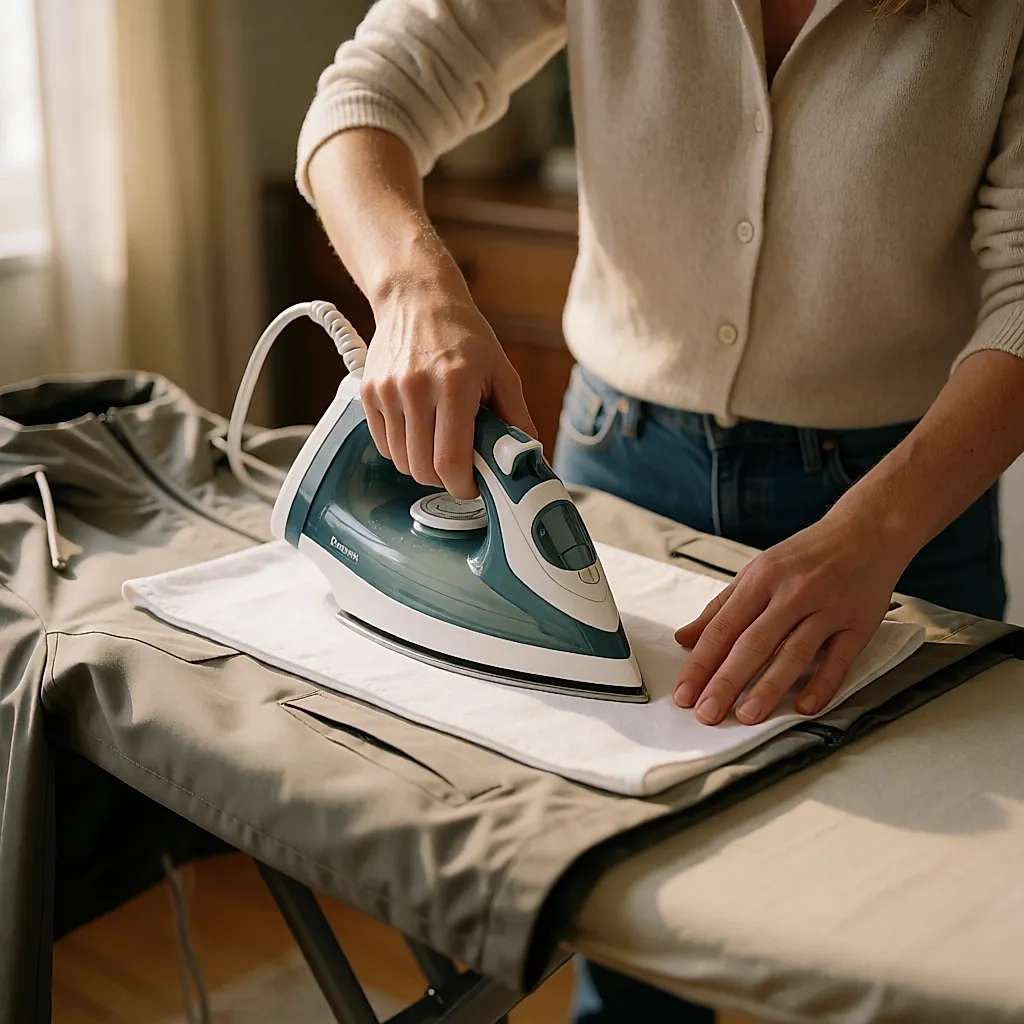
The method, step by step: clean, dry jacket, laid flat; glide the iron over it without pressing, paying extra attention to the areas that get wet first (shoulders, upper back, sleeves), steering round zips and taped seams. Let it cool, then test with a few drops on the back of the sleeve. If they bead, you've struck lucky! If they spread, the layer is probably too worn to reactivate and you'll need a re-proofing product. And if the label says no ironing – it happens – stop there, don't force it.
The drop test, before and after. Pour a teaspoon of water onto the sleeve. If it forms beads and rolls off, the repellency is still there: the iron will be enough. If it spreads into a dark patch, the treatment is dead – ironing won't make much difference, and you should be looking at a re-proofing spray instead.
The money you're not spending
Let's start with the good news: you already own the iron, and the cotton cloth. In effort as in pounds, reactivating costs nothing – it's the only item in this article that doesn't push the bill up. Then there's washing: expect to pay around £10 to £20 for a 300–500 ml bottle of technical detergent, from a hardware shop, outdoor retailer or online, and it'll easily last a season at one dose per wash.
If the repellency really has gone, a re-proofing spray costs around £10 to £25 to treat one jacket, sometimes two depending on the size; fluorine-free formulas often sit at the top of that range. Compare that with a decent technical jacket at £150 to £350: the sums don't take long, do they? One detail that matters: the spray goes on a clean jacket, otherwise you're sealing the grime under the treatment.
Nothing to buy, then. Ten minutes, a Sunday evening, a warm iron, a bit of patience – and a jacket that's set for another season of wet pavements. Maintenance may not have the glamour of an afternoon's shopping, but it has one clear advantage: it never goes out of fashion.



Comments
Your opinion matters: rate the article, react and reply to comments.
Comments are moderated; AI-assisted comments are flagged. Text emoticons (8-), :-), <3…) are automatically shown as images.