
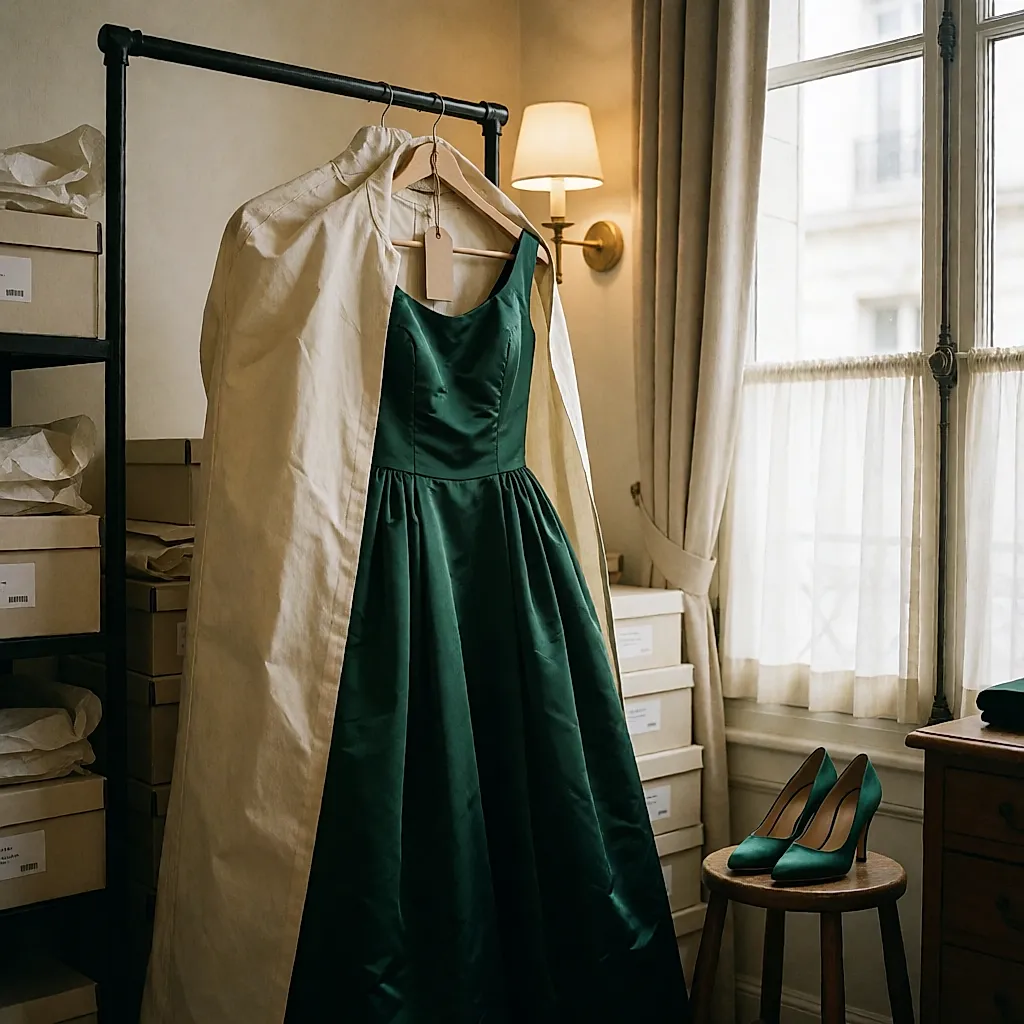
A 1997 dress is sleeping under a dust bag, numbered in marker pen, with the date of its one and only outing written on the label. Lately it keeps coming back out: a gala, a premiere, a walk up a flight of steps. The red carpet has found a new way to shine — order nothing, and go digging in the archive instead.
A piece that has already lived a bit
What wins you over first is the story. A piece pulled from a house archive never arrives on the carpet alone: it brings a designer, a workroom, a season, sometimes a silhouette that was talked about thirty years ago. Wearing it means stepping into a story that is already written — far more flattering than a made-to-measure commission nobody has ever seen.
There is also a quieter, very solid styling argument: an archive piece has already passed the wearing test. The cut has been tried, the drape signed off, the fabric has survived hours on your feet and the flashbulbs. New pieces tend to reveal themselves on the night itself, on the stairs and under hard light. And let's be honest: producing a piece of heritage is a luxury you cannot buy — it is lent, with or without ceremony, and an entire house walks up those steps with the dress.
Fabric and cut: what actually changes
Clothes from twenty or thirty years ago were not designed the way ours are. Heavy silks, dry wools, hand embroidery, silk linings: the fabric has weight, and the drape shows it. A dress from that era often holds its silhouette unaided, with rigorous seams and much less give in the cloth.
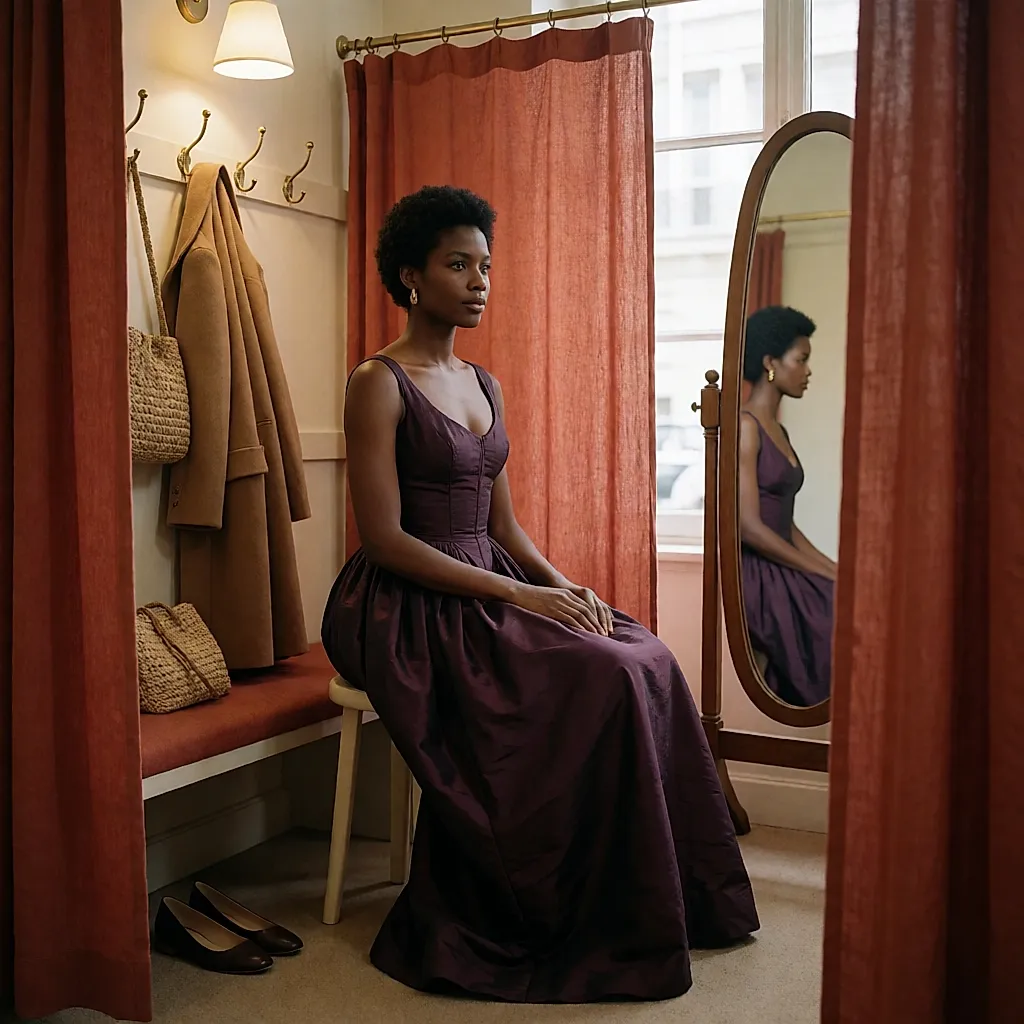
The practical consequence is very concrete: you don't raise your arms the same way, you don't sit down the same way. These pieces need the right size — which is exactly why it is worth trying on, walking about and sitting down before you say yes. And be wary of alterations: you take in a waistband, shorten a hem, lift a shoulder by two millimetres; you do not redraw a bodice. Heritage deserves respect right down to the seams, and a piece wrecked by a shortcut in alterations cannot be put right.
The archive reflex, no invitation needed
You don't need a red carpet to try the idea. The move is closer to charity-shop browsing: look for a piece with a story, check its condition, try it on for real, and treat alterations as an investment rather than a whim. A vintage tailored jacket, a thick wool coat, a clean-cut dress — these still wear beautifully, often better than a new equivalent that can be next to nothing by comparison.
Which leaves the real question: where do you find it? Designer consignment shops, charity shops that genuinely sort their stock, vintage sales, resale platforms. And one reflex that costs nothing at all: get out what you already own, have a waistband reworked, a lining sewn back in, a piece revived after too many trips to the dry cleaner. Everyone has a dress waiting at the back of a wardrobe — and what if that one is your heritage piece?
What it costs
In charity shops and consignment, expect roughly £25 to £80 for a period piece without a major label, and £130 to £430 once a signed house enters the equation, depending on condition and rarity. These figures are indicative and vary a great deal. For a single night, designer dress hire works out at around £50 to £170 per evening: the cleverest compromise when you want the look without the wardrobe.
Alterations are part of the price: around £20 to £60 for a hem, a reworked waistband or a replaced lining from a good tailor. Add specialist cleaning for fragile pieces. Where to look? Local charity shops, consignment stores, resale platforms, dress-hire services and independent alteration workshops — always ask for a quote before you leave the piece with anyone.
Three checks before you take an old piece out. The armhole seams (they go first), the state of the lining (it can crumble without warning) and the fastening (a vintage zip is hard to replace). If the fabric doesn't like water, book the clean before the big day, never after.

In the end, the red carpet is only applying an obvious wardrobe truth: what has value is not necessarily what is new, but what has a story and a fabric that holds up. So before you hit the shops for party season, open your mum's wardrobe, the box in the loft, push the door of the charity shop at the end of the street. The right find may already be there, waiting for its second outing.



Comments
Your opinion matters: rate the article, react and reply to comments.
Comments are moderated; AI-assisted comments are flagged. Text emoticons (8-), :-), <3…) are automatically shown as images.