
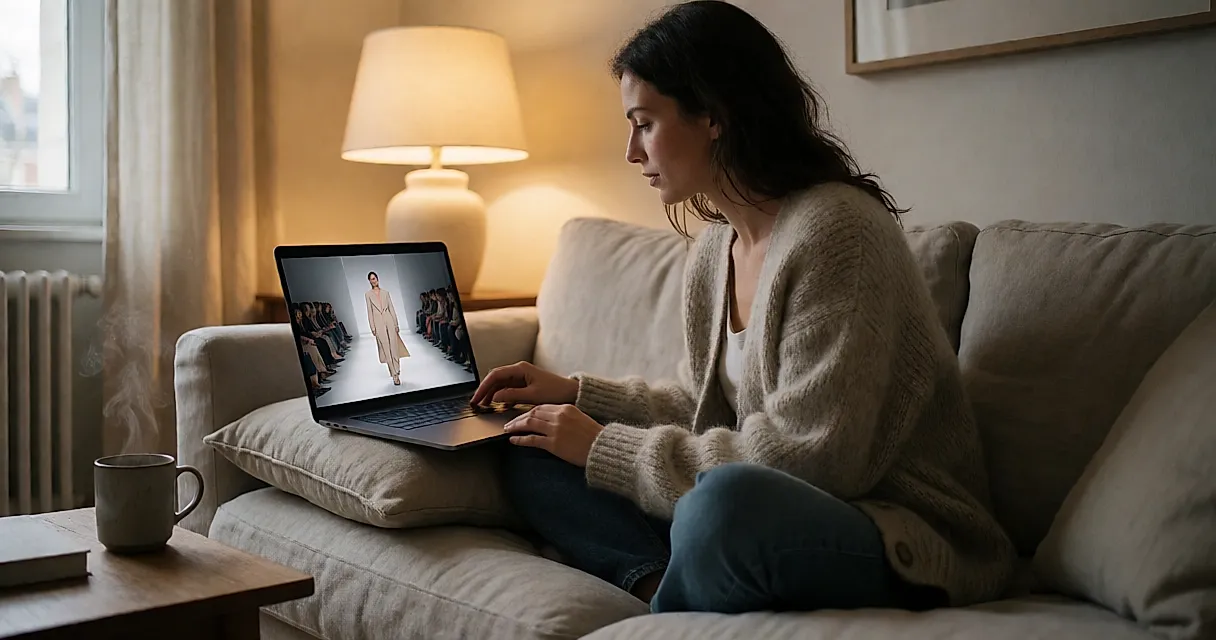
Sunday evening, 8.04pm. The kettle's whistling, the phone is streaming the show and the group chat is buzzing: 'Look at that set', 'What's this music?'. The clothes, meanwhile, will have to wait for the second video. We don't go to the show any more — we watch it, with one eye, usually scrolling with the other.
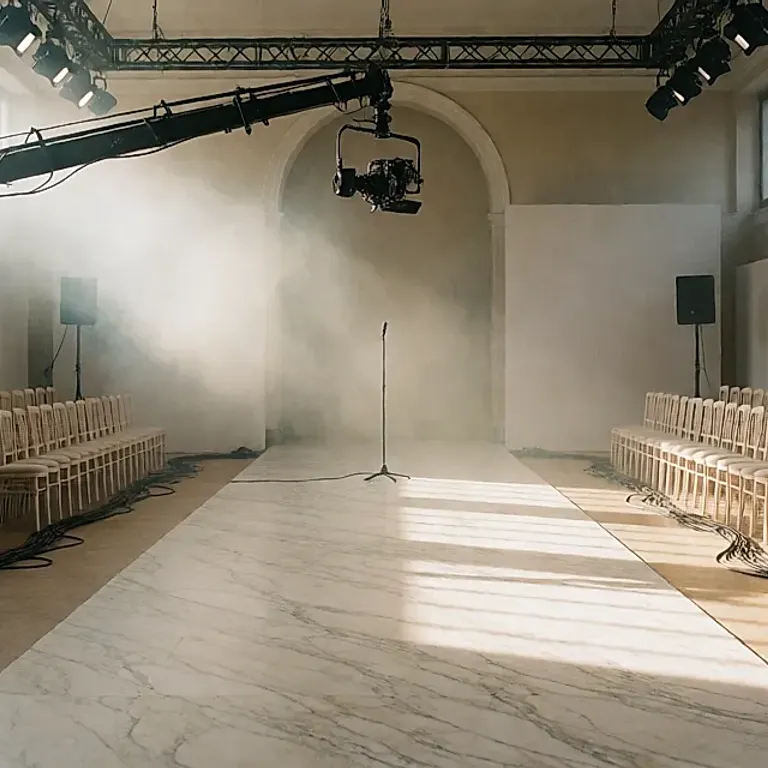
The runway has become a screen
Since the houses started streaming their shows live on their websites and socials, what lingers from a show isn't necessarily a cut. It's a gesture, a set, three seconds of music. Gucci, Coperni and Bella Hadid have produced some of the images that do the rounds before the collection has even been seen up close. The clothes arrive after the image, rarely before.
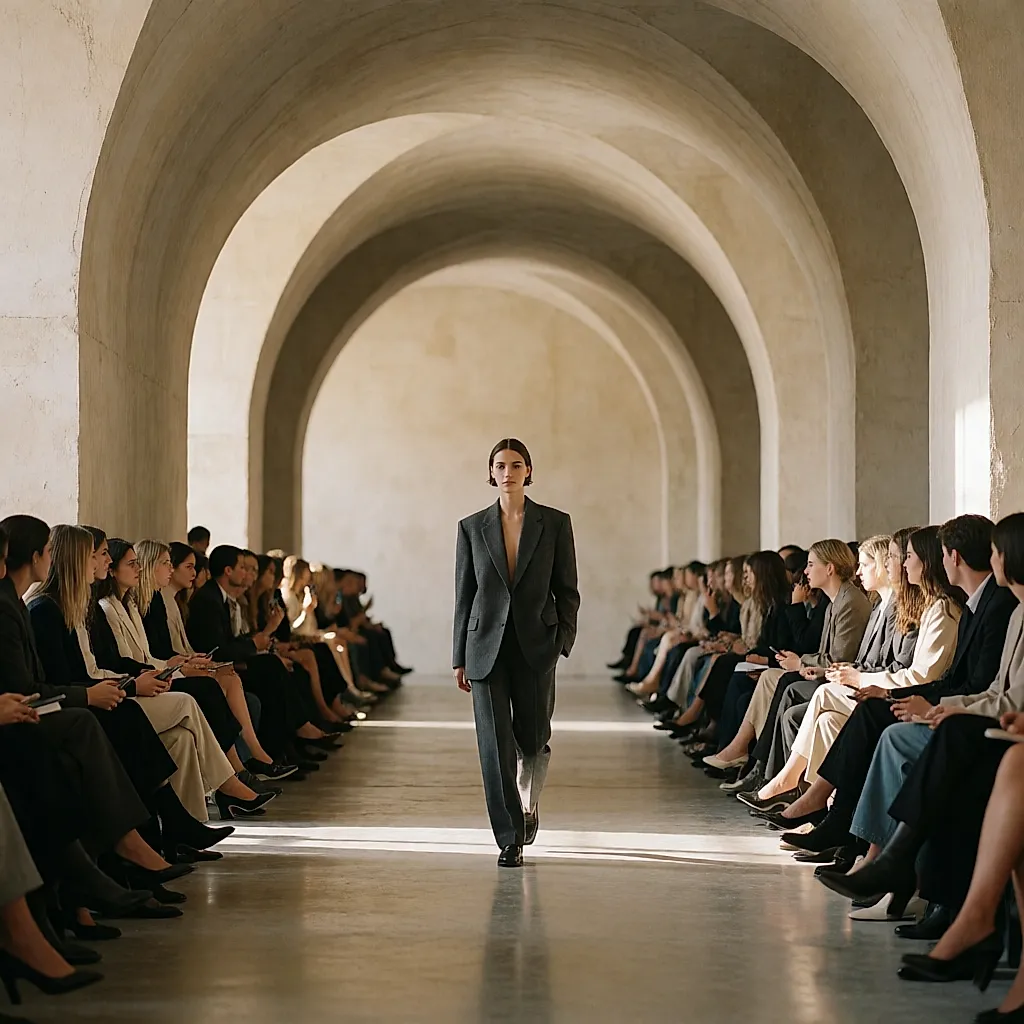
Is that a disaster? Not at all — fashion has long loved a bit of staging. It's just that staging is now watched without a ticket, from a sofa, and measured by the number of screenshots it sets off. The collection has become the backdrop to its own trailer — and you have to hand it to them, it's very smartly done.
The postcard outshines the wardrobe
Few things illustrate this shift better than off-site presentations. At Jacquemus, Dior and Louis Vuitton, the venue becomes a character. Often, the venue builds the image, the image builds the views, and the garment has to fight to exist between the two.
It isn't bad news for fashion: these travelling shows give you ideas for colour, light and attitude. But let's be honest: the trench that looks fabulous in a 6pm show photo is far less cinematic in your hallway at 7.50am on a rainy Monday. The whole difference between an image and a wardrobe comes down to that gap.
Views, yes — but of what?
At the end of fashion week, view counts circulate like final scores, and the houses get compared as the shows come out, the way you'd talk about a football match. Except a view measures curiosity, not a wish to wear. The piece that generates the buzz — the unlikely bag, the feathered silhouette — is almost never the one you'll slip into your wardrobe six months later. How many views, for that matter, for the coat you'll actually be wearing in November?
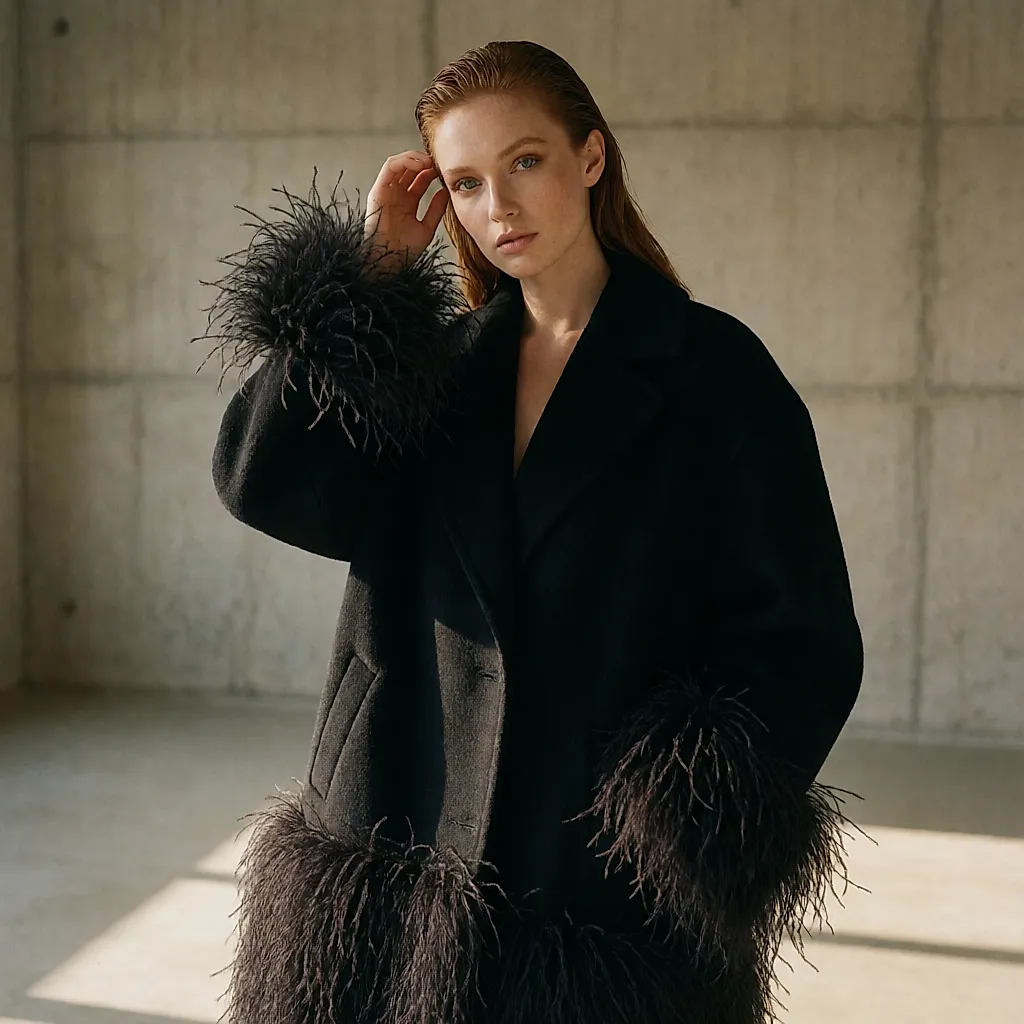
Should we conclude that the big houses are losing their grip? Let's say they share the limelight with a set, a guest, a moment. Attention has shifted; it hasn't vanished. And a house that can get a venue talked about without showing a single seam hasn't lost out: it has simply changed jobs, in part.
What we keep once the screen is off
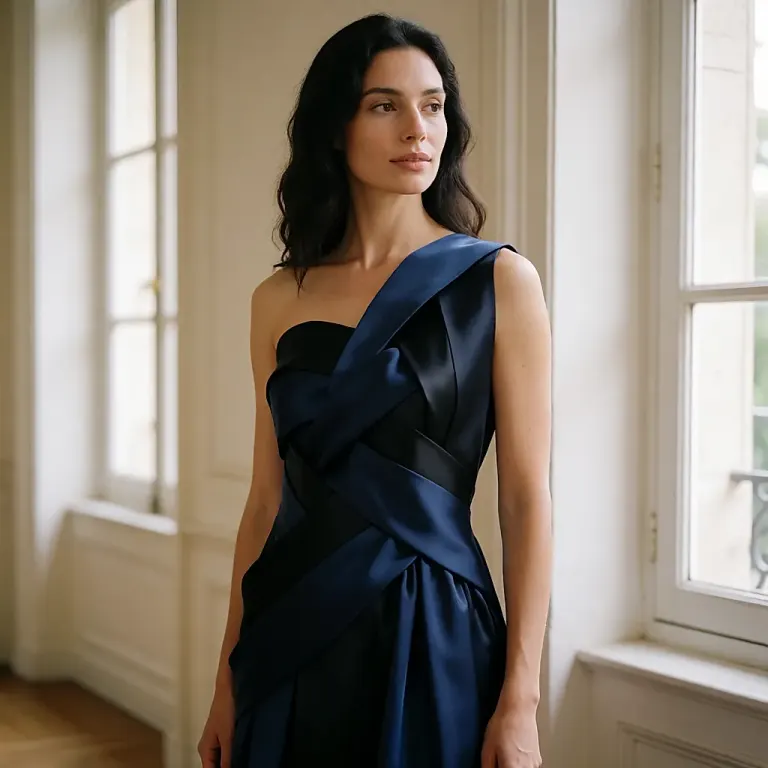
The right reflex is to watch twice. One for the journey, one for the details. On backstage videos and close-up fabric shots, you can spot what actually translates to ordinary life: proportion above all. Broad shoulders and a slim bottom half, high waist and long legs, a head-to-toe look in one colour — that's what survives the set.
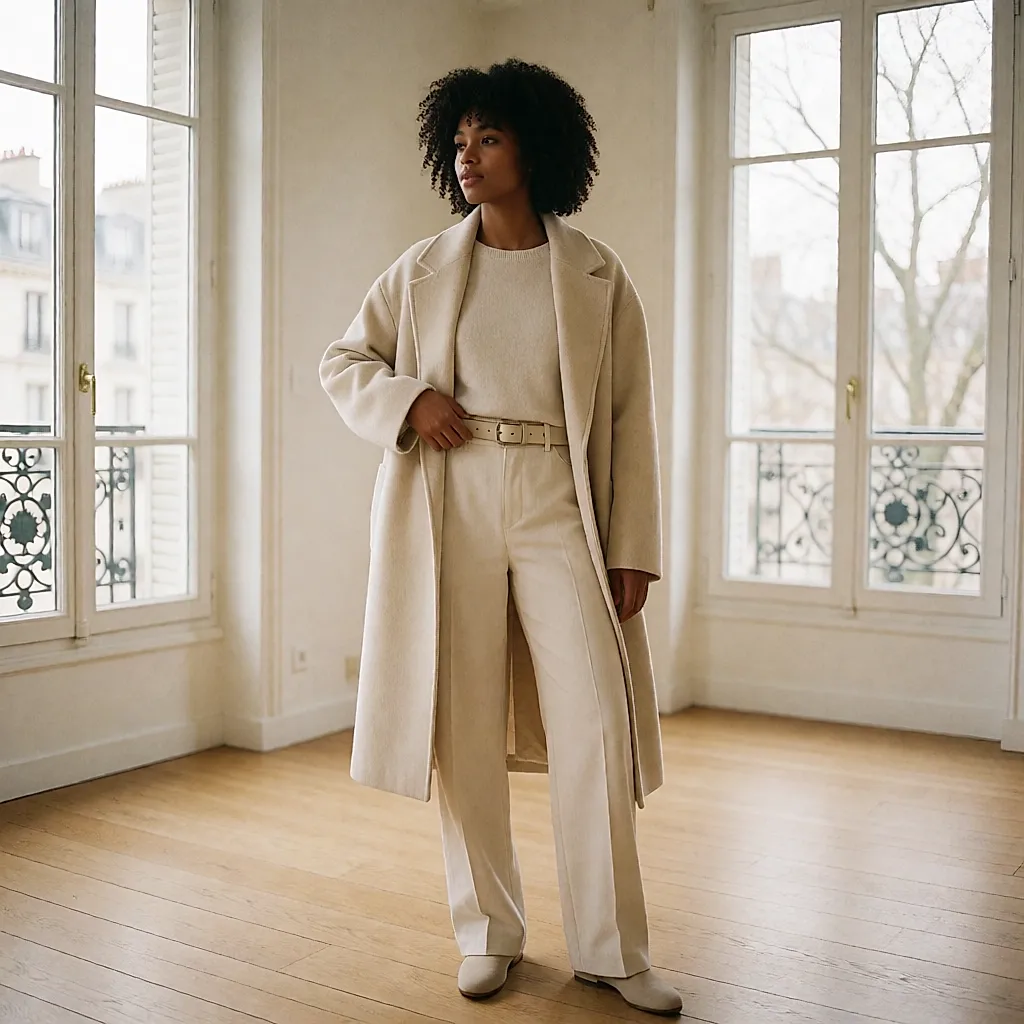
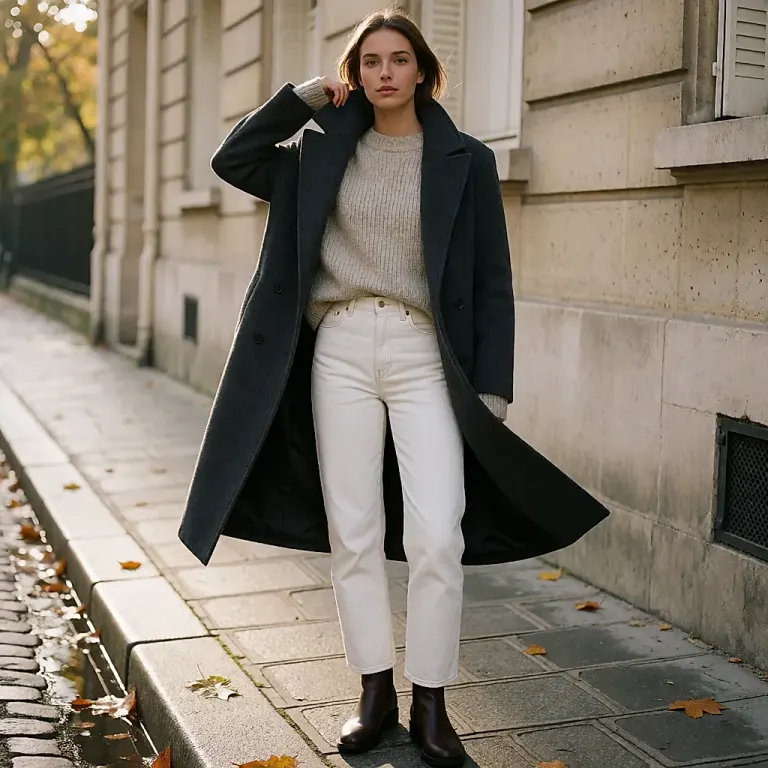
Once you've spotted the principle, you can replay it with what you already own: a loose coat over straight-leg trousers, tonal knit layering, a belt that lifts the line. A show doesn't sell a wardrobe; it proposes a relationship with the body. It's up to you to turn it into a commute outfit.
What a look seen on screen really costs
A runway look rarely comes down to ten pieces. More often it's one strong piece plus well-cut basics. For a properly lined wool coat, expect to pay around £200–450 in mid-range ready-to-wear; a recycled-wool version usually sits between £100 and £200, and the second-hand market offers vintage wool between £30 and £90 — provided you add £15 to £60 for alterations with a good tailor.
The rest of the budget is a question of patience: the pieces you saw on screen reach shops and online stores weeks later, with prices that have nothing to do with the front row (which, incidentally, isn't usually for sale). And watching the streams usually doesn't cost a penny.
The habit worth keeping: in front of a show, note just one thing — the proportion you like. The set, the music and the front-row celebrities won't make it into your wardrobe.
Next season, a show will pass through your feed between two pasta recipes. Watch it twice: once for the journey, once for the coat. It's the second that will dress you in November — and nobody will be counting that one in views.
Comments
Your opinion matters: rate the article, react and reply to comments.
Comments are moderated; AI-assisted comments are flagged. Text emoticons (8-), :-), <3…) are automatically shown as images.