
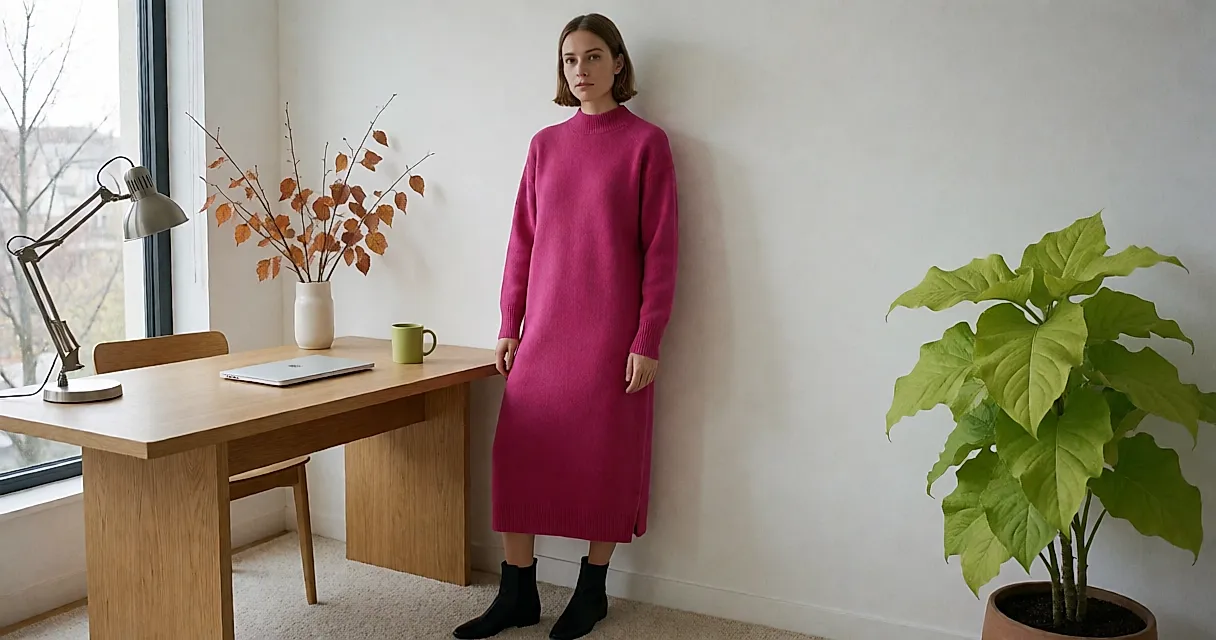
The piece that won’t be a one-night wonder
A wool coat bought for one 31 December is one of the worst wardrobe scenarios there is. Not the most visible, not necessarily the most expensive, but the most galling: a garment bought for a date, worn for a date, then left to languish at the back of the wardrobe.

Mid-November is the ideal moment to avoid that. Shop windows are full of sparkle, brands are rolling out their party pieces, and you may be tempted to buy before everyone else does. The real question, though, isn’t ‘Is it sparkly enough?’ but ‘Will I wear it in January?’
This is where it gets interesting: the right winter piece isn’t necessarily the most spectacular one. It’s the one you can wear without a special occasion. A piece you can wear on a Tuesday morning without feeling as though you’re in fancy dress, and wear twice in the same month without anyone batting an eyelid. If you’re still wearing it in February, it was worth its price. If not, it was a rental dressed up as a purchase.
What passes the January test
First move: take the garment out of its party context. A silver satin skirt is lovely under Christmas tree lights, but with a chunky wool jumper and flat boots it tells a completely different story. Ask yourself how it works with what you already wear: your favourite jeans, your slightly oversized blazer, the boots you live in. If the combination works, that’s a good sign.
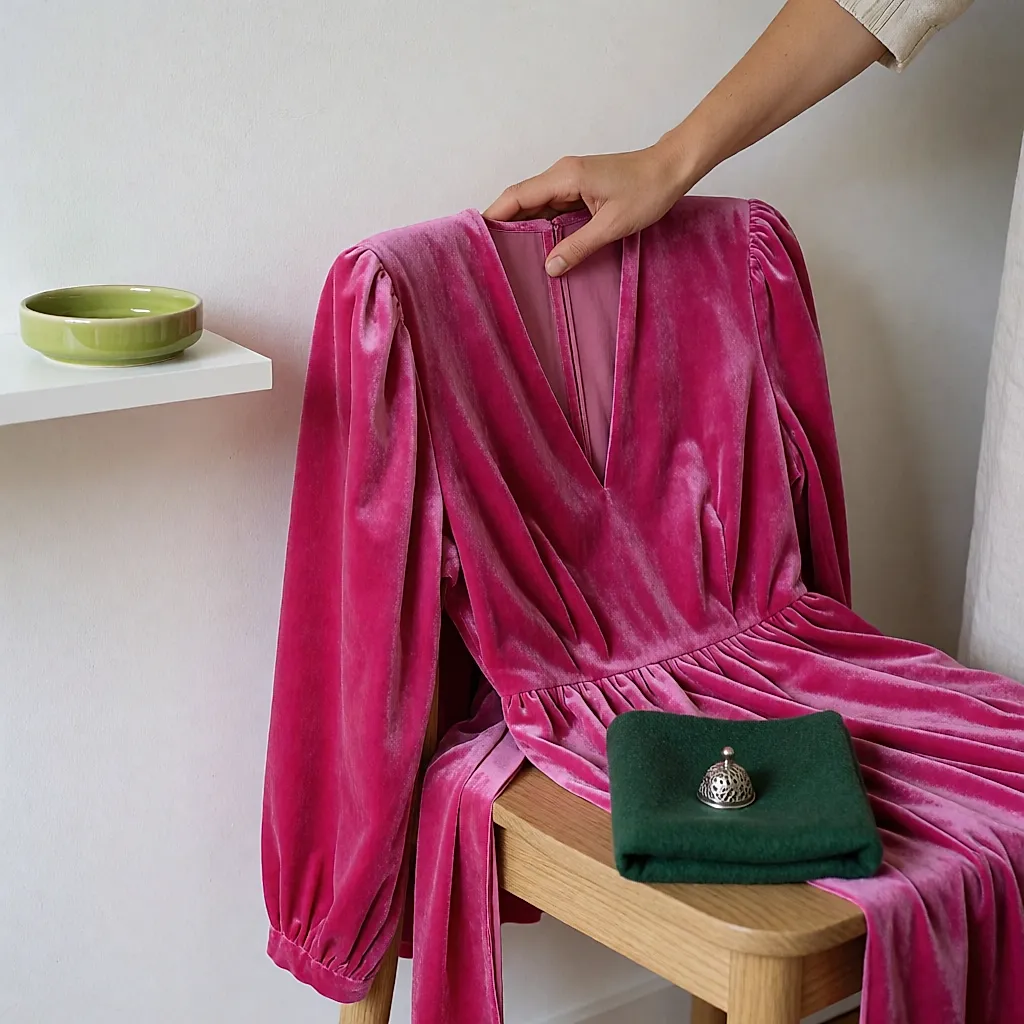
Second point: fabric. A party piece in shiny polyester signals evening immediately. A piece in wool, silk, cotton velvet or silk satin keeps a texture that also works in daylight. The drape of velvet, even a sober one, is enough to bring polish without looking as though it is waiting for a glass of champagne. It’s an underestimated detail: the more luminous and alive the fabric, the less the piece needs to do.
Then there’s colour. A little black, a little charcoal grey, a deep green. One coloured piece in a simple silhouette makes more impact than a pile of rhinestones. Ask yourself: ‘Would I wear this on a Monday?’ If the answer is no, you haven’t found the piece; you’ve found a costume.
The 24 December trap
It’s the classic: in November you buy a sequin top ‘for the festive season’, wear it on the 24th, wear it again on the 31st, and then it’s over. Two evenings for one garment is a bad calculation, unless your holiday budget is earmarked for it. Then there’s no guilt: an evening piece has its role, it is made for exactly that, and nobody has ever complained that a ballet dress isn’t much use for the weekly shop.

The real trap is ending up with too many pieces like that. If your wardrobe already holds two sequin tops and a Lurex mini skirt, the next urge for sparkle can stay in the shop. If, on the other hand, your winter wardrobe is missing one simple piece that lifts everything, such as a well-cut roll-neck, a straight wool skirt or a fine-knit cardigan, that’s the one to look for now, not on 20 December when the only size left is an 8 and the prices have crept up.
Then there is the question of fit and cut. A badly cut party piece, tight at the waist or gaping at the shoulders, will not be saved by make-up. And in November, alterations are still possible: a seamstress can adjust a hem or take in an armhole without rushing you.
What if the better buy is something else?
Before rushing to the November sales, which always arrive suspiciously early, look at what is sleeping in your wardrobe. The piece you haven’t worn for a year is not necessarily a mistake: it might be the basis of a January outfit. A slightly thick cashmere cardigan, a crisp white organic cotton shirt, a well-tailored pair of trousers: these are pieces you can wear for a fortnight straight, not evening accessories.

The true November selection is the one that will serve you in a meeting, at the weekend, at an impromptu dinner, and, on top of that, look good on 31 December. A well-cut wool jacket, a knit dress or a merino wool jumper has a place everywhere. We rarely think about these moves when we talk about budget, yet one well-chosen piece replaces three impulse buys.
And then there is the budget. As a broad guide, expect to pay between £70 and £140 for a mid-season wool piece on the high street, between £160 and £320 if you move up in quality or European manufacturing, and the price climbs quickly for cashmere or virgin wool. For silk evening pieces, expect roughly £45 to £110 depending on the finish. These are wide ranges, and that’s normal: price can affect how long a piece lasts, without guaranteeing it.
Three questions before you get to the till: does it work with at least three things I already own? Is it plain enough for a weekday? And if it doesn’t fit perfectly, am I prepared to pay for alterations? Three yeses: a good investment. Two: think again. One: put it back.
The real test happens at home
Take the piece, put it on, and look at it in your own mirror, not the shop mirror. Build three outfits in your head: one with jeans, one with a skirt or smarter trousers, one with a shirt or jumper. If you can’t make more than two, it’s an occasion garment, not a wardrobe piece. That’s not a disaster, but you need to know before you pay.
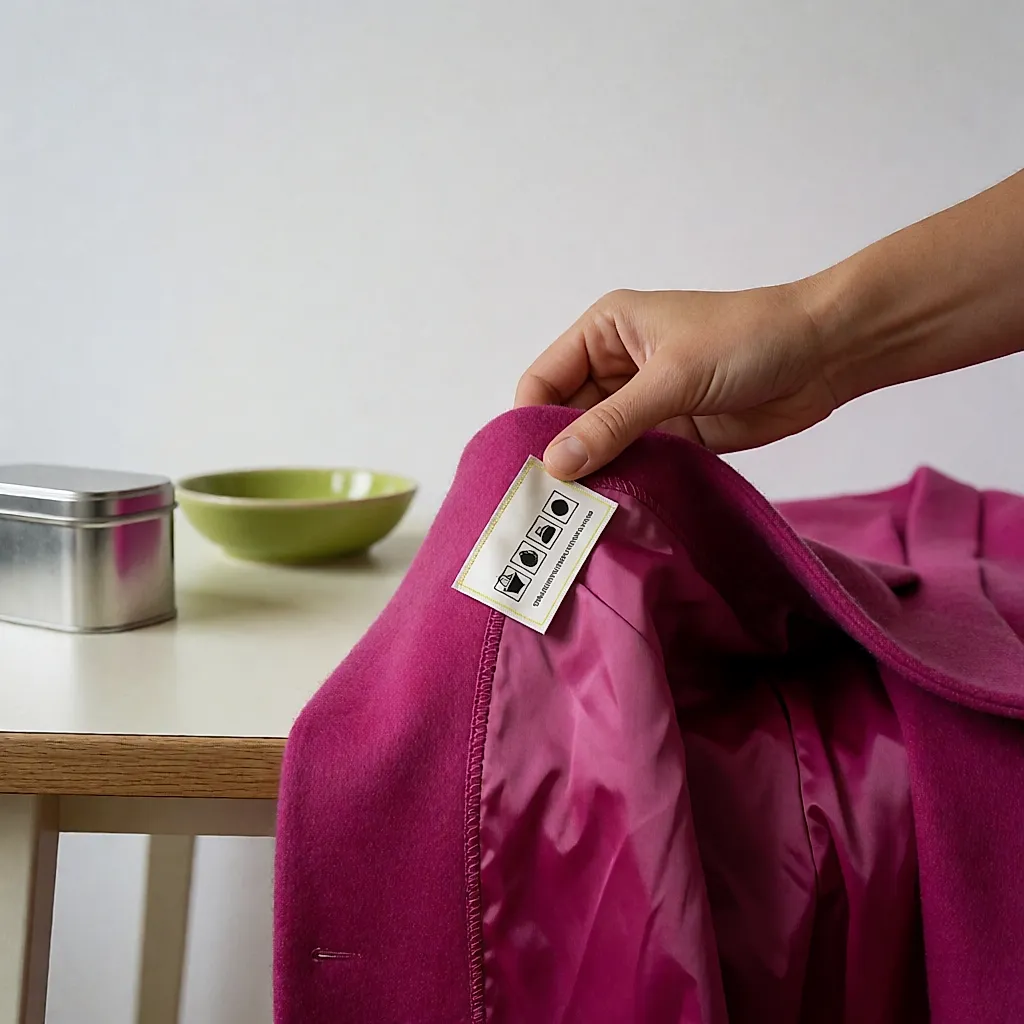
Once you’ve chosen the piece, think about care: wool that pills or silk that marks won’t last long. Prioritise pieces that wash or clean easily, and note that hand washing and drying flat greatly extend the life of natural-fibre pieces. This is the kind of detail that separates a good buy from a bad one, and it doesn’t show on the price tag.
Here’s a good resolution for November: buy less, choose better, and keep the piece until at least February. The rest — presents for other people — will come soon enough, and at least you won’t be the one giving your sister the jumper you regretted buying.



Comments
Your opinion matters: rate the article, react and reply to comments.
Comments are moderated; AI-assisted comments are flagged. Text emoticons (8-), :-), <3…) are automatically shown as images.