

On the shelf in a running shop, two T-shirts at the same price: one in polyester, shiny and light, with all the look of performance; the other in merino, matte, almost drab, like a grandad's basic. The first seems made for running. The second, increasingly, seems to appeal in the gym as well as on the road. Has performance kit changed its material of choice?
Why polyester loses the odour test
Fine wool has a solid reputation among exercisers for staying fresher longer than synthetics. There is no magic involved. Wool fibre takes up moisture — sweat — and, with it, some of the compounds that carry odour, which can then be washed away. Polyester absorbs very little sweat: moisture sits on the surface, bacteria can settle there, and the smell follows. Hence the experience many regular exercisers know: the synthetic T-shirt comes out of the machine and, two sessions later, already has that faint bottom-of-the-gym-bag whiff.
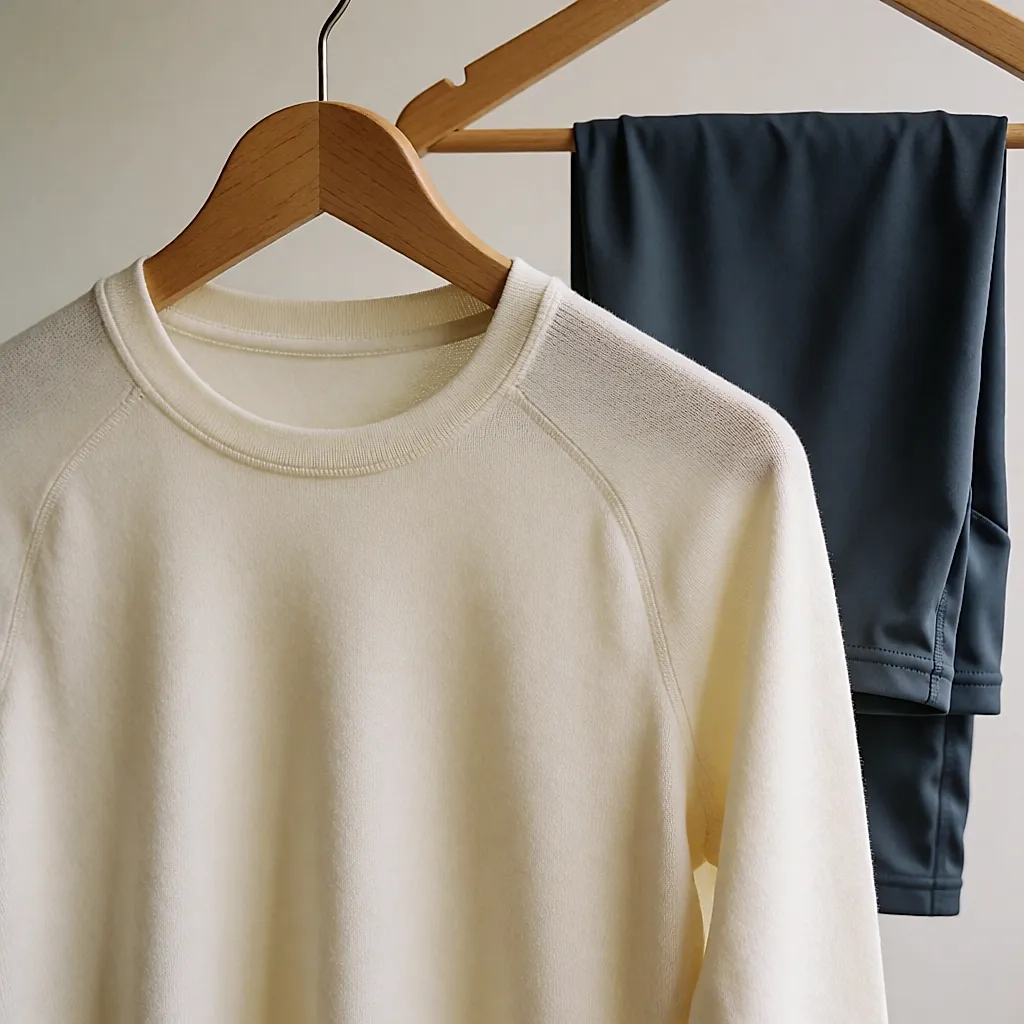
And this is where wool changes things. A merino T-shirt can often be worn several times before it goes in the machine: air it, hang it up, and it is ready to go again. Fewer washes, less water, less time spent watching the drum on a Sunday afternoon — and frankly, we will take that. Polyester, by contrast, often needs a machine wash after a moderately hard effort. Is it worth changing your whole wardrobe? Not necessarily, but for a base layer, it is a question worth asking.
A second skin that does not cling
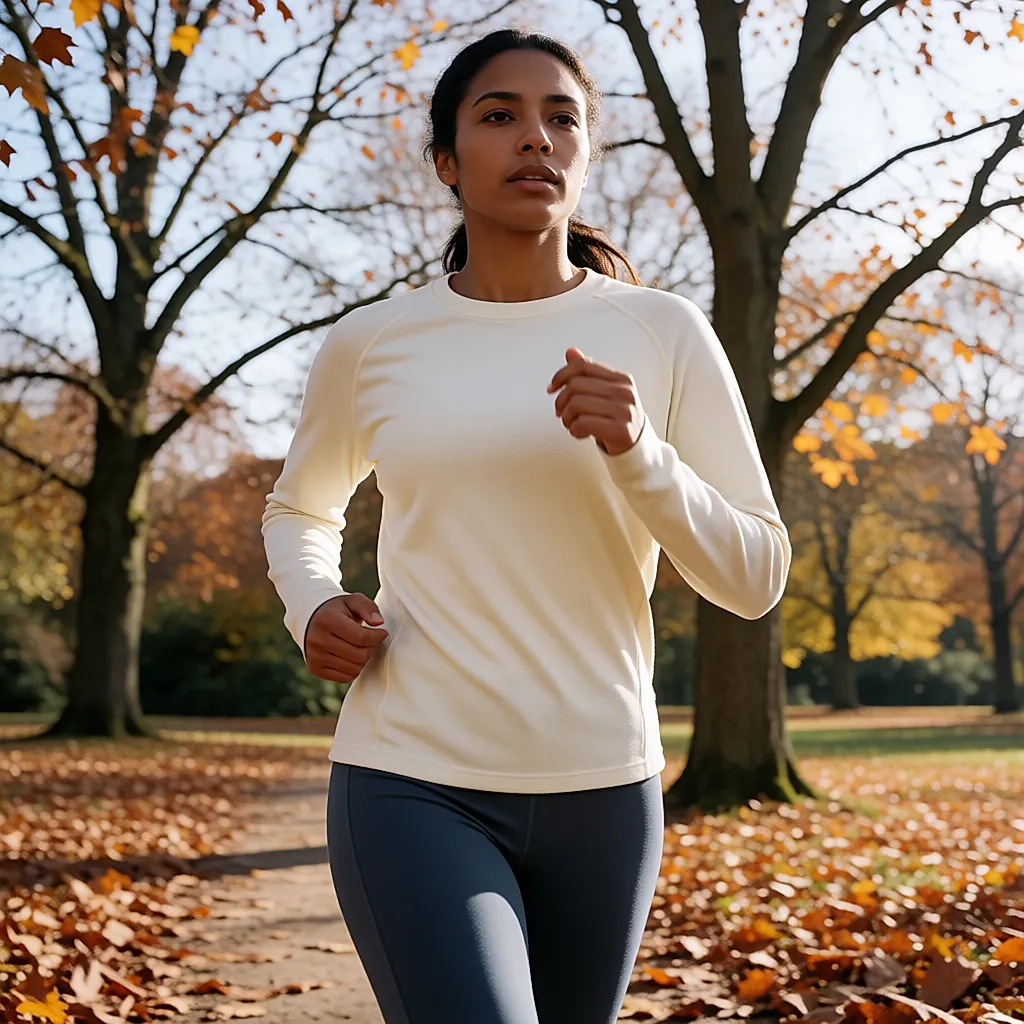
What we ask of workout kit is that it does not remind us it is there after ten minutes. Fine wool handles that well: it tends to stay soft against the skin, tends not to cling when you sweat and tends not to turn cold abruptly when the effort drops. For running, fine wool leggings are the ones that win people over; in the gym, merino T-shirts and vests seem to be gaining ground on synthetics. Style has followed suit: no more grandad jumper, but fitted shapes, flat seams, deep colours and a matte drape that works as easily under a jacket as with a full sporty look.
Wool does have its limits, and it is worth saying so. It is more fragile than polyester when it comes to repeated rubbing: a backpack, a waistband, bra straps. On an interval session with a lot of friction, a very fine wool can bobble and wear into holes. It also needs a little more care: a cool wash, a wool cycle and drying flat rather than tumbling. Nothing too daunting, but it is worth knowing before you invest.
What wool really costs
On price, wool is playing in a different league. As a rough guide, expect to pay in the region of £45 to £80 for a merino T-shirt, £65 to £110 for leggings, and £55 to £100 for a thicker base layer. Specialist brands such as Icebreaker and Smartwool sit in this bracket, and Odlo also makes wool base layers. Some mainstream brands and recycled merino can bring pieces in at a lower price, though lighter weights may hold their shape less well over time. Polyester basics, by contrast, often cost a fraction of that; the gap is real, and it does not disappear at the till.
The right question is not just the purchase price but how the piece wears. A polyester T-shirt often needs washing after every session, can hold on to odours and may eventually bobble; a wool T-shirt is washed less often — often after several wears — and can be repaired and kept. A hole can be darned, a seam re-sewn. Over time, the price gap can narrow depending on how you use it. But if your budget is tight, one carefully chosen wool piece is a better bet than a whole wardrobe of synthetics: the piece you wear most often is the one that counts.
Before you buy, check the wool content: some pieces labelled merino are not necessarily 100% wool. Look for flat seams at the shoulders and sleeves, the kind that do not press into your skin under a backpack. And if the price makes you hesitate, start with a neutral-colour base layer that works under everything. It is often the best cost per wear in your workout wardrobe.
If you are only going to buy one piece, make it the merino T-shirt or base layer, the one closest to your body. You will soon see whether the promise holds for you: fewer washes, less odour, a different way to run. As for the rest, there is nothing wrong with keeping your old polyester leggings for days when you are not aiming for much.



Comments
Your opinion matters: rate the article, react and reply to comments.
Comments are moderated; AI-assisted comments are flagged. Text emoticons (8-), :-), <3…) are automatically shown as images.