
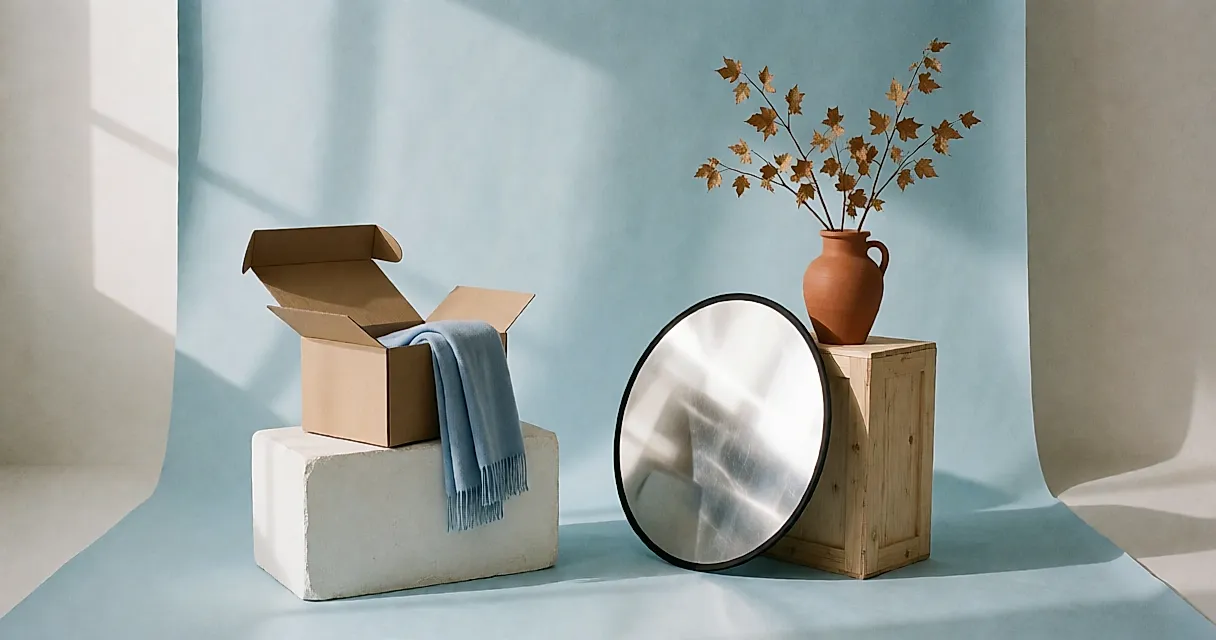
Warmth isn't about thickness
We assume warmth comes from bulk. What actually insulates is the still air trapped between the stitches — thickness simply stores more of it. But there's a second condition nobody mentions on the shop floor: the fibre has to let out the moisture your body produces. A scarf that holds onto it turns your collar into a little greenhouse. So where does the illusion come from — that two knits so similar to the touch are interchangeable? After our pieces on wool versus acrylic and on cashmere scarves, we're digging into the detail here: the job air and moisture do, how you wear the thing, what to check in store and what you should expect to pay.
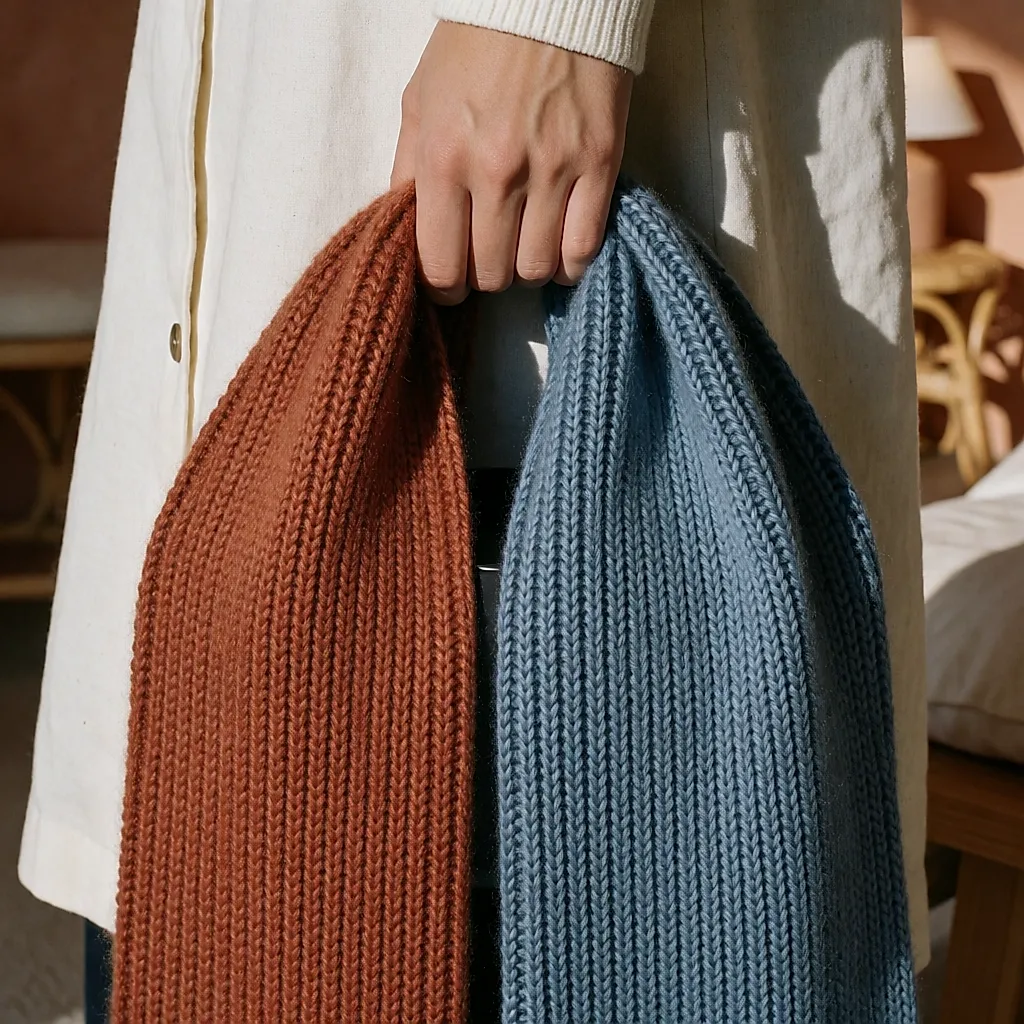
Wool absorbs some of the moisture and can hold warmth better when you're lightly sweating. Acrylic absorbs very little, and depending on the knit, the weight, your activity, the layer underneath and the humidity, it can feel clammy — not every time, though. In dry conditions, acrylic can insulate perfectly well too. It isn't purely a question of price: the fibre counts, but it isn't the whole story — and no care label will shout that at you.
Loose, and above all not too tight
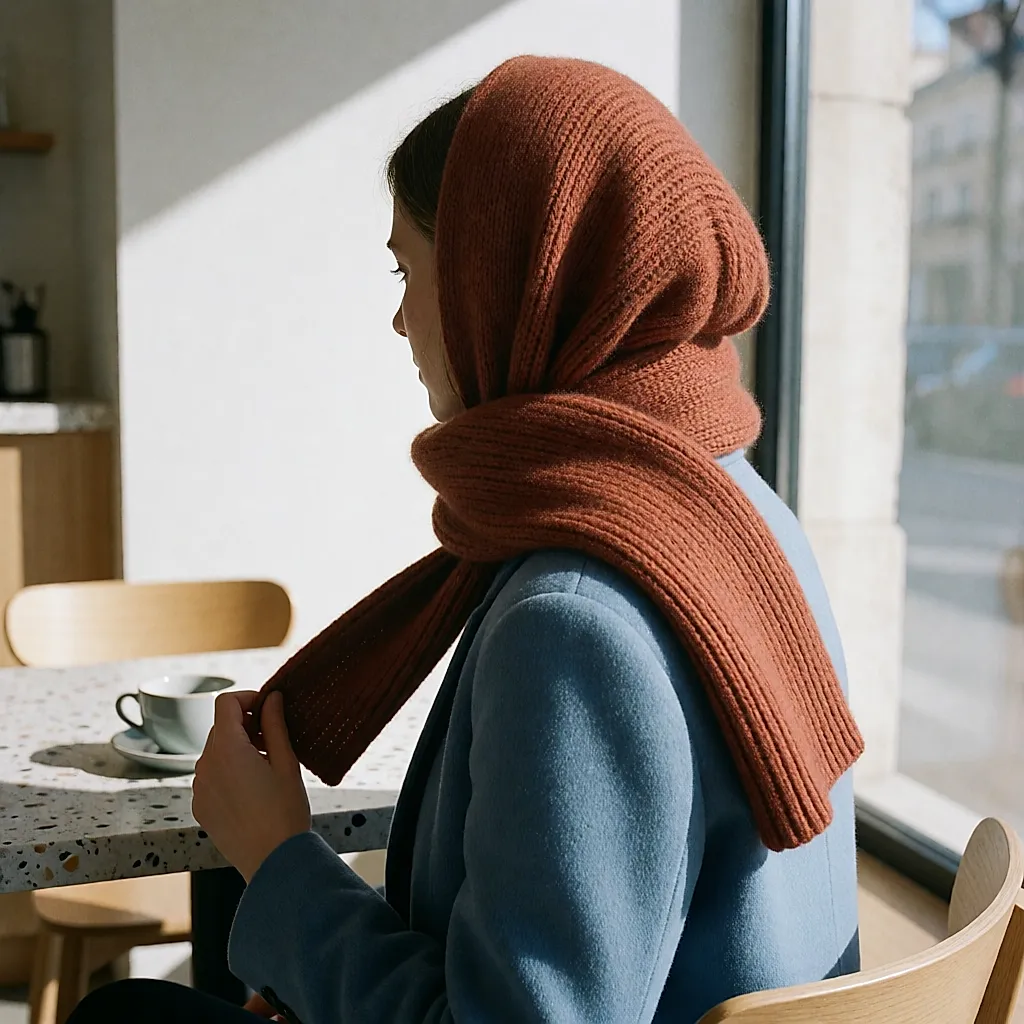
The second decision is free: how you wear it. A wide scarf, wrapped in two relaxed loops, creates a layer of air between it and you. That layer works for you all day. Wind it tight and you press the knit against your collar, flatten the air layer and lose the very warmth reserve you'd just built up. A duvet squashed at the bottom of a bag warms nobody, and neither does a scarf knotted short.
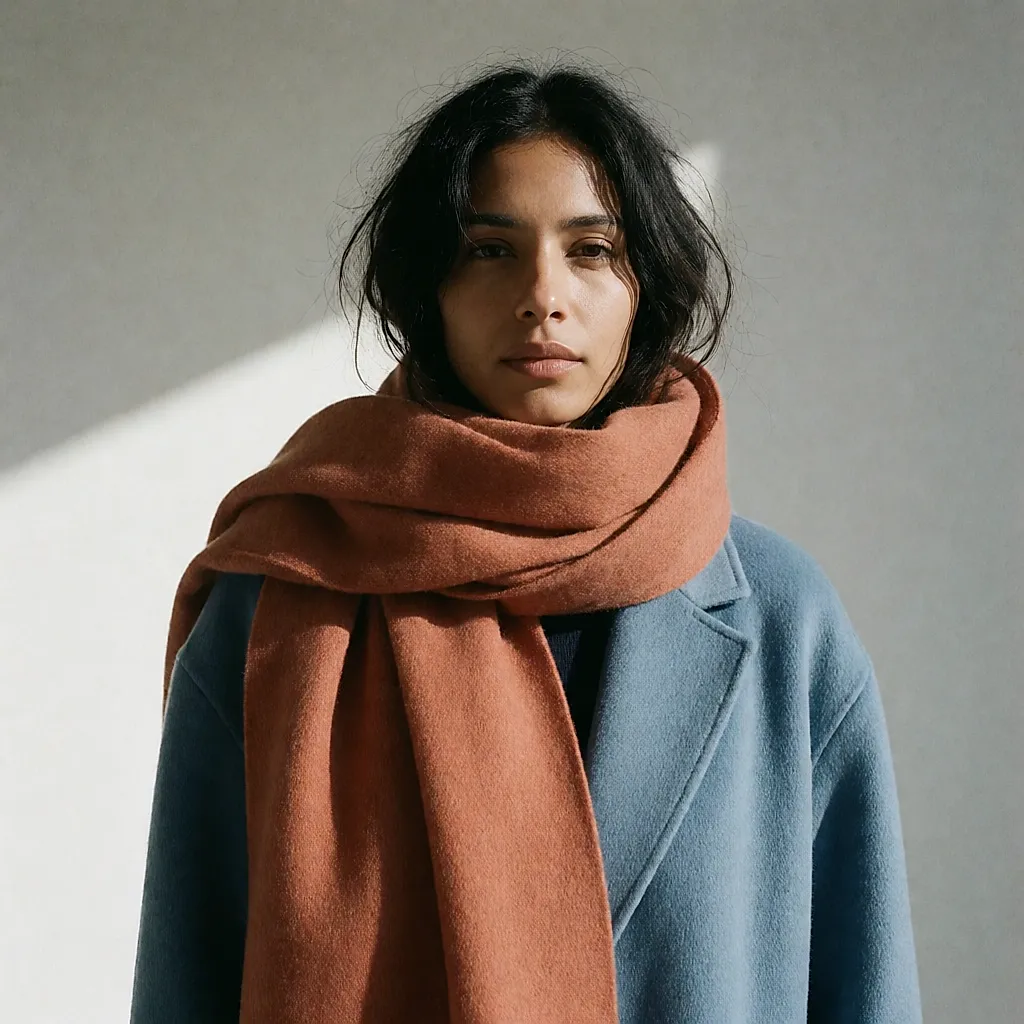
There's the geometry, too. Wide, the scarf comes up over a shoulder, covers the upper back, tucks under a coat collar — all places where the body loses heat without you noticing. Pulled tight in a single loop, it closes the neck but leaves the shoulders bare, and you end up with a warm neck and a cold everything else. Why do you think XXL scarves come back every winter with clockwork regularity?
The label is the judge
In the shop, the essentials fit on one small label sewn inside. Read the percentage before the fibre name: '60% wool, 40% acrylic' doesn't behave like '100% wool', even when the two pieces look like twins. Fibres are listed in descending order of quantity, so the first number is your best clue. Check the share of synthetics — it often explains part of the price gap, which is information in itself.
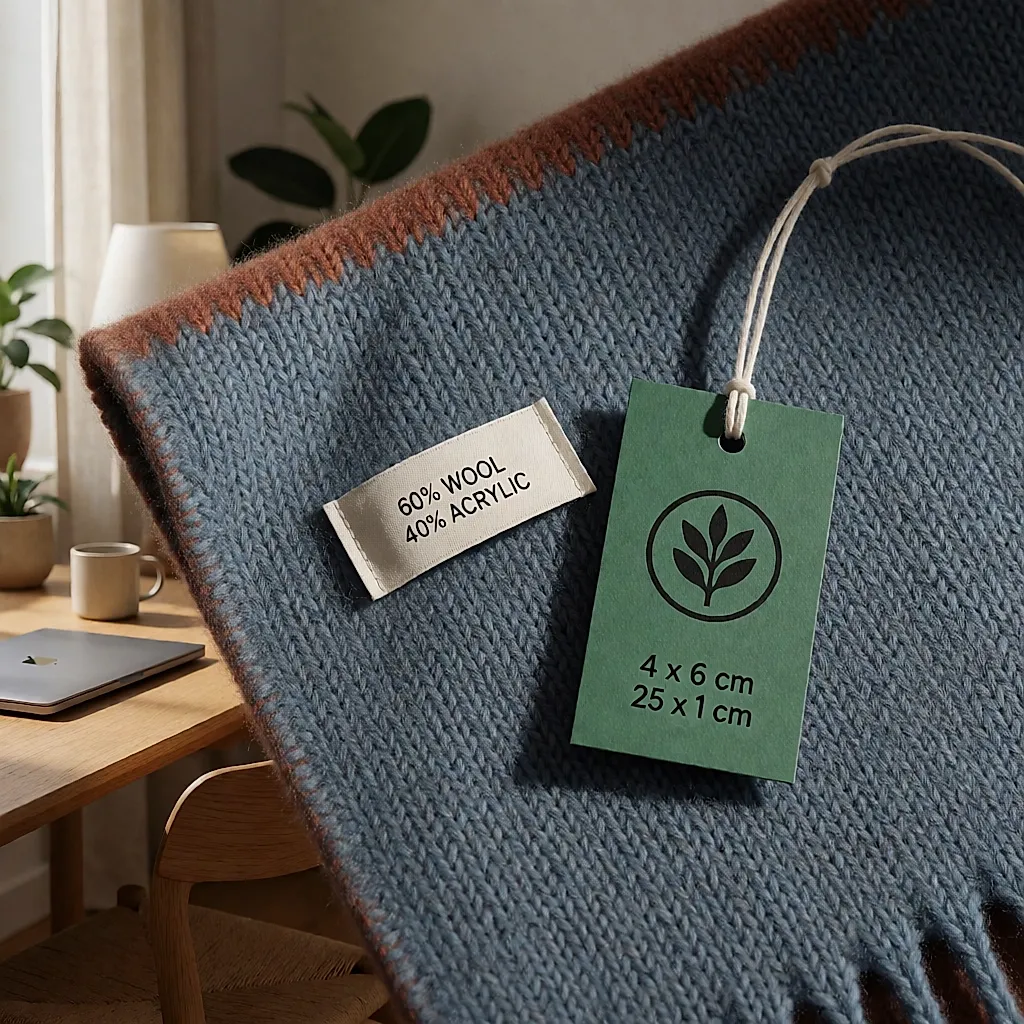
Then there's comfort, which doesn't always read off a label. A rustic wool that scratches will never feel warm to you if you spend the day aware of it; a fine merino or a soft alpaca sits against the neck without drama. As for benchmarks, a label such as RWS (Responsible Wool Standard) covers welfare and traceability in wool farming, while OEKO-TEX Standard 100 aims to limit unwanted substances in textiles: useful starting points, not diplomas of quality. And recycled wool can reduce demand for newly shorn fleece; its knit can be a little more fragile, so judge it against how you'll wear it.
What to budget
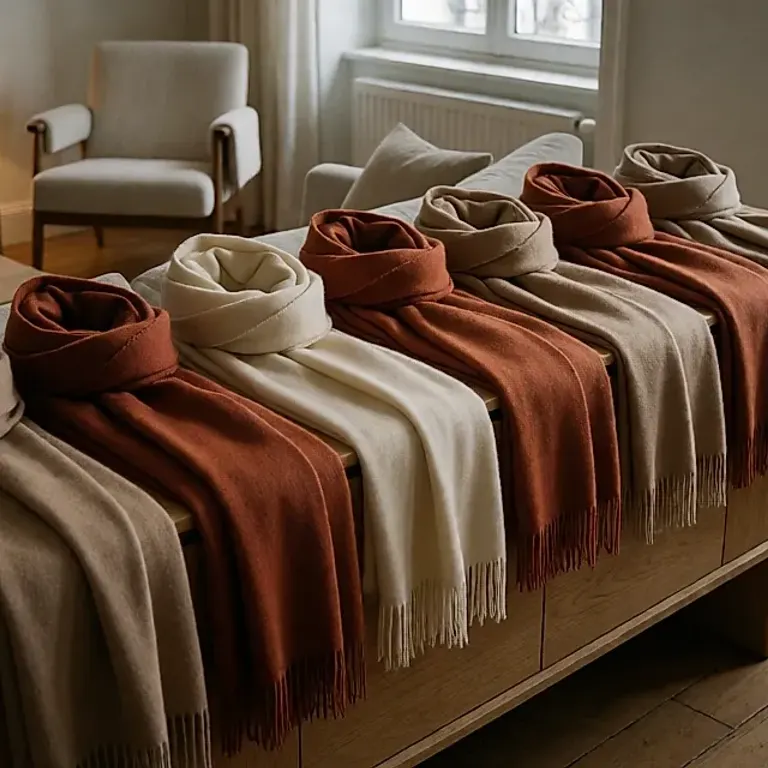
Wool scarves start at around £20 in the supermarket for recycled or rustic wool; fine merino tends to sit between £50 and £100, with cashmere or alpaca at £120 to £250. In charity shops, expect £8 to £20 for a piece that has already proved itself — and that's often where the best find is hiding.
What moves the price? Where the fibre comes from, how fine it is, the density of the knit, the brand, the city, and when you buy: in the January sales the markdowns do the sorting for you. Where to find one: supermarkets and high-street fashion chains for entry prices, specialist labels and knitwear studios for the fibre itself, charity shops and resale apps for a bargain. A wool scarf can be repaired, washed and kept — which makes second-hand especially good value.
Three checks in store. Hold the knit up to the light: if you can see the room through it, it'll be light but not very covering. Scrunch it in your hand for ten seconds: a dense knit springs back, a loose one keeps the crease. Then lift it: a big wool scarf has some weight to it, and that's usually a good sign — trapped air alone adds almost no weight.
The short answer
If you're only buying one, put your budget into a wide, soft wool scarf worn in two loops that aren't too tight: that's the combination that keeps you warm without turning your collar into a sauna. Around £30, a generously sized recycled wool does the everyday job very well; around £80, a fine merino gives you the same warmth with a smarter drape, under a city coat or with a padded jacket.
Two scarves, one neck: you may as well pick the one that lets moisture out instead of storing it, and lets the air do its job. Caramel won't keep you warm — but it will go with everything else.

Comments
Your opinion matters: rate the article, react and reply to comments.
Comments are moderated; AI-assisted comments are flagged. Text emoticons (8-), :-), <3…) are automatically shown as images.