
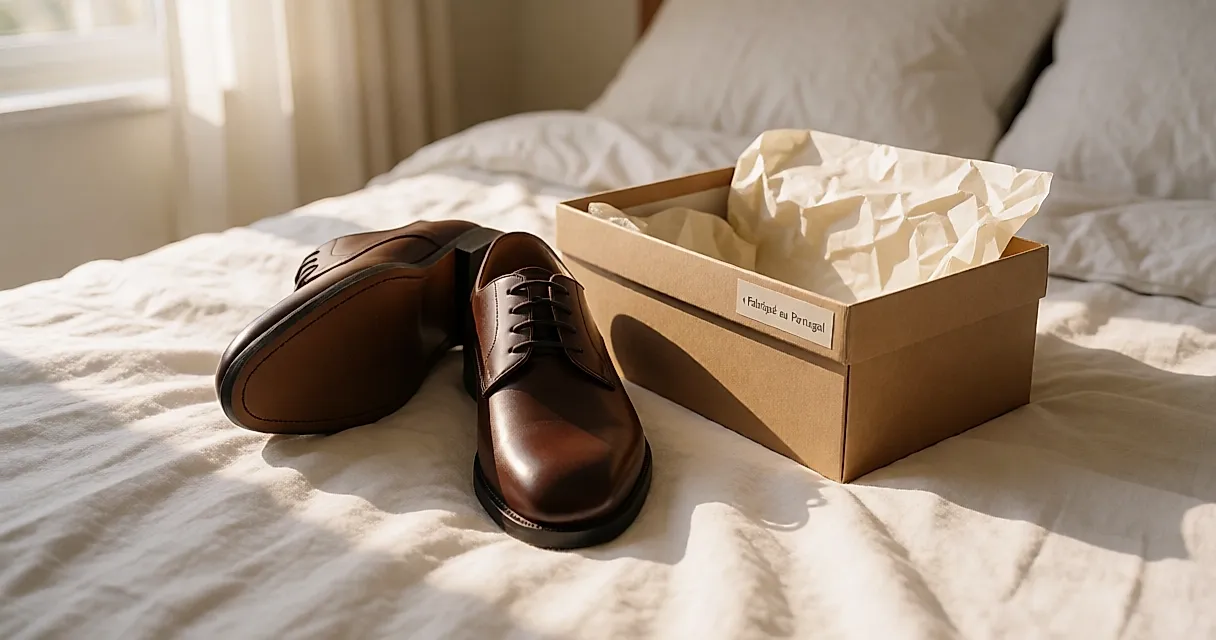
The box is still open on the bed, the tissue paper scrunched into a ball beside it, and you read the label before you'd even tried on the first shoe. "Made in Portugal." Three words, and the pair suddenly looks different — enough, at any rate, to justify paying a little more. Where a shoe is made hasn't changed; its status has. And that's where it gets interesting.
Country of origin is climbing the sales pitch
Not long ago, a product page opened with the material and the colour. Now "made in Italy", "assembled in Portugal", "Spanish leather" turn up in the first few lines — sometimes on the shelf ticket itself. The shift says something simple: once a pair costs more than a decent dinner out, "why is it this price?" starts to matter more than "what do I wear it with?". The country is a short, reassuring answer that fits on two centimetres of cardboard.
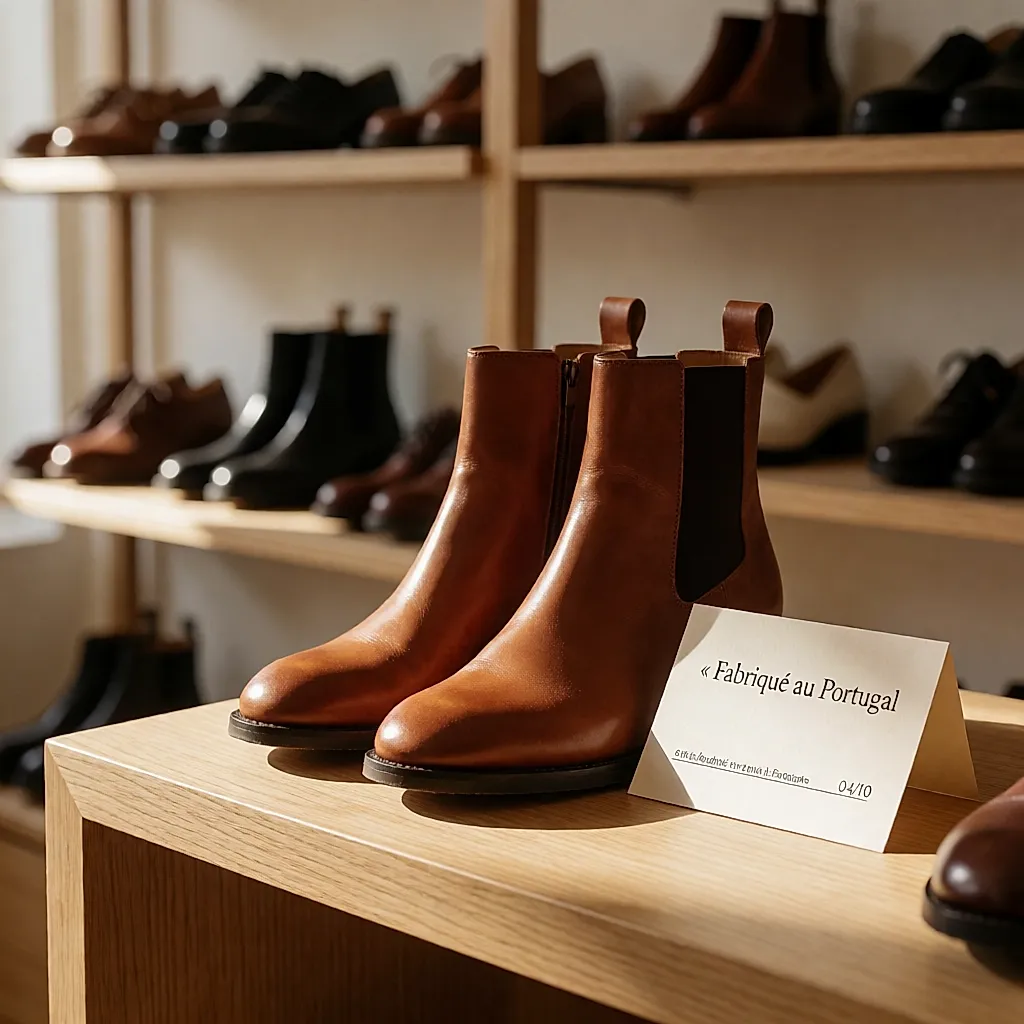
And it's a very comfortable shortcut. The country stands in for a guarantee, much as a village name does on a bottle of wine. Except a "made in" label won't tell you whether the leather was properly tanned, or whether the stitching will survive a wet British winter. Origin is not proof of quality: it's a piece of information, and you still have to know what to do with it.
What the origin label doesn't say
An origin label doesn't cover the whole journey: Italian leather cut and assembled in a workshop in Porto can end up in a shoe sold as "made in Portugal". That isn't necessarily a trick, but it is a reason not to picture some beautifully short supply chain.
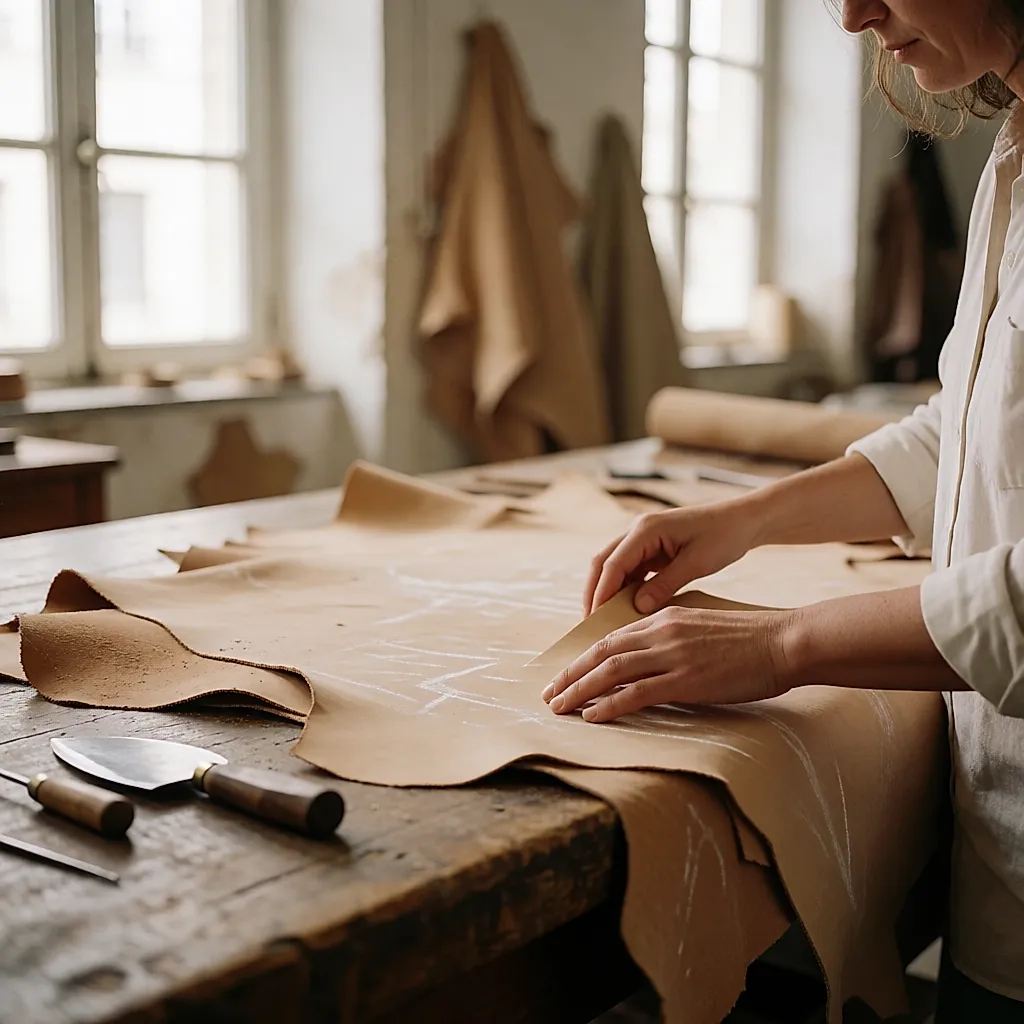
What it doesn't say would fill a notebook: where the leather came from, how it was tanned, how long the workshop has been running, the pace the machinists work at, the brand's margin. Two pairs "made in Portugal" can come out of a long-established family workshop or a rushed subcontractor — and sell at very different prices. Same label, different worlds.
What to check before you even look at the material
Start with the workshop, not the country. A product page that names a town, a workshop, sometimes a family of shoemakers, tells you more than a floating "made in Europe". A brand that is upfront about the exact place usually has less to hide than one that isn't.
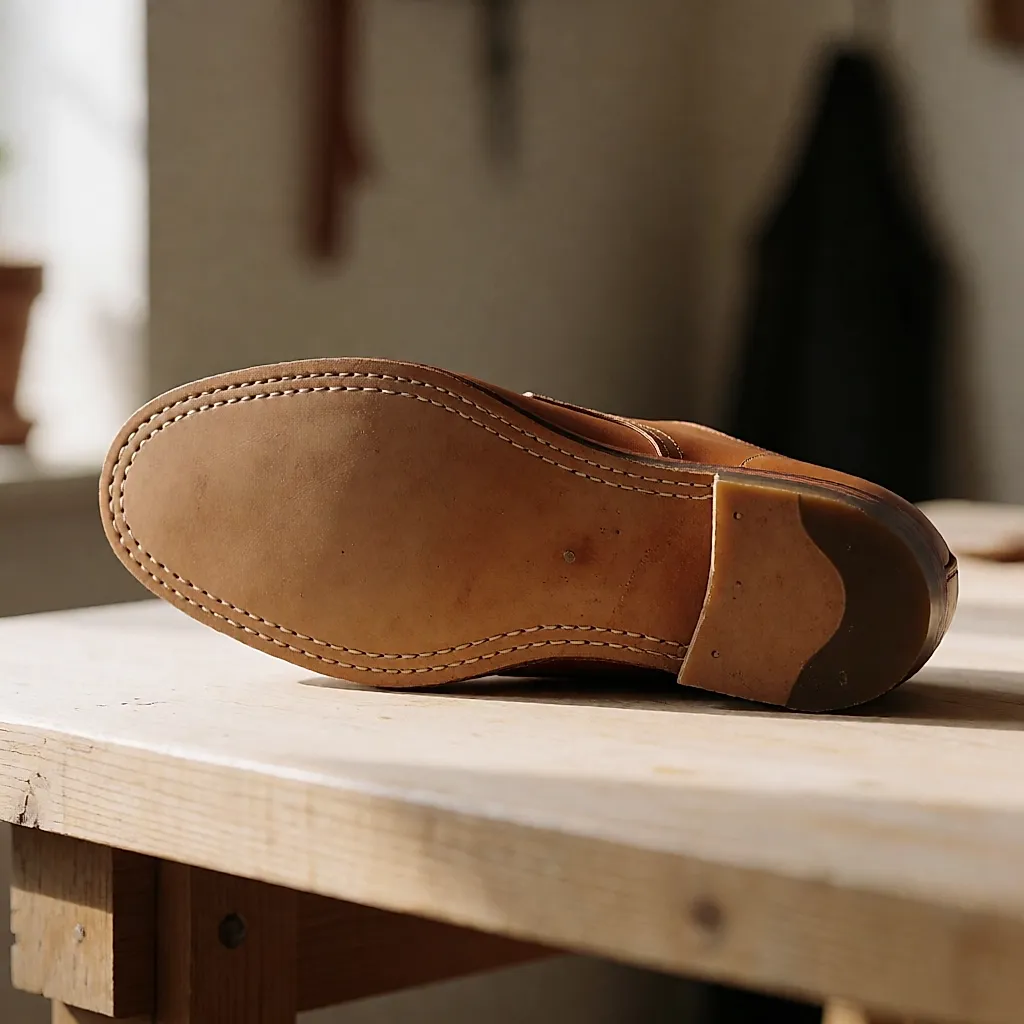
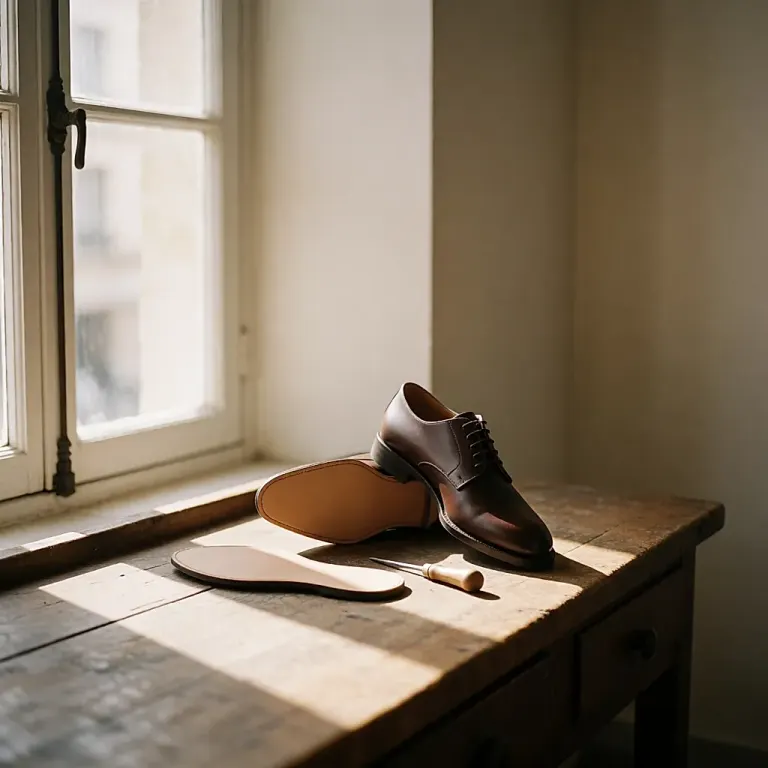
Next, look at the material — yes, after the origin, which feels strange when you're used to doing it the other way round. Origin narrows the field; material makes the call. Full-grain leather on a stitched sole can be resoled more easily as it wears; a glued construction can be resoled too, but less consistently, and it varies with the model, the construction and the cobbler. That's where the real lifespan sits, far more than on a flag printed under the heel.
And ask the awkward question, with a smile: who stitches it? If the answer stays vague, treat the "made in" line as shop-window dressing rather than a buying criterion. It doesn't condemn the pair; it just puts it back in its place in the comparison.
Three things to look for on the product page before you commit: the name of the workshop (or at least the town), where the leather comes from and how it was tanned, and the sole (stitched or glued). If the page only mentions "the EU", ask — the answer is often revealing.
Budget
On price, a declared origin costs money, but not in a straight line. As a rough guide — and these figures shift from one retailer to the next and from one season to the next — expect somewhere in the region of £80 to £160 for a pair assembled in Portugal or Spain, £130 to £300 for Italian, and often £160 to £350 for made in France, and more again from a proper shoemaker. These aren't hard rules: the town, the brand and the finishing move the figure as much as the country does, and the same origin can cost twice as much depending on where you buy it.
The next time you read a label before you check the size — and you will, as we all tend to do — read it as the start of a conversation rather than a certificate. "Made in" tells you where the pair came from; the material, the stitching and the name of the workshop tell you how long it'll stay on your feet. The rest is often marketing, and it packs away nicely back in the box.

Comments
Your opinion matters: rate the article, react and reply to comments.
Comments are moderated; AI-assisted comments are flagged. Text emoticons (8-), :-), <3…) are automatically shown as images.