
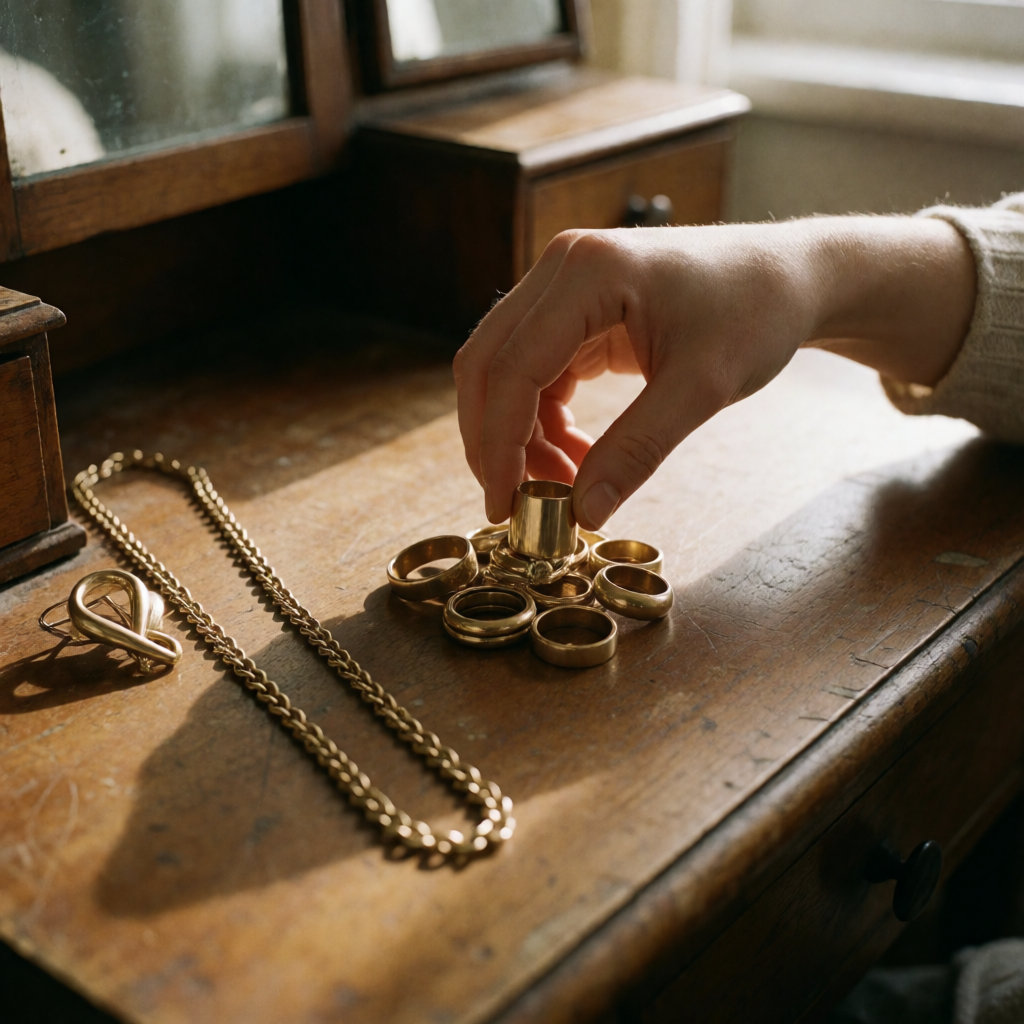
You've been there: a ring for a few pounds that gleams like a little sun when you buy it, and three days later a greenish mark on your finger makes you regret the impulse. It isn't bad luck, nor 'difficult' skin. It's plating that's too thin over a base metal, and wear that sets in faster than you'd think. Costume jewellery isn't a bad buy, though — it's a buy that ages quickly, and that can be managed.
Good news: at a low price, you can find pieces that last a little, a lot or a very long time. It all comes down to the label, and how you wear them once they're in your jewellery box.
What the label really tells you
The principle never changes: a base metal, usually brass or zinc alloy, coated with a very thin layer of gold or silver. That's plating. The thinner the layer, the faster it wears with contact with skin, sweat, perfume and water. In the UK, unlike France, there is no single legal minimum for the term 'gold plated', so it pays to check whether the micron count is stated. Hallmarks are the reliable guide for solid precious metals: 925 means sterling silver, 375 is 9ct gold and 750 is 18ct gold. Vermeil usually means sterling silver with a thicker gold coating, but definitions can vary. These words don't speak about style or beauty — they speak about lifespan. That's exactly why they're worth checking before you get to the till.

Another point we often forget, and which still matters: nickel. UK law restricts nickel release from items in prolonged skin contact, and that's not a detail if your earlobes are sensitive. If yours redden within an hour of wearing, look for stainless steel, titanium or solid silver, and check for 'nickel free' marked on the piece itself — not just promised in large print on the product page.
Style doesn't depend on price
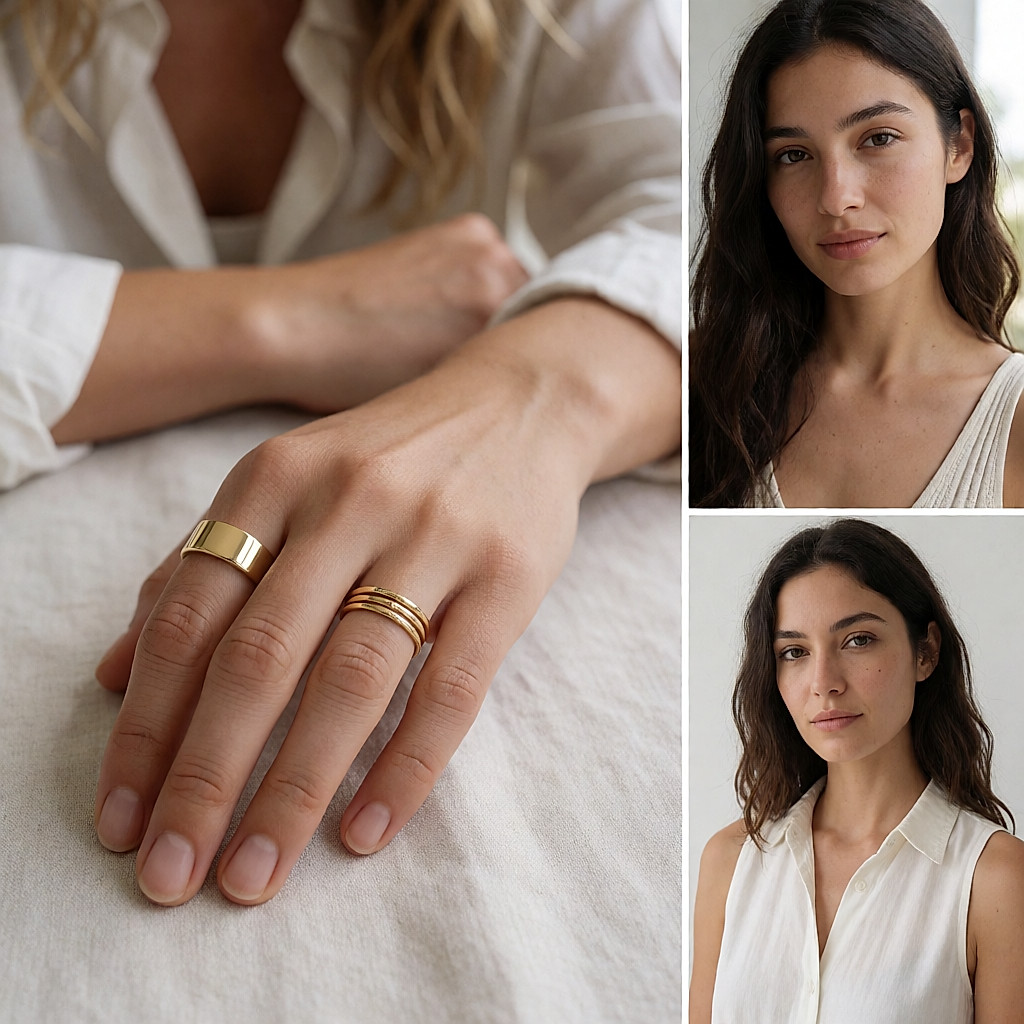
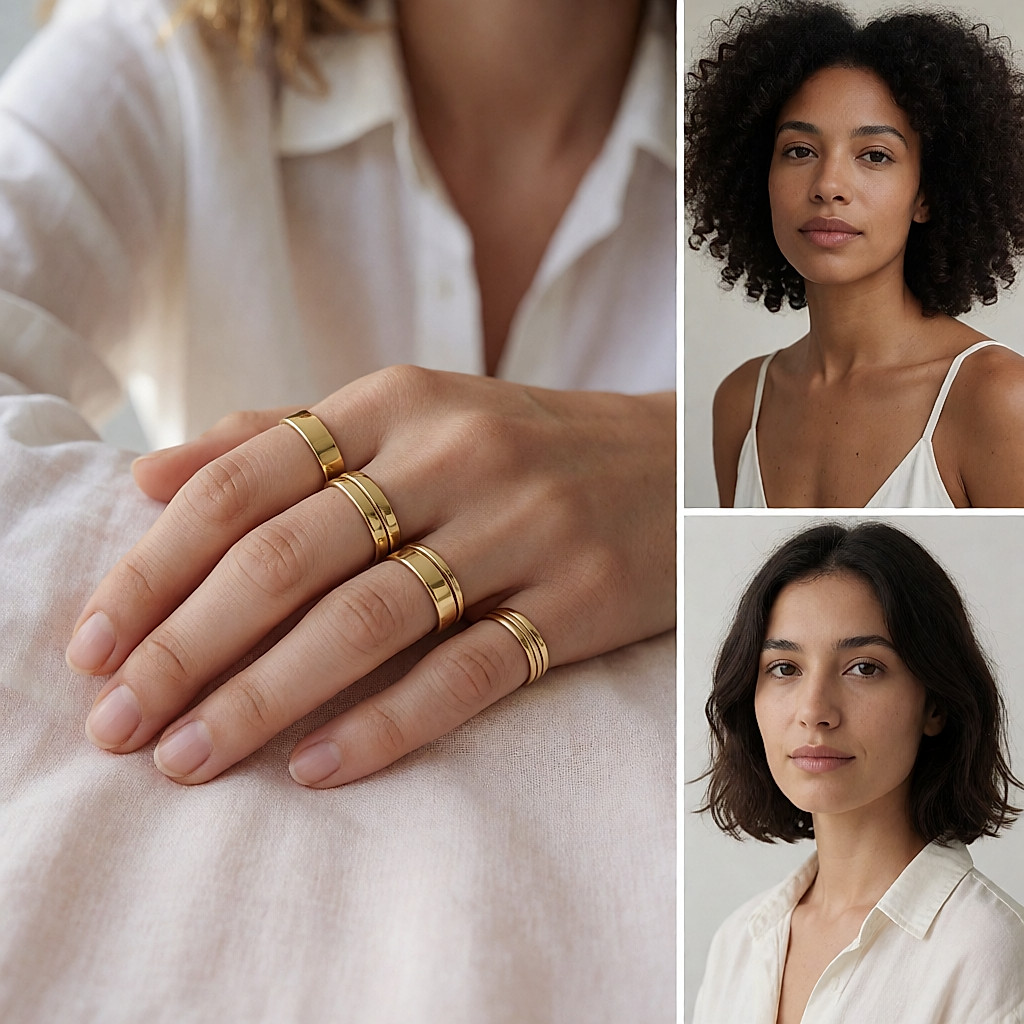
An inexpensive piece has every right to be a statement piece, and that's no compromise. What does the work isn't the value of the metal: it's the volume, the line, the way the piece sits on the skin. A wide flat ring lengthens the fingers, while a discreet solitaire leaves them as they are. A long pendant necklace stretches the silhouette over a roll-neck or fine jumper, and its material catches the light without overdoing it. A brooch pinned to a jacket lapel, or on the pocket of a canvas tote, moves the focal point without changing the rest of your outfit — and that's a fashion move that costs next to nothing.
For a crisp look, layer intelligently: two chains of different lengths, one fine and one heavier, and you're done. Avoid stacking three thick pieces, though — the texture becomes confusing, the total look loses clarity and the eye doesn't know where to land. Another simple rule: stick to one dominant metal, all gold or all silver, so the look answers itself. A capsule accessory wardrobe, in truth, comes down to five or six well-chosen pieces, not thirty sleeping in a drawer.

The habit that changes everything
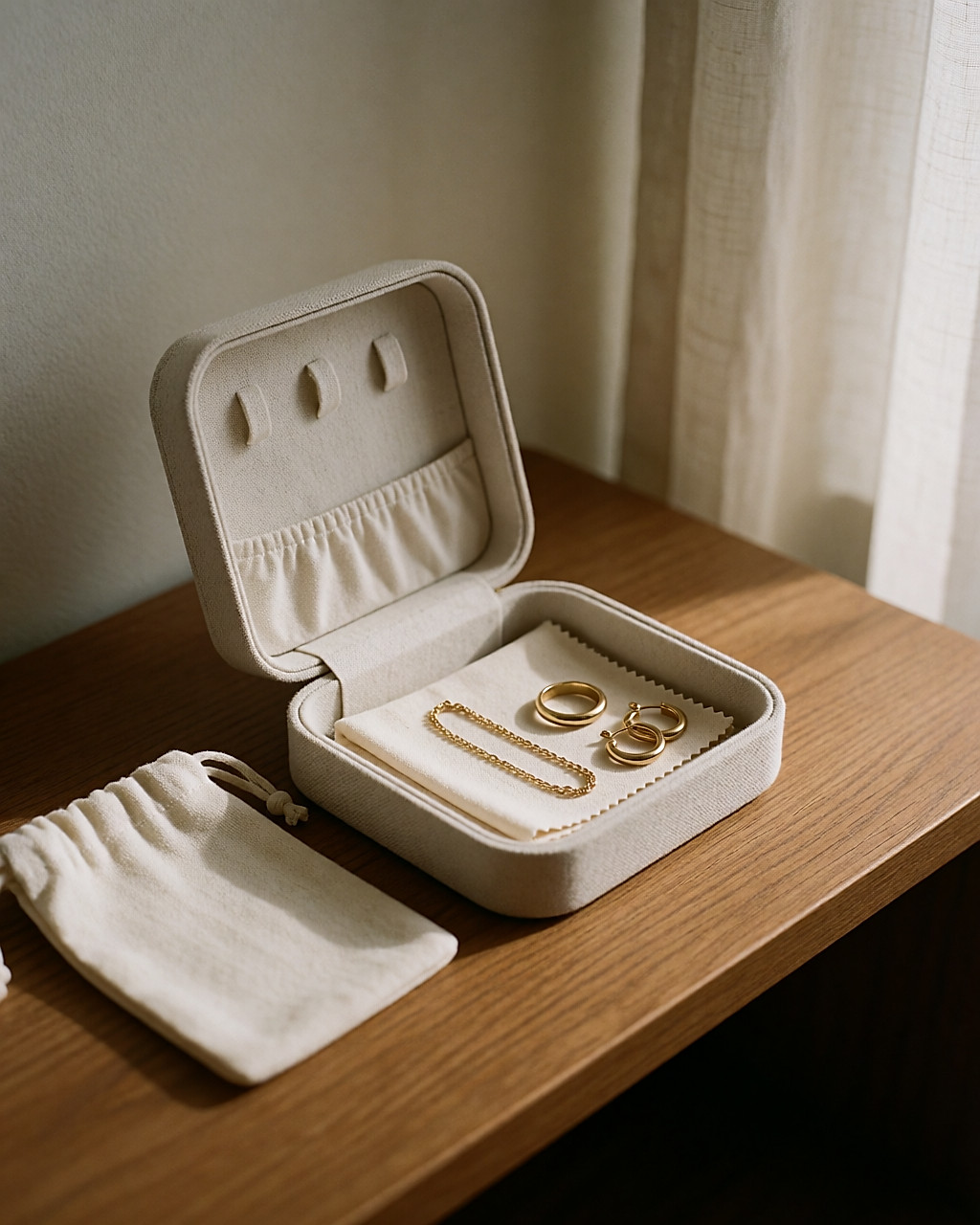
And then there's care, a grand word for two or three very simple habits. Remove your jewellery before showering, swimming and sport: chlorine, salt and sweat are the three enemies of thin plating. Store them away from humidity, and definitely not in the bathroom where steam does its quiet work. A soft cloth is enough to revive shine day to day, and solid silver can be cleaned with an impregnated cloth rather than an abrasive that scratches the surface. Nothing laborious, you'll have gathered — and these few habits clearly extend the life of a budget piece.
One detail we also forget: regularly inspect the catches, clasps and soldered joints on the reverse. If plating peels or blisters, no glue will save it, and it's better to know before you pay than after. A costume piece that gives up within weeks isn't a steal — it simply wasn't made to last. By choosing better, you give yourself permission to wear it for longer.
Where to find better without blowing the budget
Three criteria that really matter
- Material: solid 925 silver, stainless steel, recycled brass. These materials last and can be repaired.
- Label: Fairmined certifies gold from artisanal and small-scale mines, with a set minimum price for producers; Fairtrade certifies fair trading terms; the Responsible Jewellery Council certifies supply-chain practices.
- End of life: solid metal can be polished, resold or melted down. A mixed costume alloy, by contrast, ends up in the bin with no other future.
Second-hand remains a very interesting route for value. An old solid silver piece sometimes costs less than new plating, and it has already proved itself. Car boot sales, charity shops and specialist platforms are full of these little treasures you can pick up for a few pounds. On the new side, some brands work with recycled gold and silver with traceability, and the information should appear on the product page. Let's be clear: these pieces have not been tested here — this information comes from brand documentation and certification standards, not laboratory testing.





Budget
Expect roughly, in the UK:
- Classic costume jewellery: £5 to £30 on the high street, from a fashion chain or online. Plating is often fragile, best for pieces worn intermittently.
- Stainless steel: £15 to £45. Better resistance to water, often recommended for sensitive skin.
- Recycled brass: £15 to £45. It can tarnish and leave greenish marks on skin; best for pieces worn without illusions about longevity.
- Solid 925 silver: £25 to £70 for a simple piece. It can be polished, resold and almost passed on.
- Vermeil, recycled gold, Fairmined gold (gold from artisanal and small-scale mines): £60 to £250 depending on weight. A different budget, but a repairable piece.
- Second-hand: £5 to £60 in charity shops, car boot sales or specialist platforms.
These ranges obviously vary by material, weight, brand and where you buy: a designer at a market, a department store, a high-street jeweller and an online shop won't display the same prices for a visually similar piece. Good find if you get it cheaper second-hand — that's often where the smart money goes.
So shop with fresh eyes: turn the piece over, read the hallmark, consider the material and your earlobes. The best habit is never to buy without seeing the reverse — 925, gold plated, steel. And remember that a well-chosen piece accessorises many outfits, while a fragile piece covers only one, for a weekend. Budget-wise, you spend more intelligently, and style-wise, you have just as much fun!
Sources
- Office for Product Safety and Standards — Guidance on precious metal hallmarks and consumer information, gov.uk.
- Health and Safety Executive (HSE) — UK REACH restrictions, including nickel release, hse.gov.uk.
- Fairmined — Artisanal and small-scale gold standard, fairmined.org.
- Fairtrade Foundation — Gold and precious metals standard, fairtrade.org.uk.
- Responsible Jewellery Council — Certification standard, responsiblejewellery.com.
- WRAP — Resources on sustainable consumption and the circular economy, wrap.ngo.




Comments
Your opinion matters: rate the article, react and reply to comments.
Comments are moderated; AI-assisted comments are flagged. Text emoticons (8-), :-), <3…) are automatically shown as images.