
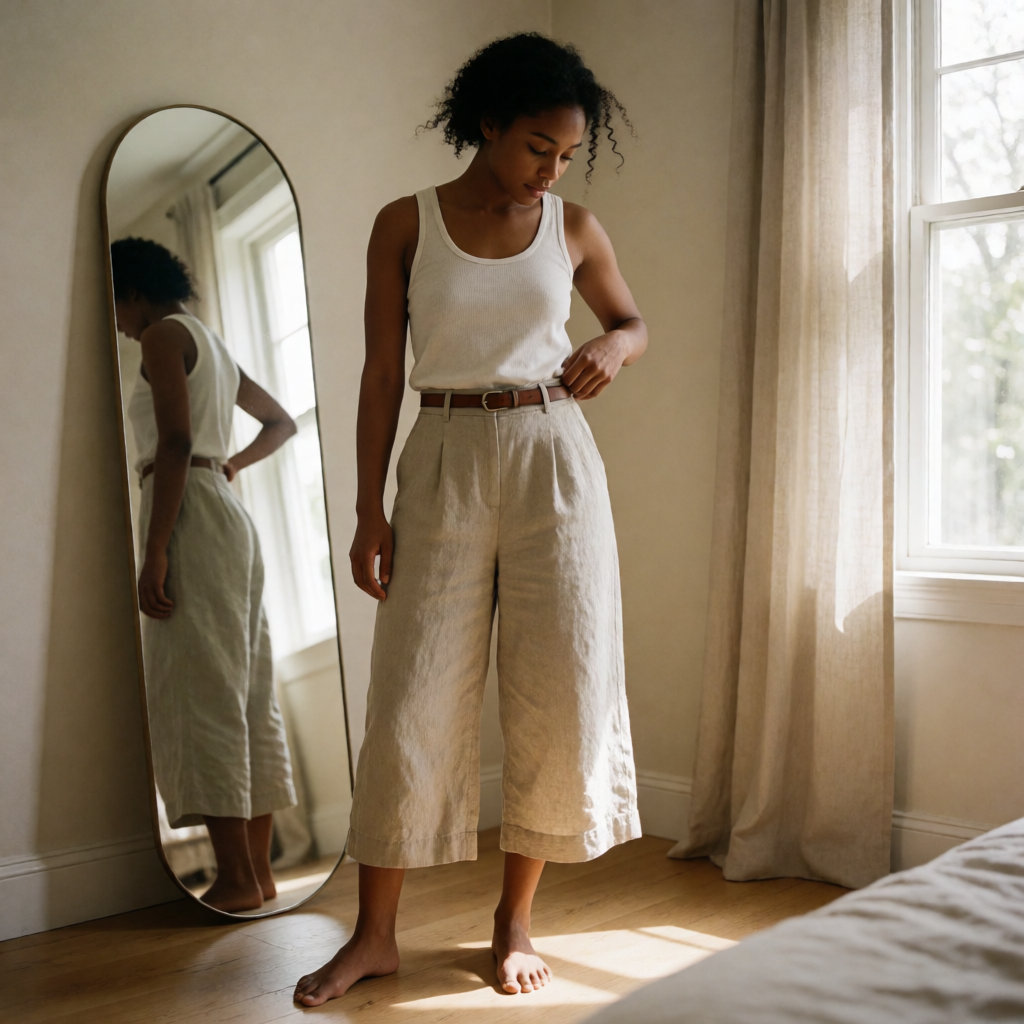
How to wear cropped trousers
We've all had that moment in the fitting room, pulling on a pair of cropped trousers with a sceptical frown and wondering whether we're sabotaging our legs. It's the piece we love to hate, the one that reappears every summer with a whole set of doubts. And yet we keep coming back to it. Because when it's worn well, it's probably the most comfortable cut in the wardrobe, and the one that most easily forgives two minutes of adjustment in front of the mirror.
The problem is never the cropped trousers themselves, but the hem that doesn't fall quite right. A fabric that's too stiff, a hem placed at random, and the whole look goes askew. The good news is that it all comes down to two or three simple checkpoints you can verify in seconds.
Length: the first checkpoint
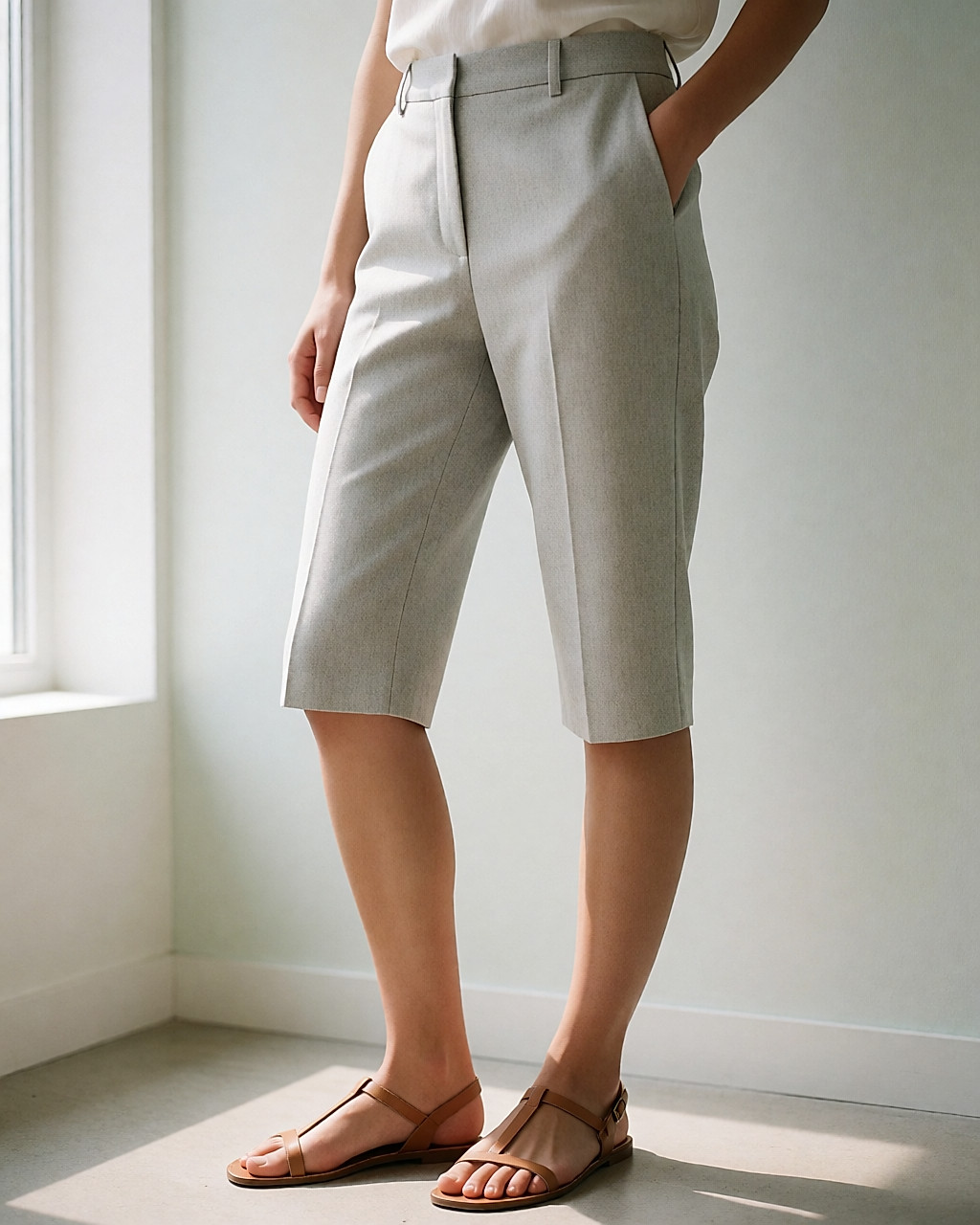
Before you look at colour or fabric, look at where the hem ends on your leg. That's where everything is decided. If you're self-conscious about your calves, a cropped cut that stops at the knee or just above draws the eye upwards: the leg looks longer, the silhouette sharper. No mystery — it's simply an effect of line.
For the slimmer or taller, you can afford to go five to ten centimetres below the knee, down to the ankle for a long cropped trouser that almost touches the shoe. None of these options is better than another — your body shape decides.
The hem that doesn't forgive, however, is the one that falls right in the middle of the calf. It cuts the leg in two and the look becomes blurred — the worst possible placement. Then a second check: the drape. Good cropped trousers hang straight without biting into the shin. Put them on standing up, sit down, take three steps. If the fabric pulls at the thigh or rides up, the cut is too tight and you'll spend the day readjusting.
Fabric creates the drape
Ultra skinny stretch jeans have probably already let you down, riding up at the slightest bend. Choose washed linen, a slightly thicker cotton, lyocell or a light gabardine instead: these fabrics have a supple hand and fall straight without clinging to the leg. The result is far more polished than you might think, and for an even cleaner effect, a high waist and a sharp front crease are more than enough.
If you're looking for a more responsible piece, several markers are reliable. Linen grown and woven in Europe, for example, or lyocell, a cellulose fibre whose solvent is recovered in a closed loop. For cotton, look for GOTS certification: this label covers the whole chain, from fibre to finished garment. Note, however, that OEKO-TEX Standard 100 only guarantees the absence of undesirable substances in the finished product, not the organic origin of the fibre — the two certifications do not say the same thing. If budget is tight, an acceptable compromise remains second-hand classic cotton cropped trousers, often more understated than a new piece.
The two-minute test. Put on your cropped trousers with the shoes you'll actually wear, then step three paces back from the mirror. If the line of the leg stays continuous down to your feet, that's the right length. If not, take the hem up a notch — or change style, it costs less than an alteration.
What to wear them with
Accessorising cropped trousers is simpler than it looks. For a sharp silhouette, pair a wide cut with a fitted or tucked-in top, plus a fine belt to define the waist. Harem trousers, meanwhile, need a little more layering: a printed tunic, flat sandals, a knotted scarf, and the bohemian look holds itself.
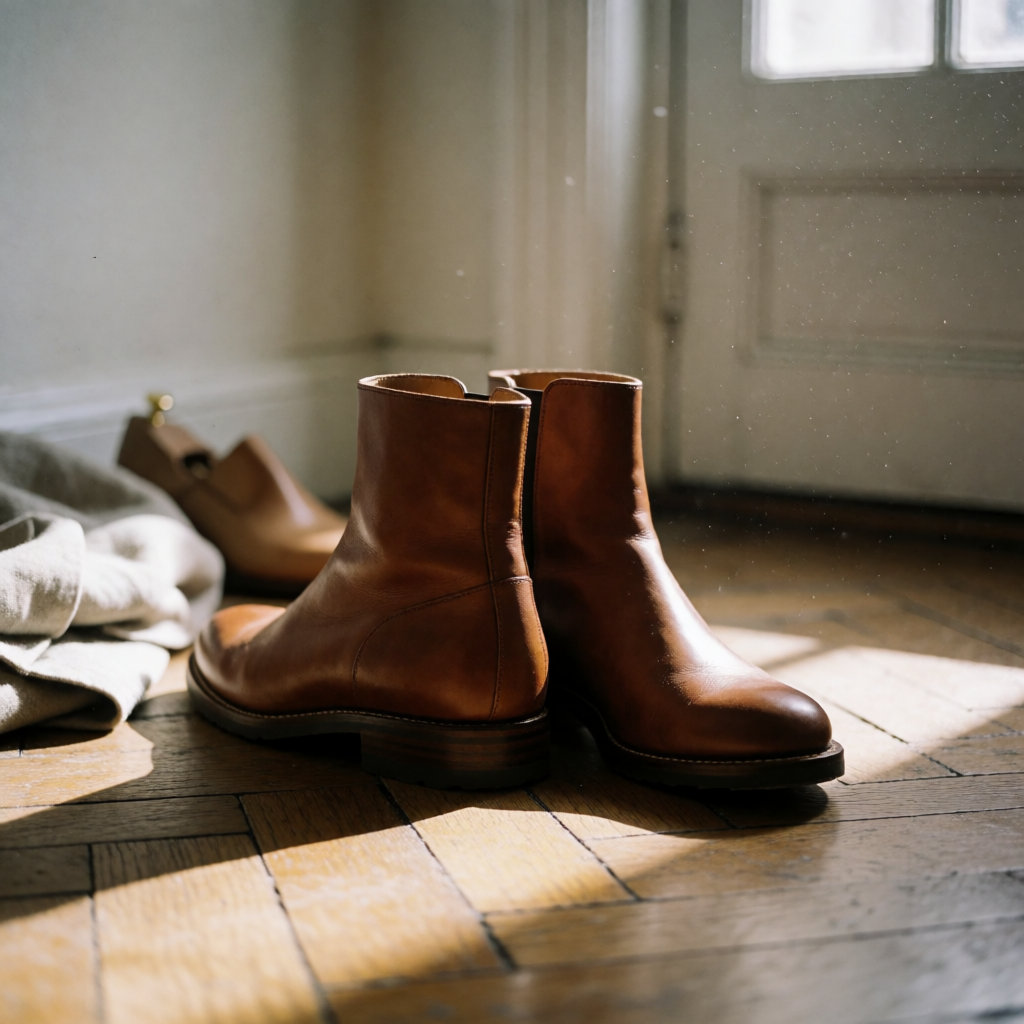
For a tennis-club feel, a polo shirt, low trainers and a sweatshirt tied over the shoulders always do the job. To make the piece more feminine, opt for not-too-high heels and a dressy top rather than an all-black look, which weighs down the silhouette. In mid-season, flat ankle boots and an oversized jumper turn summer cropped trousers into a wardrobe piece that works all year.
One last point, and not a small one: this cut visually shortens the leg — that's a fact. If you want to suggest a taller frame, choose a colour close to your shoes and avoid strong contrast at the ankle. The visual match makes all the difference.
Budget
Good news on the budget front: the range is wide. Expect around £10–£20 in a charity shop or on a second-hand platform, and £20–£35 on the high street. In mid-range ready-to-wear, it's more like £50–£100. Certified linen or lyocell made in Europe often sits between £80 and £155. The variation depends on the fabric, the label, where it's made and the cut.
And if you want to save a piece you already own, having a hem taken up by a tailor usually costs between £10 and £17 — often the best investment of the lot. A well-placed hem changes everything, and it's far cheaper than a new pair of cropped trousers.
Chloé's verdict: yes for weekends, holidays and everyday journeys, as long as you check the length and don't let the hem decide for you. Once you understand where to place your gaze, you stop asking the question — and almost wish you'd thought of it sooner. So, ready to try again? All that's left is to get out the tape measure.


Comments
Your opinion matters: rate the article, react and reply to comments.
Comments are moderated; AI-assisted comments are flagged. Text emoticons (8-), :-), <3…) are automatically shown as images.