

The collections have run ahead of the calendar. Your wardrobe hasn't.
A strappy dress, its spring/summer label still attached at the shoulder, comes out of the box while the winter coat is already in play. The real question isn't whether it's pretty — it is. It's whether it can last another two months without ending up folded at the back of a drawer, waiting for better days.
Because the lag isn't imagined: the first spring pieces often land in shops before the end of winter, when you're still in opaque tights and wool. So what do you do — pack everything away until March? Or look for the dresses that can live through a late autumn pretending to be early spring?
Not every spring dress works under a coat
The one that will serve you in November is rarely the lightest. A thick poplin — a tightly woven cotton that holds its shape — keeps a clean line even when layered: slip it over a fine roll-neck, add tights and boots, and no one will ask what season it belongs to. It's the reliable choice for work without looking as if you've skipped two months of the calendar.
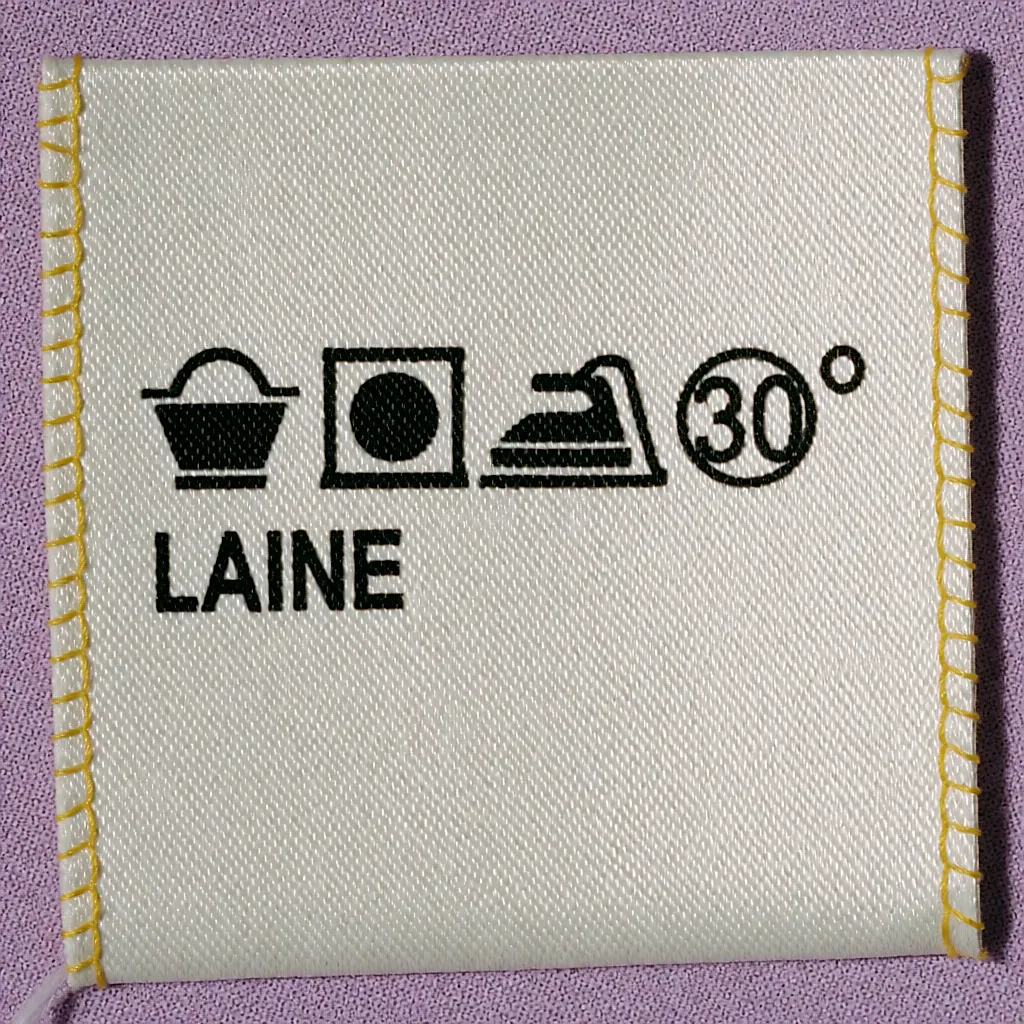
Cool wool comes next. The name sounds daunting; the fabric much less so: it's a light, finely woven wool that wears like a mid-season fabric and works very well with a fine knit underneath. Still check the composition, because the label often says more than the cut: the more wool it contains, the better the dress will last over the years.
Heavy jersey completes the trio. Fluid and comfortable, it forgives heavy Sunday lunches and low-energy Mondays, works over a long-sleeved T-shirt with a cardigan on top, and moves without fuss from desk to sofa. A thin summer jersey, by contrast, can sit this one out: under a coat it will look limp.
Layering, or how not to look as if you're waiting for spring
Three moves and the dress changes season. First, a fine merino roll-neck underneath: it's the piece that turns a strappy dress into a November outfit, and it also adds a discreet extra layer if the dress is close-fitting. Honestly, it's the best cold-weather trick going. Then tights: 40 to 60 denier opaque tights, in black, navy or brown, and the floral print immediately stops shouting 'May'. Finally footwear — knee-high boots, chunky lace-ups or combat boots. Your feet need to look firmly winter, otherwise the rest of the outfit rings false.
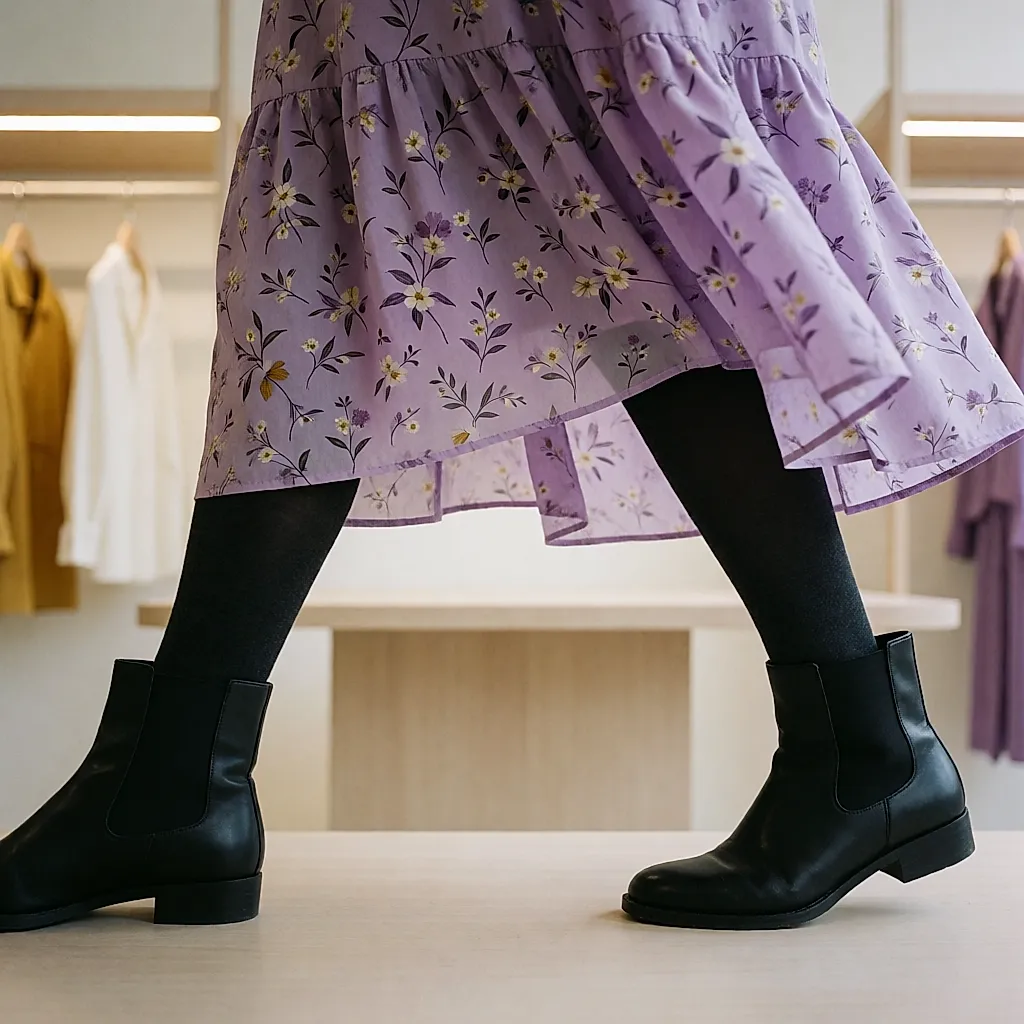
Then there's the coat, and it isn't an afterthought. A straight wool coat, long enough to cover the dress, works every time. A short jacket that stops at the waist breaks the line and turns the layered look into a pile-up. The contrast between a light piece and a heavy one is your best ally — as long as the heavy piece stays elegant.
If the dress is fluid, a belt is enough to give it a silhouette again: mark the waist, let the boots lift the hem a little, and the whole look holds together.
Budget
Price depends on the fabric. For a poplin dress, expect around £60–£150 on the high street, a little more at labels that make a point of their cotton. Cool wool climbs quickly: £90–£250, because the quality range does too. Heavy jersey remains the most accessible, at £40–£120 depending on the density of the knit and where it comes from.
If you're starting from scratch, budget for a fine merino roll-neck (£40–£90) and opaque tights (£8–£25 a pair). And before buying new, have a look at resale sites: a wool dress often drops below £60 there, with the added advantage that the fabric has already proved itself.
If, on the other hand, you hate layering, or your days are spent in an overheated office, this strategy isn't for you: you'll spend the day taking off the roll-neck.
Before you cut the label off, ask three questions. Does the dress fit under a cardigan without adding bulk? Can it take opaque tights without losing its drape? And, most importantly, will you still want to wear it in February? If the third answer is no, it can go back where it came from.
There's no rule against wearing a spring dress in November — just a bit of method and a coat that plays along. Get the box out, test the layers in front of the mirror, and give it a chance now rather than in four months. If it doesn't work, March will be there to catch you.



Comments
Your opinion matters: rate the article, react and reply to comments.
Comments are moderated; AI-assisted comments are flagged. Text emoticons (8-), :-), <3…) are automatically shown as images.