

You open your wardrobe one October morning and the verdict lands, a little depressing: grey, black, camel, everywhere. Yellow, meanwhile, has been banished by all of us to the 'spring, holidays, sorbet' box — as if it were out of season outside the warmer months. That was my mistake too, until I realised that once it's worn on a thick knit or a nicely draping bag, it doesn't make the silhouette feel cooler: it lights it up. That's the whole nuance.
And good news: the trend is on our side this year.

A cold-weather colour, too
This season, fluoro lemon has given way to much more muted yellows: butter, mustard, saffron. Almost powdery shades that coexist without drama with grey, raw denim, black and chocolate brown — exactly what's already in your wardrobe.
Mustard is the easiest to adopt, because it occupies the same place in a wardrobe as camel: it goes with almost everything. Butter, being lighter, needs a clean fabric — compact wool, poplin, tight knit. On a soft or satin fabric, it quickly turns into high-vis-jacket yellow, and frankly, no one will thank you for that.
Texture matters as much as shade, then. A ribbed knit makes yellow softer to the eye than a shiny satin, which bounces light back and hardens the colour. Conversely, corduroy or bouclé wool absorb it and give it a lovely patina. If you're wavering in the fitting room between two pieces in the same shade, keep the one whose drape stays supple without shining — it's often the one you'll wear longest.
One piece, not the full look
No need to turn yourself into a solar panel, don't worry. The rule that works best remains: one yellow element per outfit, everything else in neutrals.
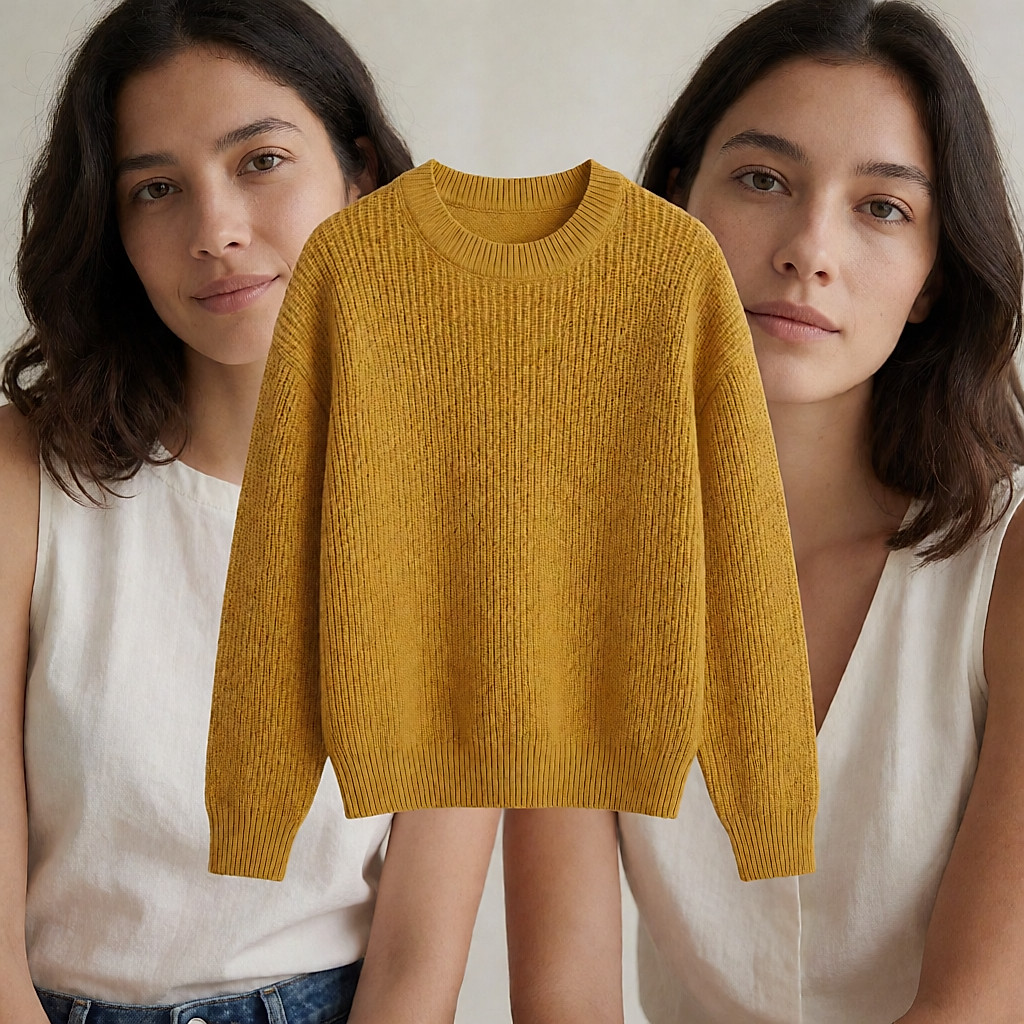
A mustard knit with black straight-leg trousers is an instant look, we love it. A saffron skirt with a white T-shirt and brown loafers, same. And if you try layering, keep yellow as the middle layer — a blouse peeking out from a dark jacket — so only a flash shows at the collar and cuffs.

Pay attention to drape, too, because that's where everything is decided. A bright yellow on a loose cut quickly becomes a statement piece you wear only once; on a straight, simple cut, it earns its place and lasts much longer in the wardrobe. This is one of the rare cases where we can recommend the most understated version: the less the cut does, the more the colour works for you.
And with prints, be wary. A yellow floral motif on a cream background can be very successful; a yellow-and-white checkerboard can tip into fancy dress in two seconds. The three-metre test: if your eye sees only the colour and none of the cut, leave it.
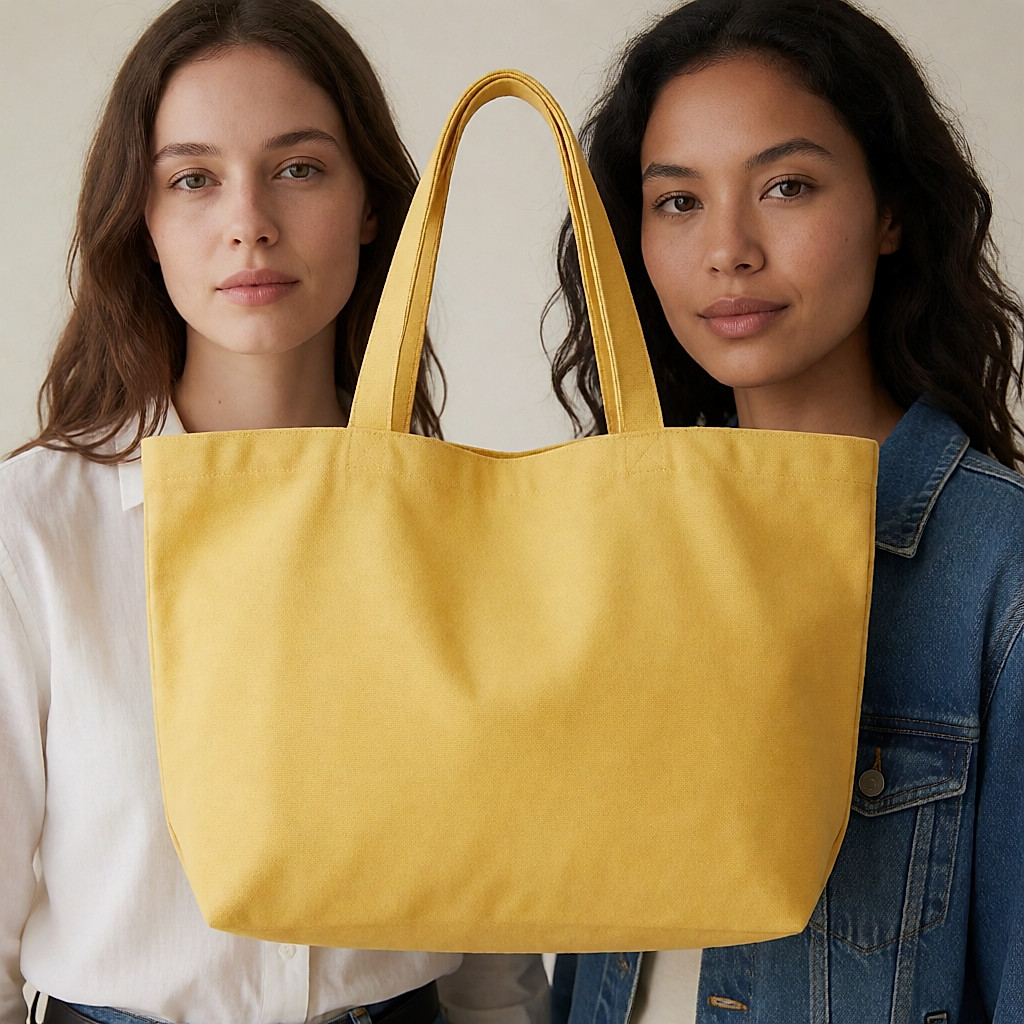
Not sure about your choice? Start with an accessory: mustard socks, a pale yellow bag, a scarf. It's the least risky way to add the shade to your wardrobe, and the easiest to reuse once you've built up confidence.
Accessorising without getting it wrong
Accessories are really the best entry point: they don't depend on your body shape, can be worn all year, and we fall for that little extra yellow that turns a grey outfit into one that looks considered.
Yellow nail polish is the quickest move — two coats, an opaque shade, and your hands change mood. On the formula side, products described as 'toluene-free' or '5-free' leave out a few common solvents; the ingredient list is printed on the back of the bottle, so you can read it before buying. Keep in mind: '5-free' is a guide to the formula, not a label or a promise that it won't cause an allergic reaction.
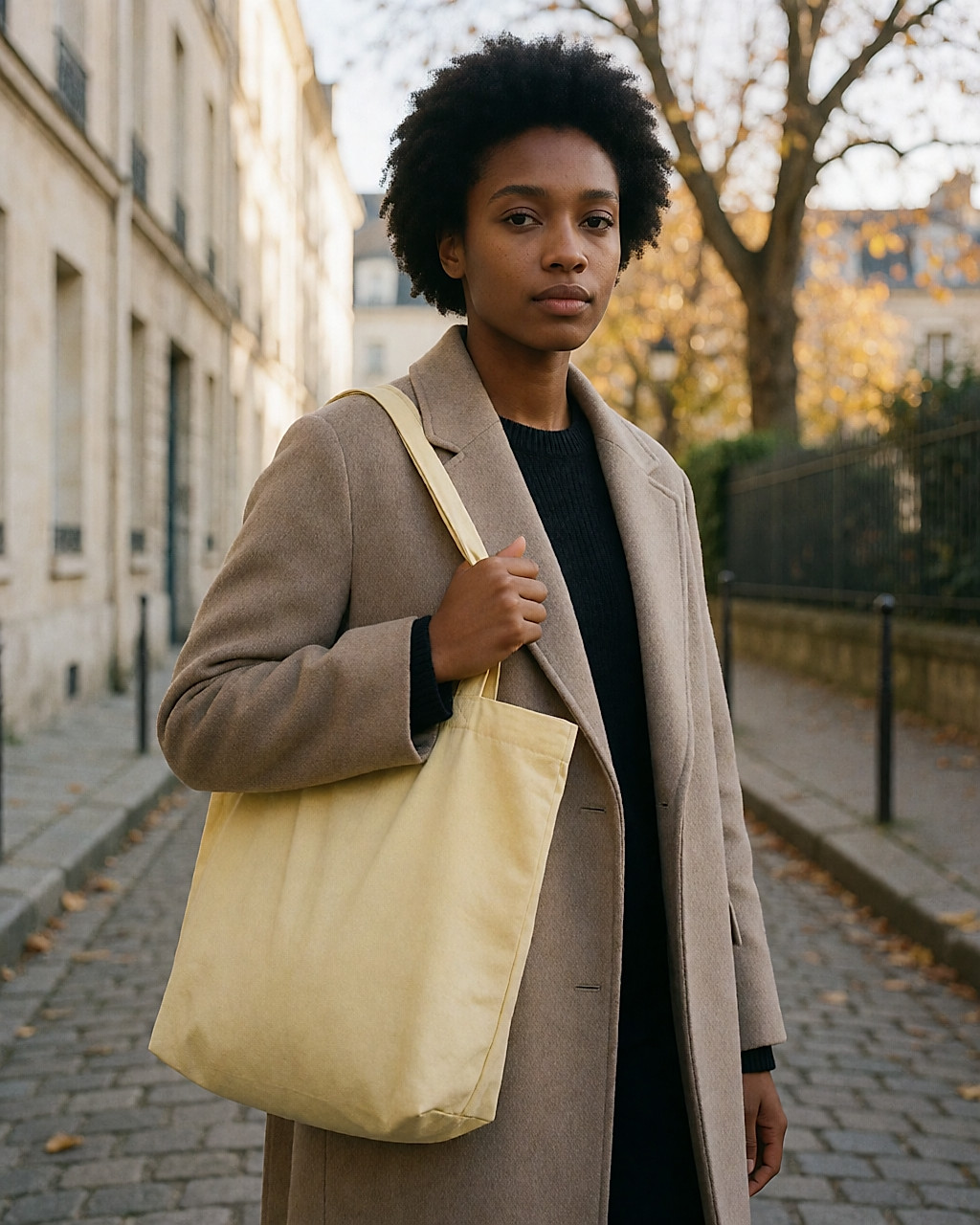
For a bag or a cotton piece, look at the labels rather than the slogans. GOTS covers organic cotton from field to finished product, with chemical and social criteria. The EU Ecolabel covers the whole life cycle: materials, dyes, water use, durability. Neither one promises you'll love the piece, let's be clear — but yellow demands robust dye baths, and these standards rule out the most questionable processes.
When it comes to end of life, in the UK, worn textiles — including shoes — can go to charity shops, textile banks at household recycling centres or retailer take-back schemes rather than in the bin. A small gesture, but one that counts.
I haven't tested the pieces mentioned here: they're selection criteria, not personal favourites.
Budget
- Yellow top (knit, cotton): £15 to £45 in supermarkets or high-street fashion, £50 to £100 mid-range, £170 and over from a designer.
- Nail polish: £5 to £12 in pharmacies or supermarkets, £15 to £25 from a brand.
- Bag: £25 to £70 in thick cotton or faux leather, £120 to £350 in leather.
- Shoes: £35 to £90 in synthetic, £100 to £220 in leather.
These ranges move according to the material, where it was made and the time of year: the January and summer sales bring prices down noticeably. Second-hand often remains the best value for this colour, precisely because it scares so many people — that's your advantage.
Sources
- WRAP — Textiles 2030, consulted in 2026.
- Recycle Now — How to recycle clothes and textiles, consulted in 2026.
- European Commission — EU Ecolabel, consulted in 2026.
- GOTS — Global Organic Textile Standard, consulted in 2026.

Comments
Your opinion matters: rate the article, react and reply to comments.
Comments are moderated; AI-assisted comments are flagged. Text emoticons (8-), :-), <3…) are automatically shown as images.