

Minus three on the thermometer, and that horrible draught of icy air that slips in exactly between your collar and your scarf. It happens ten times every winter, and every time you promise yourself you'll kit yourself out better. Serious cold doesn't negotiate: it dictates the fabric, the cut, the drape. The good news is that a well-chosen accessory blocks the wind while keeping your silhouette sharp. So how do you sort it out without blowing three months of your budget?
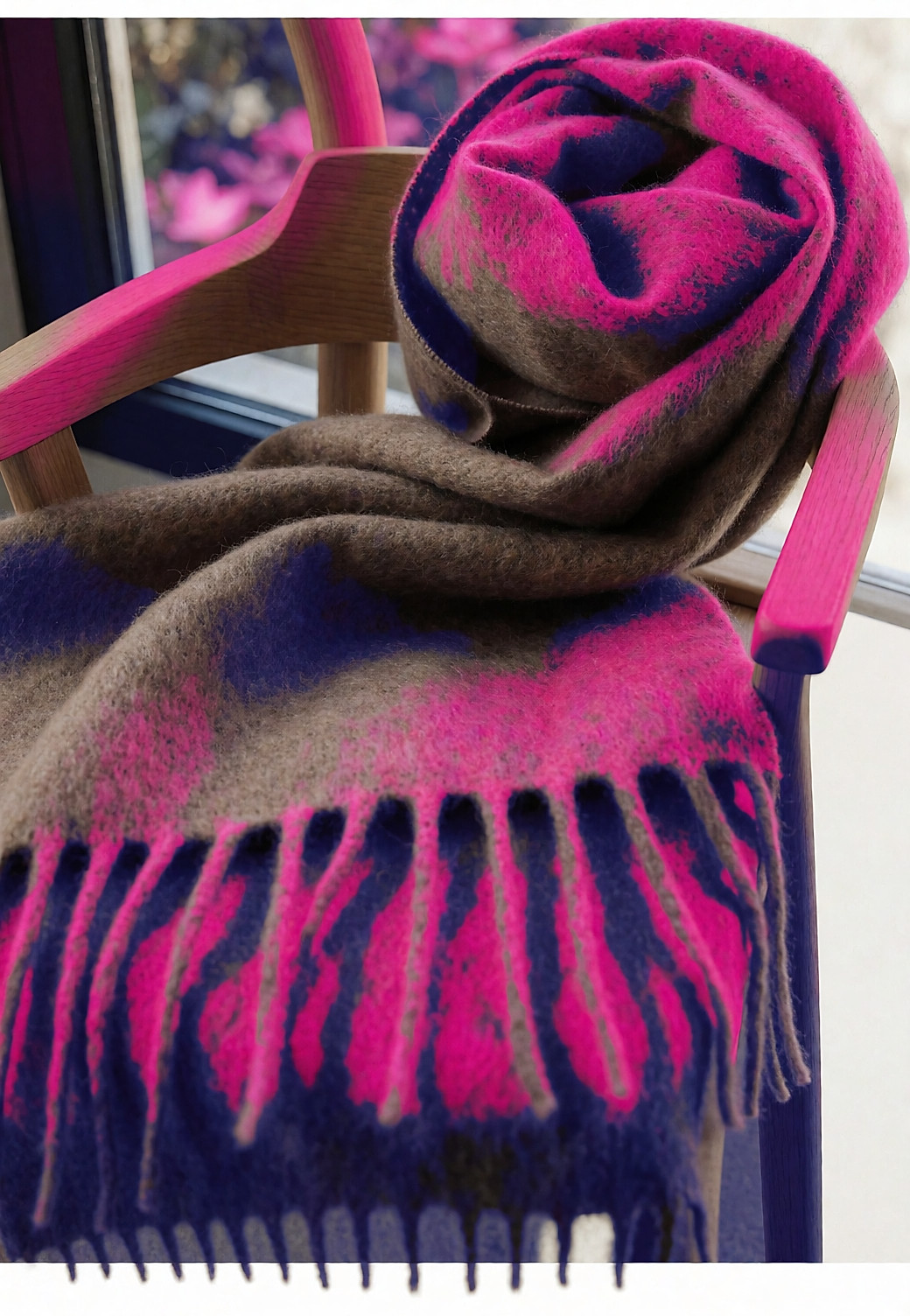
The beanie: fibre before pom-pom
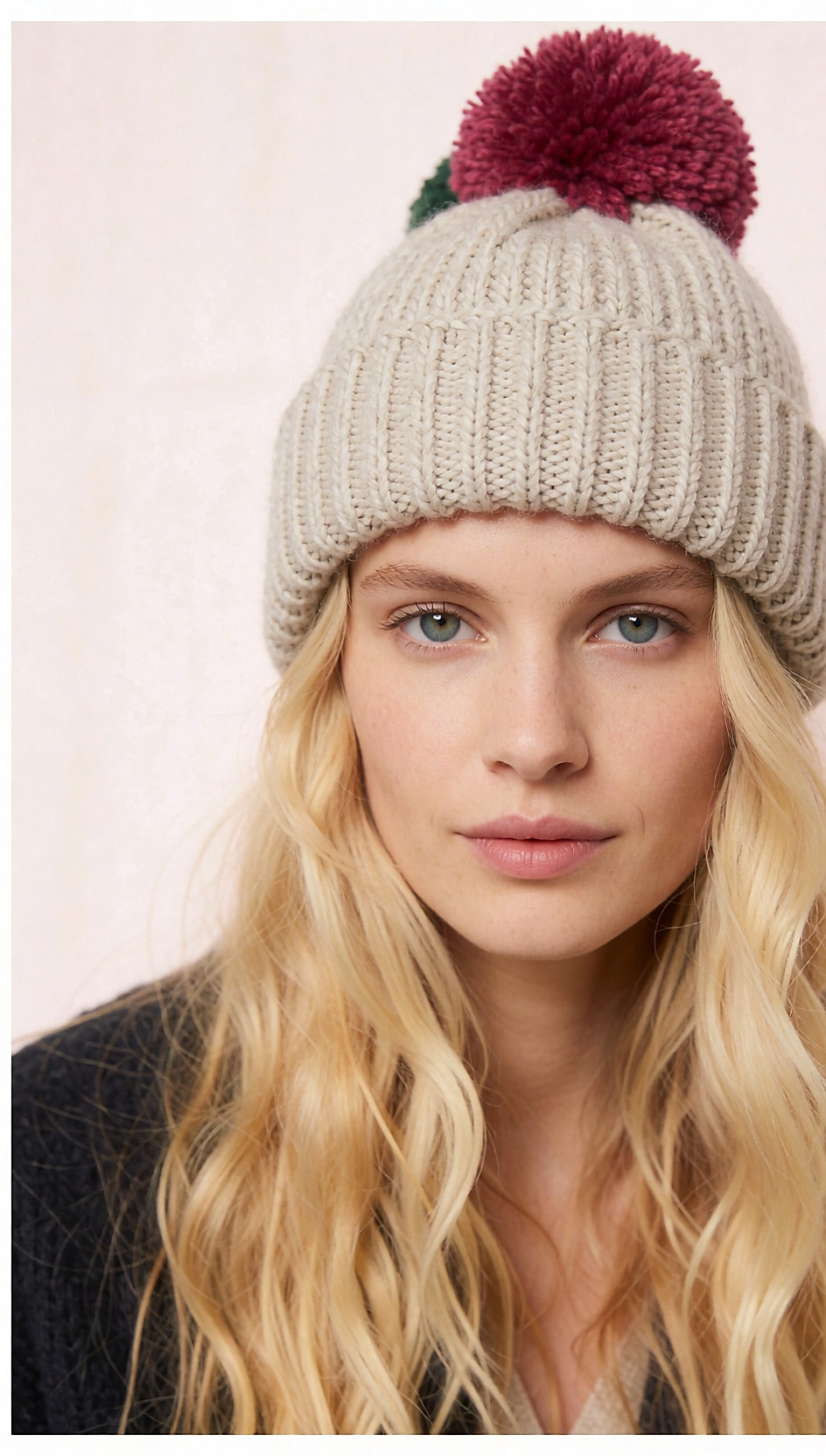
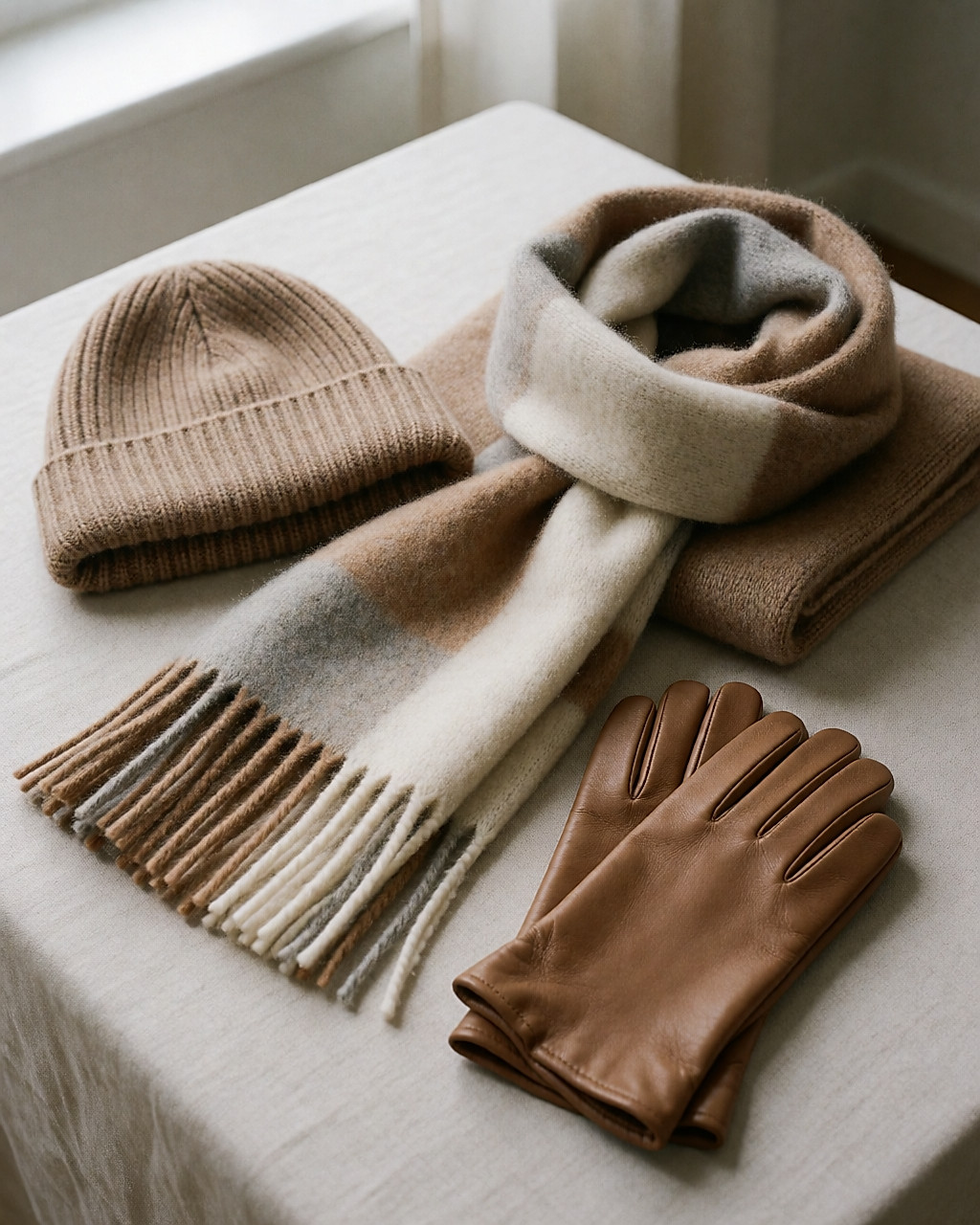
The pom-pom brings the charm, it's true, but it's the fibre that does the work. A tight merino wool knit holds warmth without leaving you clammy under a hood, and that changes everything when you're chaining commutes together. Acrylic costs less, holds less warmth and pills quickly where it rubs against a coat. For a buy that will see you through several winters, turn the label over: merino, alpaca, recycled wool.
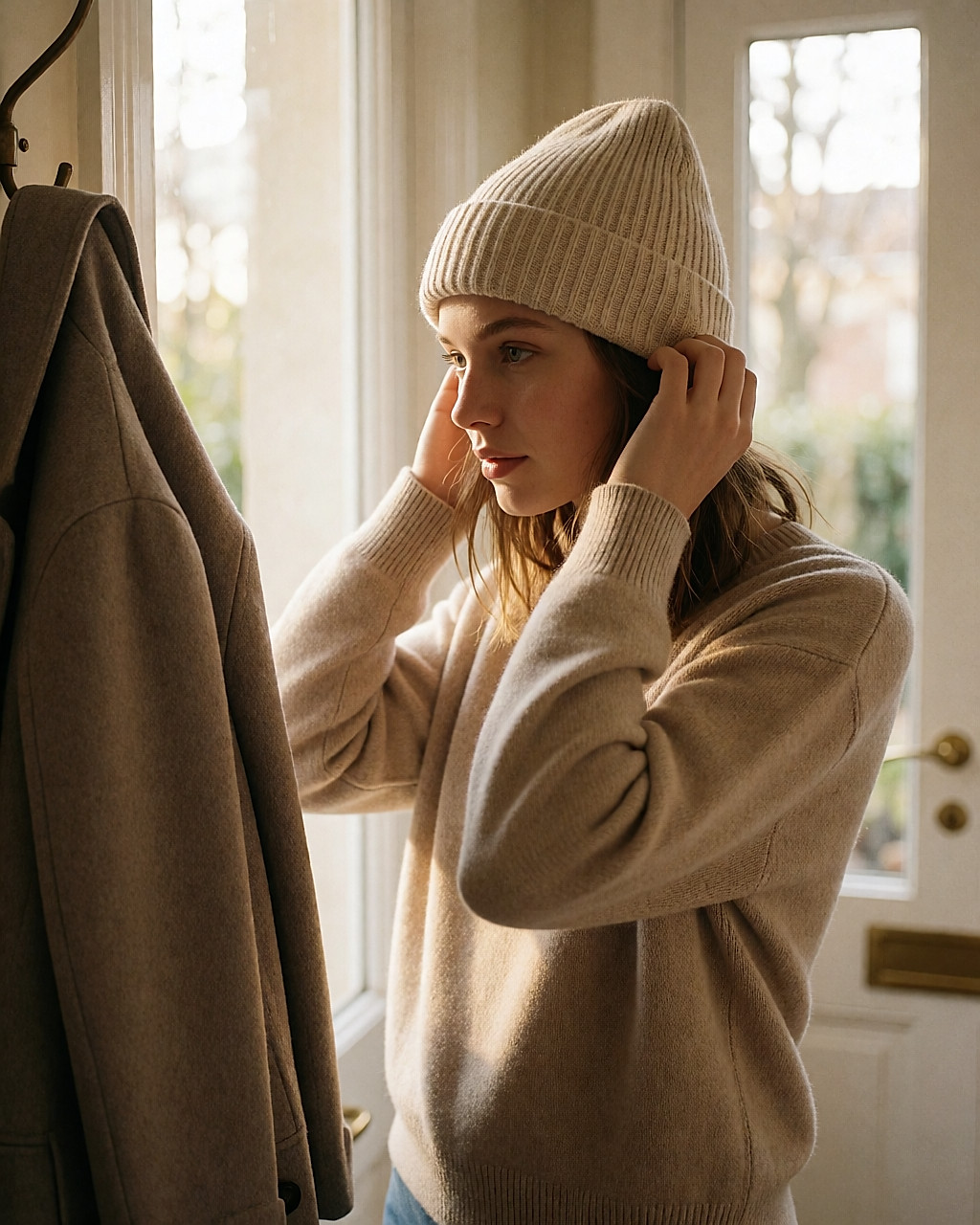
Certifications, next, don't all say the same thing — and it's worth knowing what you're reading. RWS, run by Textile Exchange, certifies wool at farm level and on traceability: a guarantee about the supply chain, not about how comfortable the finished hat feels. GOTS covers organic fibres and dyes right across the production chain. Standard 100 OEKO-TEX, meanwhile, concerns harmful substances in the finished product. Three frameworks, three quite distinct promises: a quick look before you reach the till, and you know what you're getting.
The scarf: layering starts at the neck
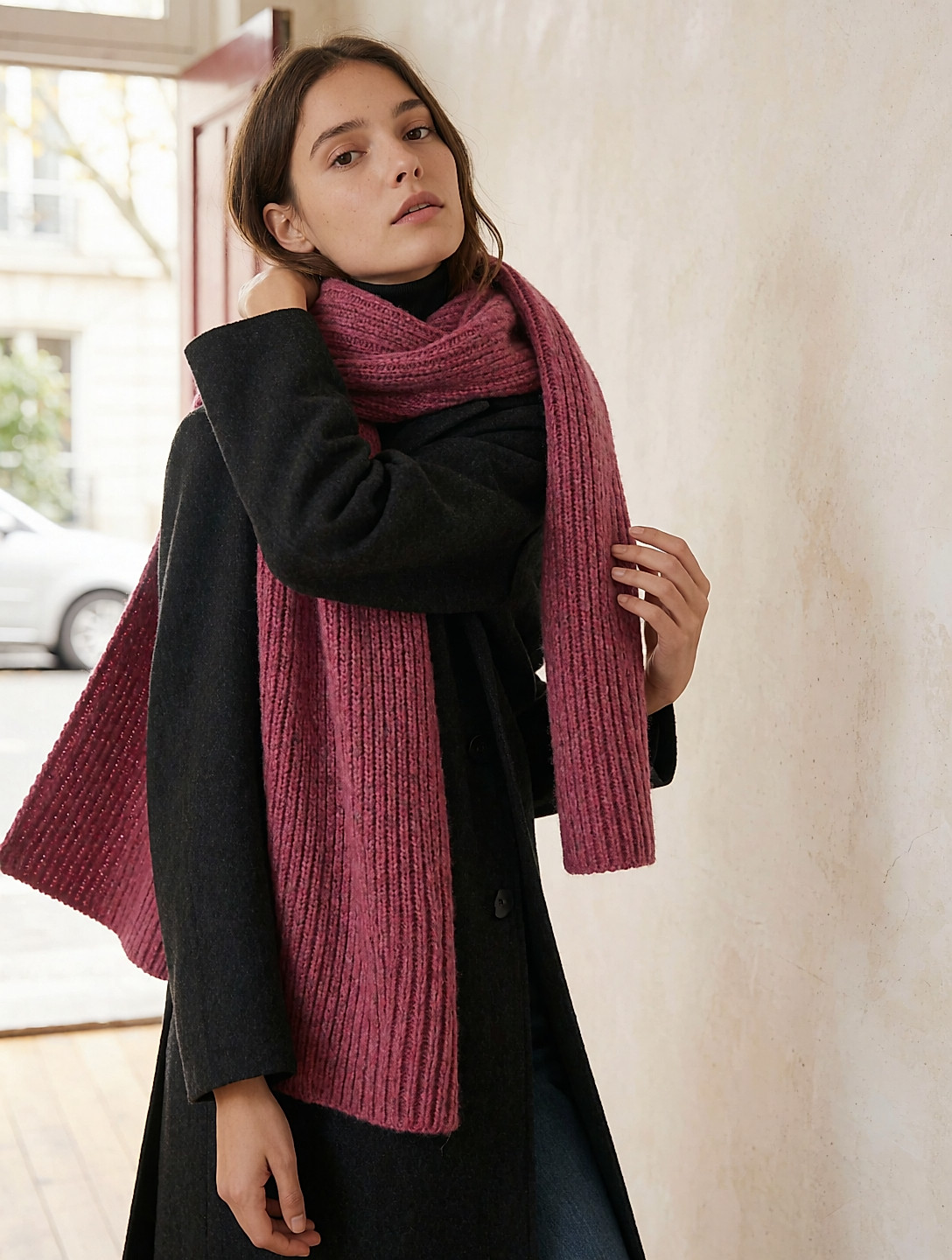
This is the piece that changes everything, the one you grab on your way out without even thinking about it. An XXL chunky-knit scarf worn over a fine roll-neck builds volume without swamping you; an oversized mohair or alpaca shawl drapes softly over a straight coat. The faux-fur snood, by contrast, is very photogenic and entirely polyester: it blocks the wind, certainly, but sheds microfibres with every wash. If you want volume without plastic, a curled wool knit will do the job better.
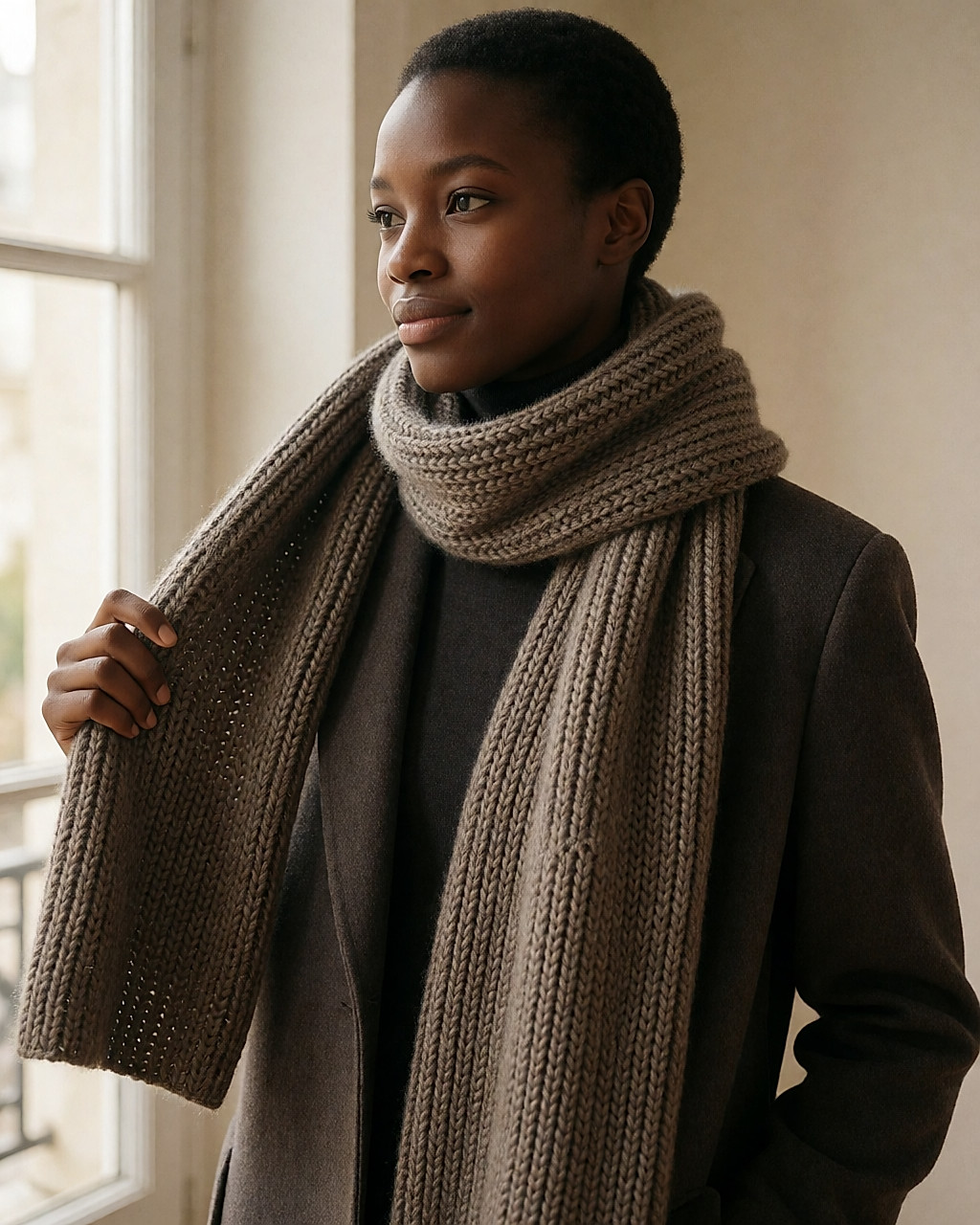
The right move, in fact: two wraps, ends left hanging at the front. You get a vertical line that lengthens your silhouette, and you can pull the knit up over your nose when the wind picks up. A small detail that counts, too: fringes weigh down the hem and add movement — whether you'd rather have a quiet scarf or a piece people notice is entirely up to you.
Gloves and mittens: leather or knit?
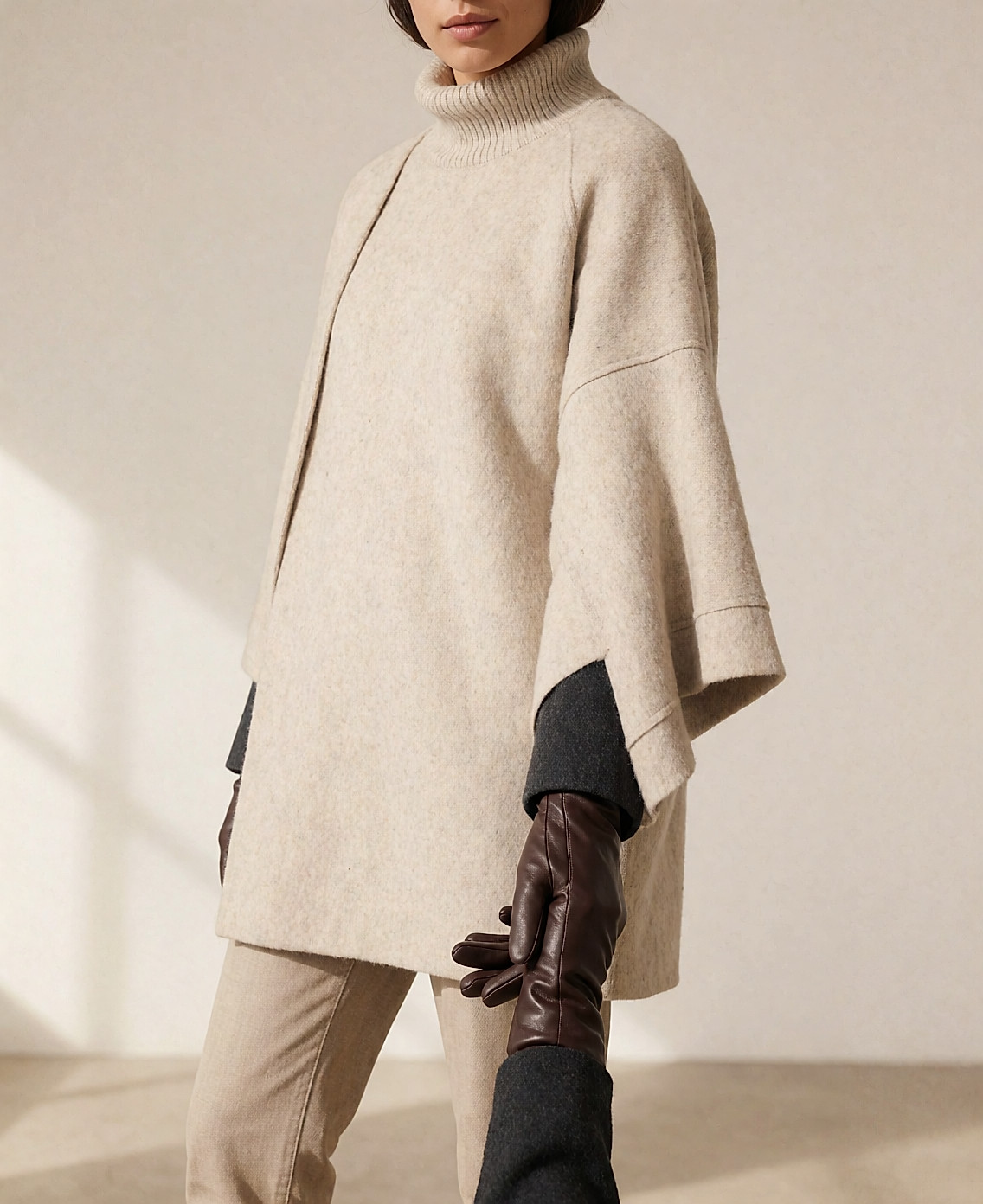
Wool-lined leather remains hard to beat: it blocks the wind, patinates beautifully over time and comes back to life with a rub of balm at the end of the season. Expect to pay £30 to £80 in a leather goods shop for a decent pair, and considerably more at luxury houses. Knitted or fleece gloves are enough for short journeys, less so once the wind settles in — and it always seems to settle in at the worst possible moment. Mittens, warmer, keep your fingers toasty in one single volume: check the lining, and where possible choose a pair with conductive fingertips so you can answer the phone without taking them off.

Colour and texture: step away from black and grey
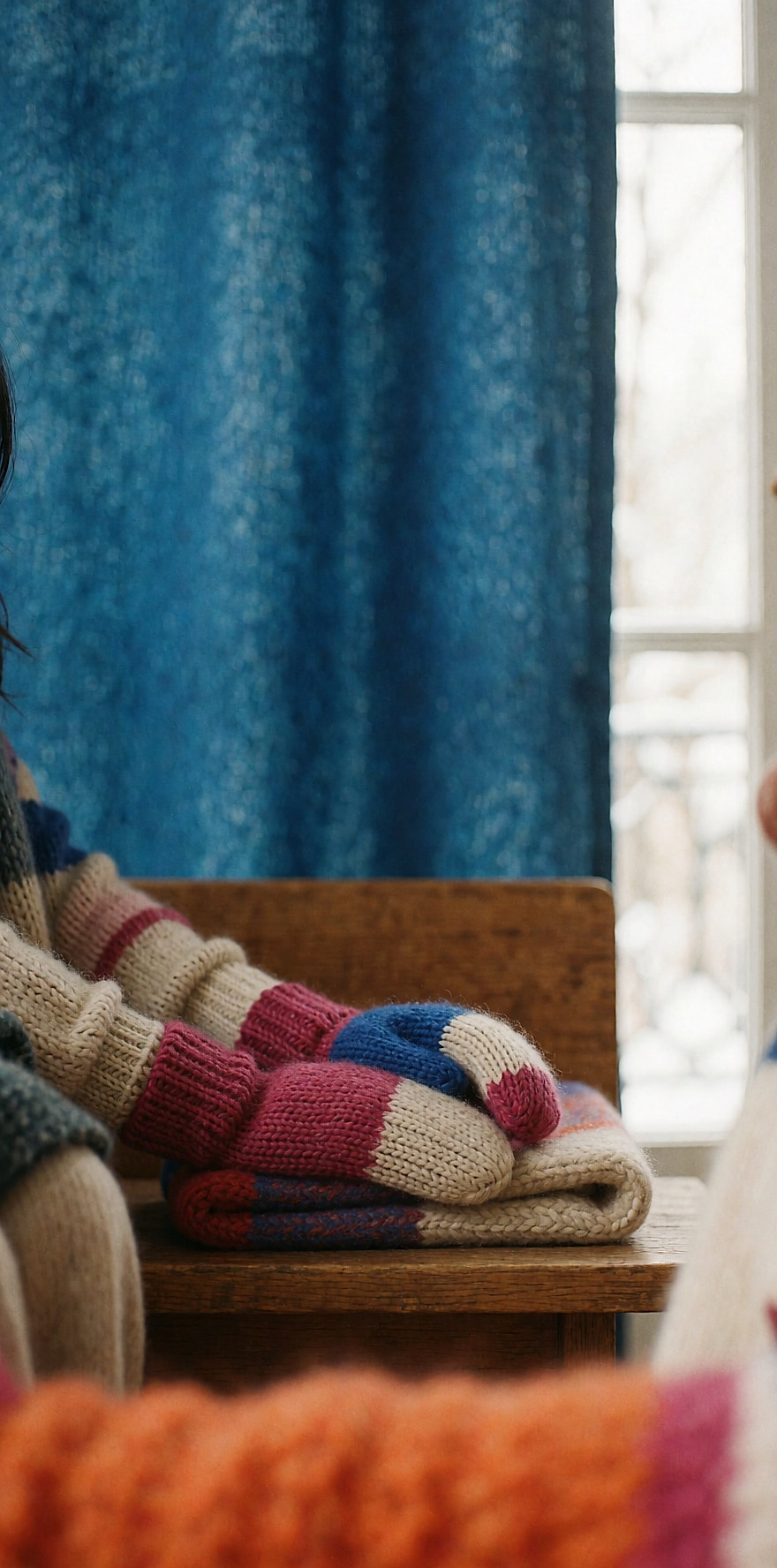
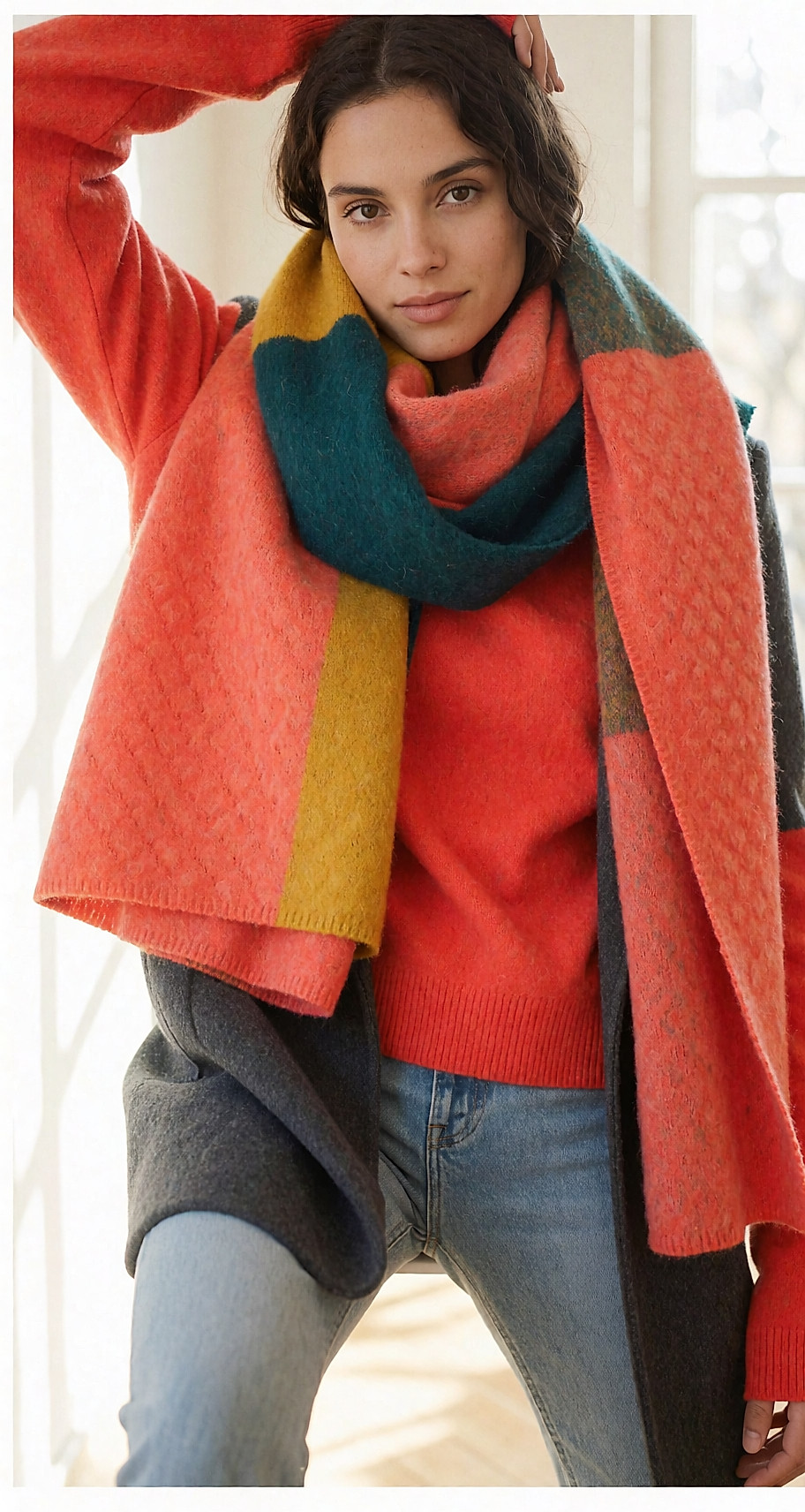
Black stays practical, we won't pretend otherwise, but it drains the complexion in the depths of winter. A raspberry scarf, a floral-print beanie, colour-block mittens: that's all it takes to wake up an all-dark look. On the texture front, mix cable knit with smooth, or wool with leather — contrast does far more for a silhouette than piling on uniform layers. And this is probably the cheapest statement piece in your wardrobe, and often the one that gets noticed most.
Here I'm talking about criteria, not pieces I've tested myself. Before you pay, check three things on the label: the share of natural fibres, a supply-chain certification (RWS, GRS, GOTS) and a seam that can be repaired. One dropped stitch doesn't condemn a beanie — ten minutes with a needle and it's back in service.
Budget
On the budget front, the gaps between materials are enormous. An acrylic beanie can be picked up in a supermarket or the sportswear aisle for £7 to £18; in merino or alpaca, expect more like £25 to £60, and £70 to £130 in cashmere. For a scarf or a shawl, wool sits around £30 to £80, with cashmere climbing from £85 to £220.
Lined leather gloves call for £30 to £80, and beyond £130 at luxury houses; wool mittens, £13 to £40. What moves the price: the fibre, the certification, where it was made and how it reaches you. On the second-hand side — charity shops, resale apps, Oxfam — the price is often halved for an equivalent piece. Online, outdoor brands and independent knitters sit above the supermarket on acrylic, and below the luxury houses on merino.
Sources
- ADEME, the French agency for the ecological transition — environmental impact of textiles, 2023.
- GOTS — Global Organic Textile Standard, 2024.
- Textile Exchange — Responsible Wool Standard and Global Recycled Standard, 2024.
- OEKO-TEX — Standard 100, testing for harmful substances, 2024.
- Met Office — cold weather warnings and alerts, 2024.



Comments
Your opinion matters: rate the article, react and reply to comments.
Comments are moderated; AI-assisted comments are flagged. Text emoticons (8-), :-), <3…) are automatically shown as images.