
You've already spent how many Sundays scrolling past identical dresses on white backgrounds, comparing product pages that all blur into one, wondering whether the style in the photo actually comes in that colour? If you're planning a wedding in the Paris region, you may already know Mariage-idf, the directory that has been listing local suppliers and publishing practical guides for years. Now it's changing hats and opening its own online shop. The idea: stop juggling fifteen tabs and bring outfits, accessories and decorations together in one place — with a tightly edited selection rather than a faceless aisle. A good move or a wasted click?
A selection built like a wardrobe
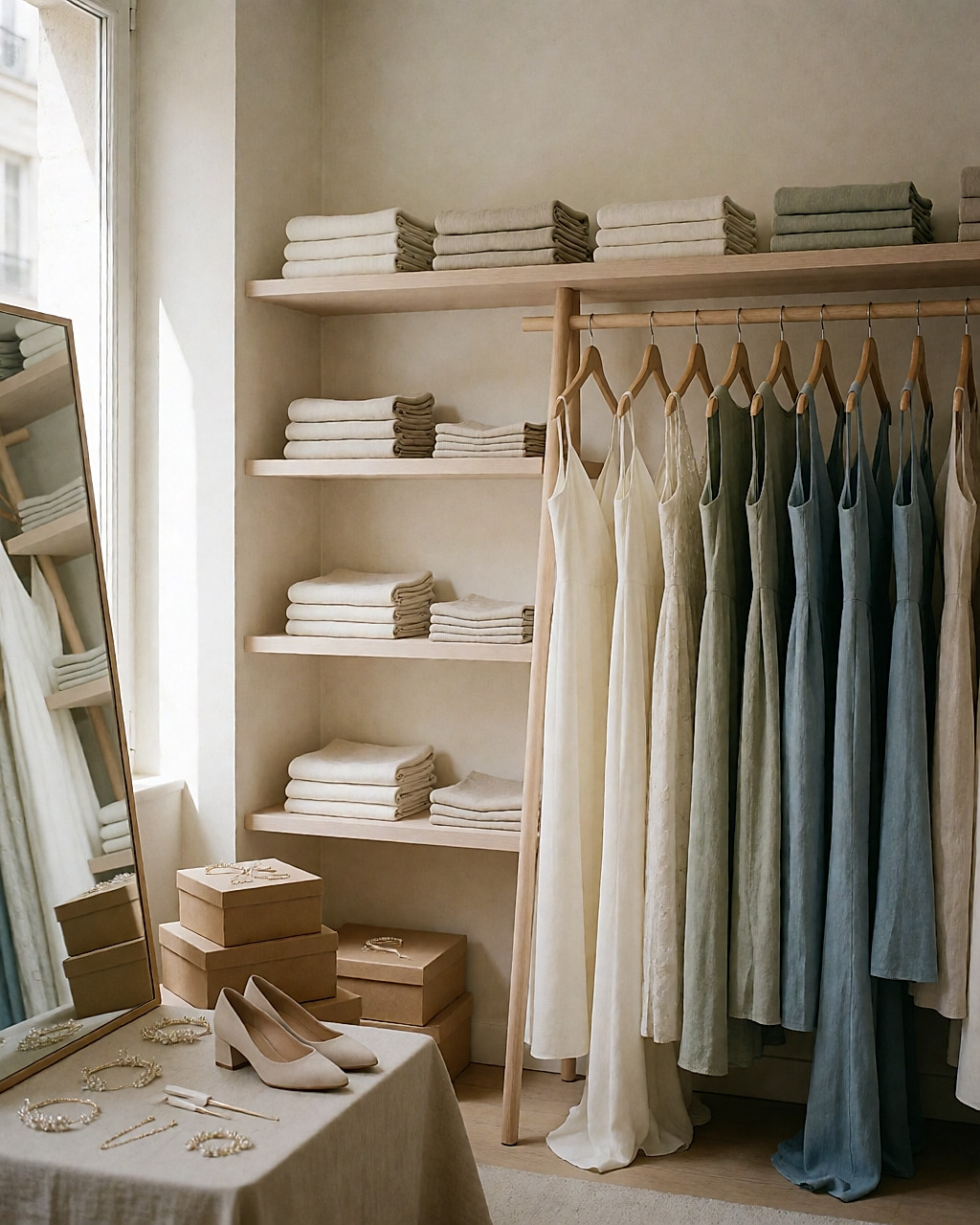
The shop doesn't claim to sell everything, and that's probably what makes it easy to navigate. You'll find the practical basics — invitations, table decorations, wedding favours — and, more importantly, a proper fashion section: bridal accessories, outfits for bridesmaids and groomsmen, and pieces you can wear again after the ceremony.
A wedding shop is really judged on how coherent its silhouette is, not on the number of products it stocks. Pieces that work together, a cut that falls well, a fabric with life: that's what you want to find, rather than a rigid head-to-toe look that will only serve one day. A ceremony capsule wardrobe, in short. That's what separates a selection from a simple catalogue: pieces that talk to each other, that you can mix, layer and accessorise without getting it wrong.
Hen and stag dos: the kit gets an upgrade
The classic is the customisable T-shirt kit for a hen do or stag do. Good news: today's version is less thrown-together than it used to be. You'll find sweatshirts and T-shirts in organic cotton, some certified GOTS — a label that requires certified organic fibres and sets rules for processing, chemical use and working conditions in the supply chain — and, increasingly, water-based prints, solvent-free, and delivery in cardboard rather than plastic mailers.

Three things to check before you pay. First, composition: the label requires at least 95% organic fibres for the word 'organic' to be justified. Second, the density of the jersey: a heavier weight stays wearable after the wedding, whereas a thin cotton ends up as a rag at the back of a drawer. Finally, what happens to the garment afterwards — if no one will wear it again, choose recycled cotton.
Before you check out, set your palette: two neutrals and one colour. Then accessorise with what you already have in your wardrobe, and avoid buying three outfits 'just in case'.
For guests, fabric comes first
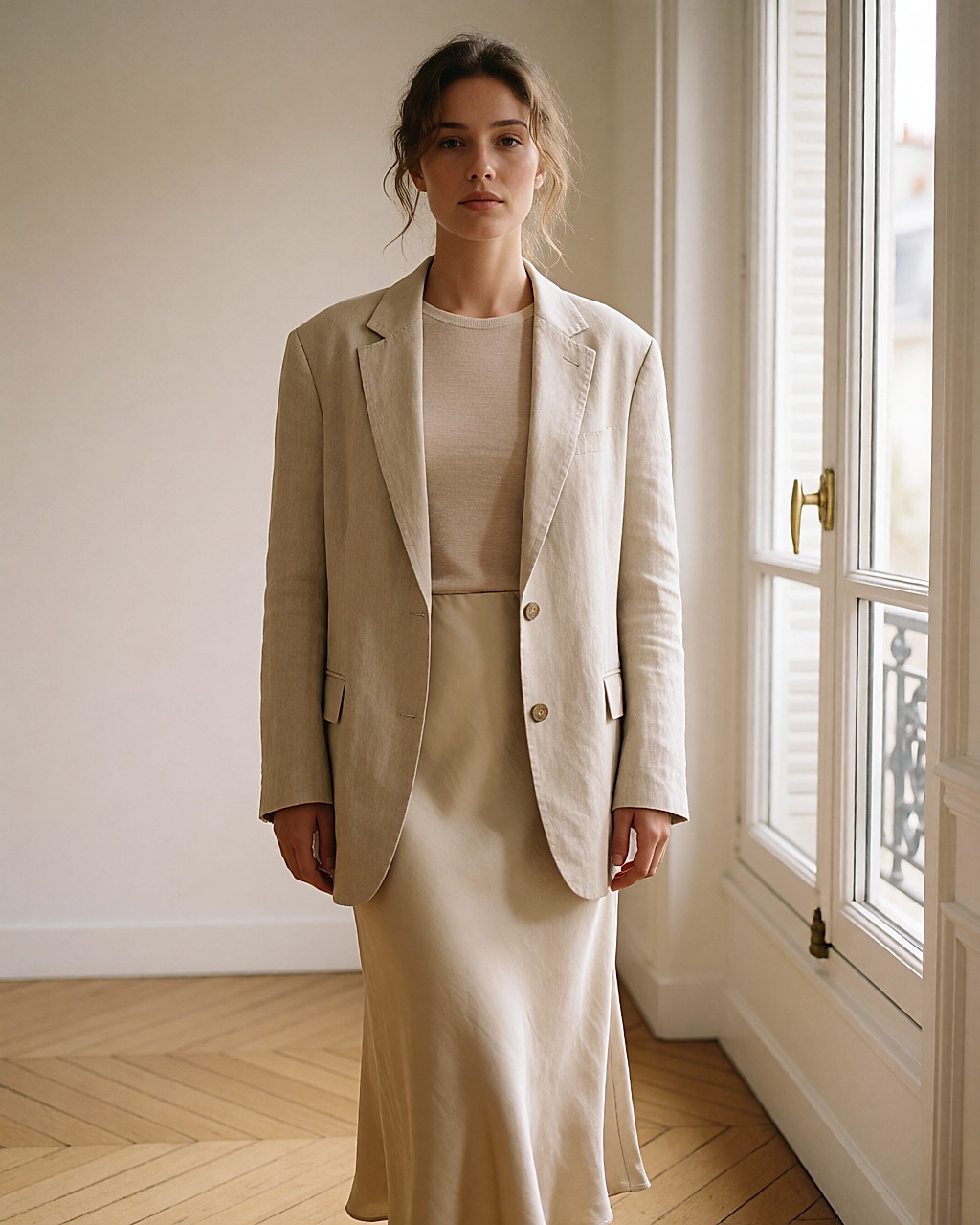
For guest dressing, the trend is no longer a head-to-toe look matched to the bride. Layering is preferred: one statement piece — an oversized linen jacket, a long satin skirt, a fluid suit — and everything else kept quiet. Drape matters more than print; texture more than logo.
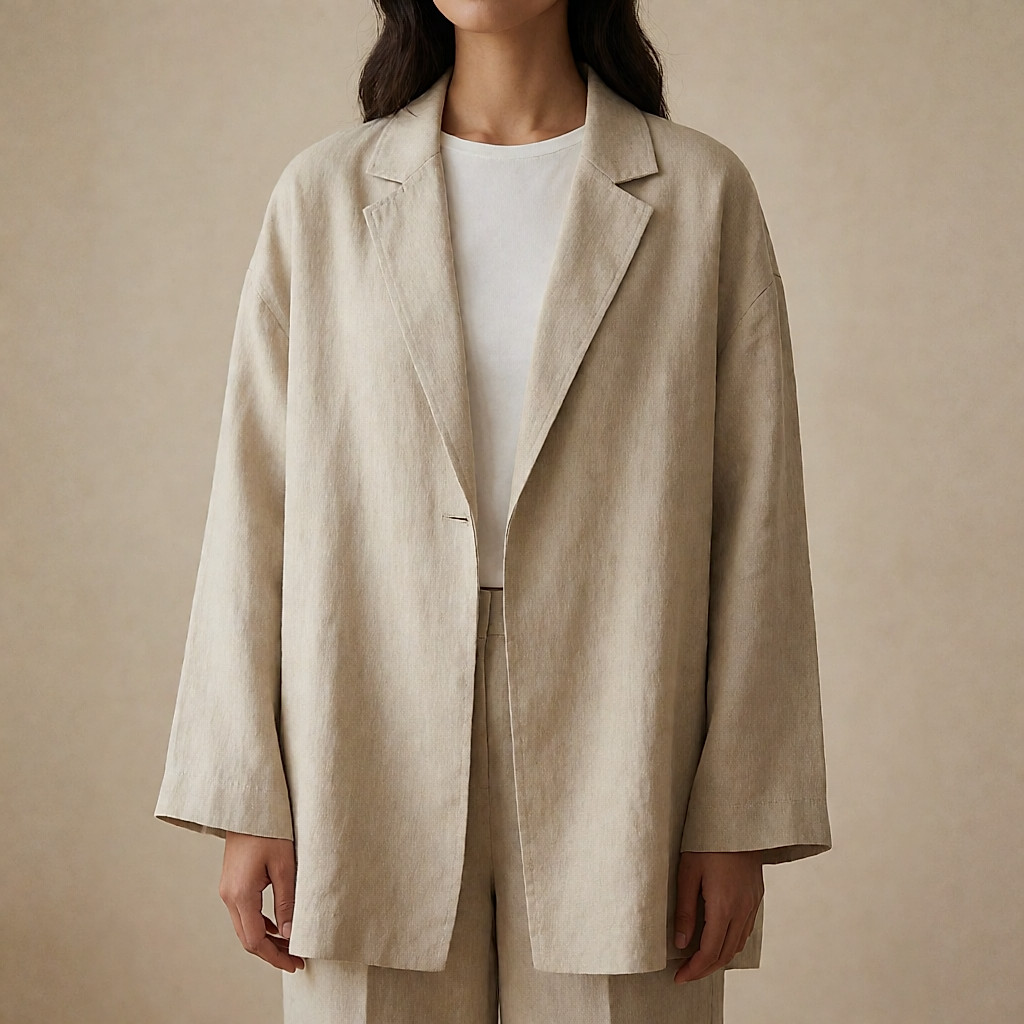

Washed linen, viscose from FSC-certified wood, a light wool for an autumn wedding: these fabrics give depth and polish to a very simple silhouette. A tip someone shared with me before my own wedding: choose the fabric first, the cut second, the colour last. That order is what prevents mistakes, and it saves you from coming home with a piece that goes with nothing.
And wedding favours?
Sugared almonds and their tulle boxes have had their day. They're often replaced by things that survive the party: cold-process solid soaps with short ingredient lists, rapeseed wax candles made in France, seed packets to sow. The gesture is simple, the object useful — and it makes a change from the little trinket that ends up in a box.
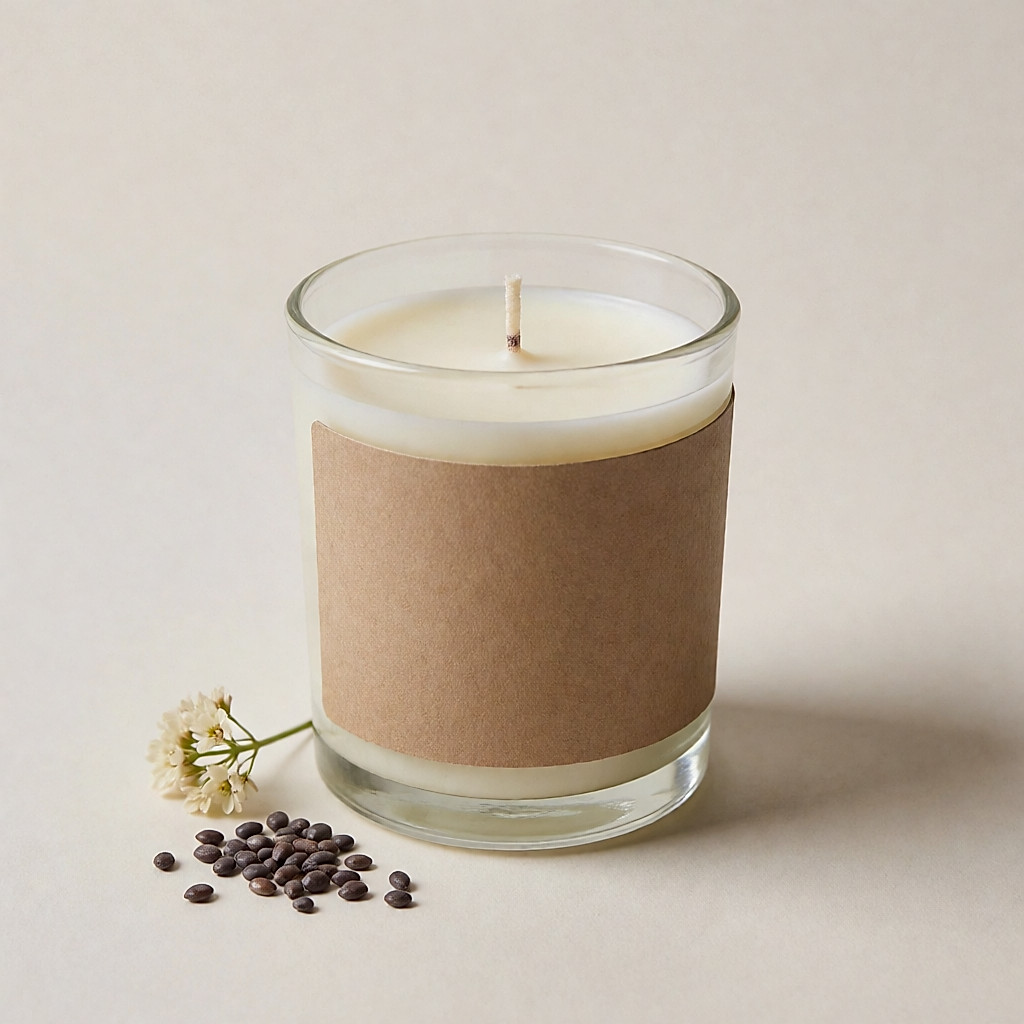
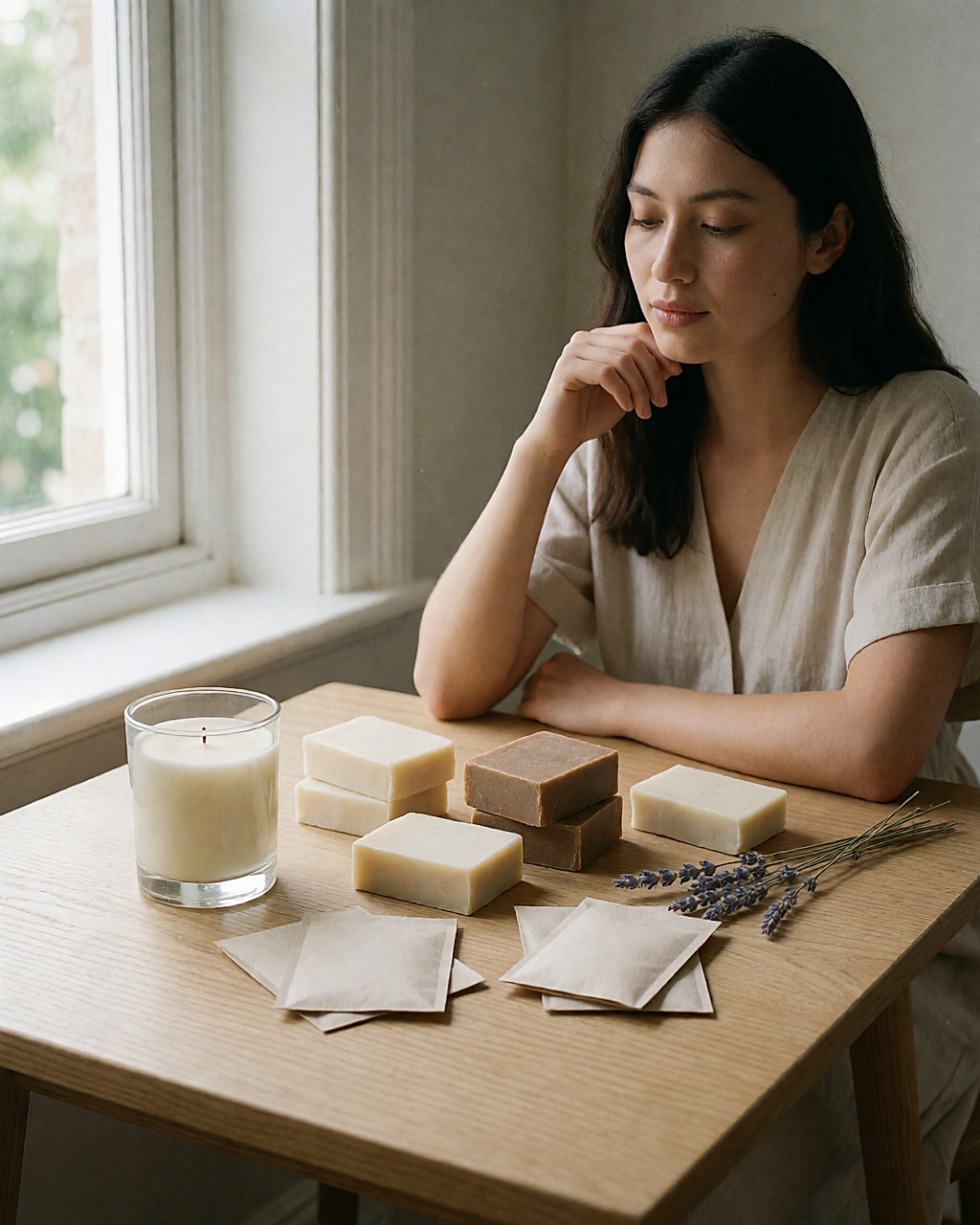
Be careful with the packaging, though. A kraft wrapper says nothing about what's inside, and 'natural' is not as strictly regulated as 'organic': read the label, not the pretty ribbon. For a solid soap, look at the INCI list and whether it contains vegetable oils rather than the big promise on the box.
Budget
Indicative price ranges, converted to GBP, for guidance:
- Custom hen/stag textile kit: budget around £13–£30 per person. The price rises with embroidery, small quantities and tight deadlines.
- Sustainable wedding favours: £2–£7 each, with discounts for larger orders.
- Guest accessories (tie, pocket square, jewellery): £17–£70.
- Full guest outfit: £70–£210, more from a designer.
- Alterations in a workshop: £13–£35.
Where to find it all: the portal's online shop, independent designers, and local tailoring workshops for alterations. Always compare the unit price rather than the bundle price — that's where the differences really show.
Sources
- Mariage-idf — Mariage-idf, directory of wedding suppliers in the Paris region
- Global Organic Textile Standard — GOTS label reference



Comments
Your opinion matters: rate the article, react and reply to comments.
Comments are moderated; AI-assisted comments are flagged. Text emoticons (8-), :-), <3…) are automatically shown as images.