

A reader wrote to me last week. Wedding booked for next year, a desk to be at every morning, a nursery run to finish by 6pm, and absolutely no wish to spend her Sundays trailing round caterers. I get this kind of message every engagement season, and the answer is usually one word: delegate. Not the American-magazine kind of luxury — a project manager, paid to take the logistics off your hands.
What they actually do
The job has settled into three packages. Full planning: they find the venue, the caterer, the photographer, the DJ, the décor, they build the timeline and negotiate the quotes. Partial planning: you keep control of the venue, they take everything else. On-the-day coordination: they pick up the file four to six weeks beforehand and run the suppliers on the day itself, watch in hand.
It's the most underrated of the three. On the day, someone has to manage the caterer's arrival, the sound system crackling, the guest blocking the doorway. That someone cannot be you.

The wardrobe is part of the brief
A good planner won't choose your dress. What they will do is help you keep a coherent look from morning to the last song: the shape for the ceremony, how the dress falls under the venue's lighting, the fabric and texture of the bridesmaids' outfits, the print on the best man's tie. Sentimental layering, in a sense — the total look starts at the registry office and ends barefoot on the dance floor.
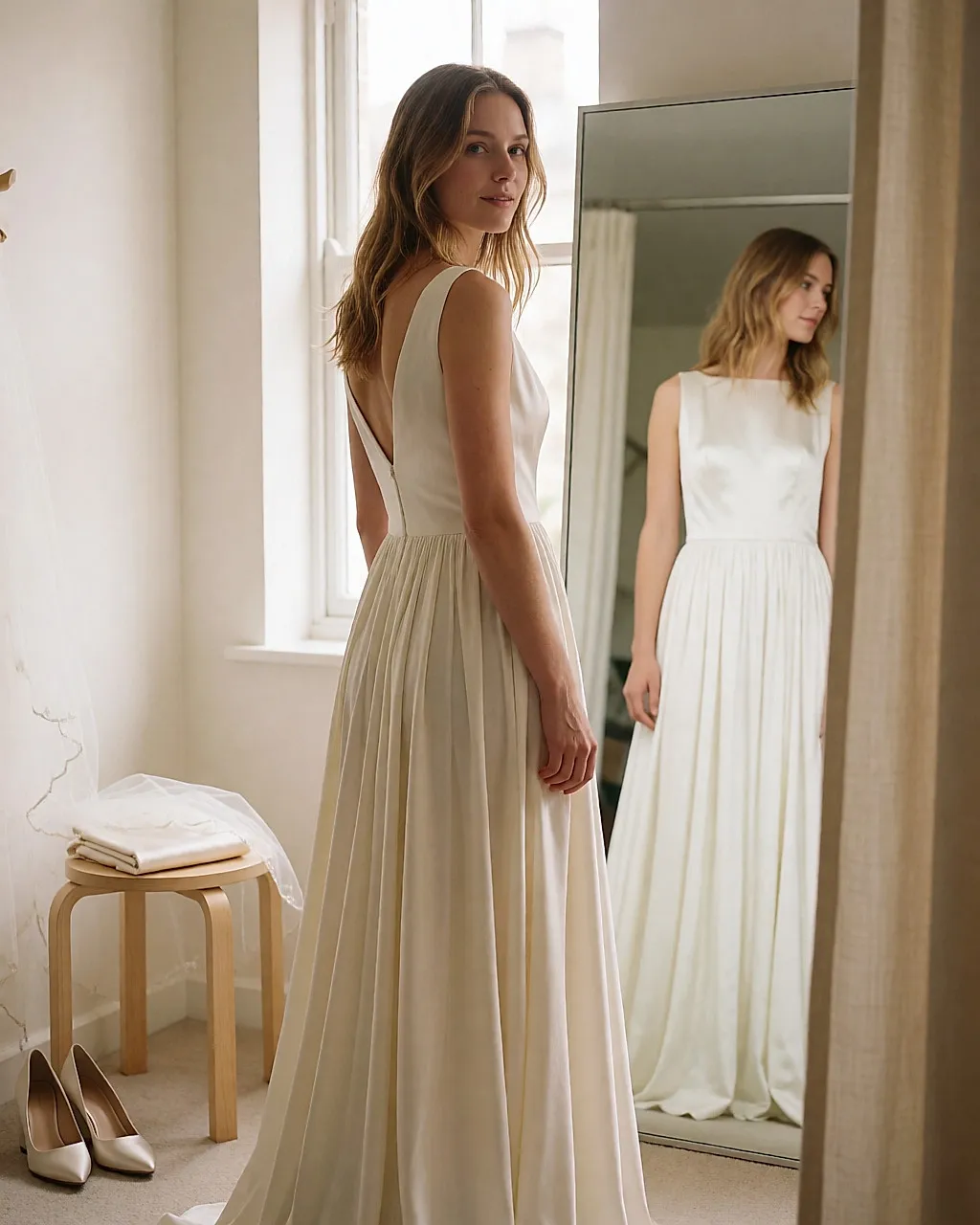
The rule of thumb: every outfit has to pass the photo test. If a statement piece steals the bride's thunder in the pictures, it goes back to the wardrobe. Accessorise, yes; compete, no.
The timeline
Allow twelve months, eighteen ideally, to secure a Saturday between June and September at a decent venue. At six months, coordination is the only realistic option. At three weeks, it's no longer planning but rescue.

Always ask for the breakdown in writing: what's included in the package, what's charged on top (travel, overtime on the day), and who becomes your point of contact if the planner falls ill. A precise quote beats a pretty promise.
I haven't tested this service for my own wedding, so I'm passing on what the professionals say rather than a personal review.
Budget
UK rates vary widely, but as a broad guide: an hourly consultation, from around £50 to £120; on-the-day coordination, from around £600 to £1,500; partial planning, from around £1,200 to £2,500; full planning, from around £2,000 to £5,000, or a percentage of the overall budget, often between 10 and 15%.
Three factors move the number: location (London and the South East push it up), the date (a Saturday in July costs more than a Friday in October), and how much you hand over. A planner's little black book can sometimes bring suppliers' quotes down, but their own fee still has to be paid — don't forget it in your sums.
Where to look: recommendations from friends and family, professional directories, wedding fairs, local suppliers' Instagram accounts. Always ask for two or three comparable quotes.
Sources
- gov.uk — marriage and civil partnership guidance: giving notice, documents, waiting periods.
- Office for National Statistics — marriage statistics for England and Wales.
- Citizens Advice and the Competition and Markets Authority (CMA) — consumer rights on quotes, deposits and cancellation.



Comments
Your opinion matters: rate the article, react and reply to comments.
Comments are moderated; AI-assisted comments are flagged. Text emoticons (8-), :-), <3…) are automatically shown as images.