
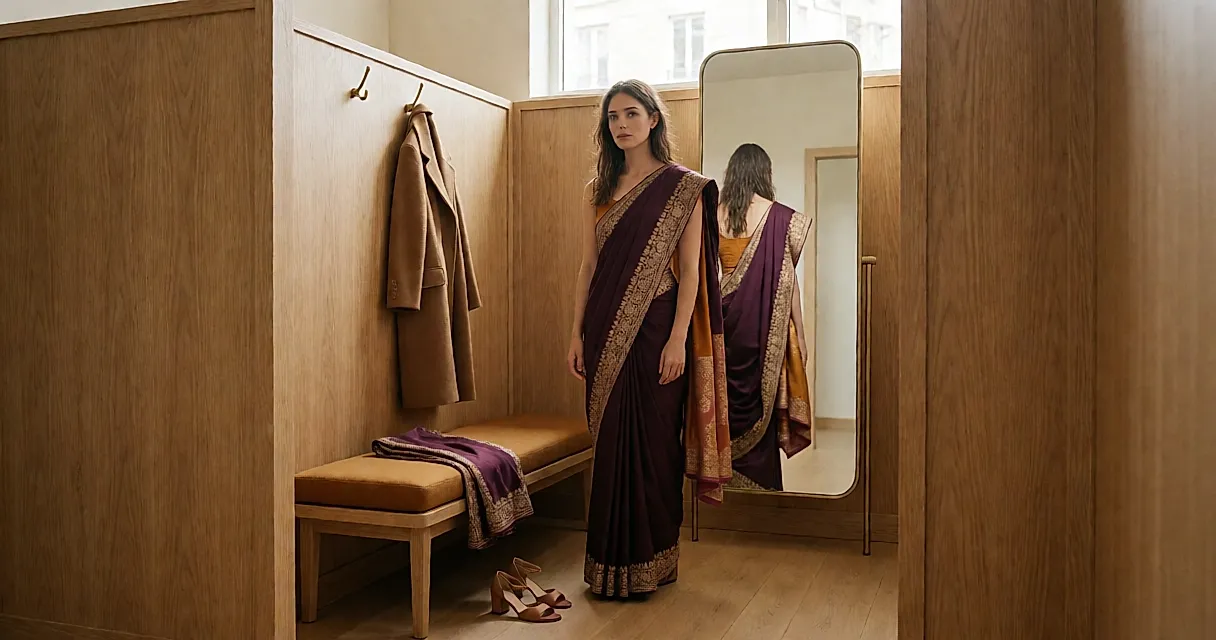
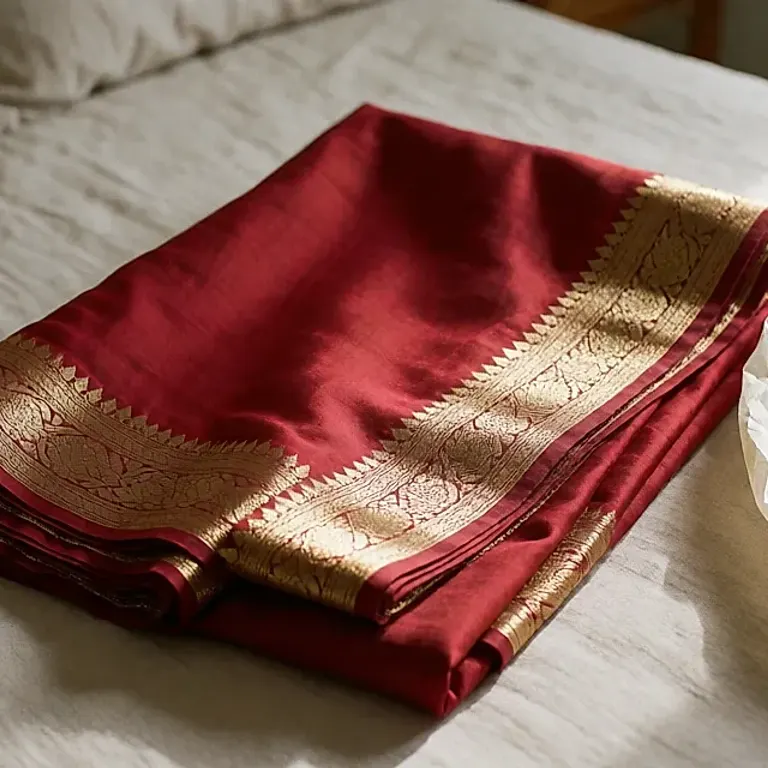
The sari is sleeping in a cotton bag on the top shelf of the wardrobe, waiting. It has survived a wedding, two house moves and a run of very convincing ‘one day I’ll get it altered’ promises. You know how to drape it, or your aunt can do it for you in three minutes flat. What sticks is the top. So what if you change that piece?
The sticking point is the choli
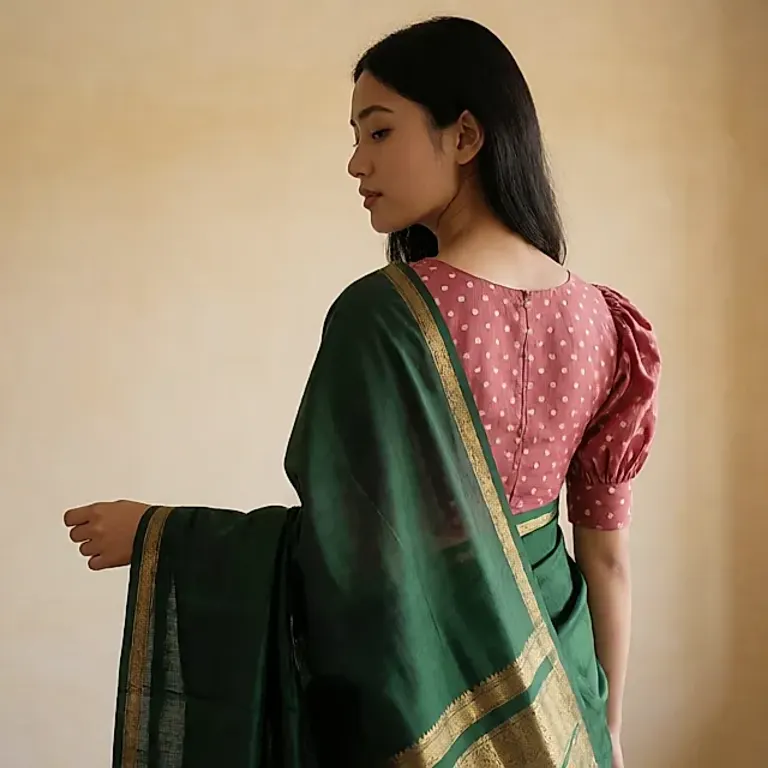
A sari is a petticoat, a drape and a small fitted top called a choli, cut at the same time as the rest. The drape forgives almost anything: it can be pulled taut again, folded, corrected with a pin. The choli does not. It was sewn for a precise silhouette, with measurements taken on a day when you may not have been exactly the same person. And when it no longer fits, everything stops: a sari without a top is still a very beautiful folded length of fabric.
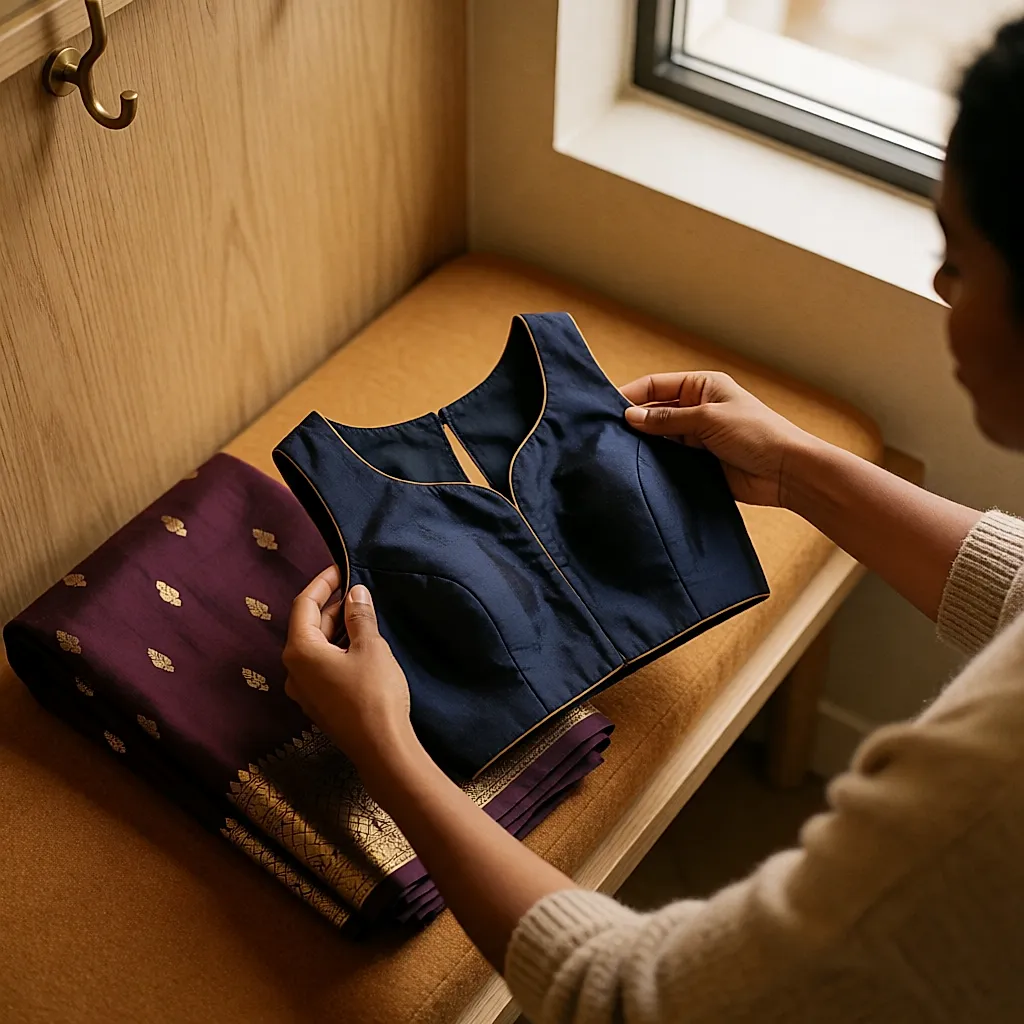
The fabric itself often holds up. The embroidery, the fall of the pallu, the colour: nothing has shifted. What has aged is the piece that can be remade. That is the entire idea: keep the sari exactly as it is and give it a new structure, fitted and secure.
What a corset brings that the choli never could
A corset, even a soft one, works differently: bones or synthetic boning, a busk, lacing or a zip, lining. In practical terms, the corset takes the strain for you. The drape sits over it and is secured at the shoulder without anyone having to stitch through the old fabric, and it stops pulling on the worn seams of a top that is too tight. No pins through old silk is already good news.

The other advantage is less easy to admit and just as real: the corset will not serve only one evening. Over high-waisted jeans with a jacket, it becomes a wardrobe piece in its own right. Call that amortising your purchase, which is an elegant way of saying you fully intend to wear it again. And frankly, who wants to reserve their best piece for a single night?
Embroidery should echo, not compete
This is where you can get it all right or get it all wrong. A family sari is rarely discreet: metallic threads, beads, sequins, dense embroidery on the pallu. If the corset replies at the same volume, the look becomes a battle of sequins and nobody wins. One echo is enough: a shade picked up from the falling panel, a motif repeated near the neckline, a gold thread that recalls the zari.
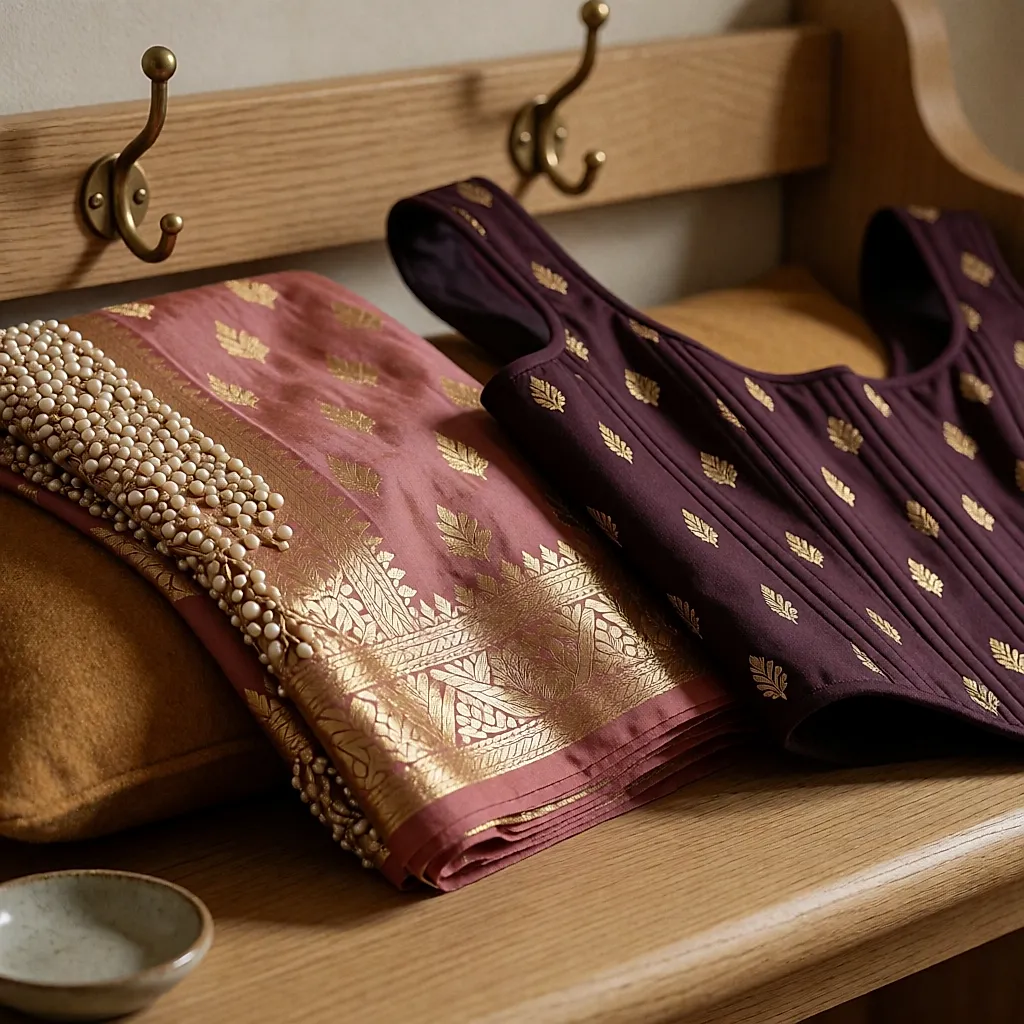
As for fabric, stick to natural and sturdy: wild silk, cotton satin, fine linen for a more matt finish. A plain matt silk corset with a heavily embroidered sari almost always works; the reverse is harder to wear. Want texture rather than a full matching look? Try matt beads with a pale sari: the contrast does the work.
The fitting is more than a quick turn in the changing room
You do not buy a corset the way you buy a T-shirt, and that is precisely the point. Measurements are taken standing up, but also sitting down. Try it at the end of the day (your body is not the same shape at 9am and 7pm): lift your arms, sit down, breathe deeply, act out dinner. If the corset rides up, compresses you or has you speaking like a newsreader, it is a no.

Two details not to skip: ask for bones short enough to dance and sit in, and lacing rather than a zip if you want to loosen it by a notch later in the evening. And tell the alterations studio: never cut into the sari to fit the top. It is the corset that gets adjusted, not the heirloom.
Three questions to ask before you order: can I sit down without discomfort? Will the corset fabric show through or leave marks under the drape? And how much will alterations cost if my size changes between ordering and the wedding?
Budget
The figures below are rough indicative ranges, to be confirmed with a quote: allow around £70–£220 for a ready-to-wear embroidered corset, more if the embroidery is hand-worked. Made to measure at an atelier, the range rises to roughly £300–£800 depending on fabric, complexity and location. Having a corset you already own embroidered often sits between £50 and £180, and a standard alteration (taking in, boning, hemming) between £35 and £110. The right question before you reach for your debit card: how many times will you actually wear it?
The canny alternative: a plain structured bustier in cotton or silk, from around £45, plus a gold belt and earrings that do the work. Less spectacular up close, very convincing under venue lights. For a single wear, rental is still the budget's best friend.
The corset does not replace the inherited piece: it puts it back into circulation. A textile that comes out of its bag twice a year is better than an admired memory gathering dust, and you rarely regret dancing in your mother's sari. Embroidered ready-to-wear for a summer wedding, made to measure if the sari is the centrepiece, plain bustier and jewellery if money is tight. Either way, try it sitting down before you say yes.
Comments
Your opinion matters: rate the article, react and reply to comments.
Comments are moderated; AI-assisted comments are flagged. Text emoticons (8-), :-), <3…) are automatically shown as images.