
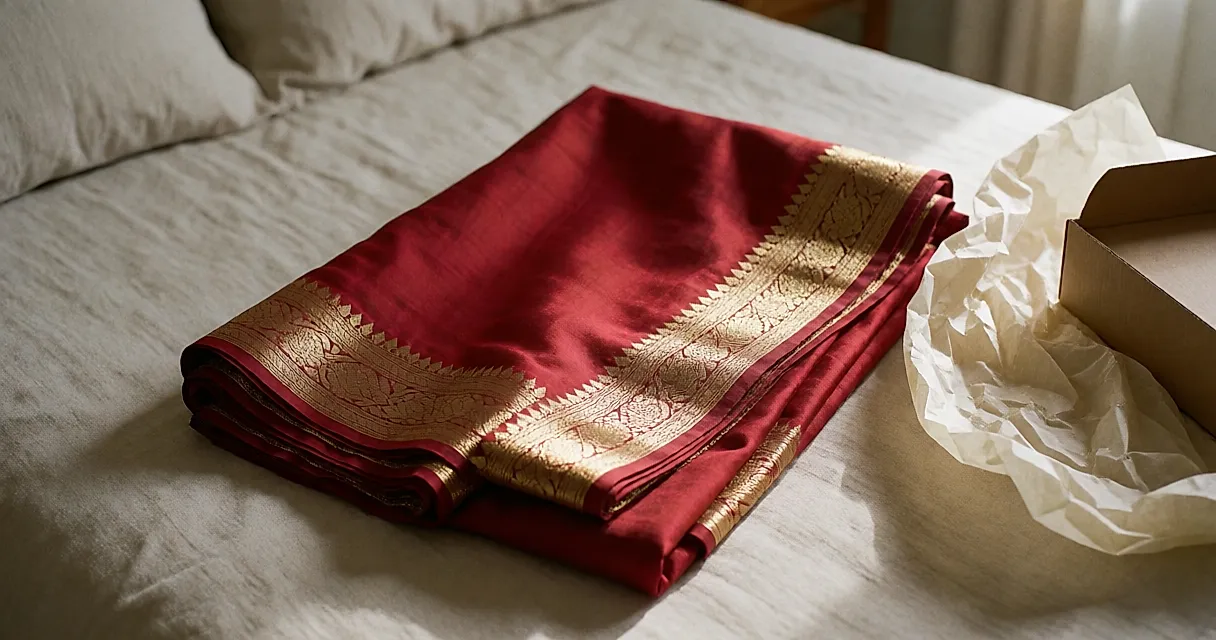
The box is open on the bed, the tissue paper creased, and the sari finally comes out. First move, before you even unfold it: weigh it in your hands. A ceremonial sari has heft — literal heft — and that heft tells you almost everything about the zari running along its borders. Whether the embroidery is worked in genuine metallic thread or in synthetic gold, it isn't the same piece, it isn't the same budget, and it won't have the same life afterwards.
A thread that isn't quite a thread
Zari is a metal thread. Or rather, a textile thread wound with metal: traditionally a silk core takes a flattened ribbon of fine silver, sometimes gold-plated, twisted tightly along its whole length. The result shines without flash, catches the light in patches rather than sparks, and develops a patina over the years.
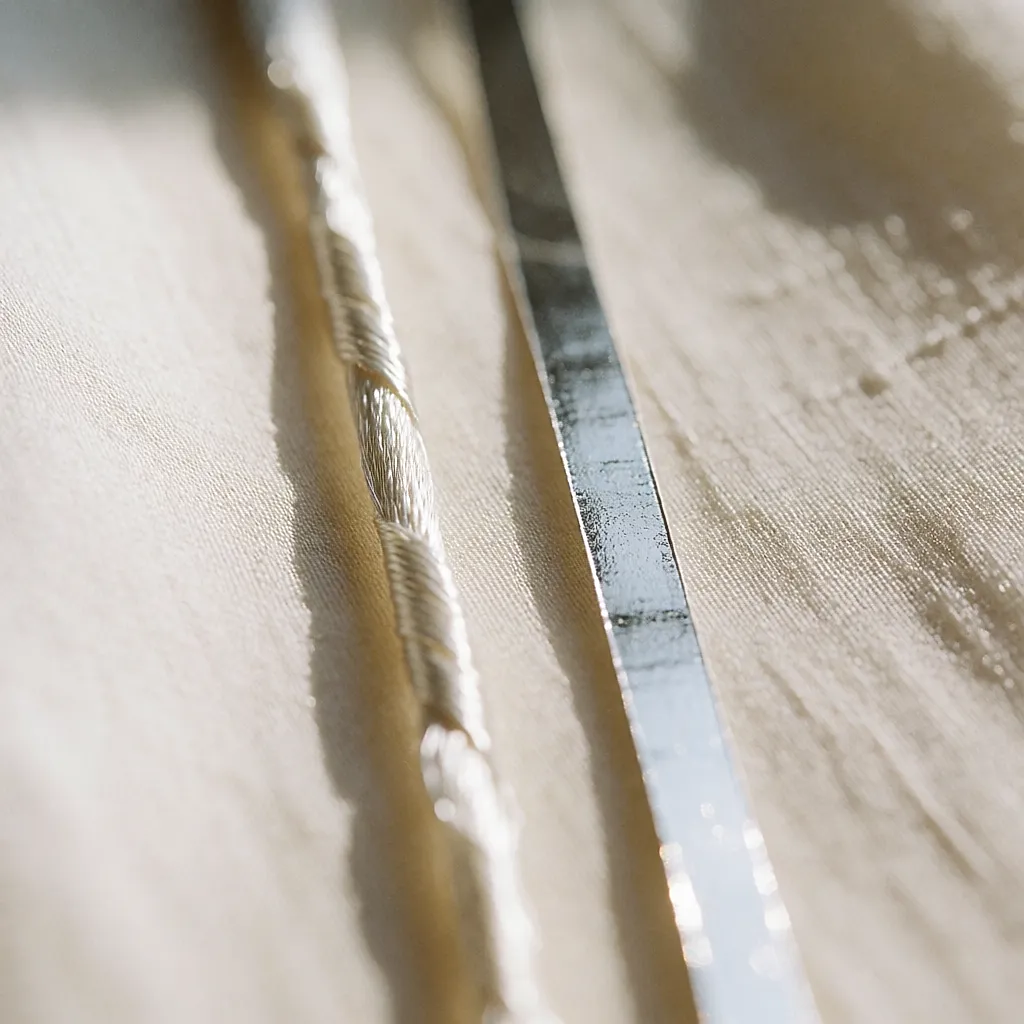
A very common version in the shops is based on a metallised film — usually polyester — cut into strips and then twisted. The finish is more uniform, brighter, and "newer" too. It isn't a con: it's a different piece with a different job. It's just that in evening light the gap shows. And in the hand, you feel it.
The clue that doesn't lie
A sari with genuine zari falls heavier on the shoulder; the pallu, the panel that drops down the back, pulls slightly and the embroidery holds itself. Synthetic gold is lighter, sometimes almost weightless, with a stiffer drape where the motifs sit. If you're torn between two pieces in a shop, put one on and then the other for a minute or two: your neck will answer before your eye does.

Second clue: touch. Metal thread is cold at first contact, then warms; the metallic version stays tepid and slightly plasticky under the finger, and you can often spot it straight away. Then turn the embroidery over. On genuine zari the reverse usually shows a dense, carefully worked network of threads; on an industrial version the pale synthetic core is sometimes on show without a shred of shame.
So should you treat weight as proof? Be a little careful. A heavy piece may simply be loaded with glass beads, and authentic zari can be fine and discreet depending on the region and the workshop. Weight is a clue, not a certificate.
Care: the dry cleaner, and nothing else
On a sari with zari, water is the enemy. The metal thread blackens, the silk core marks, and creases take on a stubborn memory. So it's dry cleaning — never the machine, never the tumble dryer, never the "delicate cycle" you talk yourself into on a Sunday night. Tell the cleaner it's zari: not all of them will know, and the handling is different.
Storage matters as much as cleaning. Keep the piece in cotton (a clean pillowcase does the job nicely) and never in a plastic bag, which traps damp. Refold it differently now and then so a crease doesn't set along the same line, tuck in a moisture absorber, and keep perfume and hairspray well away. If you really must iron it, do it inside out, on a low setting, with a cloth between the iron and the fabric.
One wedding, then the next
This is where zari gets its own back on throwaway fashion. A well-kept piece goes through wedding after wedding, taken in, let out, resized down the generations. You know it by its patina: the metal has dulled, the silk has gained body, and the motifs no longer shine the same way — they've lived.
When a thread snaps or embroidery starts to fray, two routes open up. Restoration by a specialist, who picks up the stitches one by one. Or specialist re-winding, which can bring tired motifs back to life. On synthetic gold the maths is usually simpler: the piece may cost less than the repair. The real question isn't the price, it's what you want to hand on.
Before you buy, ask the seller exactly what their label covers: genuine zari, plated, metallised? A serious professional answers straight, and a shifty one has already told you plenty. Turn the piece over, too — the reverse is usually more forthcoming than the front.
What it costs
As a rough guide, a ceremonial sari in metallised zari comes in at around £80 to £220 from a South Asian fabric shop or online, depending on length, embroidery density and origin. Genuine zari with gold-plated silver climbs sharply: roughly £300 to £1,050 for a standard piece, and more for made-to-measure workshop work. Dry cleaning an embroidered sari usually falls between £20 and £50 — worth building into the budget at the point of purchase, especially if the wedding is close.
Then there's the most elegant route of all: a second-hand piece from within the family. An inherited sari, cleaned and lightly altered, often costs less than a new one and is worth infinitely more in stories. Either way, better a slightly pricier piece that's properly looked after than one bought on impulse and left folded at the back of a wardrobe in a plastic bag.
A ceremonial sari isn't a purchase, it's a deposit. You wear it for one evening, then keep it for someone else — and the zari remembers all of it.

Comments
Your opinion matters: rate the article, react and reply to comments.
Comments are moderated; AI-assisted comments are flagged. Text emoticons (8-), :-), <3…) are automatically shown as images.