
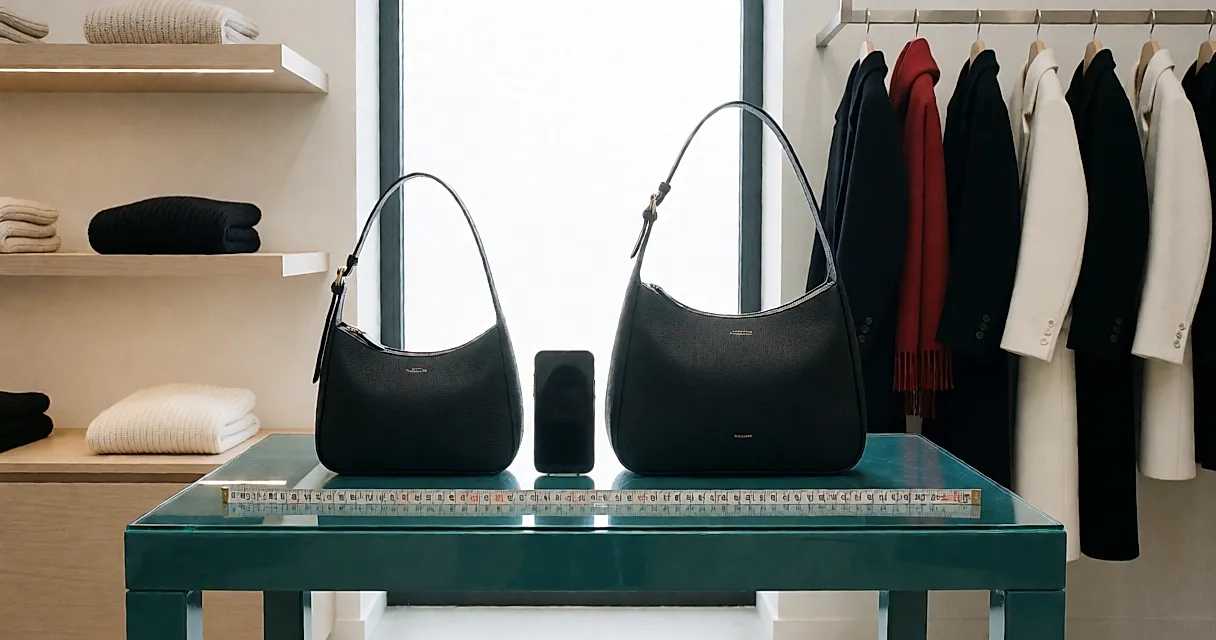
Side by side, the original and its reissue look like two sisters. Then you open the flap, slide a hand inside, lift the strap onto your shoulder — and one of them gives the game away. Style is almost never the issue: it is the centimetres, plus two details most people do not think to check in the shop.
Height, width and strap drop are the numbers that matter
Height looks like the harmless measurement, yet it decides what will stand up inside the bag. An A5 notebook is 21 cm tall; a recent phone is around 15 cm. In practice, below 22 cm you will soon give up on the notebook and the paperback; above 28 cm you are into tote territory — useful, but a little heavy once you add three things. The best move is to take a soft tape measure to the bag you already carry, the one you never complain about. That is your true reference, far more reliable than a product page.
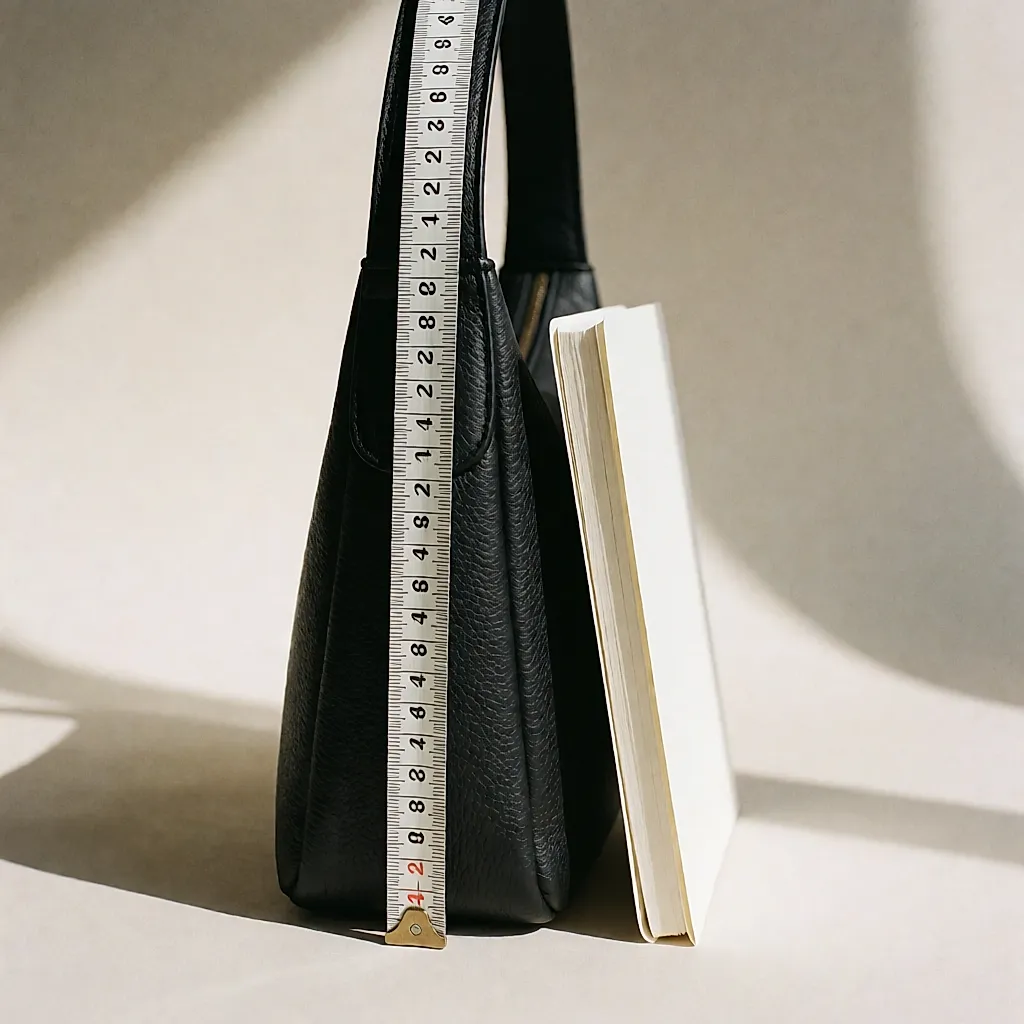
Width shapes the silhouette: too wide, and the bag sags under your arm and spills over your hip; too narrow, and it refuses your purse. Then there is the strap. Do not look at its total length — look at the drop, the distance from the top of the strap to the top of the bag. In practice, allow 20–25 cm for shoulder carry and 45–55 cm for a crossbody that sits at the hip. An adjustable strap will forgive almost anything; a fixed one will forgive nothing. Hence the question to ask before you pay, online or in store: is the strap measured fully extended, buckle included?
The clasp is often where a copy falls down
A good original clasp should turn, click and settle back into place by itself. On some modern copies, a magnet has simply been slipped under the flap: it closes, yes, but it may not hold the shape and it often cannot be repaired. The test takes ten seconds — open it, close it, listen. A firm click and a mechanism that lines up to the millimetre are good signs; a soft rattle and sideways play are much less so.
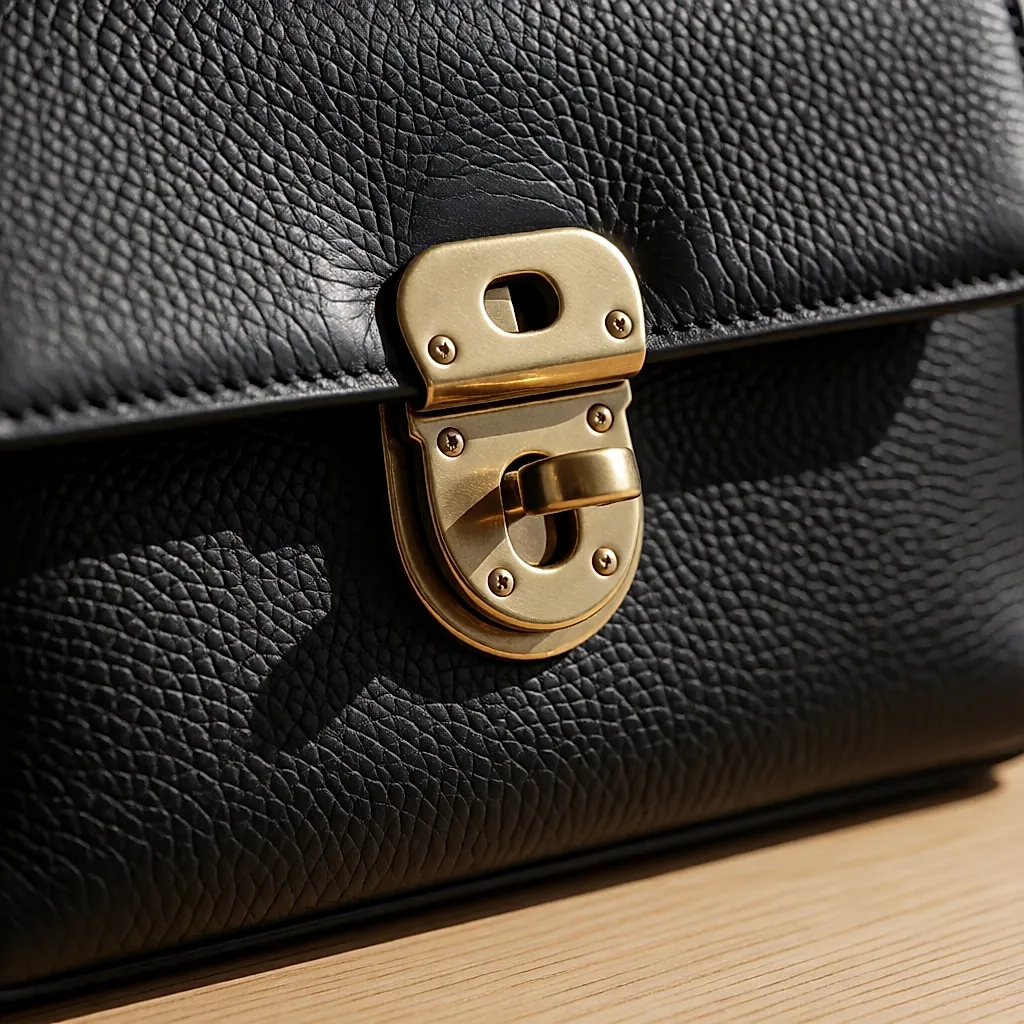
Next, look at the material and the fitting: visible screws, a thick plate, a solid brass clasp rather than lightweight metal. And ask the question that saves you: can the part be replaced? A clasp that wears out is normal; a clasp that cannot be found condemns the bag over a small thing.
The lining is what you only see once the bag is open
Open it wide, pull the lining out as far as it will go, run your hand around. An original lining is often suede, soft leather, heavy cotton or linen canvas: materials that age with the bag and can be resewn. Be wary of thin, shiny, glued-in linings — they can slip, peel at the corners and hold odours. One warning is enough; no need to turn it into a saga.
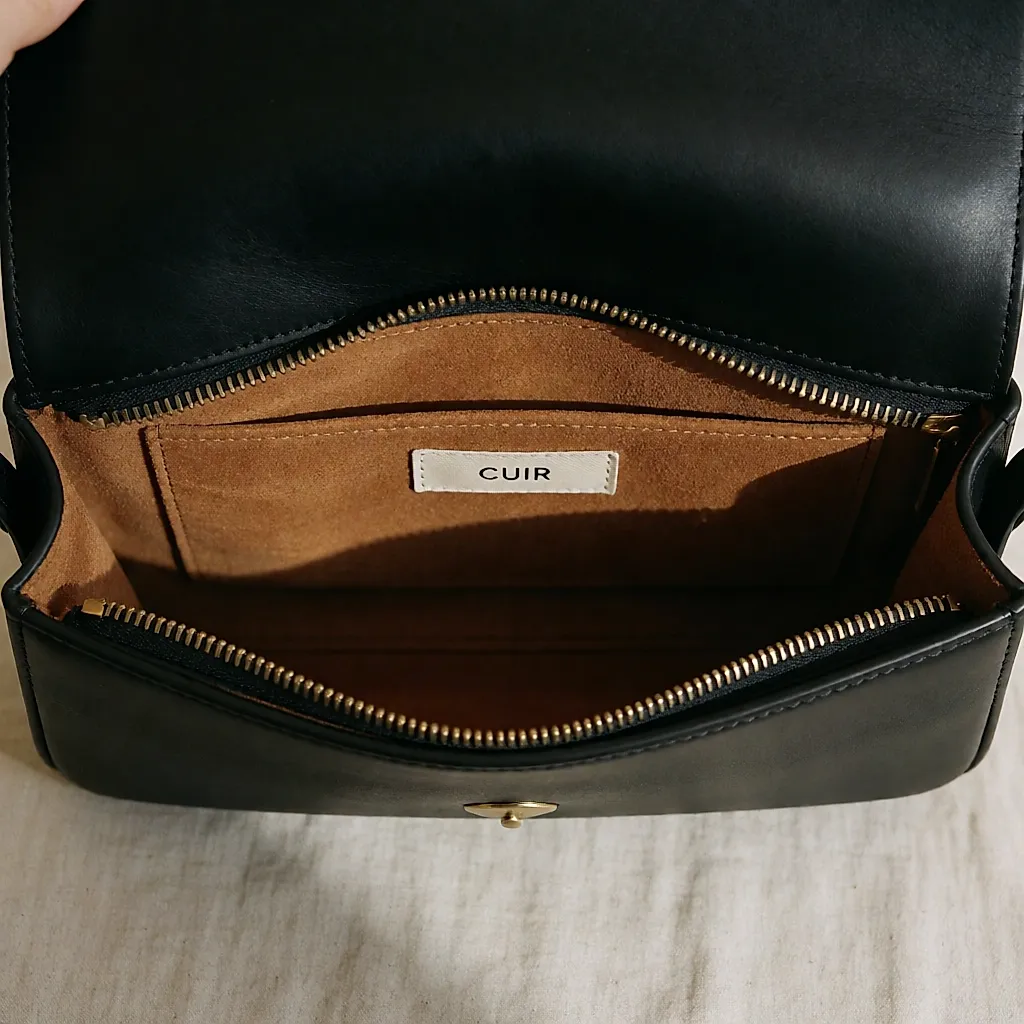
The rest is written in the stitching: even, close, with no pulled threads. An interior pocket that sags, a label sewn askew, a wavy seam — three signs you can spot in thirty seconds, and they say a great deal about the care taken over everything else.
The three-item test: take the three things you really put in a bag to the shop — phone, purse, keys — plus the notebook or water bottle if that is your habit. If it does not fit now, it will not fit later.
What you pay, down to the centimetre
Prices vary wildly. As a rough guide, expect around £150–£400 for a leather reissue from an accessible brand, and more like £1,200–£3,000 from houses that dip into their archives. On the resale market, an everyday original often changes hands for around £300–£900 depending on condition, year and whether the dust bag is included; rare pieces go for much more.
Where to look? The brand’s boutique and official website for new bags, where measurements are usually listed in detail; consignment shops and resale platforms for the original; car-boot sales for a lucky find, with a close eye on the stitching. Price also varies with the leather: full-grain, grained and patent leathers age differently, and leather that shows marks is not the same as leather that is damaged.
Three numbers in a notebook, two details under your fingers, and you have a bag you will keep for longer. That is all we wish you — and it is not much to ask.


Comments
Your opinion matters: rate the article, react and reply to comments.
Comments are moderated; AI-assisted comments are flagged. Text emoticons (8-), :-), <3…) are automatically shown as images.