
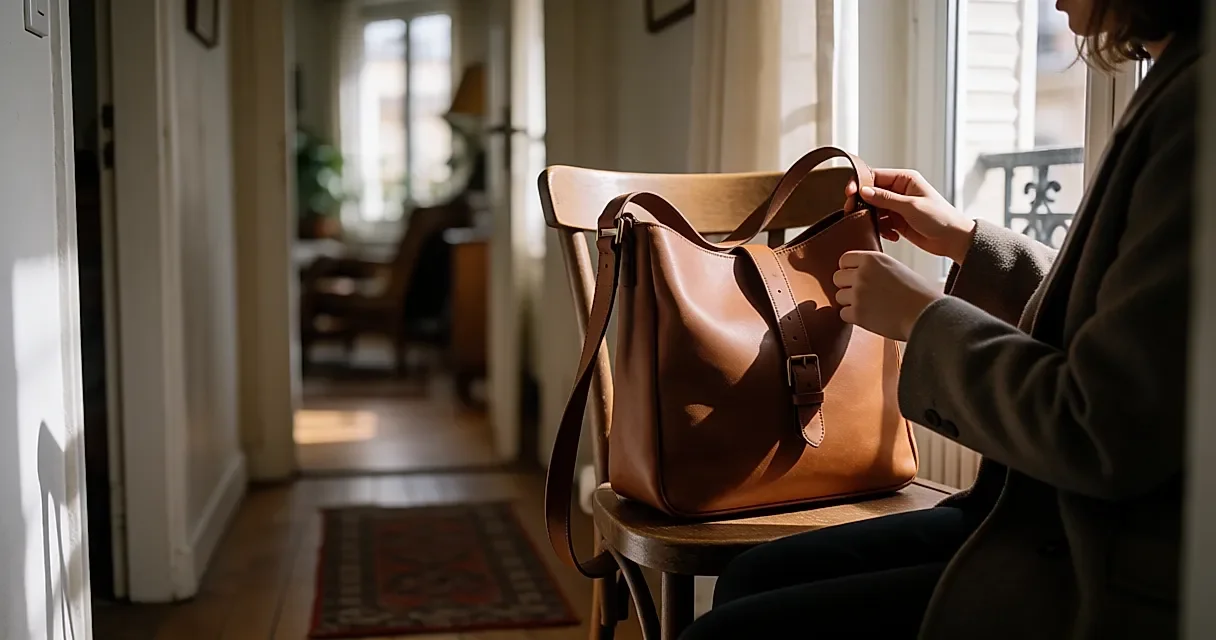
A bag almost never dies from being used. It dies from a clasp that is no longer made. The leather is still supple, the lining is holding up, and yet it no longer closes — so it goes to the back of the wardrobe to wait for a repair that never comes. What really makes the difference isn't just the shape or the colour: it's the hardware. A clasp held together by screws, replaceable strap attachments, an adjustment tab still in the catalogue — that is what separates a bag you keep from one you abandon. A bag can catch your eye, and it can go on pleasing you for years; but its fastenings must not be sealed in.
The hardware that decides whether a bag survives
A design that has stayed in a brand's catalogue for fifteen or twenty years is not necessarily a commercial accident: it is a piece whose patterns still exist and whose construction the workshops understand. Longchamp’s Le Pliage, for example, is one of those designs that has lasted long enough for the question of spare parts to become a practical one. This is exactly the kind of case where you look at how the bag is put together before you get your card out.
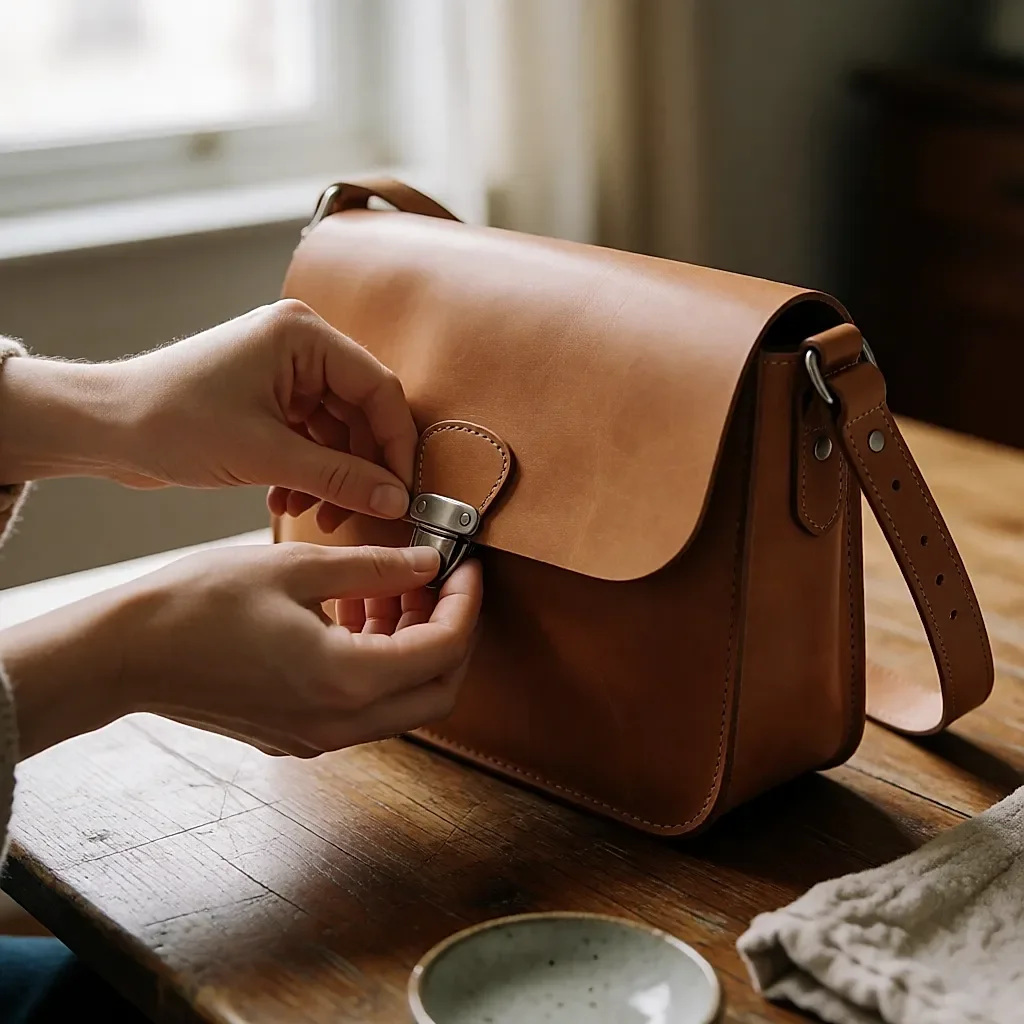
In practice, look at the screws before you look at the logo. Does the clasp come apart? Can the strap attachments be replaced? Are the lining and adjustment tab still available? If the brand has a workshop or a network of partner cobblers, who does the repair, with which parts, and how long will it take? If the answer is vague, if you are told that 'we don't repair this line', walk away. A short-lived model can be very pretty and very well cut; it remains a consumable, not a piece you keep. This isn't snobbery: whether your budget is small or large, you have the right to expect the same standard.
Which leathers age well
Not all leather ages in the same way. A full-grain leather with little correction develops a patina: it darkens slightly, softens where you carry it, picks up a few marks and then settles. Corrected-grain leather, which has been sanded and often coated, stays pristine for longer, then cracks all at once without warning. Vegetable tanning — slower and more expensive — often gives a material that ages beautifully, with a colour that deepens over the years.
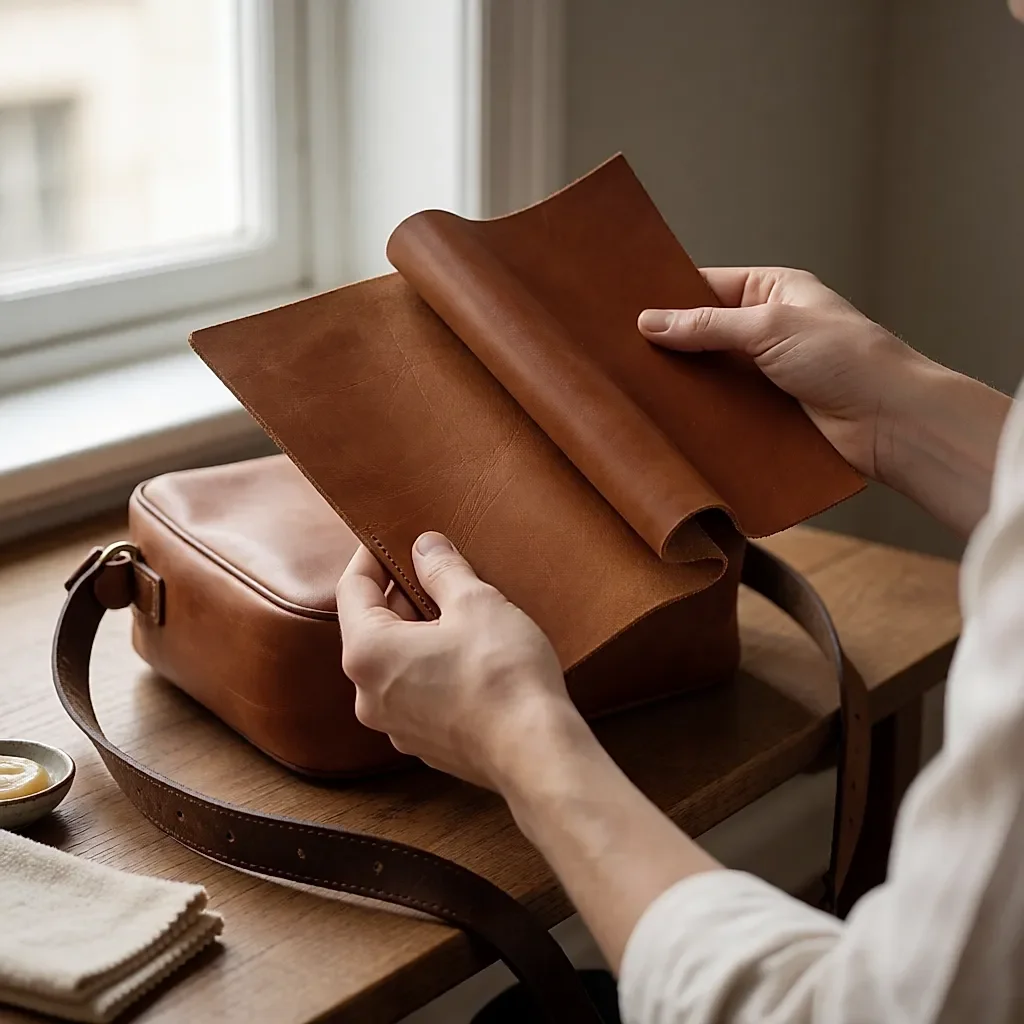
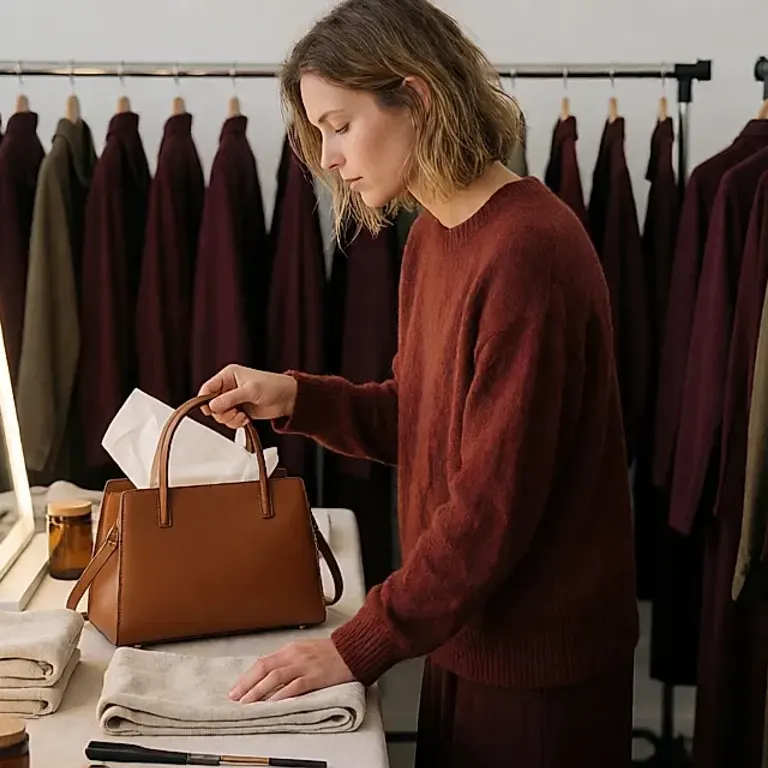
We won't repeat the full conditioning instructions here: our guide to looking after a leather bag explains how much cream to use and the right technique. In practice, the main thing to remember is storage that prevents crushing: a bag stuffed with tissue paper holds its shape better than one folded under a pile of jumpers. And read the label all the way through: if the synthetic fibre content dominates, you aren't buying a bag that will develop a patina; you're buying one that will wear out. That isn't a dealbreaker for a specific use, but it isn't worth the same price.
What about buying second-hand?
This is where it gets interesting. Older designs, precisely because they were made for so long, circulate in large numbers on resale platforms and in second-hand shops. You can find sturdy leather bags for £60 to £200 — a fraction of the new price — provided you know what to look for.
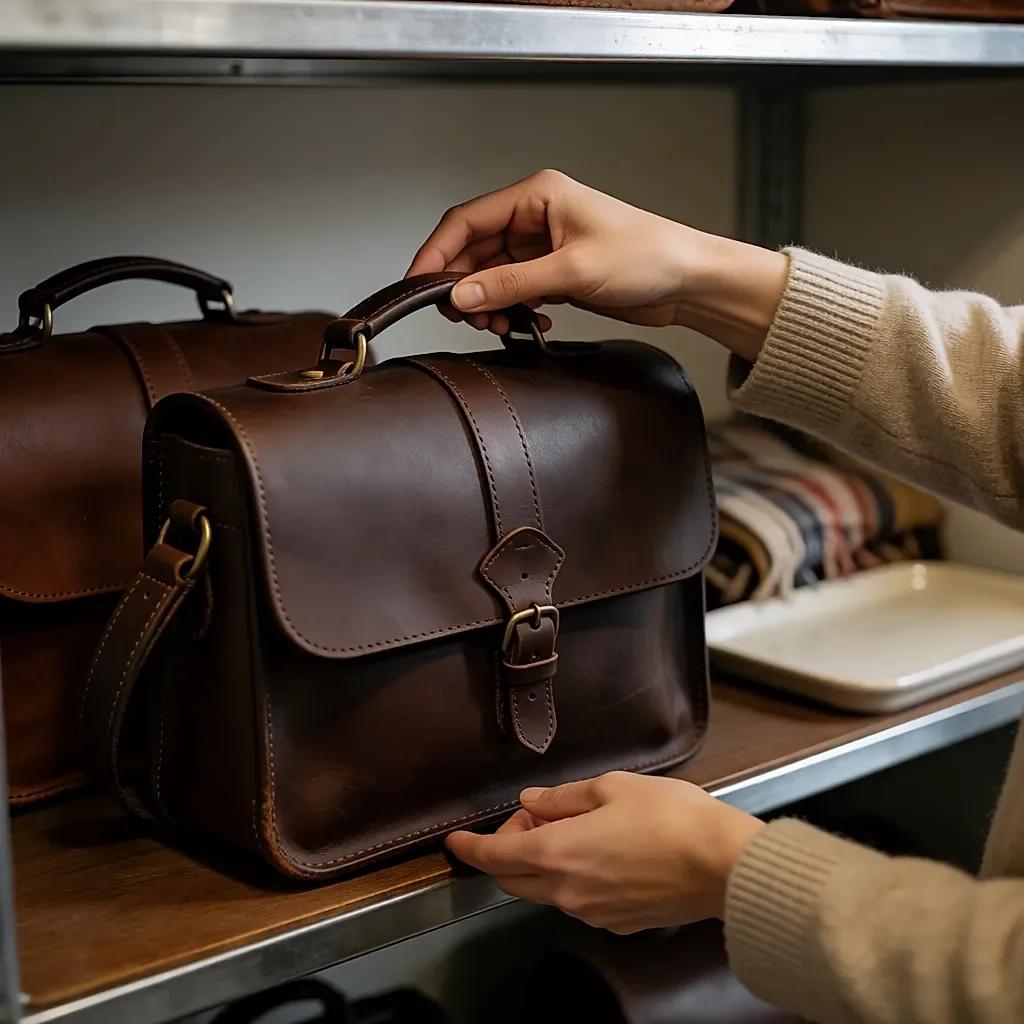
The check-up comes down to four points: the corners (the first place to wear), the stitching (is it pulling?), the metal parts (clasp, strap attachments, adjustment tab: do they click shut firmly and stay put?), the interior (holes in the lining, musty smell). Always ask for photos of the back and base. If the listing shows only the outside in flattering golden light, be wary: a bag photographs far more easily than it can be repaired.
Before you pay, ask for a photo of the interior label, the clasp and the strap attachments, plus the receipt if it still exists. On an older model, these are the details that let you check the listing matches the item — not the colour of the logo or the number of 'favourites'.
Budget
As a rough guide, expect to pay around £250 to £600 for a new, good-quality full-grain leather bag, excluding the big fashion houses, whose prices have little to do with the material. Second-hand, similar leathers often cost between £60 and £200, depending on condition, brand and how sought-after the model is. A repair at a cobbler or leather repairer — replacing a clasp, restitching a seam, fitting a new strap attachment — usually costs between £30 and £90, sometimes less for a simple clean-and-condition treatment.
The maths is quick: a £150 second-hand bag plus a £60 repair still comes in below the price of a new mid-range bag.
A 25-year-old bag isn't a vintage trophy to be handled with kid gloves — it's a bag whose hardware has survived. The next time you come across one in a shop, look at the clasp first: does it come apart, can it be replaced, is it held by a screw rather than a sealed rivet? That is often where the difference lies between a handsome bag and one that will stay with you.

Comments
Your opinion matters: rate the article, react and reply to comments.
Comments are moderated; AI-assisted comments are flagged. Text emoticons (8-), :-), <3…) are automatically shown as images.