

Around the same Chanel collection, in English and in French, the same word keeps surfacing like a smell from the attic: roots. You would have put money on "bold", on "rupture", on "a fresh start". "Lineage" wins instead. An odd way to sell the new: proving it was already there.
Same show, two grammars
On one side of the Atlantic, the story gets told as a narrative: the house opens its founder's book again, Gabrielle Chanel, and turns heritage into a script. On the other, in France, the talk is more of ateliers, of hand skills, of what a première d'atelier — a head seamstress — has been able to do with her hands for twenty years. Same subject, two accents, and underneath, the same reflex.
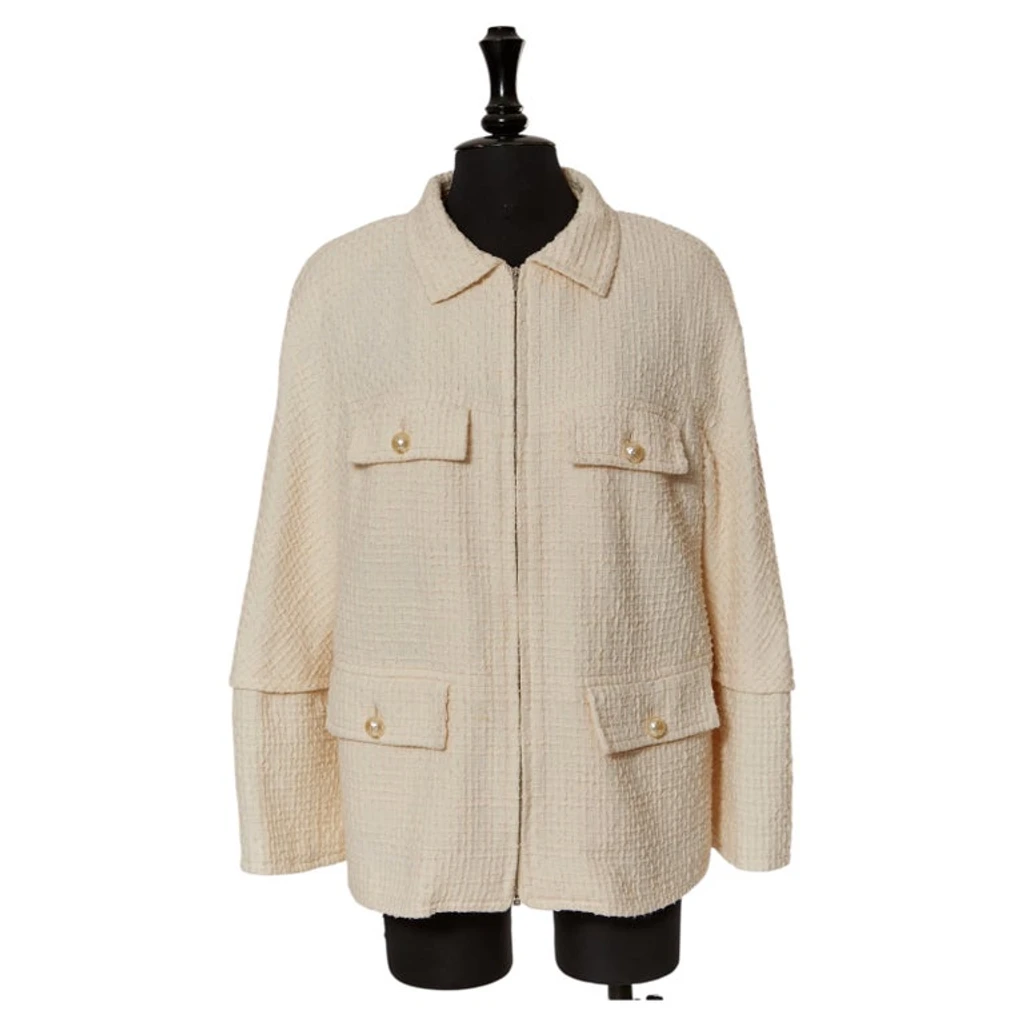
Because nobody, in either case, is asking the newcomer to sweep everything away any more. At Chanel, Matthieu Blazy inherits a set that is already built: tweed, jersey, the little black dress, pearls. His job is not to knock it down but to convince us he can move around inside it. And what if the real boldness today is knowing exactly where you come from?
Gabrielle, the user's guide
Invoking the founder is not a biographer's whim. It is practical: her codes are legible from three metres away. A Chanel jacket is recognisable by its contrast braid, its patch pockets and the chain slipped inside the hem, which weights the bottom edge and gives the drape its poise. Add two-tone shoes, a quilted bag, black and cream: the wardrobe speaks for itself, with no caption needed.
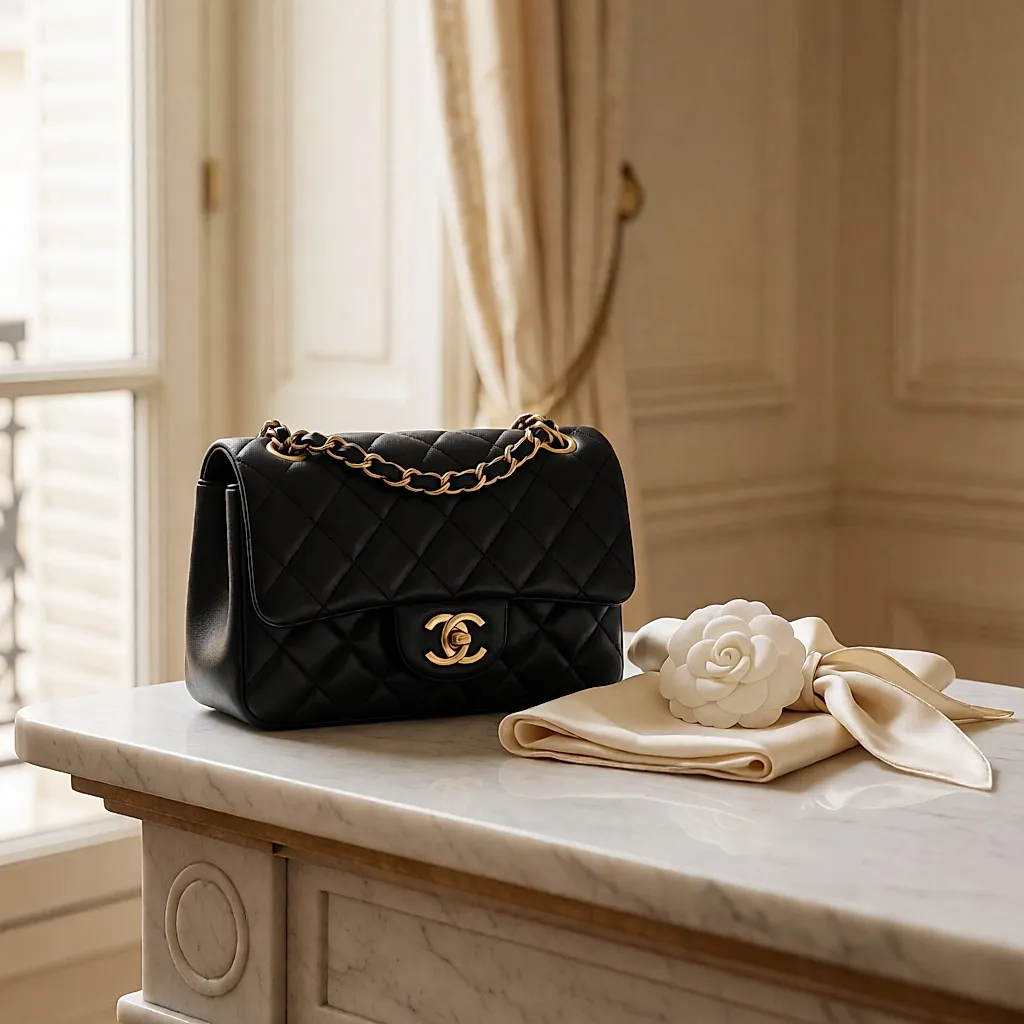
The house did not wait for this season to do any of that, either. Opened on rue Cambon in 1910, it built its legend on utilitarian pieces that became classics — jersey for day, the little black dress, the 2.55 bag launched in February 1955. In other words, the "root" is not a theme of the season. It is the catalogue.
Why starting from scratch stopped selling
The blank-slate speech had its moment. A creative director arrived, announced he was "reinventing everything", and everyone applauded. Except these days the question comes faster than the compliment: what happens to the pieces people bought five years ago?

There is plain common sense in it. The resale and archive market has turned the older wardrobe into an asset: a house that disowns its past quietly devalues what its clients already own. Lineage reassures as much as it seduces. One thing still needs checking: that the story is not just there to paper over slightly timid proposals. Roots are all very well; the tree still has to bear fruit.
And in your own wardrobe?
You do not need a couture budget to borrow the idea. The move that works: one braided piece, just one, worn with raw denim and a white tee. The full look, on the other hand, turns you into a December fancy-dress version fast — fine on an invitation, less practical in the office on a wet Monday. Does that mean digging out your grandmother's suit? Not necessarily: a chain belt or a cardigan with contrast edging is enough to land the accent.
Two caveats, though. Vintage tweed needs real upkeep: a lining to be repaired, buttonholes worn soft, a waist to be taken in. And a structured jacket, while it grounds a long, lean silhouette, can weigh heavily on a small frame — try it sitting down, arms folded, before you say yes. As for shiny braid on a cheap jacket, it gives itself away quickly: it shines like a curtain cord.
Budget
Prices swing wildly. Expect roughly £50 to £160 for a contrast-trim jacket from high-street chains, mid-market labels and online retailers. At a vintage shop or a pre-loved luxury dealer, a vintage Chanel tweed jacket often goes for somewhere between £800 and £2,200 depending on year, condition and size; immaculate pieces move fast.
Factor in alterations too: £25 to £55 to take up a hem or nip in a waist at a local tailor is often what rescues a second-hand find. And if the budget really will not stretch, you can settle for braid bought by the metre and sewn onto a jacket you already own — the most "roots" gesture there is, and the cheapest.
Three questions before you fall for a "heritage" piece — Is the braid woven or glued? (woven, it lives; glued, it lifts after the first wash.) — Does the hem have weight, or does it float? — And above all: do you already have what you would wear it with three times this month? If the answer is no, the piece is pretty, not useful.
Comments
Your opinion matters: rate the article, react and reply to comments.
Comments are moderated; AI-assisted comments are flagged. Text emoticons (8-), :-), <3…) are automatically shown as images.