
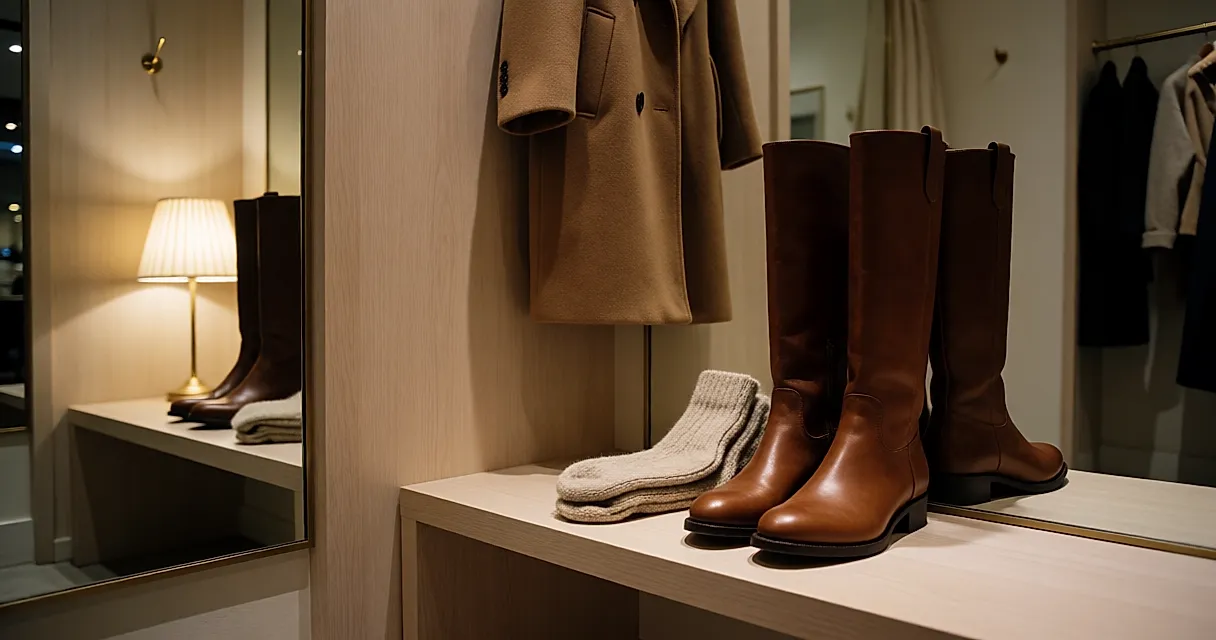
The heel of a boot rarely wears flat. More often it goes on the outer edge, at an angle, like a pencil sharpened too long on one side. There is nothing alarming about that while the rubber still has some thickness — but by the time you notice a slight wobble underfoot, it is often already late. That is why the decision is better made now, at the start of winter, rather than at the first thaw: a pair you love is better repaired before it has taken a beating.
Most of us treat a boot as one solid object: upper, sole, lining, all to be thrown out together. That is wrong, and it is good news for your bank balance.
A sole is meant to wear out, not to be a fault
Nobody buys a new car because the tyres are bald. With a boot it is the same: the sole is the part that rubs against the pavement, grit and kitchen floor — so it is the part that wears out first, and the part you replace. The value in a pair lies in everything else: leather uppers whose tanning has held up, a lining that is still soft, a shape that has not collapsed, a line that still holds the silhouette.
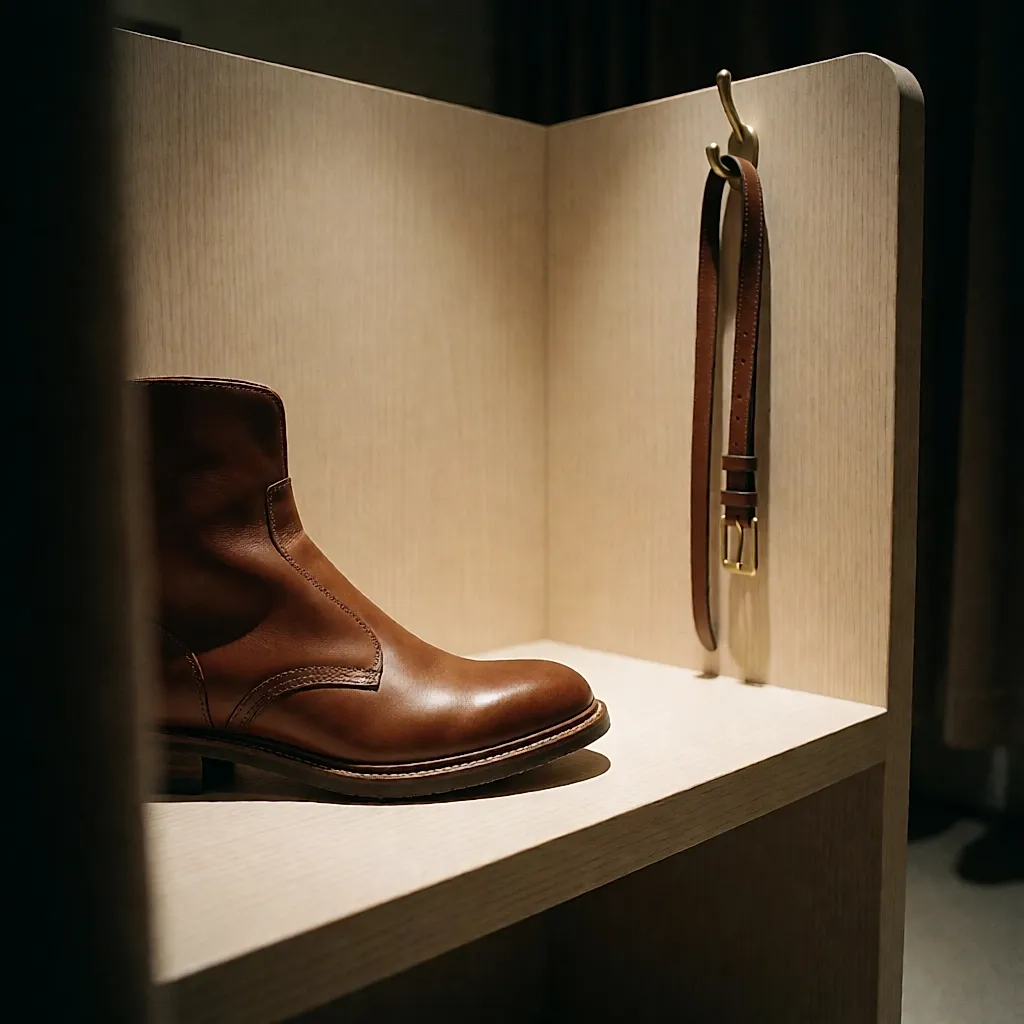
A well-made boot is designed for this: the sole is stitched or glued and reinforced, with a welt marking the boundary between upper and sole. As long as that boundary is clean, a repair is possible. Once wear crosses it, you are no longer repairing a sole: you are trying to rescue damaged leather.
Hence the timing. In November, the pair is about to go through four months of daily wear: it is better that it starts with fresh soles. In March, you will have given a dead sole a whole season of rain and pavement, and wear will have had time to climb to where it matters.
What to check underneath a boot
No magnifying glass needed. Turn the boot over in good light and look for three things: a heel worn at an angle, a toe that whitens or lifts when you press it, and fine spiderweb cracks on the flat of the sole. Add two quieter clues: a tread that has smoothed to the point of slipping on wet ground, and a seam that is starting to gape at the side.
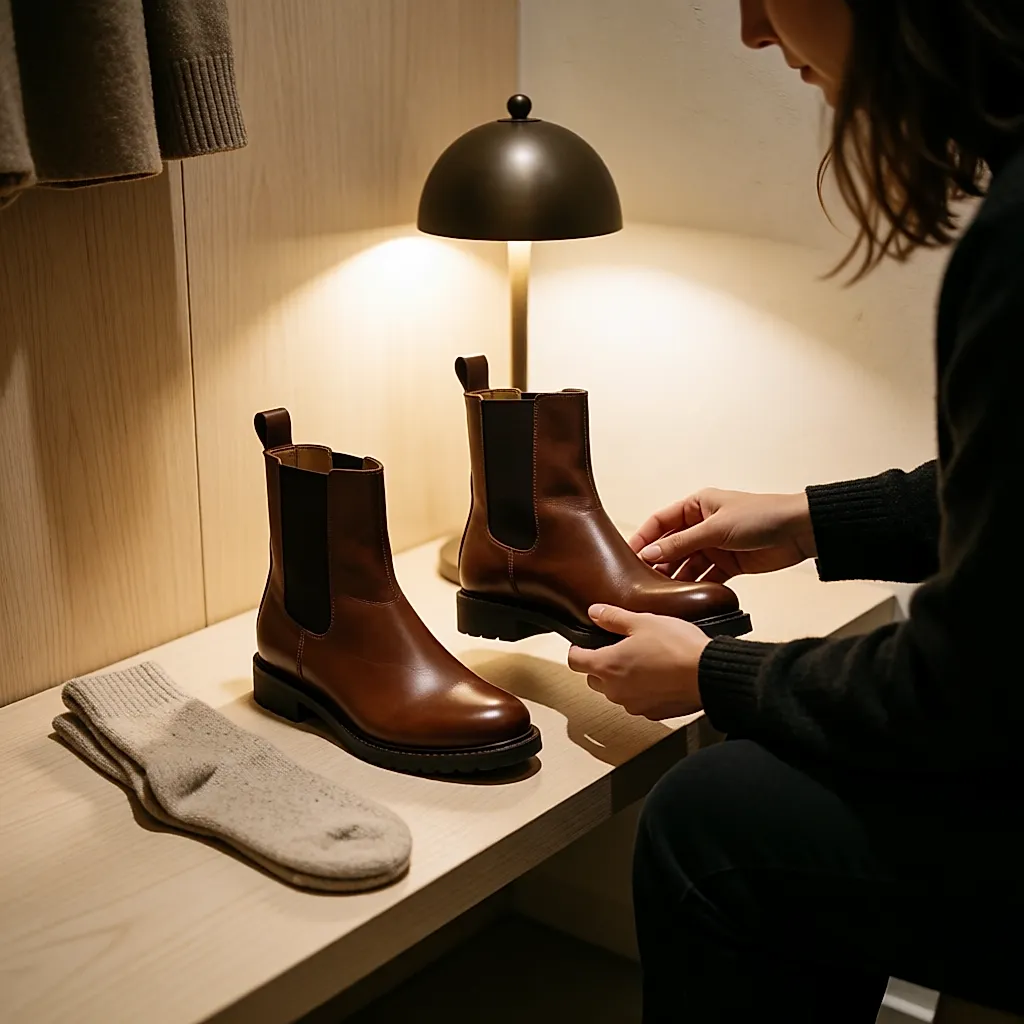
The most telling test is simple: bend the boot where the foot bends, press the toe, run a fingernail under the edge. If the rubber lifts by a few millimetres, this is the ideal moment — a simple glue repair is still enough. If it tears, you are already at the next stage.
Five signs that justify a trip to the cobbler
- The heel is clearly worn on one side.
- The sole lifts at the toe when you press it.
- The underside is smooth where you put your body weight.
- Fine cracks are appearing on the flat, without reaching the leather.
- The side seam is gaping or a thread is showing.
What a repair really saves
Two interventions happen before wear sets in, and they are the best value: the heel tap and the toe tap, the small pieces fitted under the heel and at the toe that take the friction for you. Fitted in time, they can be replaced for the price of a lunch and save months of wear on the sole. Then comes the full resole: the worn sole is removed, a new one is fitted — leather, rubber or crepe depending on how you wear them — and the boot goes back out for winters to come.

What it saves, in concrete terms: leather that has patinated with wear, a colour you will not find again, a cut that falls just right. What it does not save: an upper split at the crease, leather that has dried out and gone cardboardy, a dead lining, or a budget pair whose sole is moulded in one piece with the upper — there is nothing to take apart.
When the pair is genuinely finished
The real cut-off is when wear reaches the upper leather: the sole has worn through its rubber, then the welt, and the upper is touching the ground. At that point the cobbler has to rebuild, and the bill is no longer anything like a straightforward resole. The same applies if the boot no longer holds your foot: a collapsed shape, a crushed heel counter, a heel that sits crooked despite the repair.
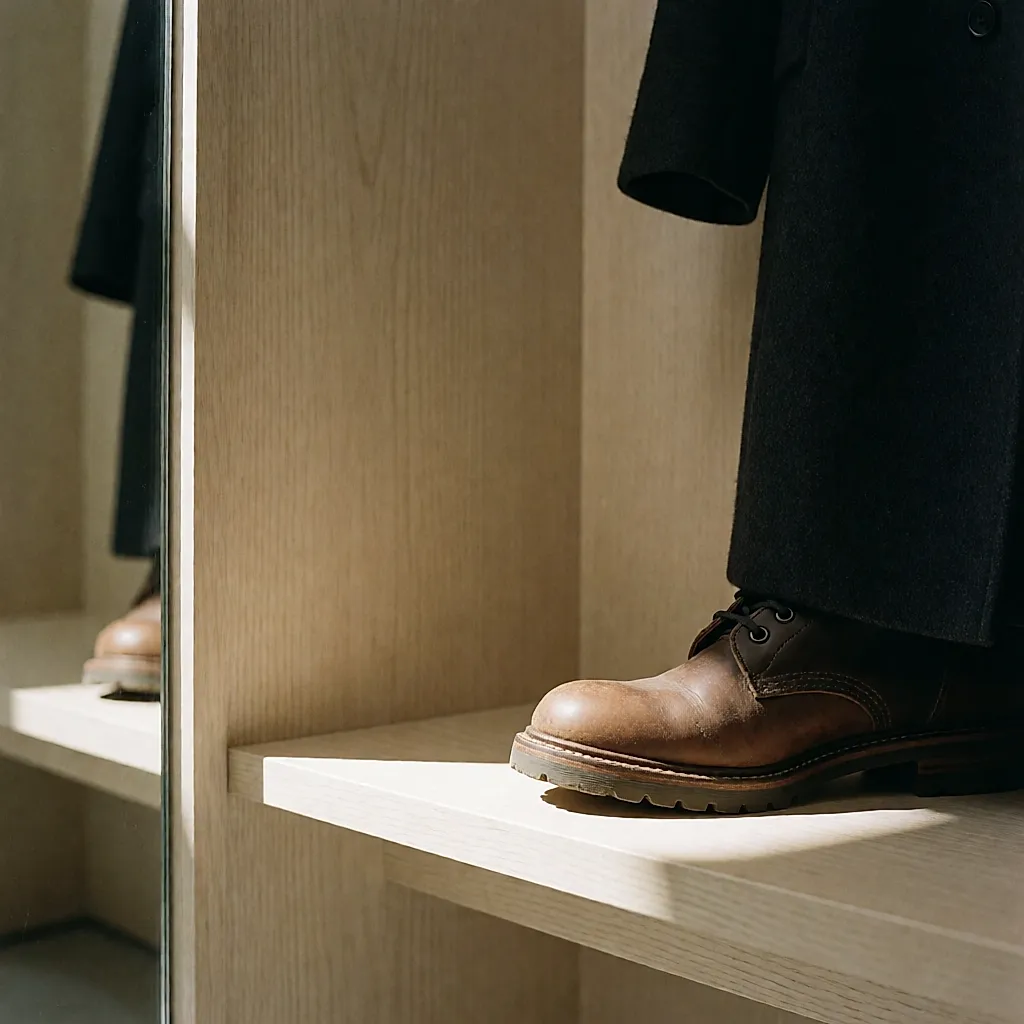
One criterion remains that is less technical, and it is just as valid: would you still wear them? An immaculate boot you never put on is not a boot to repair; it is a boot to give away. And for the financial decision, a simple rule: if the quote is more than half the price of a new pair of comparable quality, it is worth thinking hard — below that, repair is almost always the better bet.
Budget
Expect to pay £15 to £35 for fitting a heel tap and toe tap, £45 to £90 for a full resole depending on the sole chosen, the city and the type of construction — a stitched leather sole takes more labour than a glued rubber one. A small glue repair is often under £25.
Where? The local cobbler is still the first stop: you show them the boot and ask for a quote before work starts. If you do not have one nearby, some repairers work by post — ask for the price and turnaround before sending anything, as postage can add significantly to the price.
In the end, the decision comes down to one line: a sole can be changed, leather can be kept. Look at your boots in the light tonight — if the heel has gone at an angle, you still have a month to act calmly, and the whole winter to walk on them without a second thought.



Comments
Your opinion matters: rate the article, react and reply to comments.
Comments are moderated; AI-assisted comments are flagged. Text emoticons (8-), :-), <3…) are automatically shown as images.