

You had hidden them at the back of the wardrobe after a whole day of feeling them slip off your heel, that ridiculous little foot dance as you search for your shoe with every step. We know the refrain by heart: blister on the toe, a definitive return to heels, and a solemn promise never to go back. Bad luck — or good news, depending on your point of view — the ballet flat is poking its glossy nose out again. And this time, it really does stay on!


Since strappy satin styles reappeared on the catwalks, the most ordinary shoe in the wardrobe has become a piece in its own right. In 2026, we no longer slip it on by default, as a spare pair for days when inspiration deserts us: we choose it, we own it, we almost collect it. That deserved a closer look.

The ballet flat is no longer a consolation prize
For a long time, it played a supporting role, the flat you pull on when heels stay in the cupboard and you haven't an ounce of courage left. The conversation has changed completely. The catwalks have placed it on the same level as a loafer or a Derby shoe, with detailed uppers, slim straps, sometimes an open-weave mesh, an unexpected print or a texture that catches the light. In short, it has earned its place.

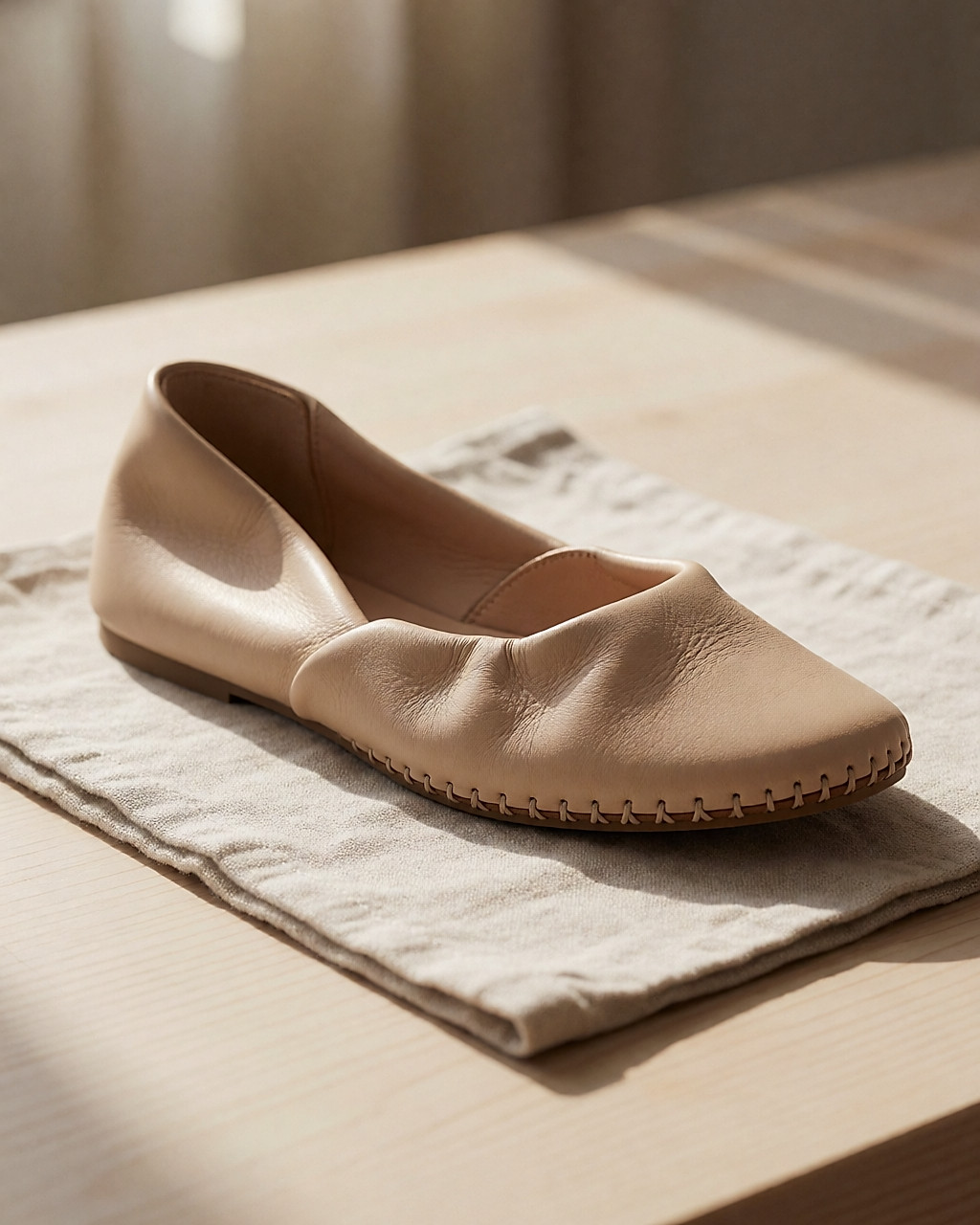
The silhouette taking shape today is more confident, too: square toe, slightly thicker sole, or very supple leather that hugs the instep like a second skin. The 'balletcore' wave itself has lost momentum. Frankly, that's a good thing: what remains is the essence, a soft look that breaks up an overly strict total look. We love that little touch of whimsy that takes the seriousness out of an outfit.
Cut, fit and material: three things to check
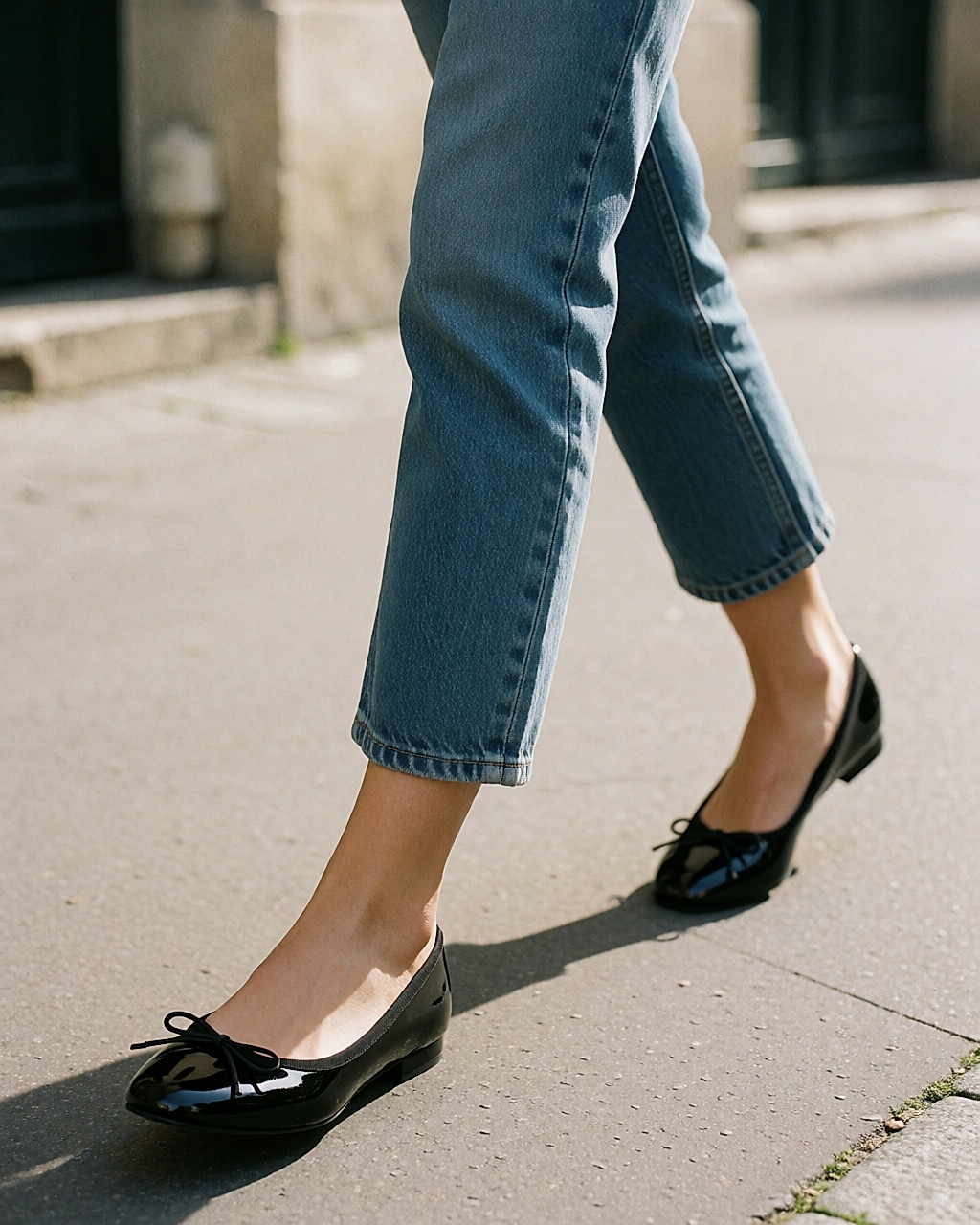
Before you reach for your card, look at three things, in this order. First, the cut. A round toe to soften the foot, an almond toe to elongate it prettily, a square toe to make a statement. And above all, always try on both shoes, ideally at the end of the day — that's when feet swell slightly, so you might as well test them in real-world conditions!
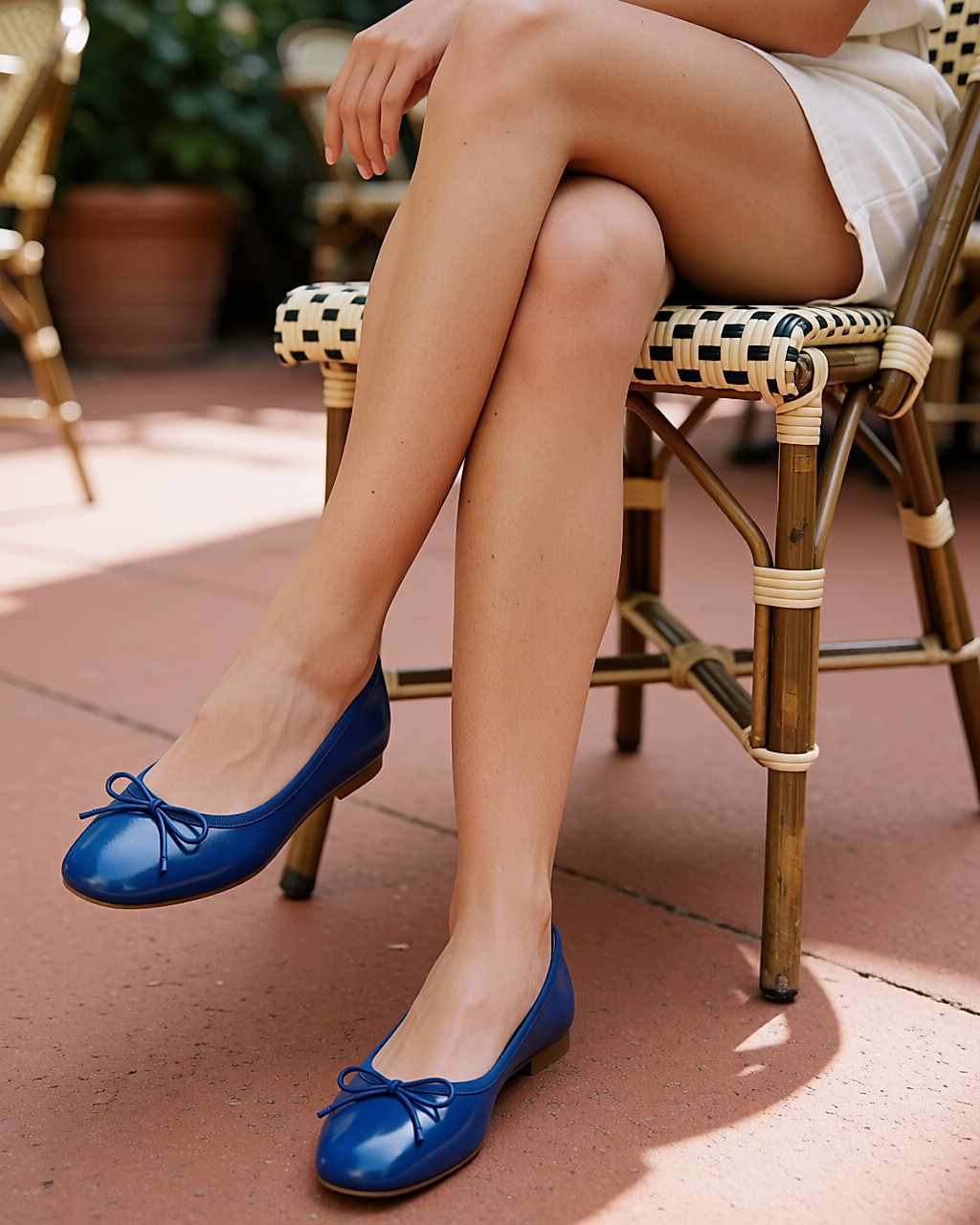
Next, the fit: it's the number-one enemy. An upper that gapes lets the heel slip and creates blisters in no time. Look for a supple retaining elastic, never slack, that holds the foot snugly without pinching.

And finally, the material — the thing that makes all the difference after a few months. Full-grain leather has life, ages beautifully and can be repaired. Corrected-grain leather, covered with a finishing layer, marks more quickly and forgives less. As for synthetic satin, so popular on the catwalks, it doesn't hold up well over time and is hard to recycle: that's a compromise to accept with your eyes open!

Repairable and traceable: the criteria that make a difference
Three markers to keep in mind if you want a pair that really lasts. First, assembly: Repetto still stitches part of its production in its historic workshop in the Dordogne, and Bobbies has most of its styles made in Portugal. The practical result: less transport between the factory and your wardrobe, and much easier repairs when something finally gives.

Then tanning — a point we too often forget to ask about. Ask whether the leather comes from a tannery audited by the Leather Working Group, the benchmark that rates tanneries on their management of water, waste and chemicals, with Bronze, Silver and Gold levels. Be careful, though: it documents the tannery, not the final quality of the shoe, and it doesn't make the leather 'natural' either. It's a useful marker, not a magic passport.

Then there's end of life. A stitched ballet flat can be resoled and can last for years, with the occasional trip to a cobbler — an investment that quickly pays for itself. When it really is worn out, in France Refashion collection points, the eco-organisation for the textile and footwear sector, take in used pairs and give them a second life. In the UK, check Recycle Now or your local council for textile and shoe recycling points.

The gesture that changes everything, and costs almost nothing: slip cedar shoe trees into your ballet flats as soon as you take them off, and alternate between two pairs. The leather recovers its shape, the upper doesn't lose its form, and you can extend their wear. A win for your wallet too!
How to style them
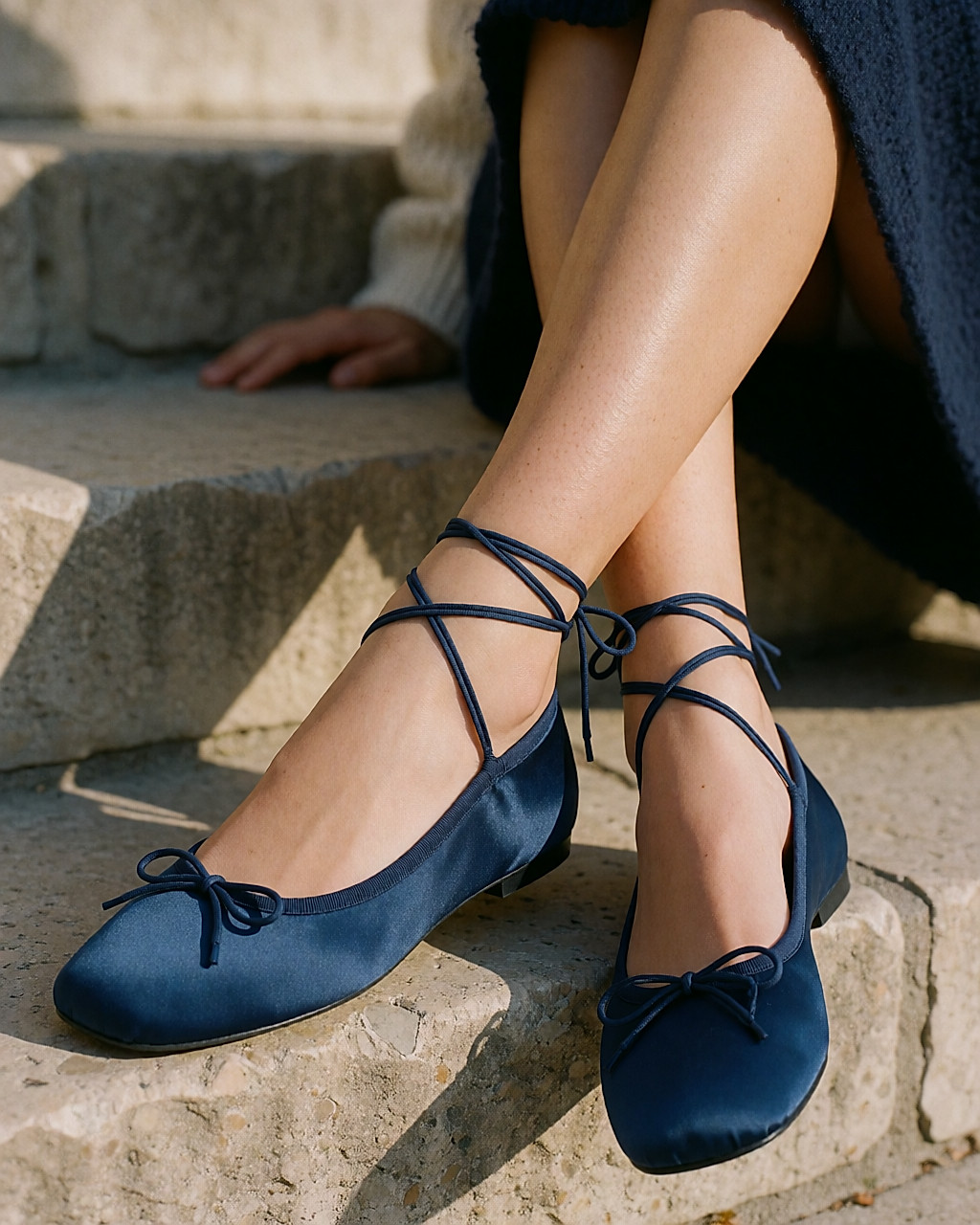
Ballet flats love contrast — that's when they give their best. With wide raw denim, choose a pointed toe: the line lengthens, the silhouette refines. With fluid trousers, dare a monochrome total look — the texture then does all the work, without needing to pile on more.
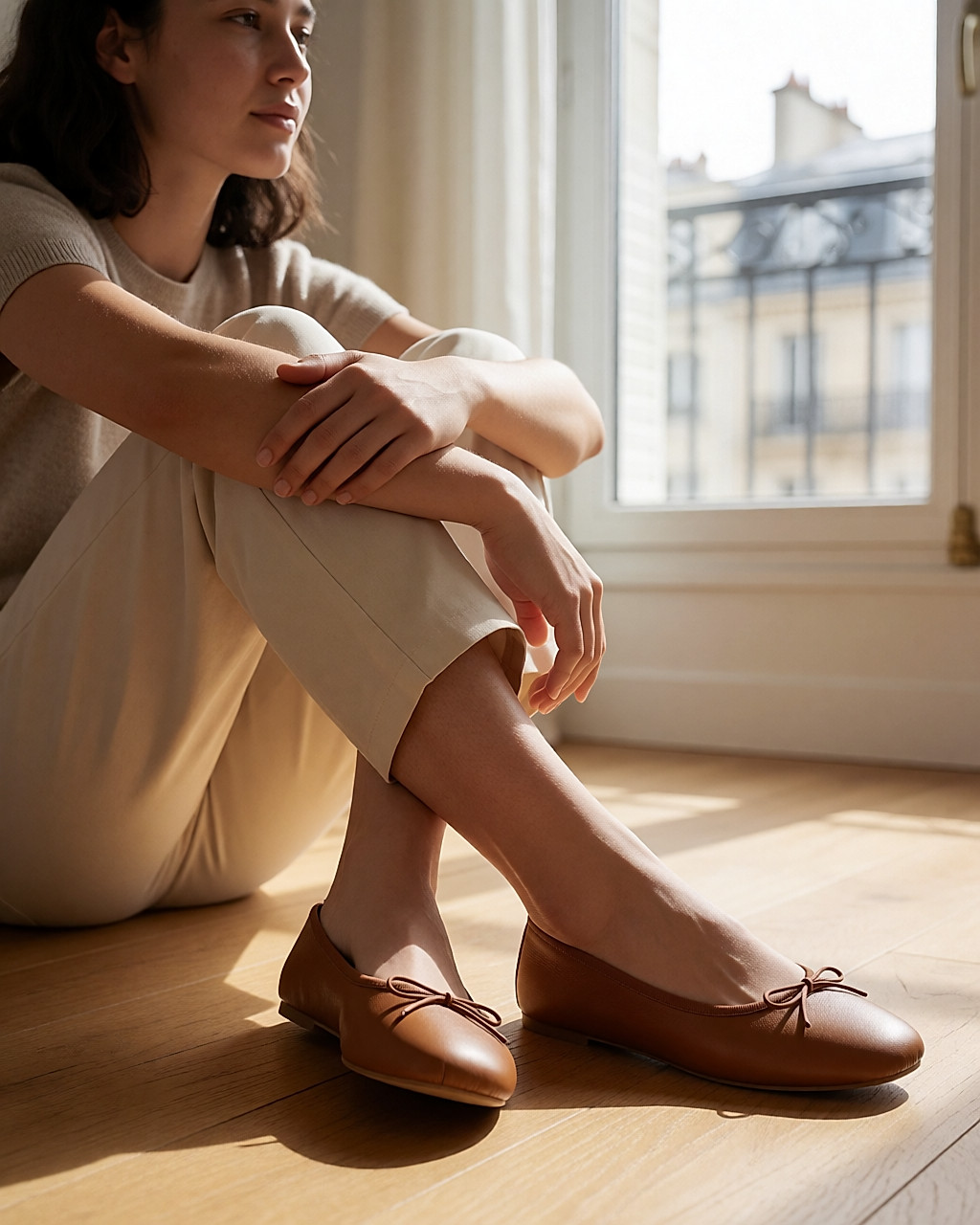
Layering fine ankle socks with a scalloped edge works very well with a short skirt, much less so with a midi skirt that squashes the silhouette. In truth, one strap, one mesh detail or one print is enough to turn a ballet flat into a statement piece: no need to overload it, it doesn't need that to stand out.




Budget
The approximate price ranges you'll see in the UK, excluding promotions.
Expect £20 to £50 on the high street and in department stores: corrected-grain or synthetic leather, glued sole, sometimes repairable. Fine for testing a shape without breaking the bank. £75 to £150 at mid-range labels such as Dune London, Office or Clarks: full-grain leather becomes more common, with a better fit around the heel. £170 to £300 at Repetto or Bobbies, often available online in the UK: European or French assembly, leather that is more often traceable. And £500 to £950 for Ferragamo, Chanel, Miu Miu or Alaïa — beware: a high price doesn't mean it will last, and some luxury satins can mark quickly.
What pushes the price up: the material, where it's assembled, a stitched rather than glued finish, and the brand too. Where to find them? Brand boutiques and department stores to try them on, online shops for the full range of colours, and second-hand for luxury at prices below new, depending on condition.
So, which version are we falling for this season? A glossy black pair, a wardrobe safe bet, or a bright yellow that wakes up a neutral outfit in an instant? It doesn't matter, as long as it stays on your heel and feels like you. Here's a pair we're proud to bring back out of the wardrobe — and this time, there's no reason to hide it away again!
Sources
- Refashion, eco-organisation for the French textile and footwear sector
- Leather Working Group, environmental audit benchmark for tanneries
- ADEME, environmental impact of textiles and footwear
- The Lyst Index, quarterly ranking of the most searched-for products
- Vogue France, catwalk reviews and trends
- Repetto, historic Dordogne workshop
- Bobbies, Portuguese manufacturing
- Ferragamo, official site


Comments
Your opinion matters: rate the article, react and reply to comments.
Comments are moderated; AI-assisted comments are flagged. Text emoticons (8-), :-), <3…) are automatically shown as images.