
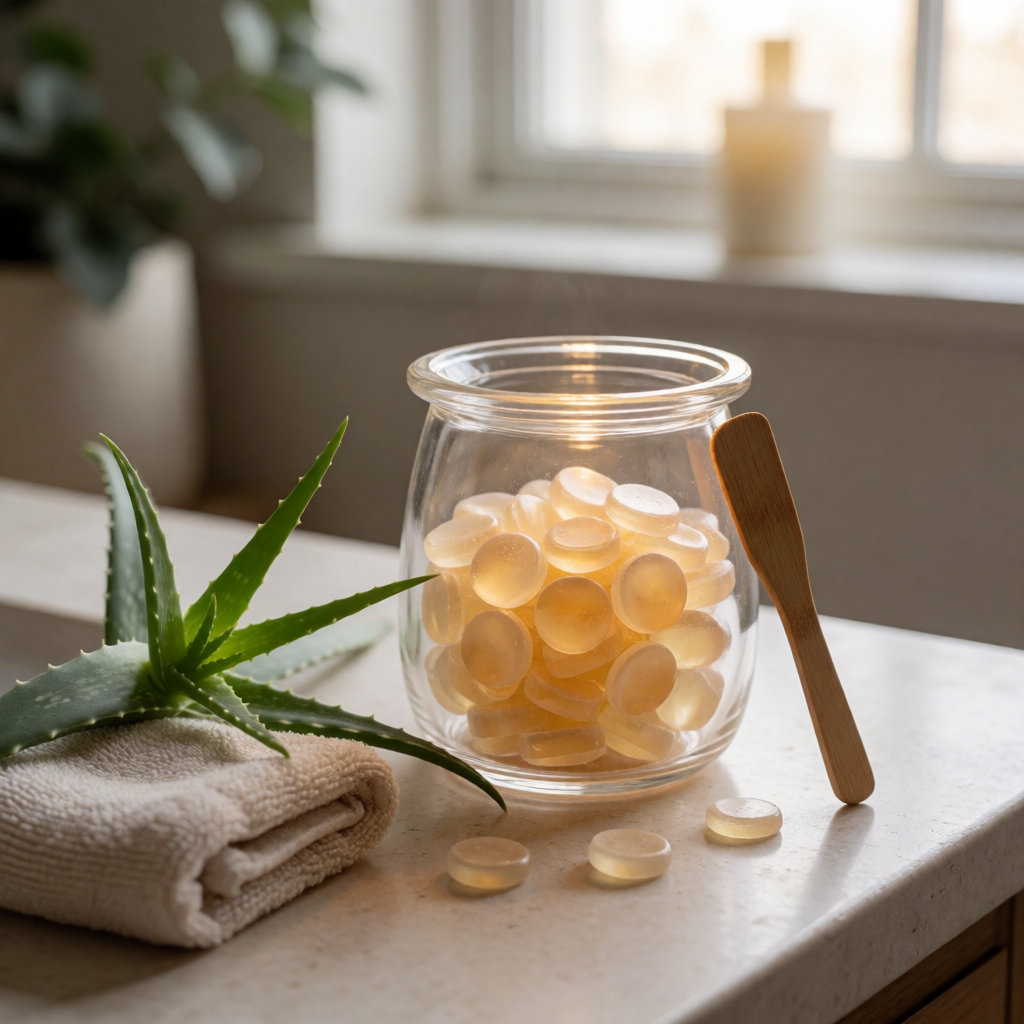
A closer look at bikini waxing
A strip of wax applied crookedly the day before a wedding, and three days of redness to remember it by. That's how you learn that the bikini line does not forgive improvisation! The skin there is thinner than elsewhere, the folds are many, lingerie rubs: it's a far more delicate area than the legs. So: razor, wax or light? In practice, it's rarely the equipment that decides the result — it's your technique!
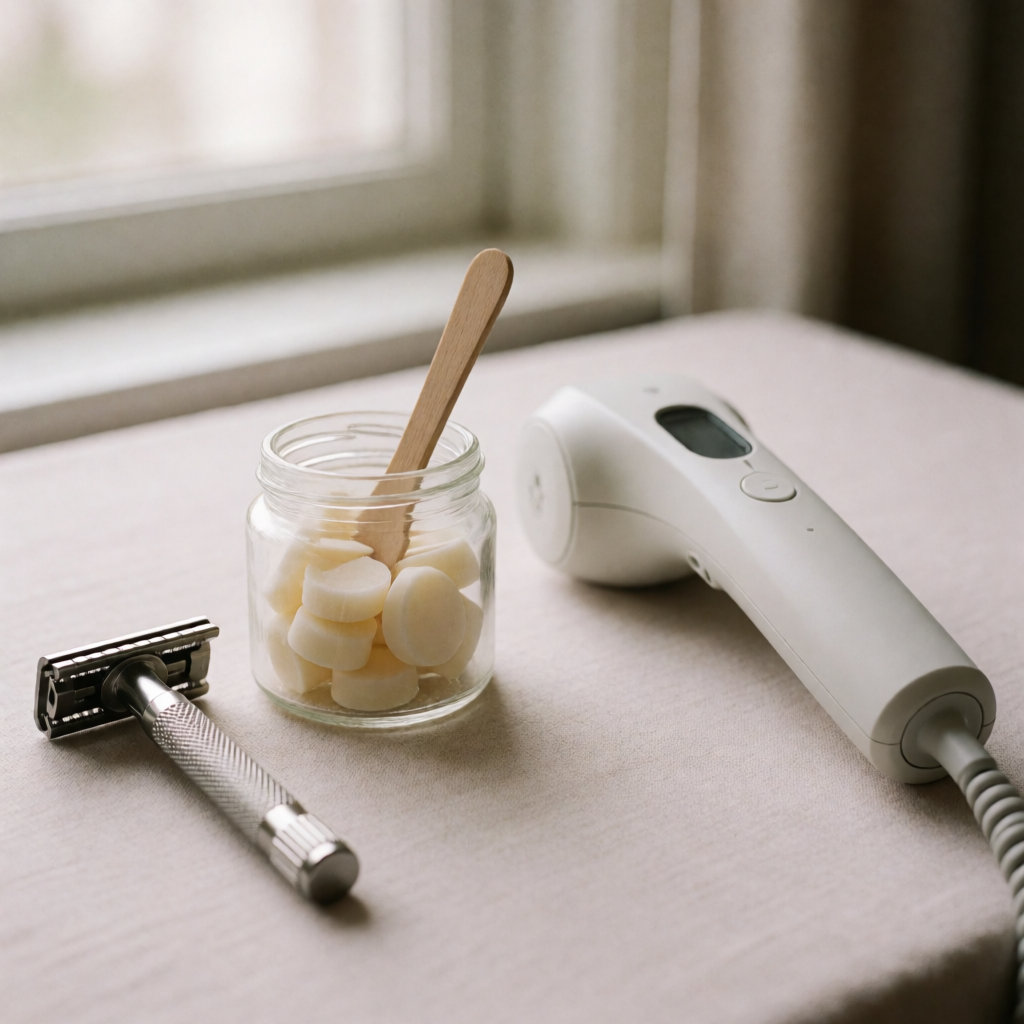
Razor, wax, light: what really changes
A razor cuts the hair at the skin's surface. It's quick, painless and tempting when you're in a hurry. Except the hair grows back with a blunt tip, which can feel rough — shaving does not, however, change its thickness or how fast it grows. And if you do it every two days, the area soon becomes irritated. It's a favourite terrain for ingrown hairs and folliculitis.
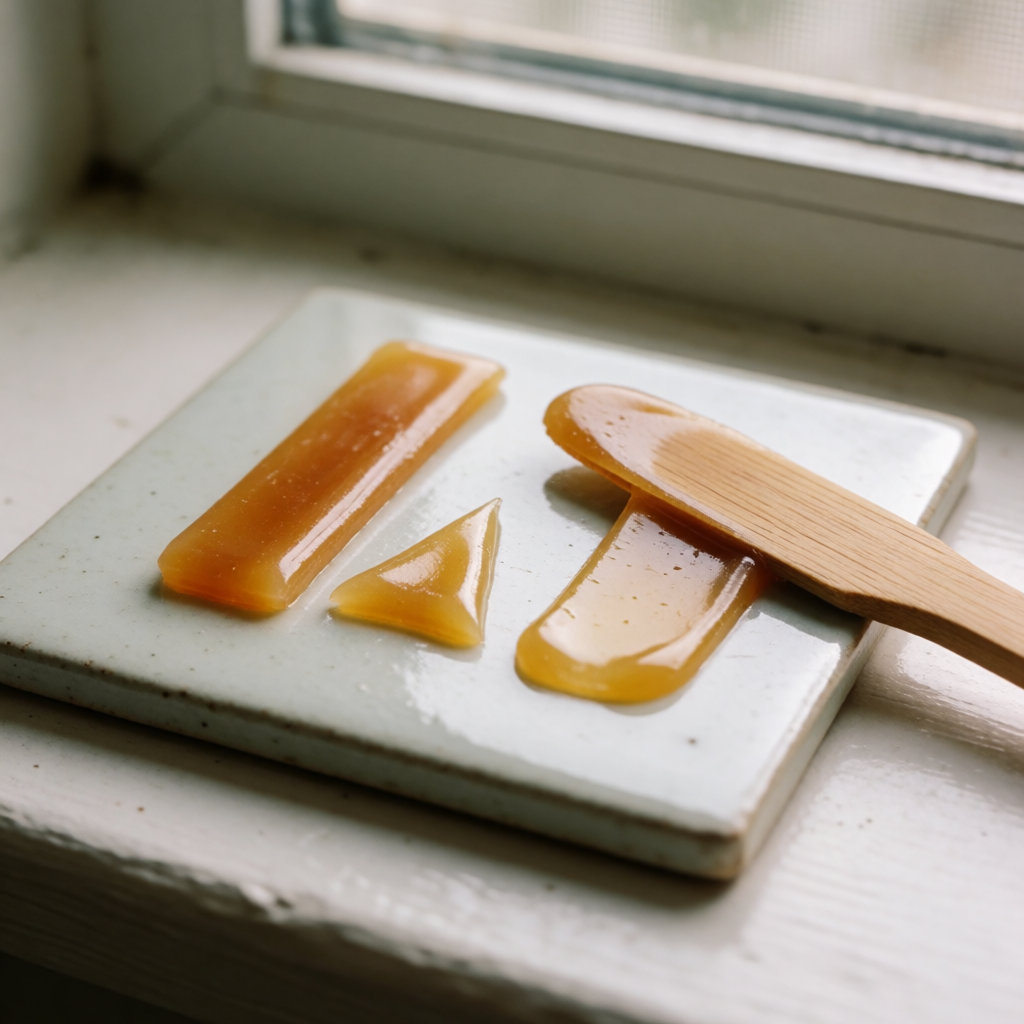
Wax, by contrast, pulls the hair out with its root. Regrowth is slower, and the hair comes back softer. In exchange, the skin stays raw for a few hours. Hence the rule: two passes maximum per area, the rest is finished with tweezers. Let's be honest, it's the method that hurts most — but also the one that lasts longest.
As for IPL and diode laser, that happens in a clinic, never on a whim. You need several sessions spaced apart and an assessment based on the colour of your skin and hair. On poorly assessed skin, the device can burn instead of removing hair. Something to think about twice before booking.
The technique, step by step
- Clean, dry skin, with no cream or oil. If the hair is long, trim it with scissors: too short and the wax won't grip.
- Heat the wax and test the temperature on your wrist before you begin.
- Stretch the skin with one hand, apply a thin strip in the direction of hair growth, then pull it off firmly, parallel to the skin.
- Two passes per area, no more. The rest is finished with tweezers.
- Electric epilator: personal use only; clean the blades after each session.

If you have reactive skin or recurring ingrown hairs, ten minutes with a beauty therapist will save you plenty of contortions in front of the mirror. Sometimes it's the most energy-efficient move — yours.
The styles that are popular
The American bikini, often called a landing strip: a rectangular strip at the centre of the pubic area. Simple to maintain, neat under a high-cut swimsuit.
The Brazilian: a less defined triangle at the front, leaving a little more hair. It's a very common request in salons.
Hollywood: nothing at all. For a few days, the skin is bare against friction and bacteria, so it's better to schedule it before you plan to wear a swimsuit.
Custom styles (heart, star, initial): fun for an occasion, but time-consuming and costly to maintain.
Aftercare: the routine that helps avoid damage
Forget alcohol, perfumed wipes, deodorant and perfume on the area. What really helps comes down to a simple formula: a fragrance-free gel or cream with panthenol or aloe vera, applied in a thin layer. No scrubs, no hot baths, no direct sun for 24 to 48 hours. It's a small thing, but it makes all the difference.
Wax 48 hours before, never the day before. And if the area feels hot, oozes or develops painful spots that don't clear up within two or three days, make an appointment with a GP or dermatologist: folliculitis can be treated, it can't be guessed.
Budget
For wax, expect around £8 to £20 for a kit of pellets or cartridges, enough for several waxes — from supermarkets, beauty retailers or online.
Electric epilators cost between £25 and £80, with replacement heads or blades to buy regularly.
In a salon, a wax bikini line costs from £15 to £35 depending on the style, up to £45 for a Hollywood in a big city.
For IPL, expect £50 to £130 per session, often sold as a course of 6 to 10 sessions; diode laser in a clinic costs more, on a bespoke quote.
What changes the price: the city, the salon, the style requested, your hair growth and the package chosen. Always ask for the price before you lie down.
When it comes to products, favour refillable options: wax pellets rather than disposable strips, a cardboard or glass container, a brand with COSMOS Organic certification or Soil Association certification if ingredients matter to you. A word of caution, though: a label says nothing about effectiveness. It sets standards on the formula and origin of ingredients, not a result on your skin.
Sources
- NHS — Skin infections and how to prevent them, patient information.
- British Association of Dermatologists — Folliculitis patient information.
- Soil Association Certification — COSMOS Organic standard.
- Competition and Markets Authority — Environmental claims guidance.




Comments
Your opinion matters: rate the article, react and reply to comments.
Comments are moderated; AI-assisted comments are flagged. Text emoticons (8-), :-), <3…) are automatically shown as images.