

An evening dress registers in three seconds. A complexion registers without anyone quite knowing why: you decide the person looks rested, luminous, 'well', and you look for answers in sleep or sea air. On the red carpet, Byrdie and Harper's Bazaar often give as much space to Kim Kardashian's make-up as to her outfit. Two independent beauty desks, the same instinct: the clothes can wait until the next paragraph.
The dress goes back; the skin stays
The maths checks out, you have to admit. A red-carpet dress is a loan, something that goes back in its garment bag the next day, often still with a tag and a courier. The skin goes nowhere: it is the one layer of the look you can make your own without a couture budget, the one that stays in the eyes of everyone who was there. A silhouette impresses; fresh skin stays with you.
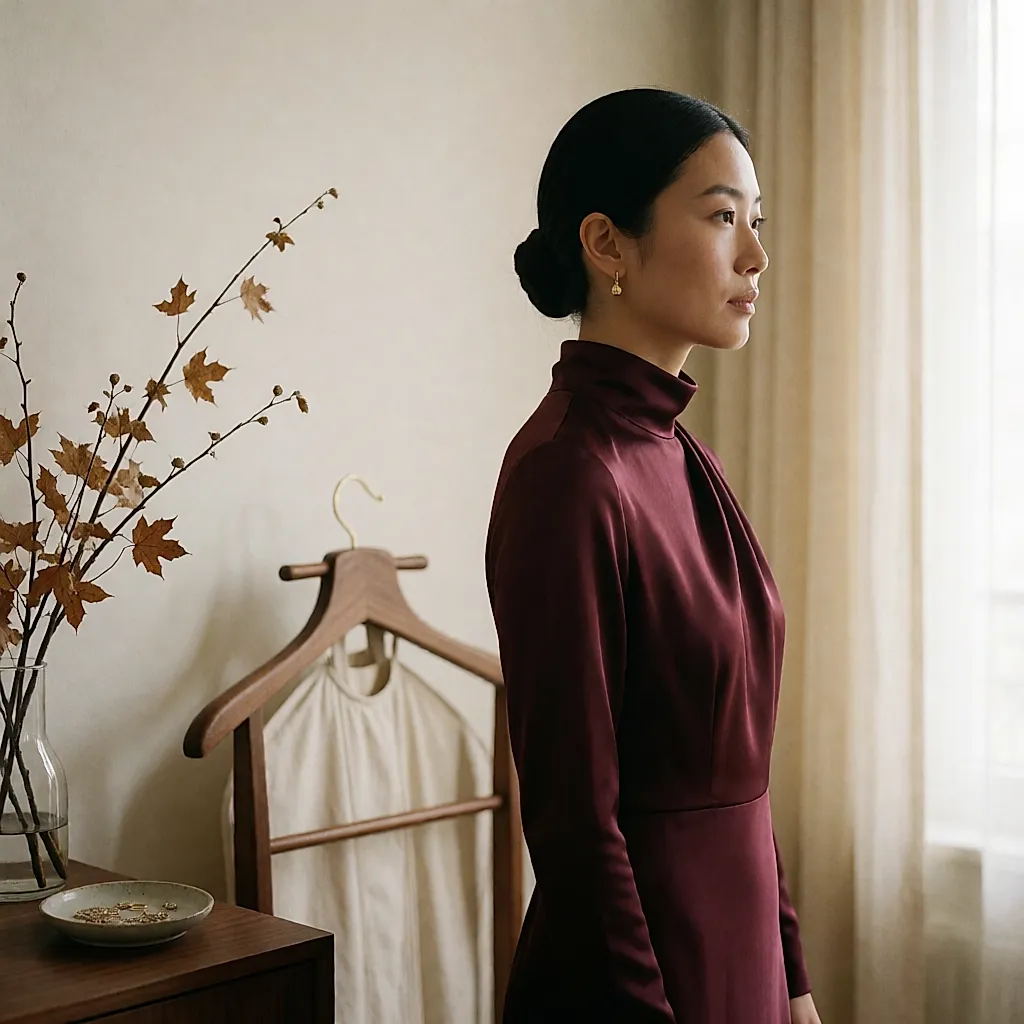
And let's be honest: skin is easier to write about than a train. Describing a dress without showing it quickly turns into an inventory of the fashion house and the fabric. Describing make-up means talking about texture, light and transparency: things a reader can try the following Saturday with what she already has in her bathroom. Beauty desks know this; they've approached the subject from the only angle that really concerns you.
Evening skin isn't day skin with more coverage
This is where it all happens, and often where it goes wrong. The party-day reflex is to pile it on: more foundation, more powder, more everything. The result is a flat, uniform surface that no longer looks like skin and, under low evening light, takes on the very eighteenth-century look of plaster. What we're after isn't new skin; it's skin that reads clearly.
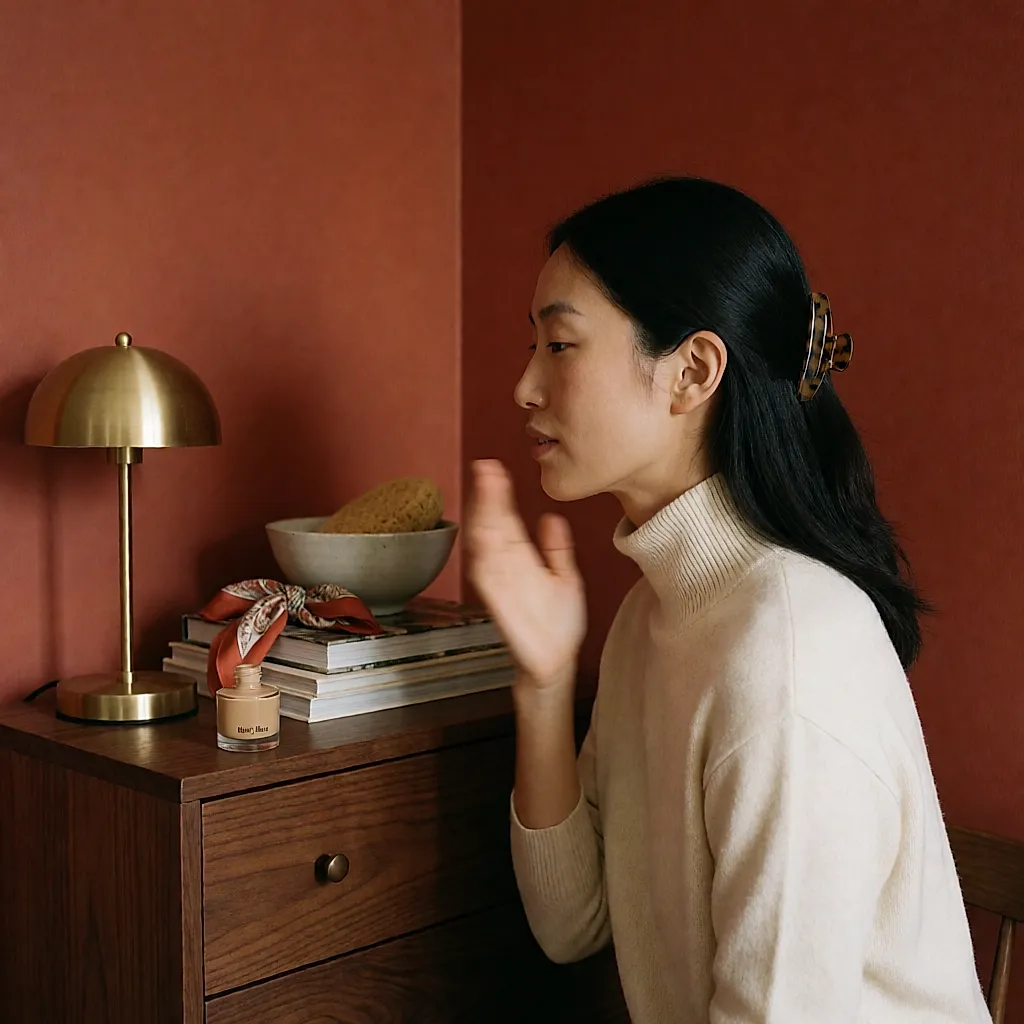
Evening skin has three jobs, in this order: even out what needs evening out, place light where the face catches it naturally, and last until pudding. The rest — dramatic contouring, three layers of powder — belongs to performance, not to your Tuesday night. Thin layers, targeted light: the rule is four words and it works at almost every budget.
Then there's the question of matching. A perfect face sitting on a bare neck is visible from ten metres away and fools no one. Evening skin should be thought of as continuous: the neck, the top of the chest, the ears too if your hair is up. Thirty seconds more and the whole look shifts up a gear.
The techniques you can borrow without copying someone else's face
We're not claiming to have got within a metre of a red carpet, and we won't sell you a copy of a face that isn't yours. What does transfer, though, is the technique. First, prep: skin that has been moisturised and left to settle for a few minutes absorbs make-up better than skin that gets its moisturiser and foundation in the same breath. In practice, it's often the gap between the two that changes the result.
Then the amount. A pea-sized amount for the whole face, placed at the centre and stretched outwards, corrects redness and small marks without creating a mask. Concealer comes after, only where it's needed. Then light: a touch of highlighter on the tops of the cheekbones and the bridge of the nose, not everywhere. Blending does the heavy lifting — if you can see an edge, there's still work to do.
For staying power, powder is confined to the areas that actually shine: the forehead, the sides of the nose, the chin. The rest can stay supple. And if you have only five minutes on Sunday evening before going out, keep the essentials: even out, blend, add a little light. The rest is decoration.
Budget
When it comes to price, the range is wide and the price tag isn't the best guide. As a rough guide for the UK market, expect around £10 to £25 for a foundation from a pharmacy, high-street beauty retailer or online; £30 to £50 in a department-store beauty hall for more complex textures. Organic ranges and refillable formats often sit between £20 and £40. A concealer, £8 to £25. A loose powder, £10 to £30.
For highlighter, a cream stick is more than enough and can be worked in with your fingers. On application, a brush or a washable sponge at £10 to £20 will serve you better than yet another product: how you apply it often matters more than the price difference. As for packaging, look for a refill where one exists, glass or card rather than solid plastic, and remember that a well-washed brush lasts for years — it's the most cost-effective eco-friendly habit in your make-up drawer.
Three checks before you go out
- Your phone light, screen on, reveals edges better than the hallway mirror.
- A tissue pressed to your forehead: if it sticks, you've been heavy-handed with powder.
- Neck and chest treated in the same movement as the face, no exceptions.
An evening dress gets handed back. A complexion is yours to keep, and it asks for neither fitting nor alterations. Next time you're torn between one more garment and ten minutes in front of the mirror, you'll know what the beauty desks would say — and what we'd say.


Comments
Your opinion matters: rate the article, react and reply to comments.
Comments are moderated; AI-assisted comments are flagged. Text emoticons (8-), :-), <3…) are automatically shown as images.