
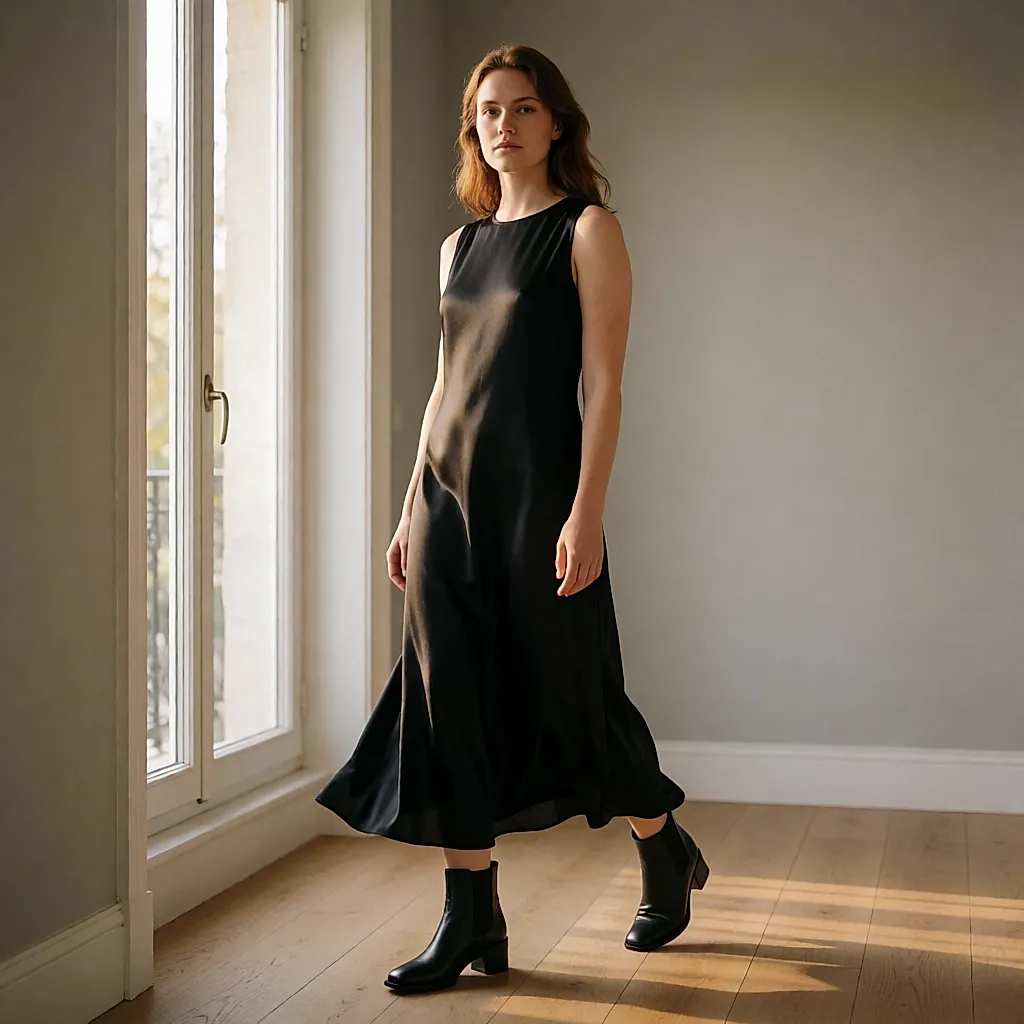
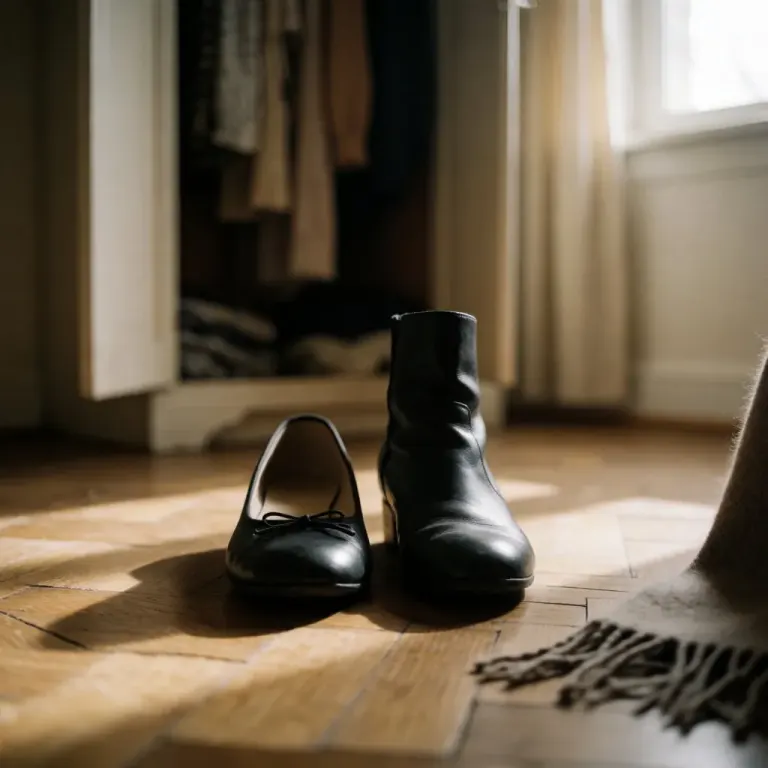
The long dress is out of the wardrobe, the bag is ready, there are twelve minutes to go — and two pairs are waiting by the door. The black court shoe: sharp, elegant, the pair that cost you an entire evening of standing around last year. The ankle boot, meanwhile, has already proved itself between two showers and three pavements. So what if you gave it a go under the dress?
What actually changes once the dress is on
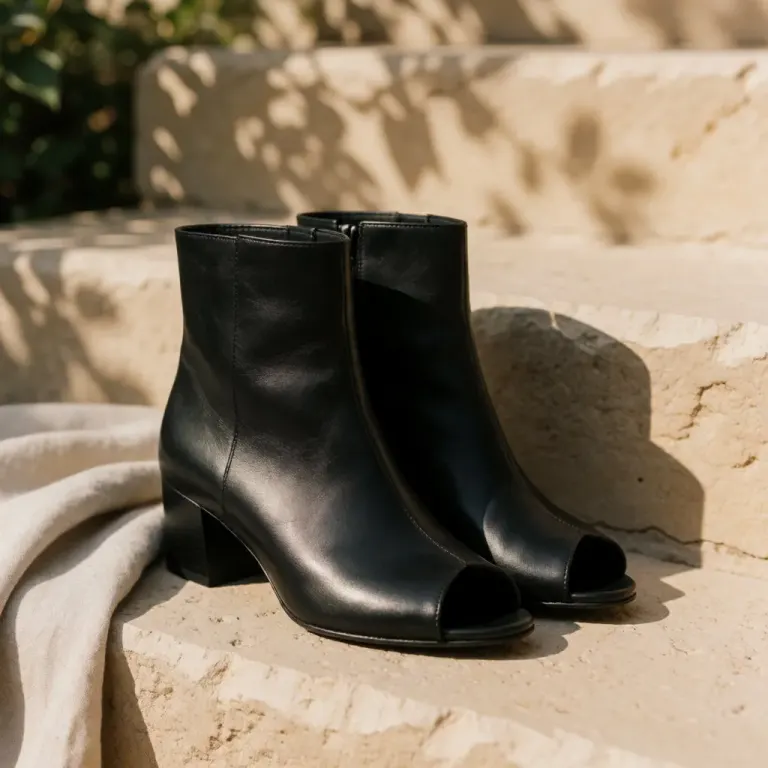
Under a long dress, you don't see the shoe: you see the toe, the ankle, the heel, and the way the line ends. That is exactly where an ankle boot wins. A closed toe lengthens the foot without stretching it; a stable heel — block, square, five to six centimetres — keeps the silhouette upright without making your toes do the work. And that strip of upper rising over the ankle adds what a court shoe always leaves bare.
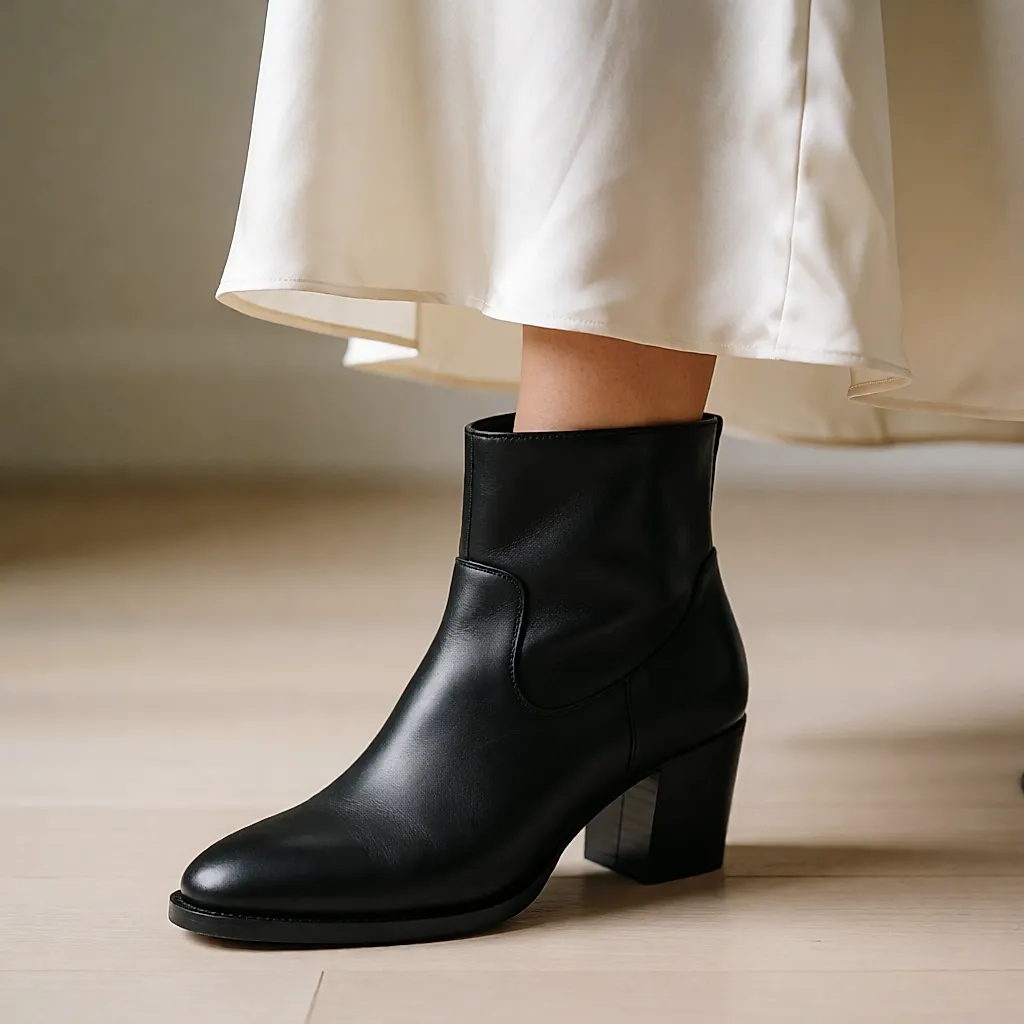
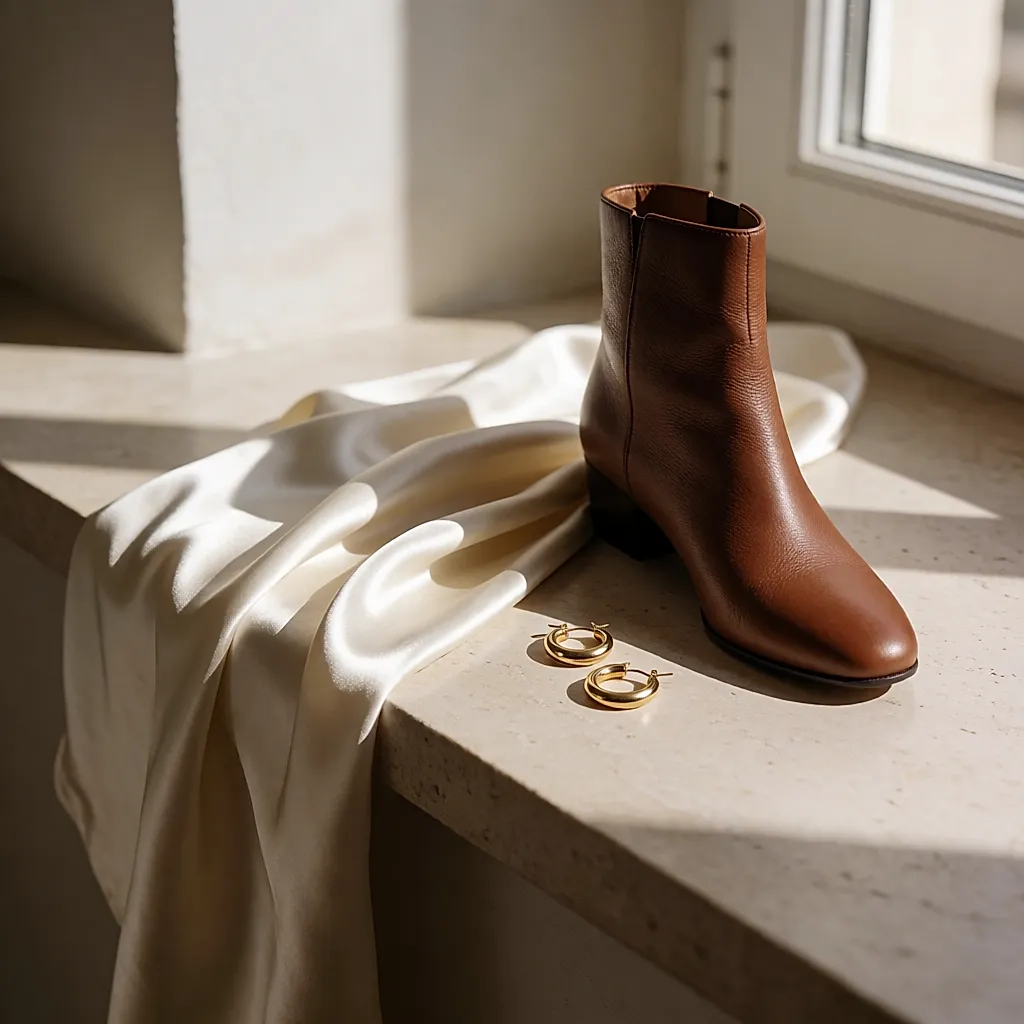
The rest is about drape and material. A fluid silk or satin dress likes the contrast of smooth, matte leather; a thick knit or velvet calls for a softer ankle boot, in suede for example, whose texture absorbs light instead of reflecting it. In other words, you aren't swapping one shoe for another: you're swapping one effect for another. The court shoe elongates; the ankle boot grounds. And between the two, no one will look at you oddly.
Three combinations that work, one that doesn't
Long slit dress and low-shaft ankle boot: the slit lets the foot through, you glimpse the heel, and the dress remains the subject. Straight knit or wool dress and square-heel ankle boot: the monochrome head-to-toe look, from collar to sole, works for dinner, a daytime ceremony, a Sunday too dressed-up for jeans. Satin dress with a bit of fluidity and fairly raw leather: the contrast does all the work, which means you can skip jewellery. A pair of earrings, a small bag, and stop there.
What doesn't work, though: a very high slit with a tall ankle boot. There, two lines cut across the middle of the leg and the look loses its thread. Same caution with airy chiffon or light lace: under thick leather, it feels as if you're wearing a shoe heavier than the dress. It isn't forbidden — it's a contrast you can see, and a contrast you can see should be a deliberate choice.
Before you leave, three checks that take five minutes. Put on the dress, the shoes and the tights you'll wear that evening: opaque tights completely change how the ankle reads. Walk for ten minutes on a hard floor, in the hallway if necessary. Then look at yourself from a distance, in a shop window or in a photo: it's the only way to see what others will see, namely the tip of the ankle boot peeking out.
When the court shoe still wins
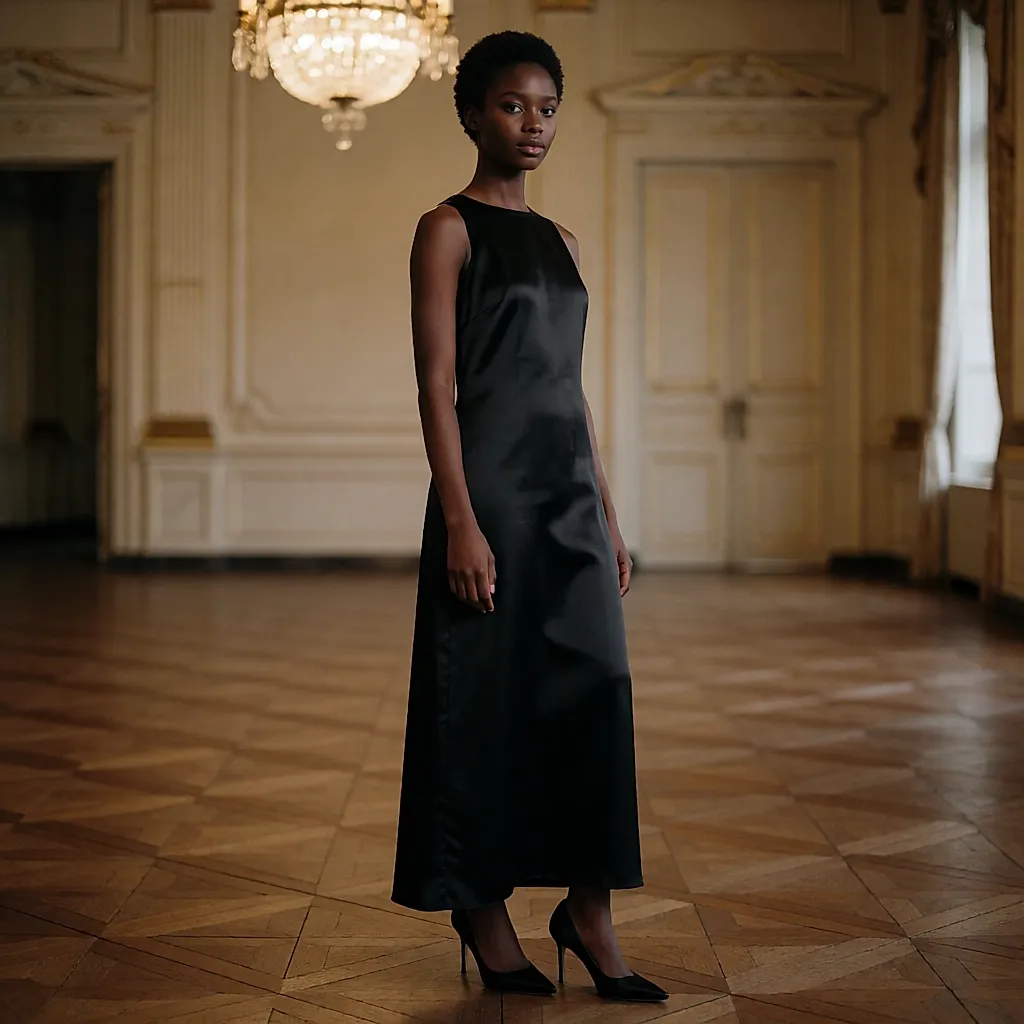
It has to be said plainly: some evenings leave it no room. A strictly formal dress code, a ceremony under chandeliers, a duchess satin sheath dress that calls for a bare foot — the open-toe court shoe remains the most correct answer. It isn't a question of trend, it's a question of register. Same logic if your long dress is cut from a highly worked fabric: a discreet shoe is sometimes the best way not to steal its thunder.
On body shape, a useful nuance: a high shaft under a long dress that falls to the ankle can make the leg look stumpy if you're petite. In that case, a low ankle boot, open over the instep, or a boot with a finer heel will do a better job. The idea isn't to put you off: choose shaft height according to dress length, never the other way round.
Budget
Expect to pay around £60–£120 for a leather ankle boot at fashion chains and mass-market retailers: it's a good way to test the look for a season, provided you turn over the label and check the proportion of synthetic fibres in the lining and sole. Between £150 and £300, you're into multi-brand retailers and shoe specialists — softer leather, a stitched sole, more considered shapes. Beyond that, around £250–£500, you're paying for European manufacturing, sometimes vegetable-tanned leather, and a structure that can be resoled.
Where to look? Shoe chains in town centres and shopping centres, multi-brand boutiques, independent shoe shops, and above all second-hand: for £40–£120, you'll find leathers with a patina already, often with finer shapes than new. The best find is often there. One last habit: a sole protector and a resole cost in practice £25–£60 at a cobbler, and completely change the lifespan of a pair.
So, can ankle boots replace court shoes under a long dress? In real life — a dinner, an autumn wedding, an evening when you walk home — yes, and without self-consciousness: closed toe, stable heel, natural material, and you're set for the whole night. Keep the court shoe for occasions that truly demand it. But admit it: lately, it's the ankle boot that gets pulled out most often.
Comments
Your opinion matters: rate the article, react and reply to comments.
Comments are moderated; AI-assisted comments are flagged. Text emoticons (8-), :-), <3…) are automatically shown as images.