
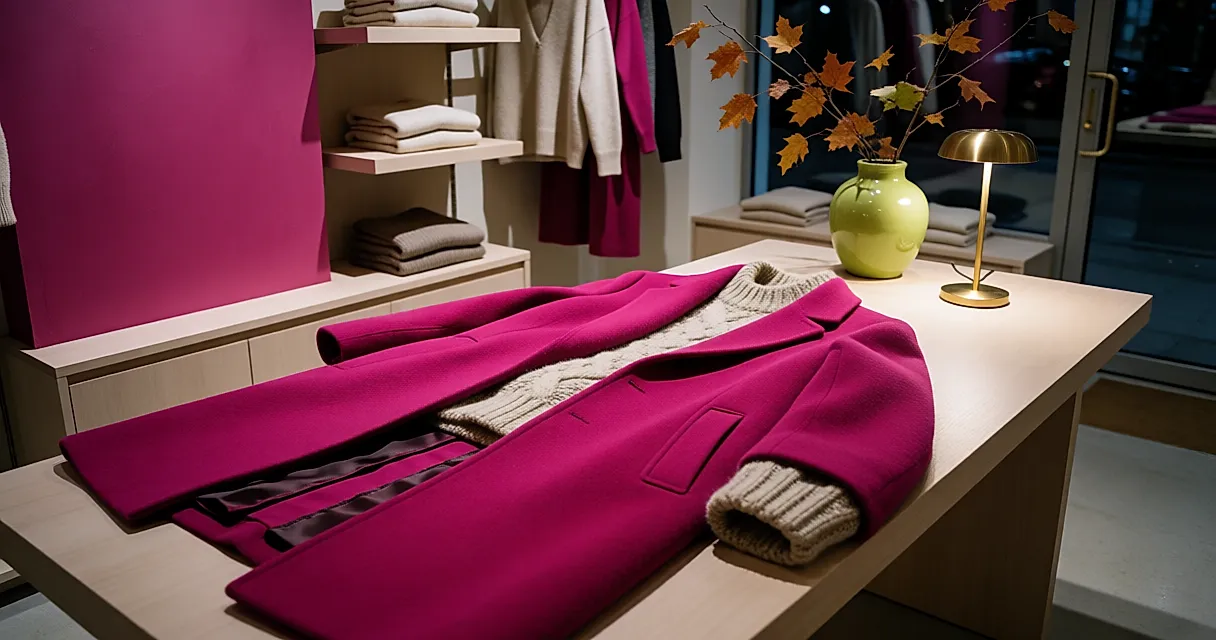
A coat is decided at the one point nobody looks at: the armhole. It's what governs whether you can lift an arm to haul a suitcase off the rack, hold an umbrella without your whole shoulder going with it, or wrap someone in a hug. Yet we almost always try coats on over the thin T-shirt we happened to be wearing that day — never over the jumper that will actually live inside it until March.
In the fitting room, we all cheat a little
The script never changes: you walk in wearing whatever you had on, pull the coat over it, turn once in front of the mirror and announce that it's perfect. Except that T-shirt has nothing to do with Tuesday morning's chunky knit, or the blazer you wear to a work lunch. The coat fastens in the cubicle and gapes in January. You know how it ends: the collar rides up, the buttons strain, and out comes the old coat you were so keen to replace.

The good news is that the full-scale try-on costs nothing extra. Walk into the cubicle with the thickest jumper you own — the one you actually reach for when it's properly cold, not the prettiest one. Didn't think to bring it? Fold it into your bag before you leave the house. It weighs nothing and saves an awful lot of returns.
The armhole is the real judge
That seam joining sleeve to body does most of the comfort work, and it's the last thing anyone examines. Too narrow, and it pulls the moment you raise an arm and carves creases under the armpit. Too low, and you're left with a wodge of fabric weighing on your shoulders that stops the coat hanging straight. The margin between the two is narrow — and that is precisely where the purchase is decided.

The test takes three moves, and you shouldn't worry about who's watching: arms straight out in front, then above your head, then roll your shoulders in a full circle. If the coat rides up to your ears, the armhole is too tight. If it doesn't shift a millimetre and the fabric bunches under your arm, it's too loose. How many coats have we bought telling ourselves it would soften up with wear?
The sleeve should rotate cleanly at the wrist
A detail that alterations tailors check before anything else: does the sleeve rotate cleanly at the wrist when you drop your arms? If the seam spirals, if the fabric twists, the armhole is set at an angle or cut for broader shoulders than yours. That coat is unlikely to become comfortable, however much you spend on alterations.
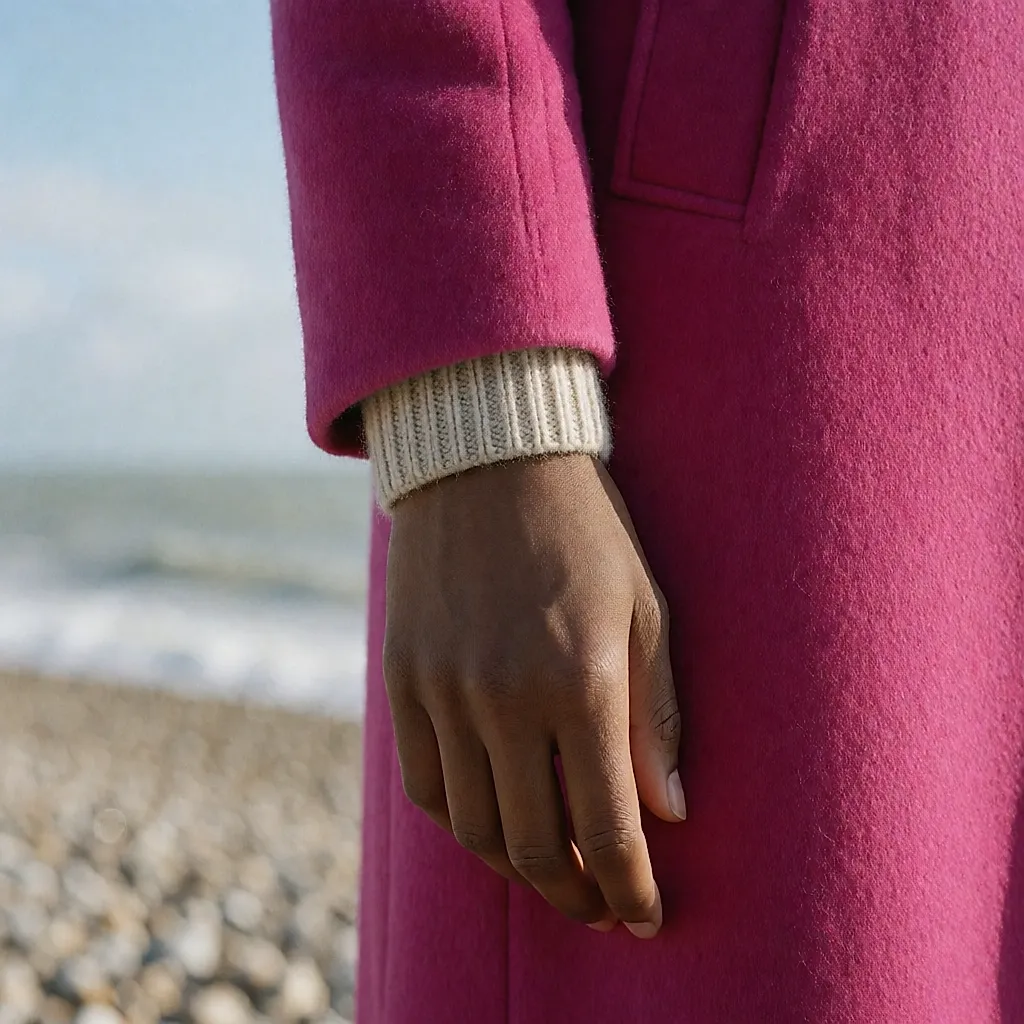
Another marker: length. A winter coat should cover the wrist bone, even the first knuckle, when you're wearing a thick knit. If it stops mid-forearm on a bare arm, it will leave your January jumper on show — and you'll spend the season with cold wrists. Shortening a sleeve usually costs £25–£60 depending on buttons and lining; lengthening means letting down or adding a cuff. Re-cutting an armhole is more like £60–£120, plus an honest conversation with your tailor: sometimes they're the one who tells you no. Treat all of these as a guide, since prices vary widely between tailors and regions.
What the lining tells you
Turn the coat inside out and look at the inside: that's where you read the difference between a piece that will see you through five winters and a two-season purchase. A viscose or cupro lining glides over a jumper without snagging; a lining that runs properly down into the sleeves means you don't feel every seam against your forearm. If it's removable, you get a mid-season coat thrown in — no small thing in a wardrobe that's already full.
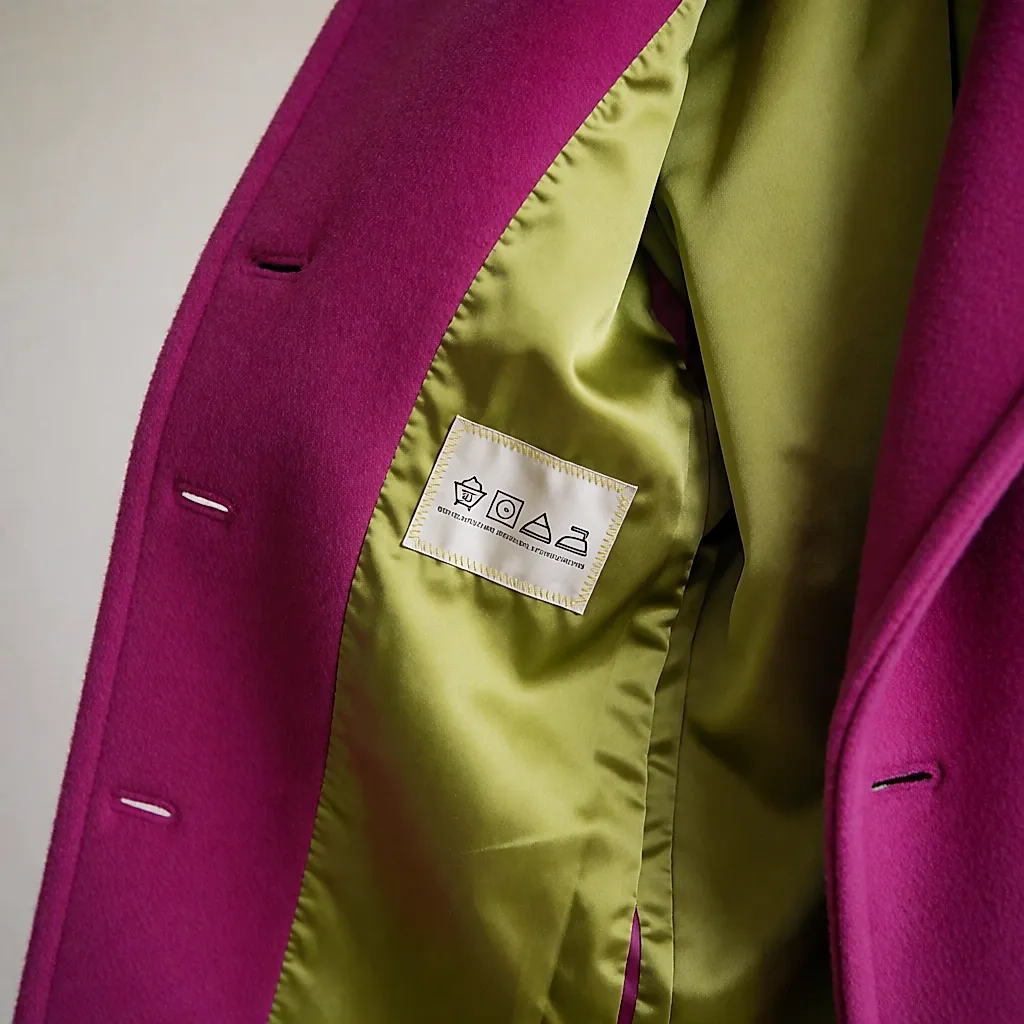
The join matters too: when the lining stops at the body and never runs into the sleeve, the garment is cheaper to produce — and it's often the first corner cut. Read the fibre composition on the label, look at how much synthetic fibre is in the mix, and feel the wool: a fabric that scratches or shines won't wear the way a soft, matt wool does.
What to budget for
Three very rough tiers, just to place things. Expect £80–£200 for a mid-season wool-blend coat from a department store or a high-street basics specialist; £250–£600 for a majority-wool, properly lined coat from a multi-brand retailer; beyond that you're paying for the cloth, the construction and the name on the label. The January sales and the second-hand market shake the numbers up again — a well-made wool coat can turn up second-hand for a fraction of its original price, provided you check the armhole before you pay.
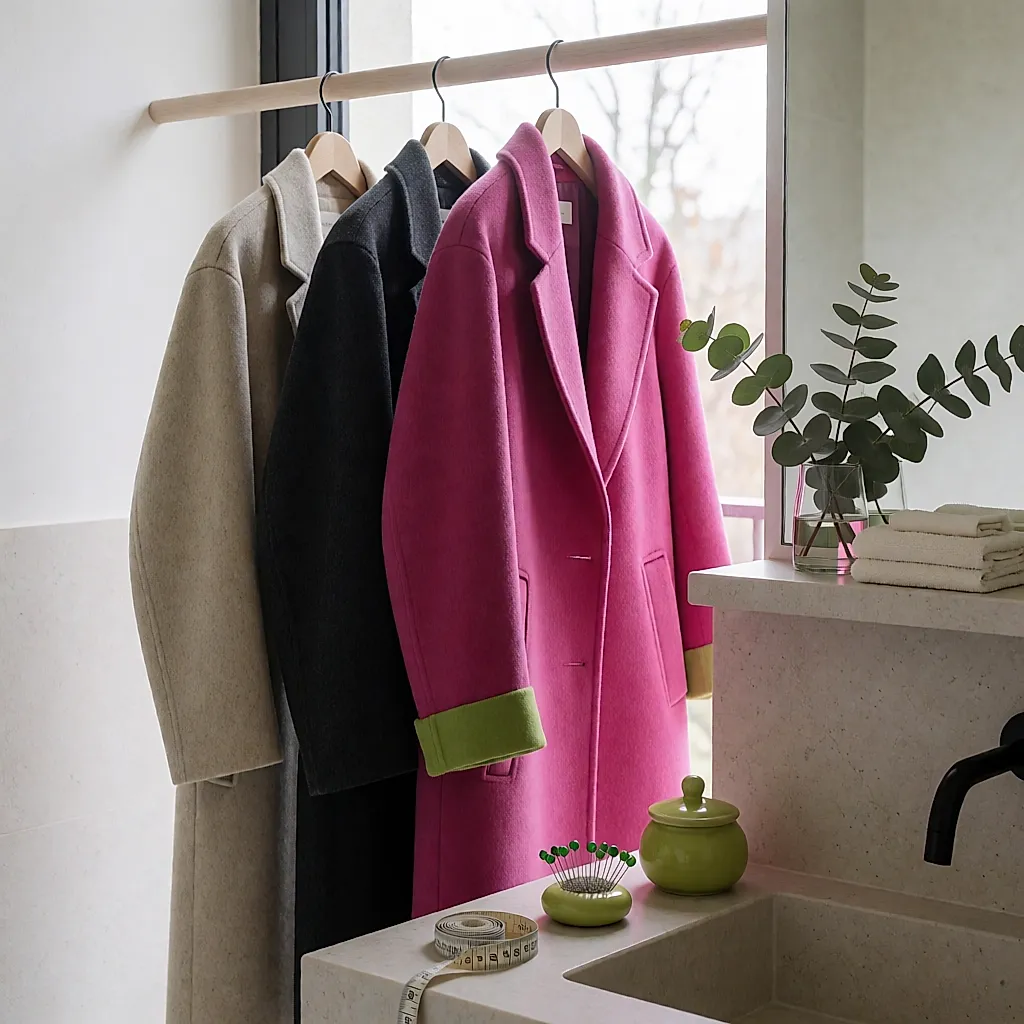
And if money is tight, one well-cut piece you keep for five years beats a coat bought in a hurry. Alterations change the picture: a shortened sleeve and a waist taken in turn an ordinary coat into one that hangs properly, for £40–£90.
The three-minute test. Walk into the fitting room with your thickest jumper. Raise your arms, roll your shoulders in a full circle, drop them and check that the sleeve rotates straight at the wrist. Fasten the coat over the knit: if it strains at the buttons, it's a no. Turn it inside out to see whether the lining runs down into the sleeves.
The real question isn't "do I like this coat?" but "what will I be wearing underneath, and will it let me get on with my day?". A beautiful camel coat that locks up your shoulders will stay in the wardrobe; a simpler cut that sits right at the armhole becomes the one you throw on without thinking. So next time, take the jumper, get into the cubicle and put your arms up. You'll see straight away which of the two is coming home with you.


Comments
Your opinion matters: rate the article, react and reply to comments.
Comments are moderated; AI-assisted comments are flagged. Text emoticons (8-), :-), <3…) are automatically shown as images.