
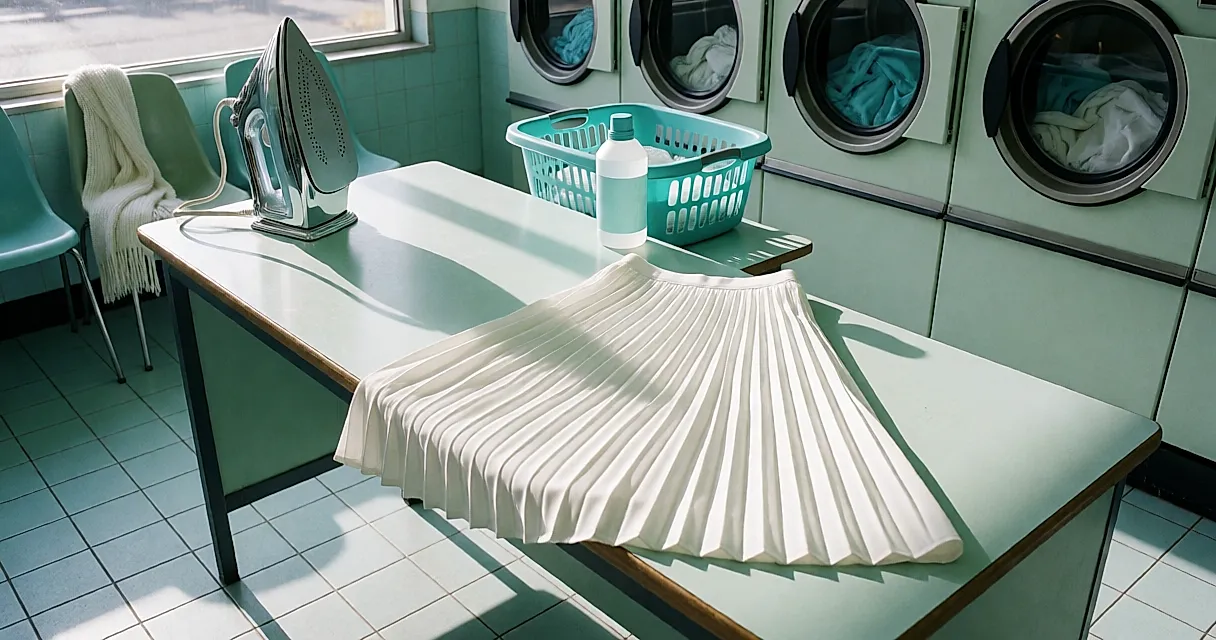
A pleated skirt that has lost its pleats is a bit like an accordion that has forgotten the tune: the shape is still there, the swagger has gone. The culprit is almost never the washing machine — it's the iron, that reflex we all have to "smooth everything back flat". But this kind of pleat isn't meant to be pressed. It's meant to be left alone.
A pleat is material memory
In a pleated skirt, the folds aren't drawn by hand: they're set. The fabric is heated, creased and then cooled to hold its accordion shape — which is why it seems to remember its structure, even after a full day sitting at a desk. That memory copes well with wear, but it hates three things: scalding water, twisting and the weight of an iron.
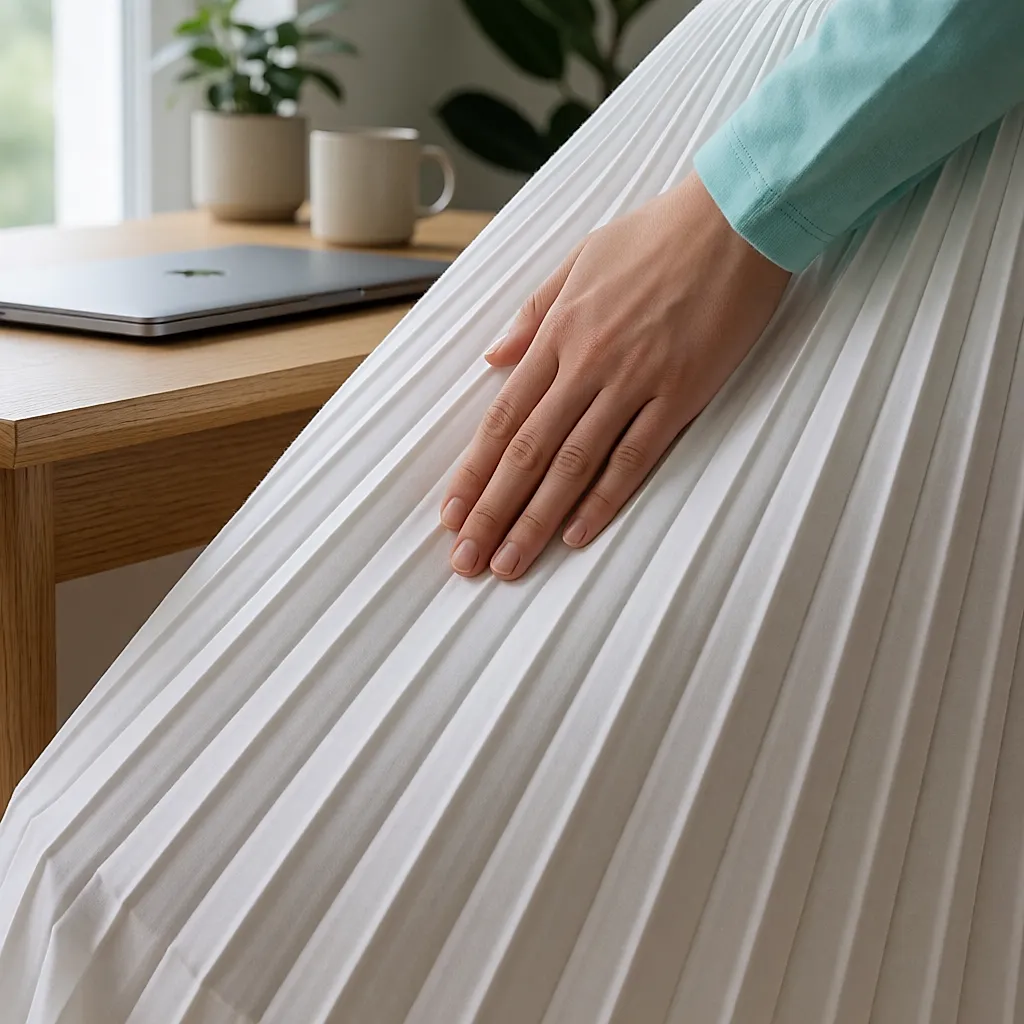
Hence the idea of treating the piece as an object, not a heap of cloth. You wash it rarely — a skirt worn over tights or a slip doesn't need to go through the machine every week — you handle it with the flat of your hand rather than your nails, and you let the fabric do the work. On the subject of fabric: before you buy, check the label and handle the fabric. A very lightweight or loosely woven cloth is less likely to hold a crisp pleat, so look for a fabric with enough body to keep its shape.
Washing: cold water, no twisting
For washing, a delicate cycle at a low temperature, following the care label, is enough — cold water is actually the pleat's best friend. The real secret is an inexpensive bit of kit: the laundry net. Put the skirt inside a generously sized mesh bag, set the spin as low as it will go, and the machine is much less likely to twist the pleats around each other. Why does such a small thing change everything? Because it limits the one thing a drum does very well: mess.
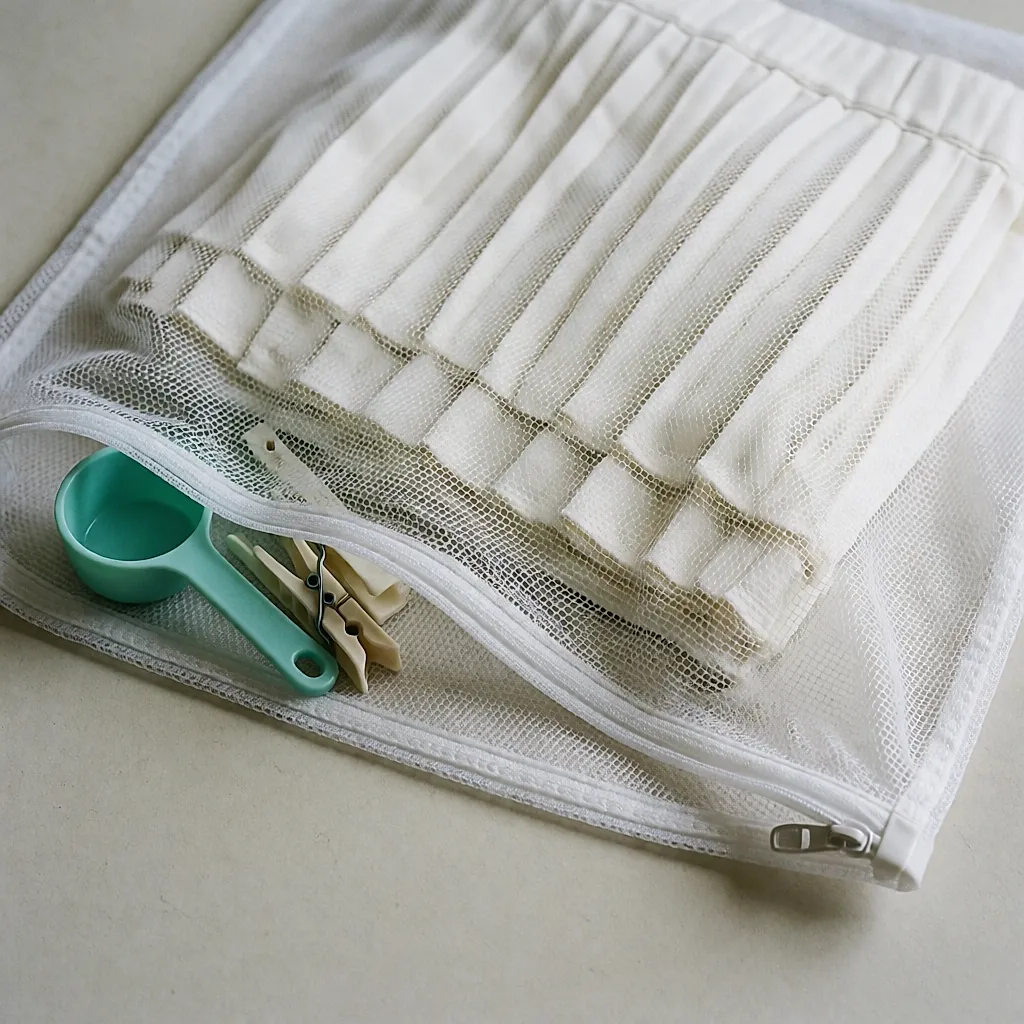
By hand, it's the same logic. Wash by pressing, rinse in cold water, and never wring it out like a dishcloth: that's the gesture that can break a pleat, leaving soft ripples that are hard to fix. And as for fabric conditioner, forget it — it can relax the fibres, exactly what a pleated skirt doesn't need. And the tumble dryer, while we're at it? It combines heat and movement, the piece's two enemies in one machine.
Dry flat, never on a hanger
The second trap, and not a small one: the hanger. A wet skirt is heavy; hung up, it stretches, loses its shape and marks the waistband. So dry it flat, on a clean bath towel or a drying rack, with the pleats lined up by hand while the fabric is still damp. No radiator, no direct sunlight that fades the colour: one night in a well-aired room is usually enough.
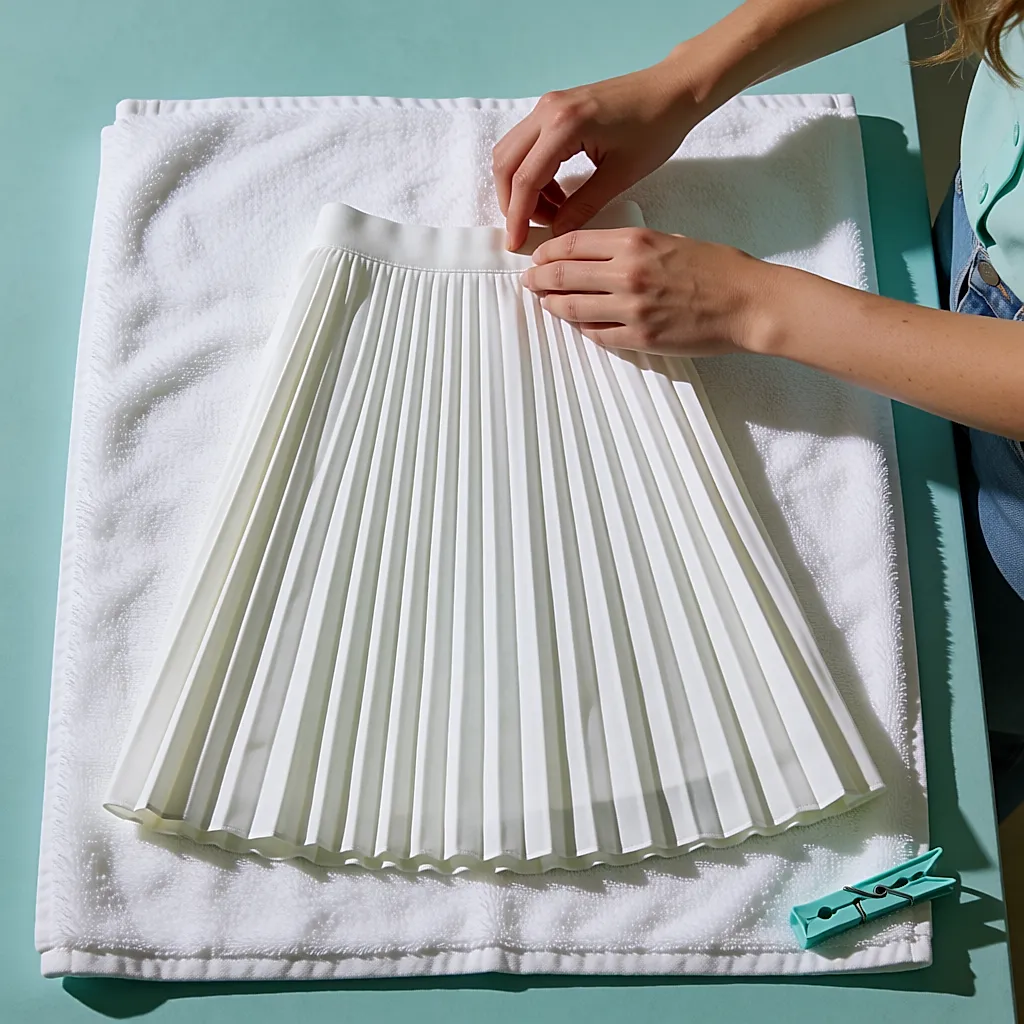
And if you live in a flat where every centimetre counts? A rack balanced across two chair backs does the job perfectly, and so does a big towel folded in four. There's no such thing as small comfort — only pleats you don't want to find crumpled.
Store rolled, not folded
Folded in half in a pile, the skirt picks up a horizontal crease right across the middle of the pleats. That crease is difficult to smooth out — and you know the problem with the iron now. So roll it: lay the skirt flat, roll it loosely from waistband to hem, and put it in a drawer or slip it into a suitcase.
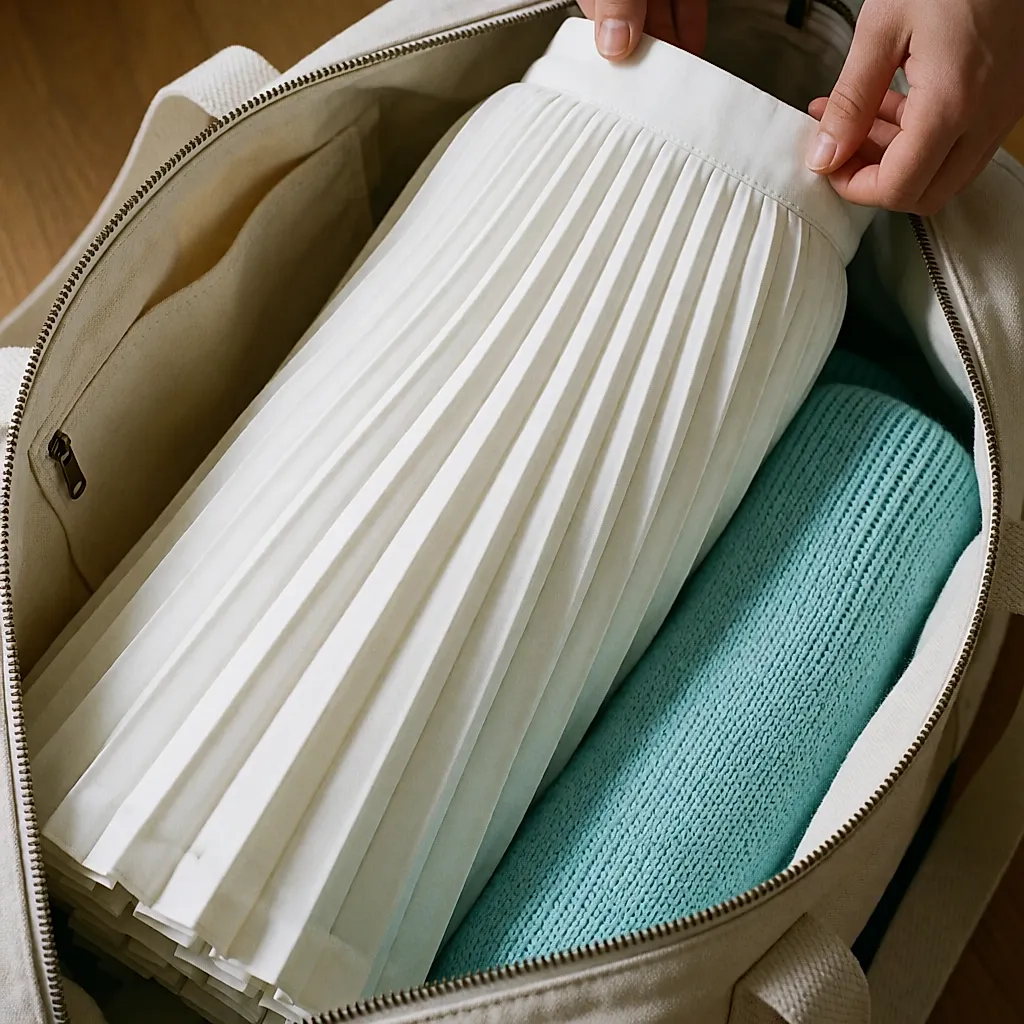
Roll it, really? Yes, and it's not some organisational whim: it's the least aggressive way to keep the volume without creating a new fold. Bonus for weekend trips: rolling takes up less room in a suitcase and often arrives in better shape than whatever you folded in a rush the night before.
The iron, that reflex to unlearn
It's the most counter-intuitive step of the whole care routine: don't iron your pleated skirt. Under the soleplate, the pressure flattens the top of the pleat and the steam relaxes the set, even through a cloth. The result: a limp accordion, sometimes with a sheen on the ridges, and damage that may not come out in the next wash.
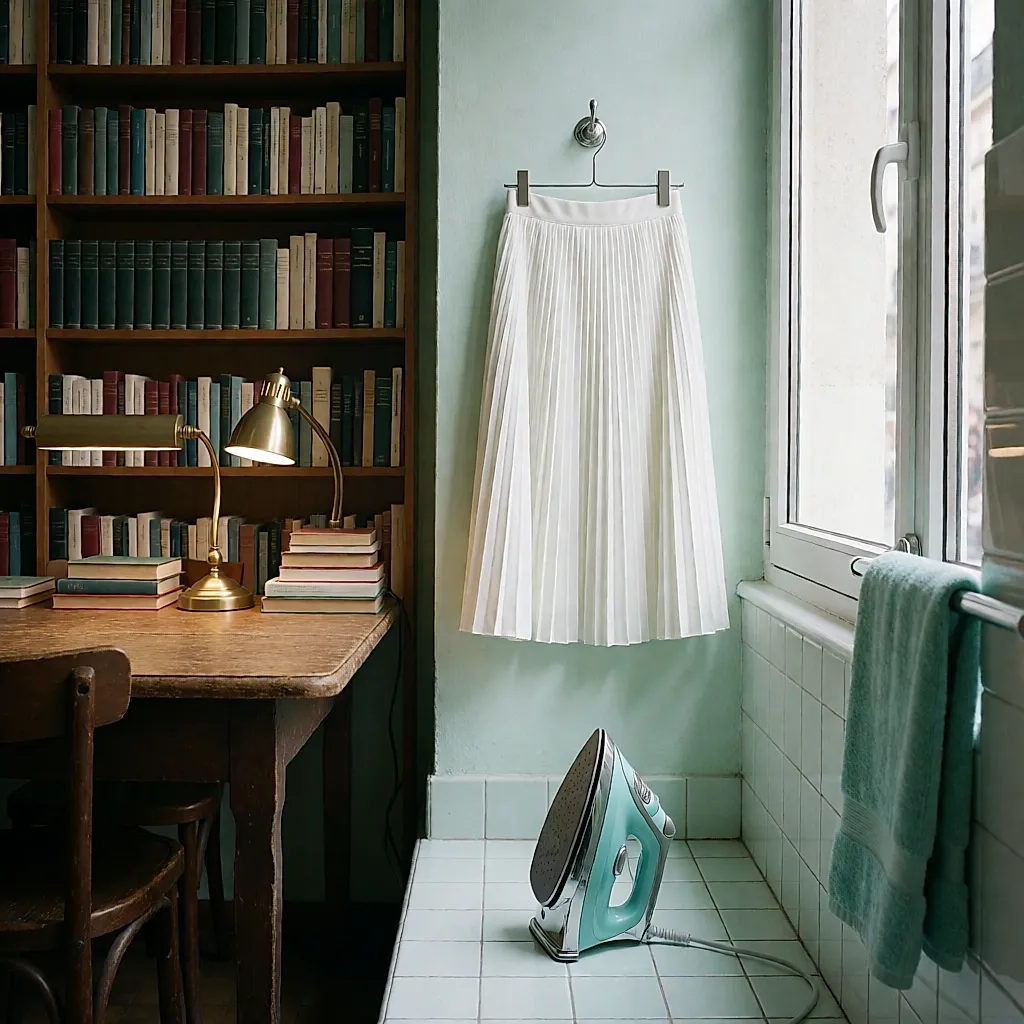
If the piece has been creased by a long journey or the back of a drawer, the gentlest thing to try is to hang it in the bathroom during a hot shower, then let the humidity work without touching it. Reshape the pleats with the flat of your hand, leave it to dry, and keep the iron well away — it has never done this particular case any favours.
The three-second test: hold the skirt at waist height and look at the pleats in raking light. If they form a sharp, even edge, all is well. If they ripple, the problem comes from washing or storage — not from ironing.
Budget
Money-wise, the good news is that none of these extras is compulsory. A laundry net costs around £3 to £8 at a supermarket or homeware shop; a flat drying rack, £15 to £40 depending on whether it folds or not. If a bath towel and a tiled floor already do the job at home, you can skip both.
For a wool skirt or a fabric that doesn't like water, allow £10 to £20 for dry cleaning, depending on the piece and where you live. One tip: always ask the dry cleaner whether they're used to pleats before you leave the skirt — not every shop is familiar with accordion folds.
The verdict: cold water, flat drying, rolled storage, iron kept away. With those four habits, your skirt is far more likely to keep its lines season after season, and you can invest in a lovely piece without dreading wash day. A pleat is like a good cut: it's respected far more than it's repaired.


Comments
Your opinion matters: rate the article, react and reply to comments.
Comments are moderated; AI-assisted comments are flagged. Text emoticons (8-), :-), <3…) are automatically shown as images.