

You've brought a pair home from the shop, your hand sliding in like silk, and three wears later that rubber-mitten feeling sets in? The maddening part is that the glove hasn't changed. It's the leather that was never meant to give where you expected it to — and under shop spotlights, that simply doesn't show.
The trap of touch
In store, we judge with our fingertips, which is only fair: it's all we're given. But softness at the point of sale mostly tells you about finish — a rich, polished leather worked to feel lovely on first contact — not about whether it will mould to your hand as you wear it. A glove that's already very soft on the display has little room left: it will stretch, bag at the fingers, and end up feeling as though it's floating around you rather than following you. A slightly firmer leather that creases at the knuckles after a few hours' wear, like a good pair of shoes, is the one still doing the work.

Then there's size, which is often skated over. A glove that's too big will never really soften: it creases across the palm rather than at the fingers, and your hand swims. Close your fist before you say yes. At the base of the fingers it won't widen — leather relaxes, it doesn't grow.
The lining nobody looks at
Yet it's the first thing your hand feels, and it's where the confusion begins: a thick, slippery silk gives an instant impression of luxury while saying nothing about the leather. Silk, cashmere, soft wool, fixed or removable lining: each choice changes the real comfort, the warmth and the way the glove behaves on your hands. Who actually checks this before reaching the till?
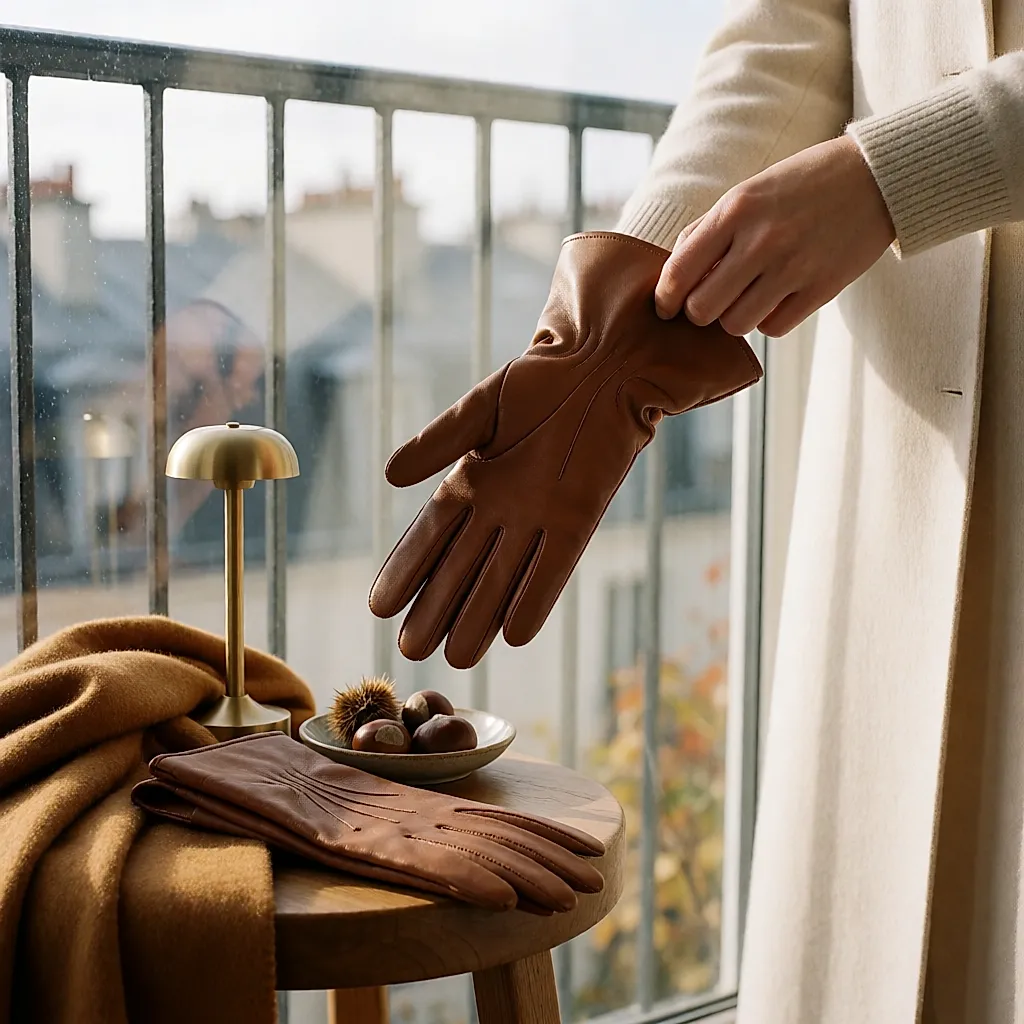
And one detail you always notice too late: a lining that turns inside out through the fingers as you pull the glove off. That happens with rushed construction, where it isn't properly anchored. Cast an eye over the composition too — a share of synthetic fibres in the lining and your hand will sweat inside leather that can't breathe. A word of caution, not a verdict.
Hand-sewn, hand-stitched: the detail you don't see
Look at the seam running across the back of the hand and along the fingers: that's the crispin, the outside seam. Stitched on the outside, it doesn't rub the skin from within, and it's easy to spot at a glance — often the mark of hand construction. Look at the fourchettes as well, the little flexible panels between the fingers: that's where a cheap glove stiffens first, long before it gives up altogether.
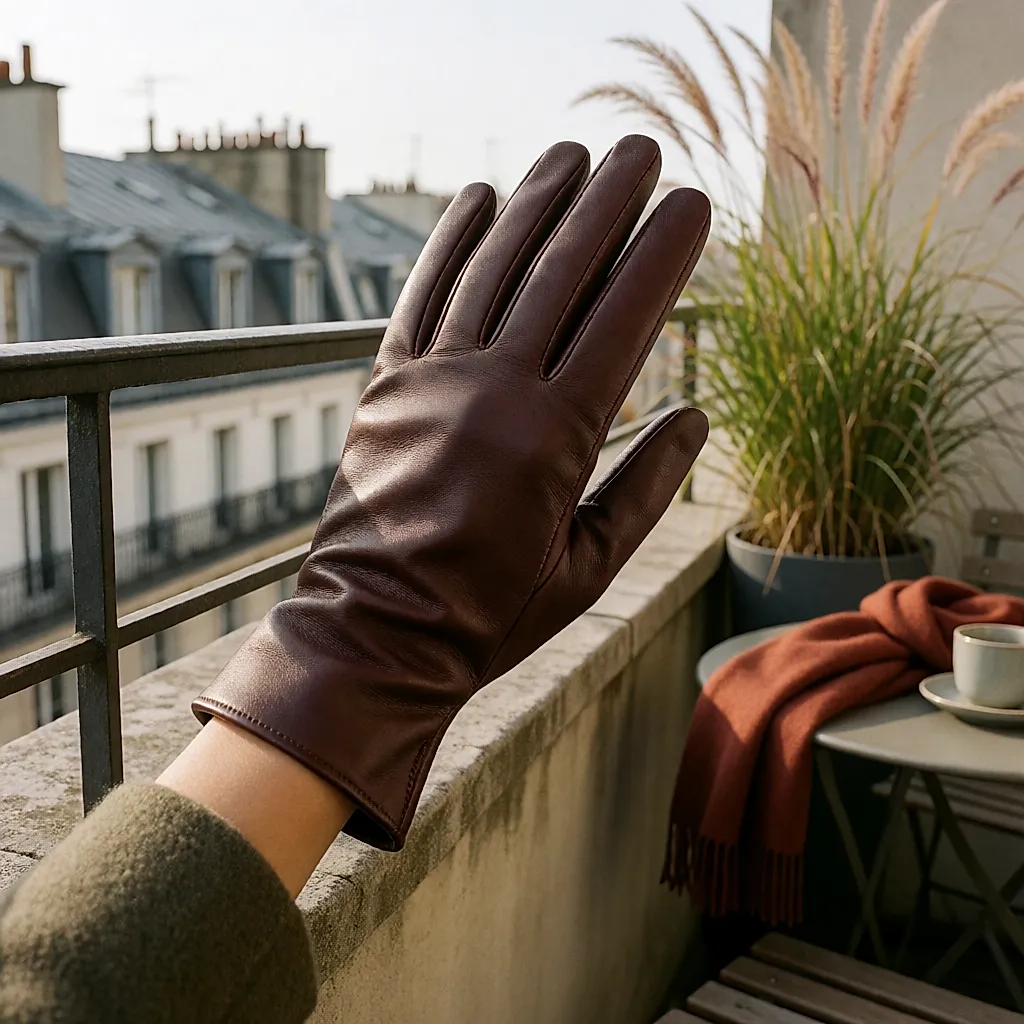
Hand-sewing explains a good part of the price gap, and not just as folklore. A finer seam interferes less with the knuckles than a machine seam, which tends to be thicker and tighter. One caveat: hand-sewn doesn't mean well cut. A glove assembled by hand to the wrong measurement is still a bad glove, only a more expensive one.
Thickness is the real arbiter
This is where the difference between a cheap pair and a good one is settled. A very fine gloving lambskin is supple straight away — lovely in the fitting room, far less so by the second winter, once the fingers wear through and the seams give. A slightly thicker goatskin or calf takes a few wears to settle, but it will stay with you much longer.
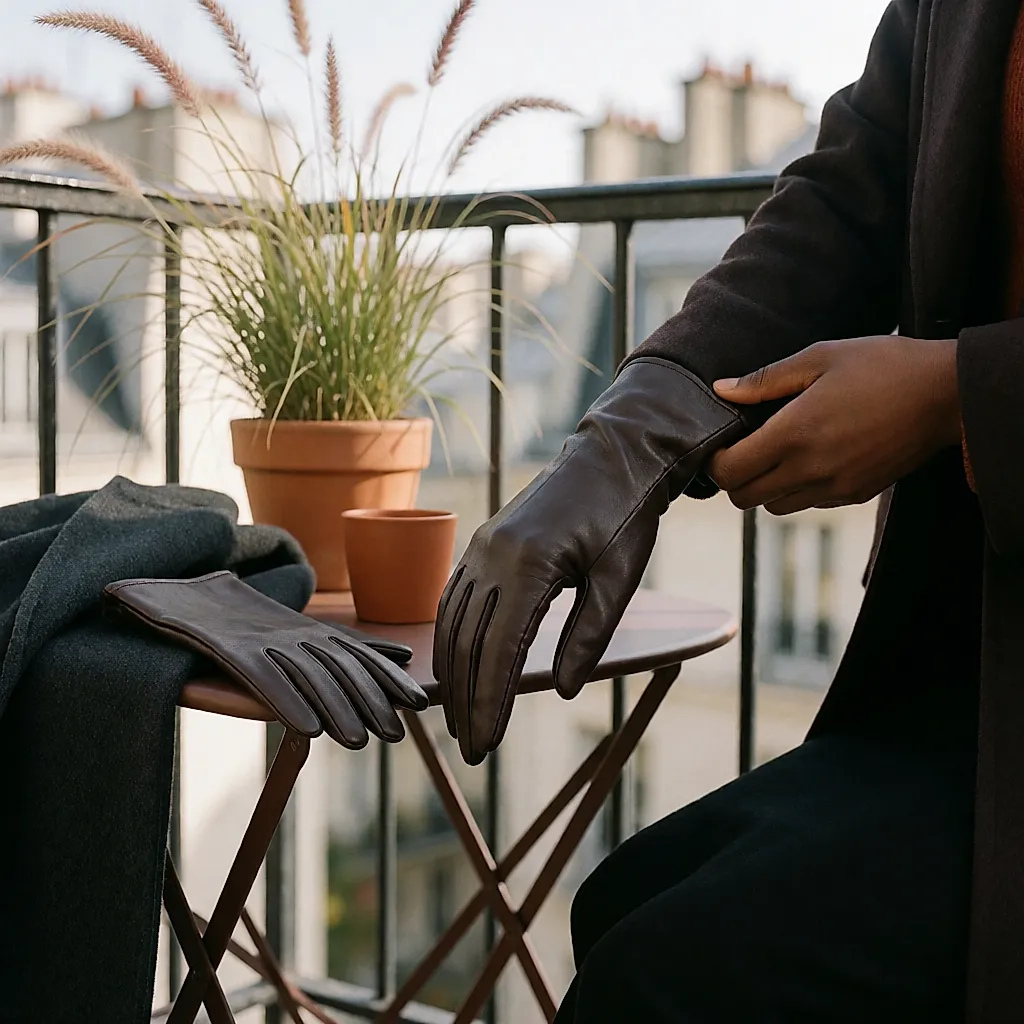
Hence the line you hear from glovers: a good glove doesn't soften, it takes the shape of your hand. The nuance counts. Leather doesn't turn comfortable by magic over time; it marks, relaxes and follows the form it's given. Too thick, badly cut or too narrow, and no season will rescue it.

Budget: what you're really paying for
As a rough guide, under about £40 you'll find decent pairs in department stores and high-street chains, often very thin lambskin with a synthetic lining — perfectly good for one winter, provided you're not expecting ten years. Between roughly £60 and £110 you're into leather-goods and glover territory: full-grain leather, silk or wool lining, at least partly hand-sewn. That's the sensible spend if you wear gloves every day from November to February. Above about £130, you're paying for the cut, the labour, and sometimes a cashmere lining.
Second-hand remains an excellent hunting ground: £10 to £35 for leather already broken in by someone else's hand, as long as you check the seams, the inside of the fingers and the state of the lining. Look to glovers and leather-goods sellers rather than seasonal rails: less choice, often a better cut.
The try-on that beats every fitting: pull the glove on, close your fist, spread your fingers. Nothing should pull at the base of the fingers or gape across the palm. Keep it on for a few minutes in the shop, long enough for the leather to warm: what you feel then is more reliable than first impressions.
The short version
For everyday wear on a tight budget, a £60–£80 pair in full-grain leather with a wool lining will prove better value over three winters than a £30 pair replaced every autumn. For more occasional use — November Sundays, car-to-station runs — a thin £35 glove does the job very well, and nobody will judge you in the market queue. And if you inherit a pair that has already been worn, keep it: leather that has known another hand is often the softest against yours.

Comments
Your opinion matters: rate the article, react and reply to comments.
Comments are moderated; AI-assisted comments are flagged. Text emoticons (8-), :-), <3…) are automatically shown as images.