

Look at the shoulders of your favourite jacket. Two small pointed bumps, right above the sleeves, as if a discreet rodent had made a nest there. They are not from the dry cleaner's or from wearing it too often: they are the marks of a wire triangle, a thin piece of steel, that has spent months pressing its geometry into a wool shoulder. And the worst part? It cost you nothing. It turned up on its own, slipped into a parcel, or was handed back by the dry cleaner's with the jacket.
We lavish attention on care: brushing, airing, stain removal, trips to the dry cleaner's. Meanwhile, the object that holds the jacket all year is quietly working against you.
Why wire hangers are not harmless
A jacket has a shoulder; a wire hanger has an angle. That is the whole problem. The garment's weight is concentrated on a tiny area, in the wrong place, and the wool eventually takes on the shape imposed on it. After a while, the shoulder line collapses, the sleeve juts forward, the seam can distort, and the jacket looks tired even though it has barely been worn.
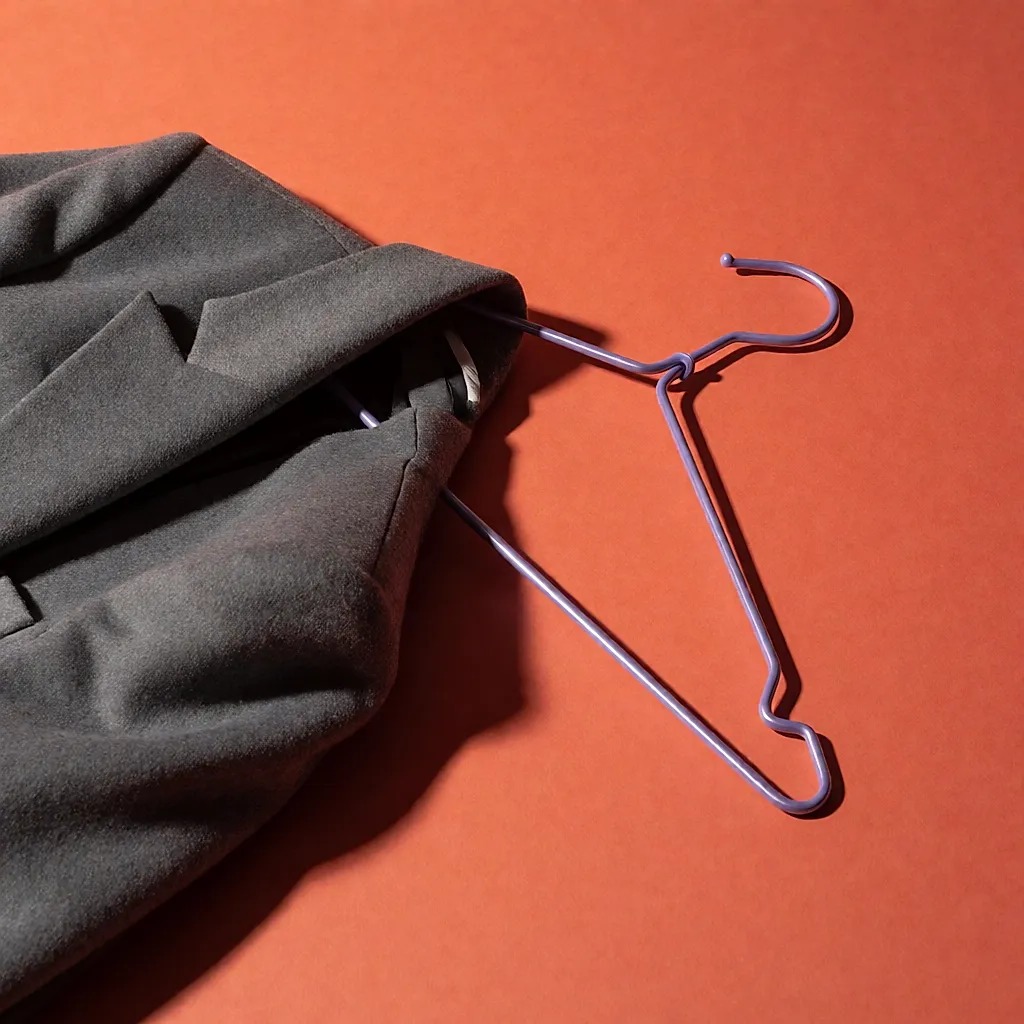
It has nothing to do with the precious fibre: a cool wool blazer, a cotton trench, a corduroy jacket, all are vulnerable. Wire hangers do not damage out of malice; they damage because they lift rather than support.
Width first, material second
Before you rush out to buy wood, there is one simple measurement to take: shoulder width. A correct hanger stops at the shoulder seam, neither before nor after, with about 2–3 cm of support under the shoulder line so the weight is spread rather than concentrated. Too short, and the sleeve droops; too wide, and the seam distorts the other way, with sleeves hanging like curtains. In practice, for a classic women's jacket, pick a hanger that reaches exactly from shoulder seam to shoulder seam; for a coat, go up a size.
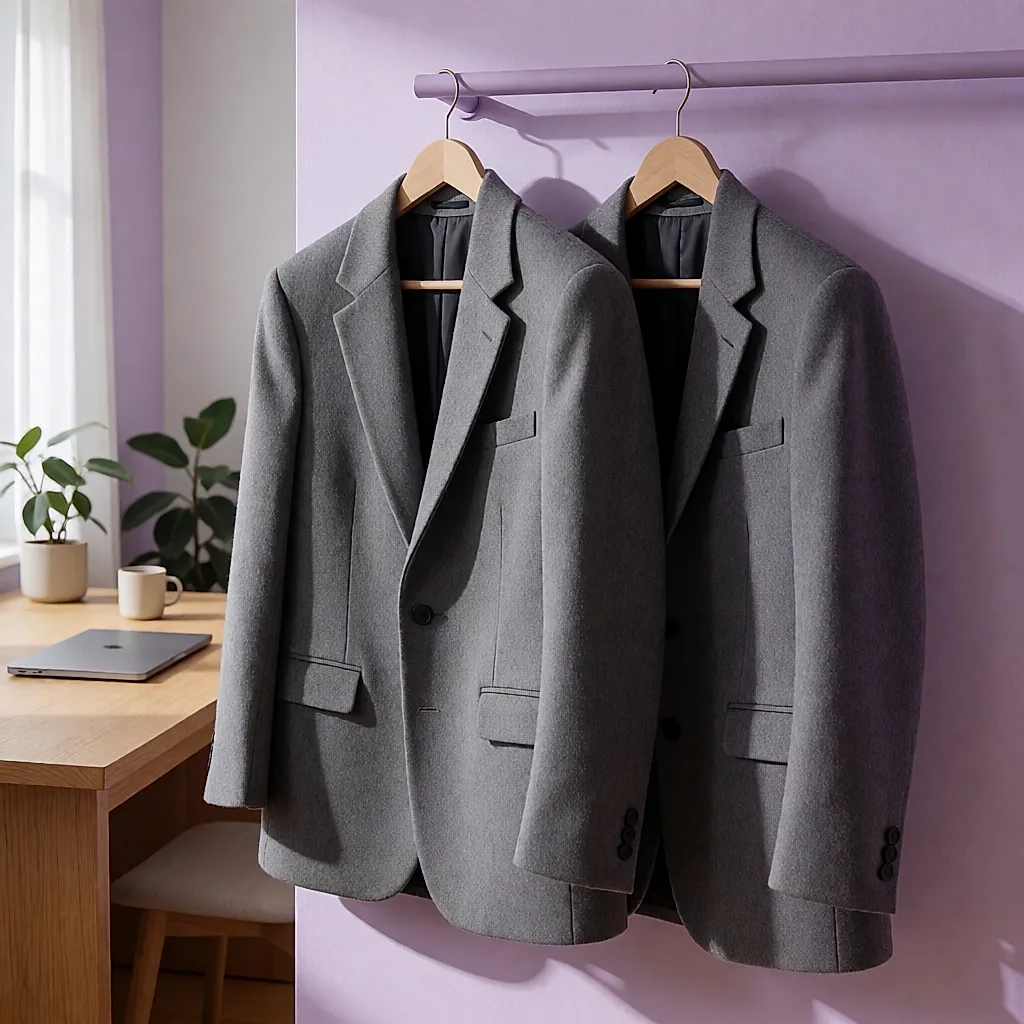
Thickness matters as much as width: a broad, rounded shoulder spreads the weight across the whole shoulder line instead of concentrating it on two points. That is the difference between a jacket resting and a jacket losing its shape. And the good news is that a wide, well-shaped moulded plastic hanger will do the job properly for a summer blazer — there is no need to turn it into a battle of materials.
Why wood earns its place
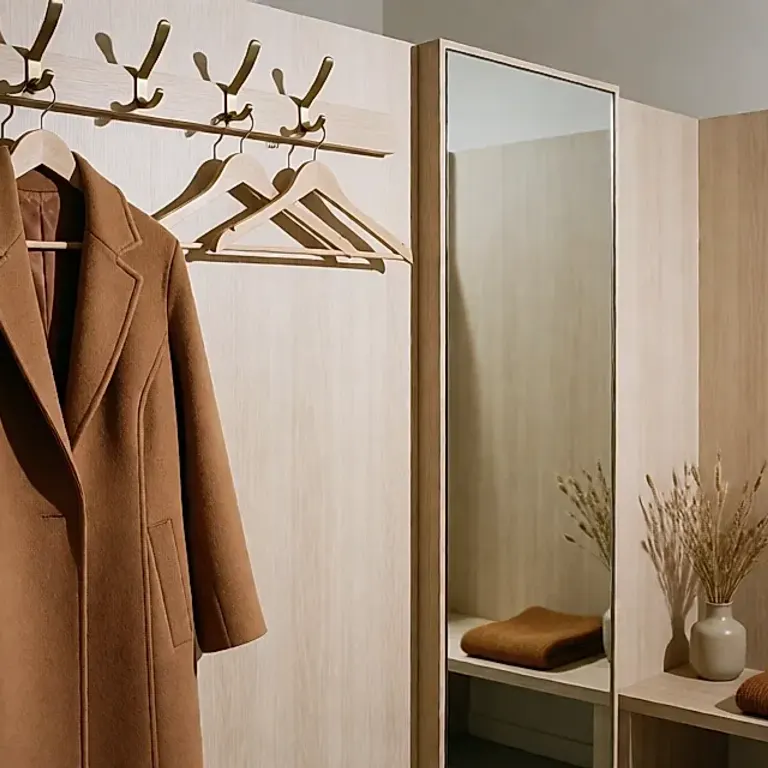
So why wood? Because it is rigid without being sharp, it supports without bending, and it naturally has the thickness that follows the shoulder line. A solid model with a bar even doubles as a valet stand: jacket on one side, trousers on the other, and Monday's full look is waiting for you when you get back.
Three details to check in the shop. First, the hook: a properly screwed-in metal hook is better than a bent wire one that spins in its socket. Next, the curve: wide, rounded ends respect the seam. Finally, the finish: raw or oiled wood rather than a thick varnish, which lets the smoothest jackets slip off. If the origin of the wood matters to you, look for a forest-management label on the packaging — and be wary of plastic hangers with a 'wood effect'.
Why knitwear is better folded than hung
It is the rule we forget all the time, and the one that costs the most: fold, do not hang. A merino wool jumper, a cashmere knit, a slightly heavy knit will distort under its own weight if hung — and no hanger width can rescue it. Even a wide hanger can create marks at the shoulders and stretch the sleeves.
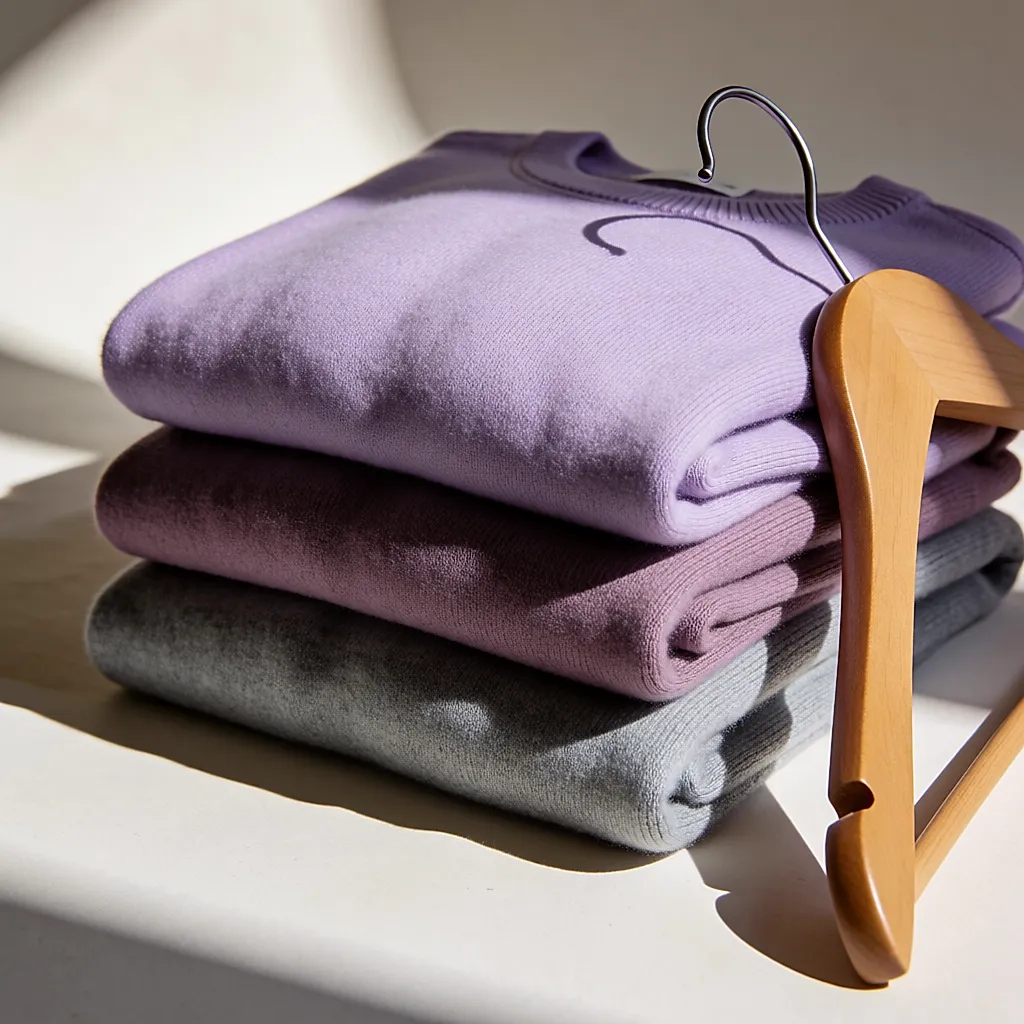
So fold in thirds, in a drawer or on a shelf, and keep hangers for jackets, shirts and coats. If space is tight, you can fold a knit over the bar of a hanger — but avoid hanging knits by the shoulders. For delicate pieces, a cotton cover breathes better than a plastic bag, which traps moisture.
The three-second test. Lift the jacket by its hanger: if the shoulder immediately collapses, the hanger is too short. And for knitwear, one question before you put it away — does it weigh more than a T-shirt? If yes, fold it.
Budget
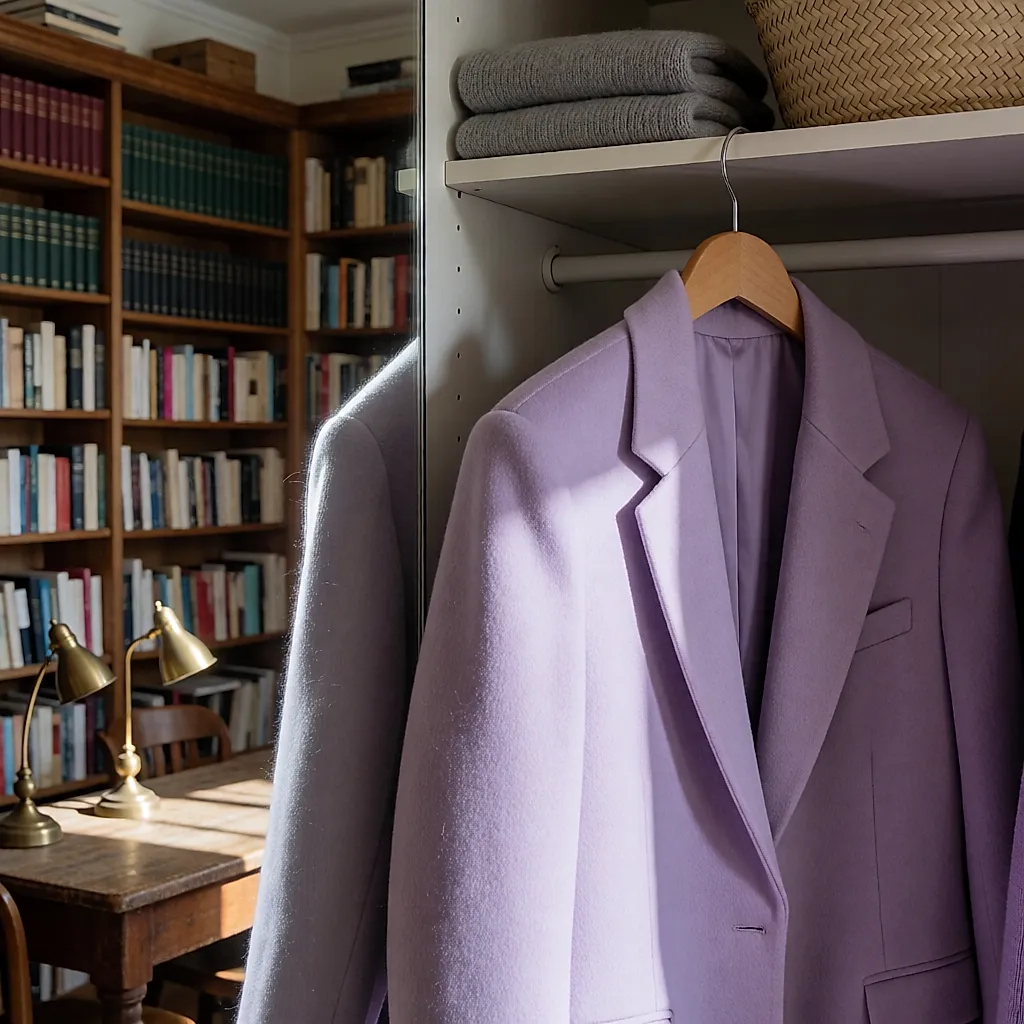
There is no need to redo the whole wardrobe at once: five or six wide hangers are enough for the jackets and coats that matter. In supermarkets or online, a pack of ten wooden hangers usually costs around £15–£30, or £1.50–£3 each — a good place to start, though the finish can vary from one hanger to the next.
For solid wood with a trouser bar and wide shoulders, expect more like £4–£10 each from a haberdashery or storage specialist. Padded models with wide, cushioned shoulders rise to £6–£14 each and suit delicate jackets. And charity shops and car-boot sales are still the best hunting ground: £1–£3 for an old hanger, sometimes beautiful, as long as you check the hook and sniff the wood for damp.
The wardrobe knows first
A jacket does not wear out in a day; it wears out in the wardrobe, slowly. The hanger is the only thing in your wardrobe that works for you while you sleep — so it may as well do the job properly.
So keep wire hangers for what they do best (nightdresses, the dry cleaner's, the cellar), give a wide wooden hanger to the pieces that cost real money, and fold knitwear without grumbling. The next time you hesitate in front of a jacket with tired shoulders, look at the hanger before you look in the mirror.


Comments
Your opinion matters: rate the article, react and reply to comments.
Comments are moderated; AI-assisted comments are flagged. Text emoticons (8-), :-), <3…) are automatically shown as images.