
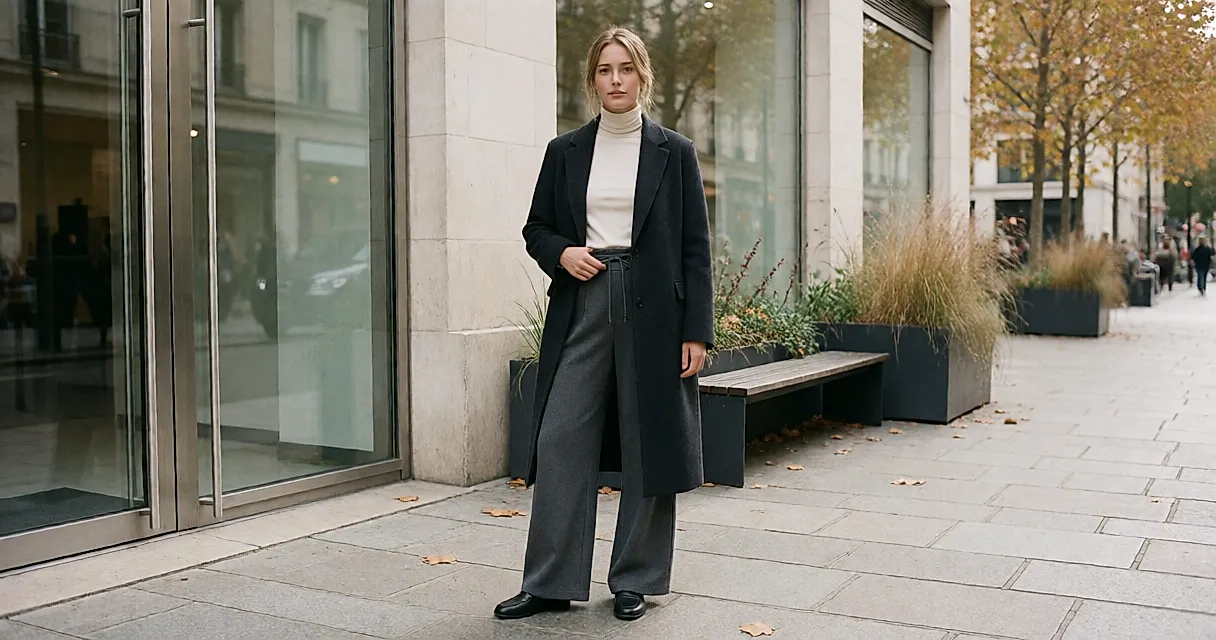
Once there was a clear dividing line between the tracksuit that ends up in a heap on a chair after a workout and the trousers you pull on for dinner. Now one word covers both: joggers. The cut, though, has changed allegiances. High-waisted, wide-legged and made from lighter sweatshirting, the jogger has learned to behave like a proper trouser without giving up the comfort that makes it so easy to live in.
Sweatshirting has lost weight (and all the better for it)
Remember brushed-back fleece, the fluffy inside that was warm enough but could add bulk to a leg in a second and stand up on its own against a wall? We all wore those trousers, often for a very good reason: they required no thought at all.
The new generation does the opposite. Unbrushed fleece, loopback cotton, heavy jersey, organic cotton, sometimes a little merino: the fabric weighs less and moves with you. That gives drape, the word stylists use when a material falls straight, with weight but without stiffness. It is this drape that makes joggers presentable outside the gym.
Before you buy, turn the garment inside out and read the label. A high proportion of synthetic fibres is not a good sign for how well it will hold its shape or how it will age in the wash.
Three details that make all the difference
Length comes first. Too short and it cuts the leg in two; too long and it drags and frays on the first stretch of pavement. The useful benchmark: the hem should graze the top of your shoe, without a deep break or an edge that sweeps the floor. Torn between two sizes? Take the longer one and have the hem taken up; expect £10–£20 at a local tailor, sometimes less.
Then the waistband. High-waisted, yes, but only if it sits above the navel and stays there on its own. An elastic that is too soft rolls over as soon as you sit down; one that is too tight leaves a mark by the end of lunch. Look for a wide, doubled waistband and a flat drawcord rather than a chunky sweatshirt cord.
Then there is drape. Two discreet darts or a front pleat are enough to give a wide leg some shape; with none of that, trousers can look like a kit bag. It is not about price, only cut.
Under a coat, with flat shoes
The rule is simple: joggers replace trousers, they are not an add-on to sportswear. Under a straight coat that falls to mid-calf, with a fine roll-neck and flat shoes, the silhouette holds. A trench, a long wool jacket, an oversized leather jacket: anything with a bit of structure at the shoulder works, because the bottom half is fluid.
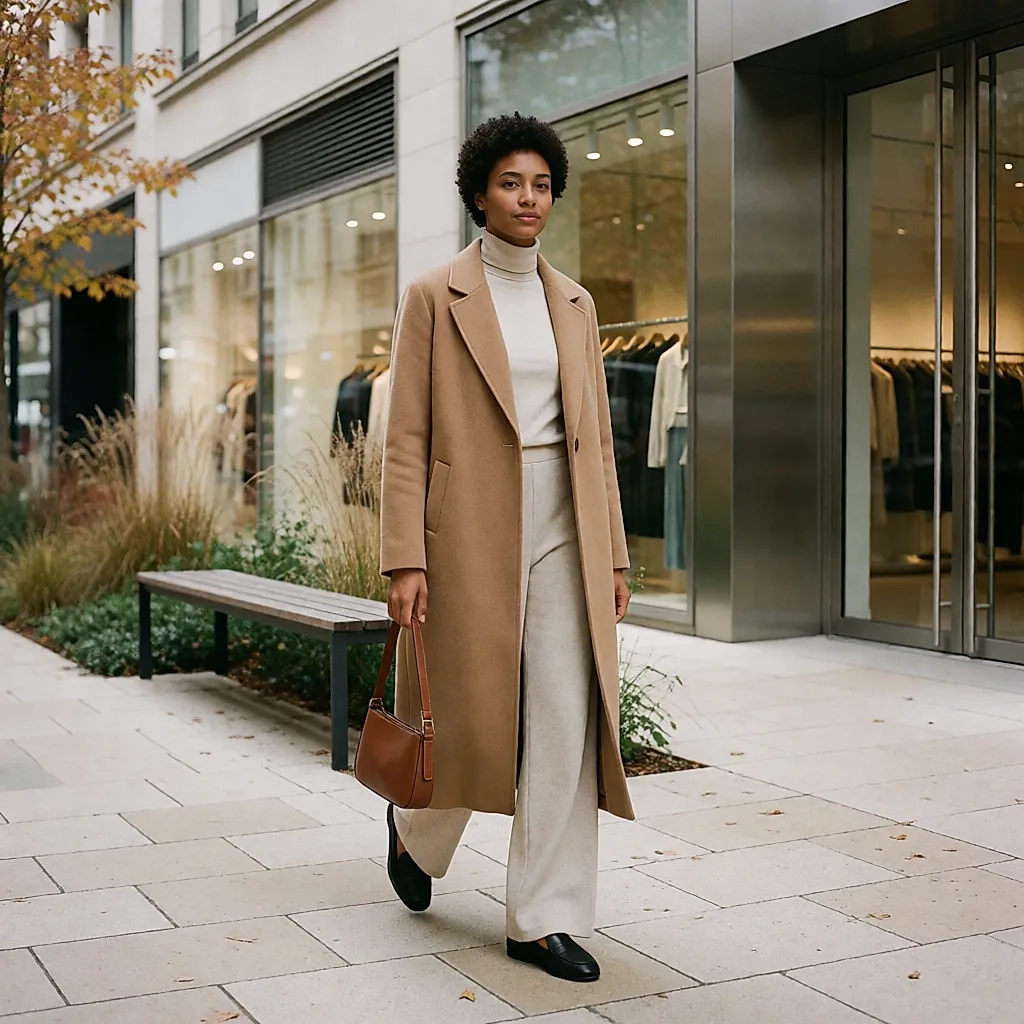
The real trap is the shoe. A running trainer, with its reinforcements and technical sole, instantly pulls the outfit back towards a jog. What to wear instead? A flat-soled shoe: loafers, soft derbies, ballet flats, or a pared-back leather trainer. And if you are under 1.6m, go for a wide leg but a sensible one — maximum volume eats up centimetres — and a mid-to-high waist that lengthens the line.
As for the full fleece set, keep it for short trips: the matching jacket and trousers look charming after a class, and more questionable at a work lunch.
What to spend
There is a comfortable spread of prices. Expect £20–£50 at general sports retailers, where wide cuts have arrived in force; £60–£120 at fashion labels that treat sweatshirting like proper trousers, with darts and a doubled waistband; and over £150 for a wool-blend fleece, heavier, warmer and more hard-wearing.
Second-hand is often the best hunting ground: thick cotton joggers from the 1990s turn up regularly at £15–£30, and they drape just as well as anything new. Just check the condition at the ankles and knees, two areas that slacken quickly.
The fitting-room test: sit down, then lift one knee. If the waistband gapes at the back or the fabric pulls at the crotch, the next size up will be more comfortable — joggers should be roomy, not tight. And if the trousers do not hang straight unless you hold them in place, they will not do any better at home.
One last thing: wide-leg joggers are not an all-rounder. They are at their best at the weekend, under a coat, with flat shoes and a clean top. For the office you need an impeccable cut and a fair amount of nerve — which is another subject, and another budget.

Comments
Your opinion matters: rate the article, react and reply to comments.
Comments are moderated; AI-assisted comments are flagged. Text emoticons (8-), :-), <3…) are automatically shown as images.