
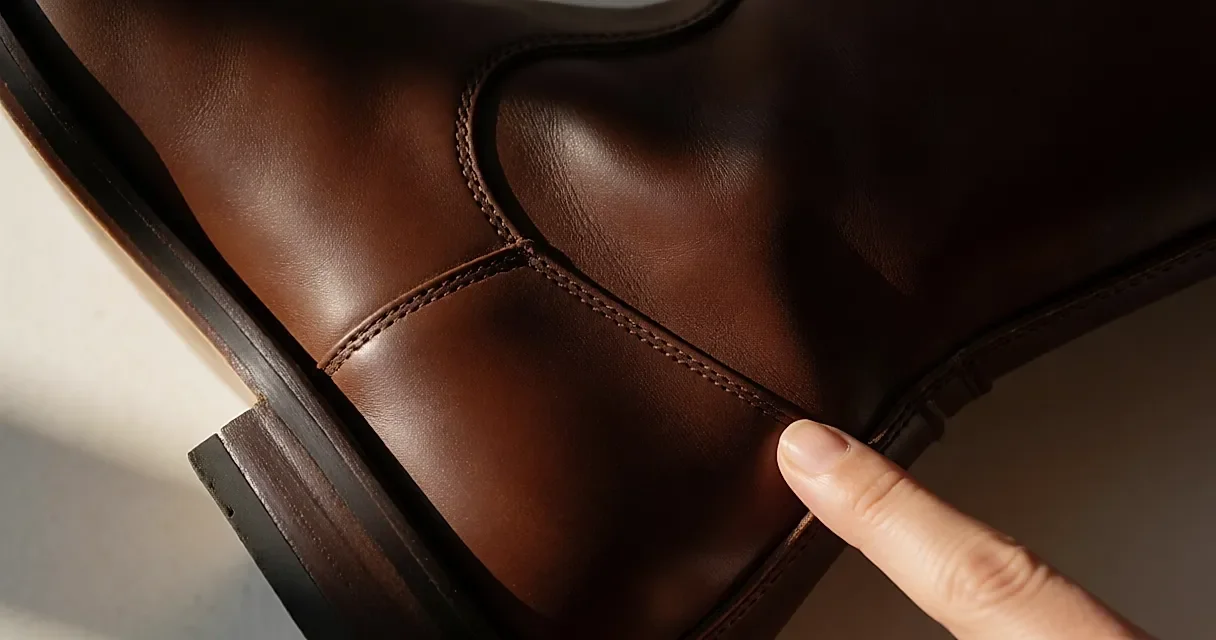
The small label stitched inside the lining says '100% leather', and that is roughly all it says. Not the country where the hide was tanned, not where the animal came from, not how it was treated. In other words, the most reassuring word on the shoe is also the most silent. Yet we need to make it talk: tanning, full grain, budget, resoling—these are the things worth asking about.
What the label actually tells you
On a pair of shoes, material labelling with pictograms tells you whether the upper is leather, textile or synthetic. That is something—but it stops there: the origin of the hides, the tannery or the type of tanning rarely appear.
For a bag, it is even less clear: there is no equally structured equivalent, and many brands simply say 'leather' with no further detail. The word does mean animal hide—not a petroleum derivative, which is a relief—but it does not say which part of the hide was used, whether it has been corrected and given a finish, or whether it was vegetable- or chrome-tanned. Many leathers are still chrome-tanned, often because it is faster and cheaper.
The question worth asking (and the one that isn't)
'Is this real leather?' You will get a yes, every time, even when the precise answer is corrected, coated leather with a finishing layer on top. The useful question has two parts, and they need to be asked together: where were the hides tanned, and where do they come from? These are two separate pieces of information, and that is where the detail lies.
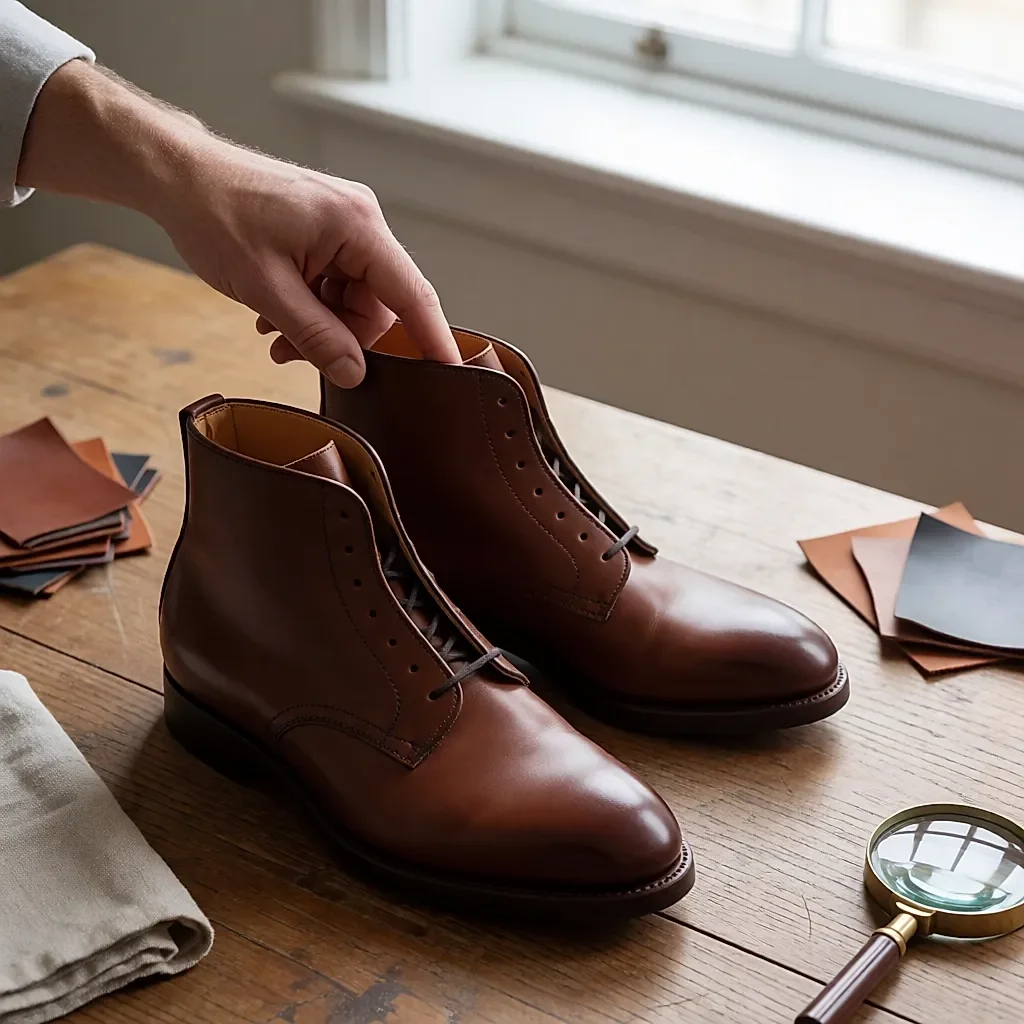
'Italian leather' usually means the hide was tanned in Italy, in one of the highly specialised districts—Veneto, Tuscany—not necessarily that the cow was raised nearby. Many raw hides travel before they reach the tannery, so the distinction matters. If the sales assistant cannot answer, it is not a verdict on the quality of the piece: it is a clue to how much information the shop has.
The third question, and the one that changes the finished product: which tanning method? Vegetable—barks, tannins—chrome, or a blend of the two. Vegetable tanning often gives a livelier patina, a colour that changes, and leather that stiffens a little over time; it also needs more care. Chrome tanning remains very common, very consistent, and often softer and more resistant to damp.
What origin can and cannot tell you
A clear origin gives you some leverage: you know which tannery to ask questions of, and some are audited on their environmental practices—notably those that go through the Leather Working Group. One caveat: this standard mainly covers a site's environmental performance; it does not tell you everything about traceability from hide to farm.
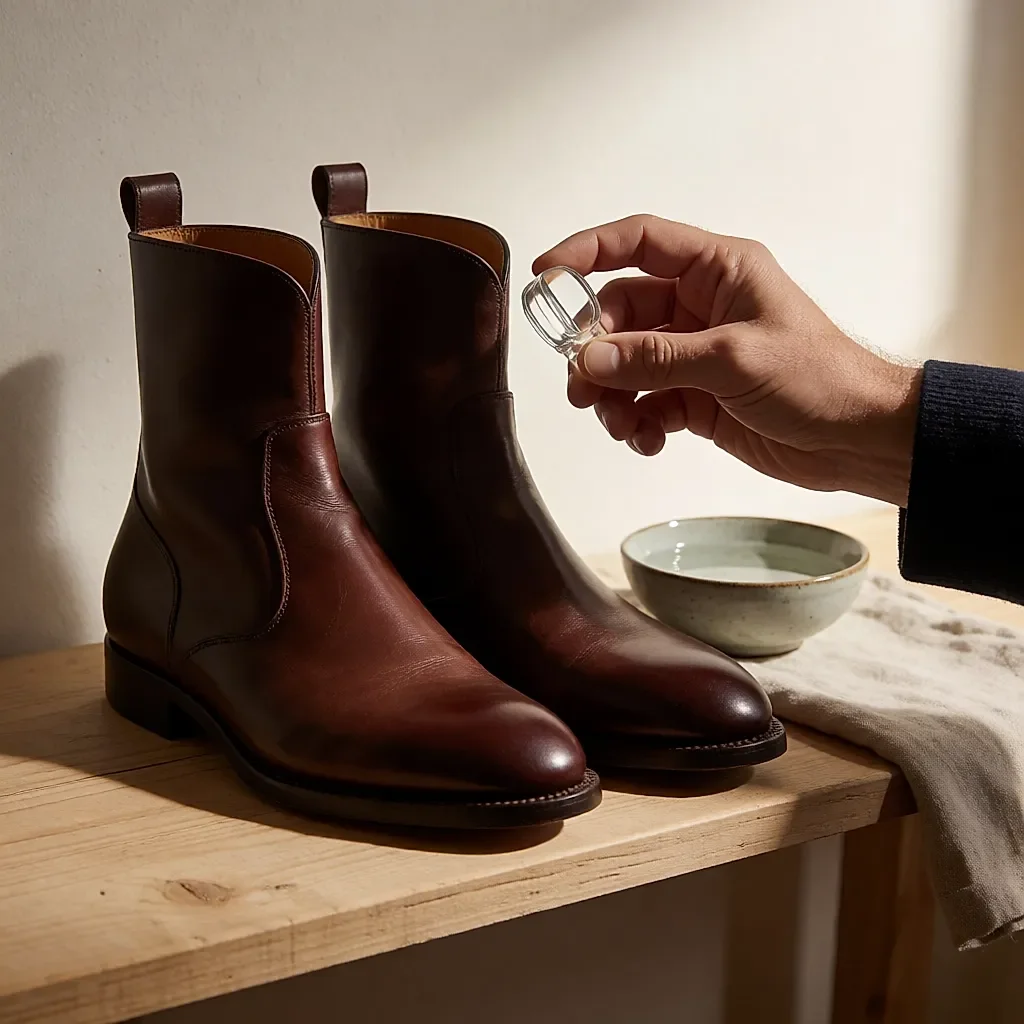
A clear origin guarantees neither the durability of your pair, nor the conditions in which the animal was raised, nor a fairer price. Traced leather can be mediocre; vague leather can be excellent. What traceability does change, in practical terms, is your ability to make the boots last: depending on the construction, a boot in full-grain leather can be resoled; uncorrected leather takes conditioner and patina more readily. Corrected and coated leather much less so—and that is often what you find in lower-priced ranges.
Here is the term to remember: full grain. It is the top layer of the hide, the part that breathes. It is often what makes the difference between a pair that will last several seasons and one that ends up at the back of the wardrobe, behind the returns box you never got round to sending back.
Budget
The ranges below are rough guides, based on prices shown in UK shops and online at the time of writing; they vary with city, finish, lining, place of assembly and where you buy. As a rough guide, expect to pay around £150 to £350 for full-grain leather boots from a brand that documents at least some of its leather, and £80 to £150 for entry-level pairs, often in corrected leather. For a bag, budget around £200 to £600 for a piece tanned in Europe with a named tannery.
And if you add care—conditioner, resoling: expect around £60 to £90 at a cobbler—it is better to build that into your starting budget.
The three questions to ask in the shop, in this order: Where were the hides tanned? Where do they come from? Which tanning method? If the answer is 'I'll have to check' and the information never comes back, you have your answer.
A pair of boots is an object you keep, damage and repair—not a purchase you repeat every autumn. So the next time a sales assistant tries to rush you, turn over the label and ask the question that makes them pause. You will see: serious shops remember it, and the others change the subject. It is up to you to choose your camp.

Comments
Your opinion matters: rate the article, react and reply to comments.
Comments are moderated; AI-assisted comments are flagged. Text emoticons (8-), :-), <3…) are automatically shown as images.