
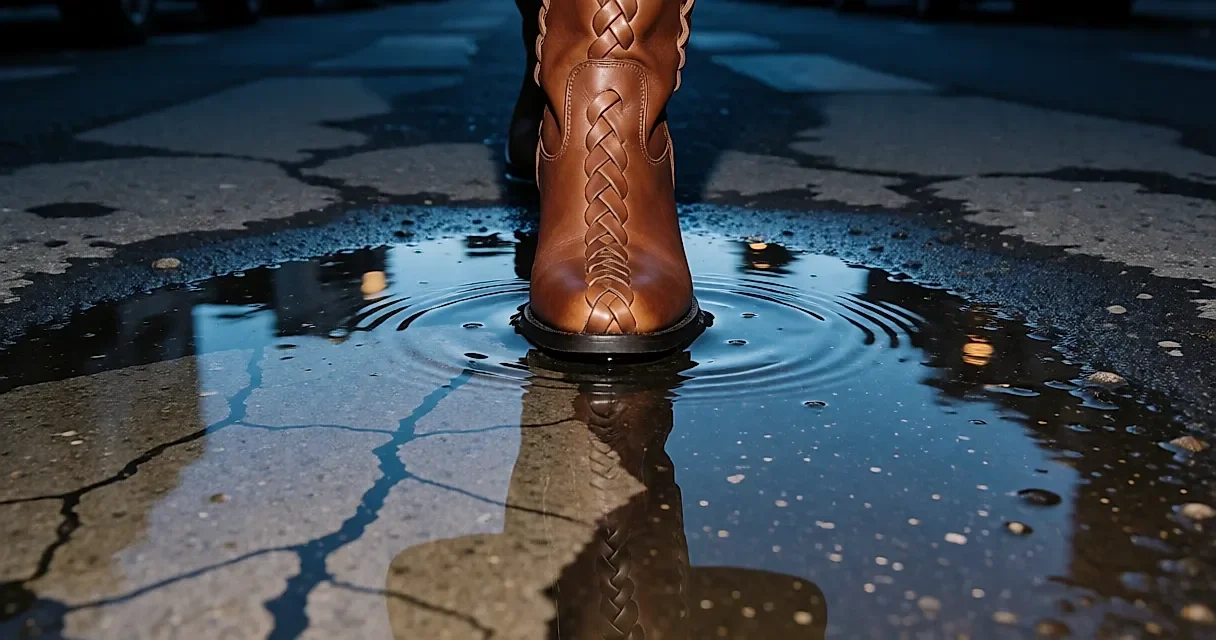
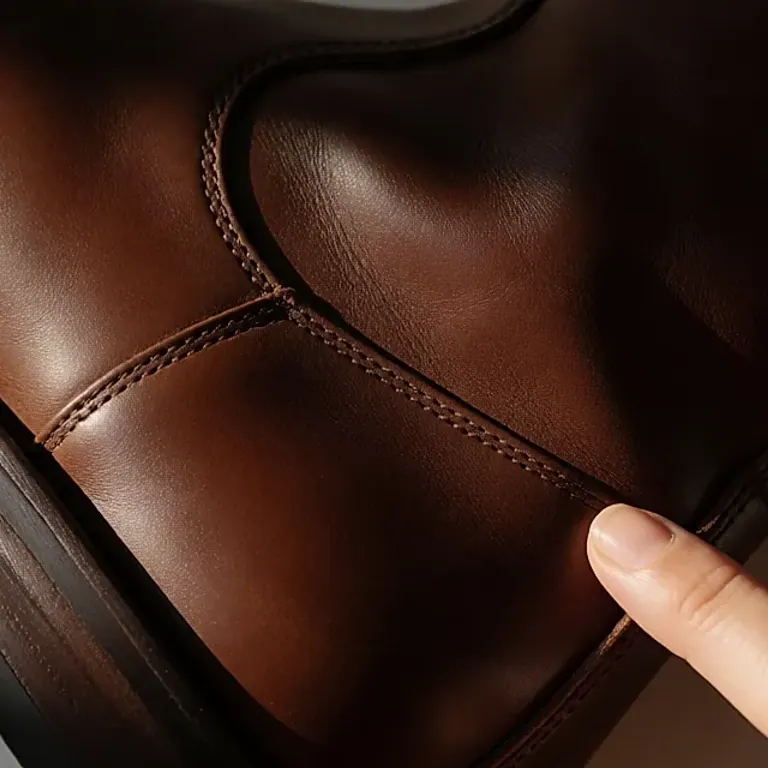
On a braided leather boot, everything comes down to the grooves. Between two straps there's a channel, and that's exactly where water settles. We love braiding for its texture, for the way it catches the light without shining — the question is whether it delivers on the promise of a winter shoe. The answer comes down to one nuance, and it changes the way you look after your boots.
From summer sandal to winter boot
Braiding didn't start life in a boot. It's a leatherwork and sandal technique: straps crossed to give a supple material some relief, and to hold together what would otherwise be too thin. Nothing very wintry about it, then.
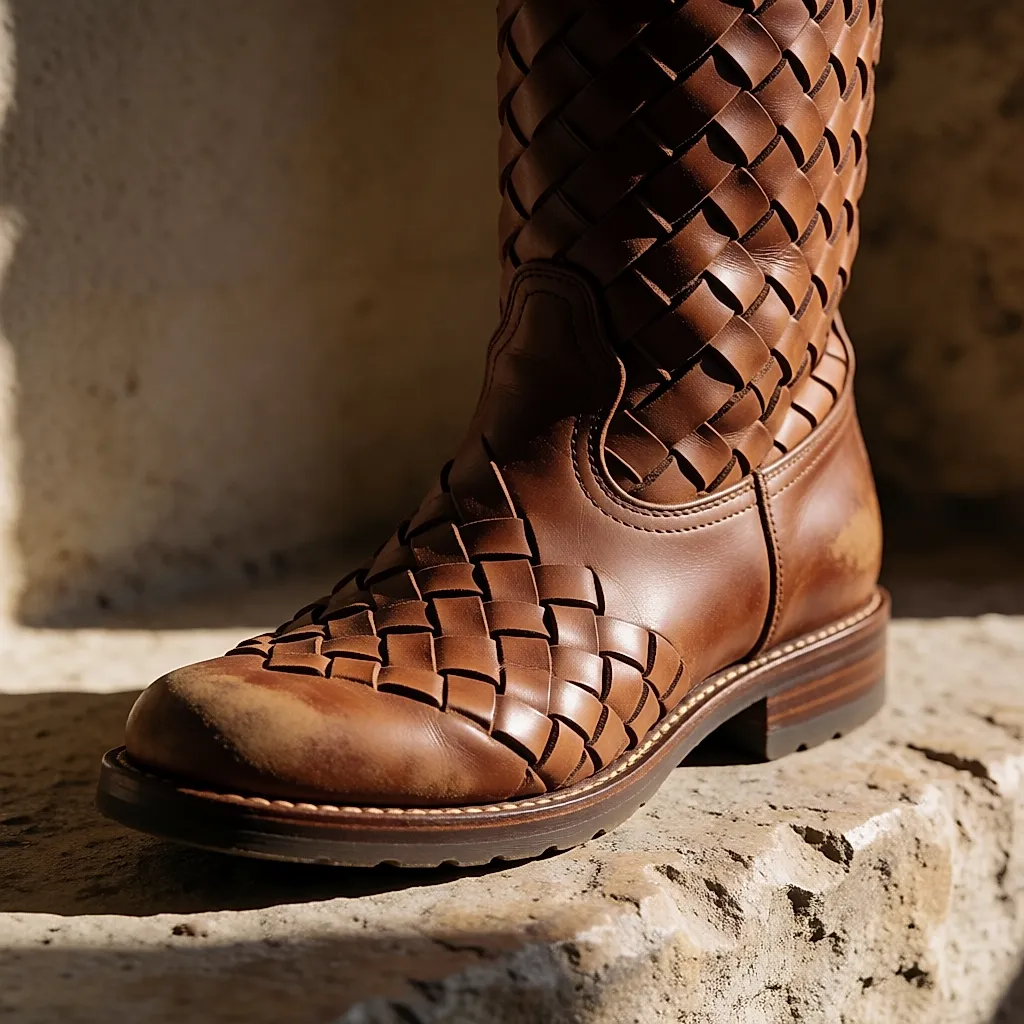
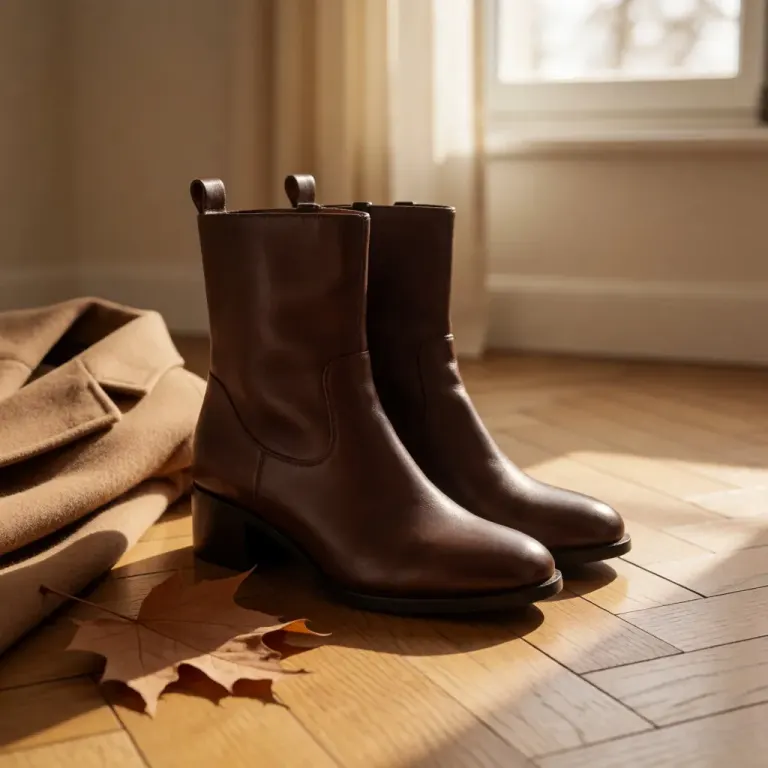
And yet here it is in boot form, heading into the cold months. Ankle boots with tight braiding, boots with wider straps, waxed leather: the texture does the work and the look follows. A braided boot acts as a quiet statement piece — the detail that lifts a straight-leg jean and a wool coat. One silhouette caveat: a thick braid adds volume to the calf; if you want a sleeker line, go for a fine braid or smooth leather.
What the rain actually gets through
A leather boot isn't a rubber boot, and your feet are better off for it: leather breathes, so you can wear it all day without the sensation of living inside a freezer bag. But it isn't waterproof. It's tanned hide, treated at the surface, and water can eventually soak in if you stay out in it long enough.
Does braiding make things worse? It doesn't change the nature of the leather, only its surface: between the straps there are grooves, cut edges, places a care product struggles to reach. In practice, these boots can handle a short commute in light rain, wet pavement and a street with a little water running along the gutter. For long spells of heavy rain, rubber boots exist — less breathable, far more waterproof. So the useful question isn't 'will it cope with water?' but 'for how long, and how often?'.
Where the upkeep shifts
With a braided boot, care isn't only about the upper: it happens in the grooves. The basic routine stays the same — feed the leather before winter, and again after every genuinely wet outing. A beeswax grease or a plant-oil-based cream is enough (expect £8-20 a pot, plenty for several seasons). Work it in, let it sink, buff it up.
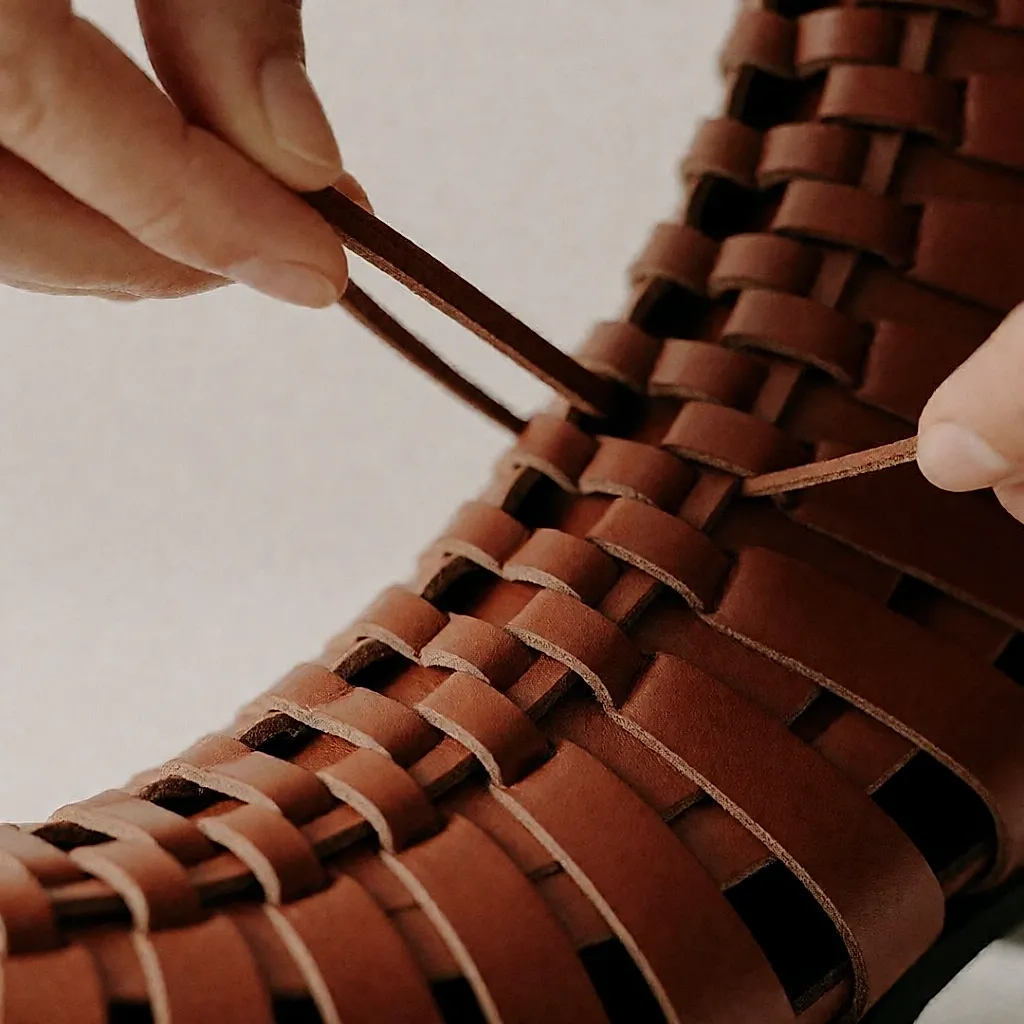
The second step, less glamorous but decisive, is drying. No radiator, no hairdryer — leather doesn't like being cooked. Stuff the boot with newspaper and leave it in the open air; put shoe trees in once it's dry. In the grooves of a braid, a fine brush or an old toothbrush works wonders.
The five-minute Sunday ritual: brush dry to lift dust and salt, run a damp cloth over the straps, grease lightly, let them dry in the open air. And store boots upright, never balled up at the back of the wardrobe.
Why leather scores on repairability
This is where leather earns its points. A leather boot, especially with a stitched sole, can go to a cobbler: a resole, a seam that gives way, a strap that comes unstitched. Expect £40-90 for a resole depending on the sole and where you live — less than buying a new pair, and the boot goes on for years.
Rubber boots, by contrast, are moulded in one piece. They are very good against water but much less at ease with repair: a tear is hard to put right, and much depends on the brand's repair service. Before you buy, it's worth asking: 'and if they get a puncture, what then?'.
What to budget for
Braided leather costs more. Expect £180-350 for a well-made pair in full-grain leather, more like £400-700 from houses that braid by hand. Below that price, look closely at the sole and the stitching.
Rubber boots sit between £60 and £140, with some perfectly decent city styles in that range. Second-hand, a braided leather boot in good condition can turn up at £60-150: check the soles and the cut edges, and ask whether the leather has been fed.
In the end, a braided leather boot doesn't ask to be treated like jewellery: just fed, dried, and handed to a cobbler the day it starts to tire. Three small steps, one pot of grease, and it comes through winter with extra patina. Maybe that's the real luxury — a pair you repair instead of replace.
Comments
Your opinion matters: rate the article, react and reply to comments.
Comments are moderated; AI-assisted comments are flagged. Text emoticons (8-), :-), <3…) are automatically shown as images.