
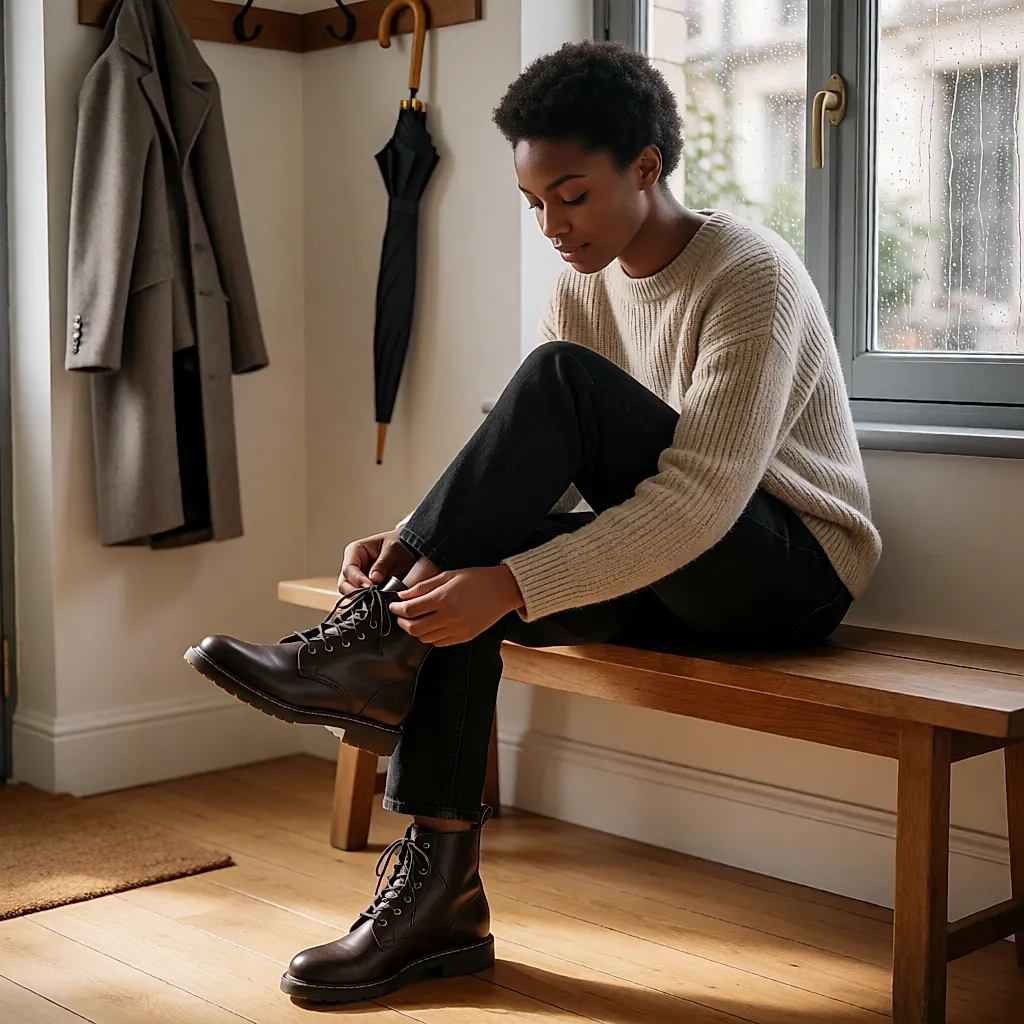
It’s been raining for three days and your right boot has just given up in the middle of a pedestrian crossing. The water didn’t come in through the sole: it slipped through a seam, quietly enough to leave you with a damp sock until home time. The trouble is that when you’re buying them, none of this is visible.
What actually makes a boot waterproof
Three places decide, and not the one you’d expect. The sole comes first: it isn’t what makes a boot waterproof, but in practice, a well-built pair can last several seasons. A rubber sole with a deep tread grips better on wet pavements, and on a city pair, a stitched sole can be replaced by a cobbler, whereas a simply glued sole ends up in the bin.
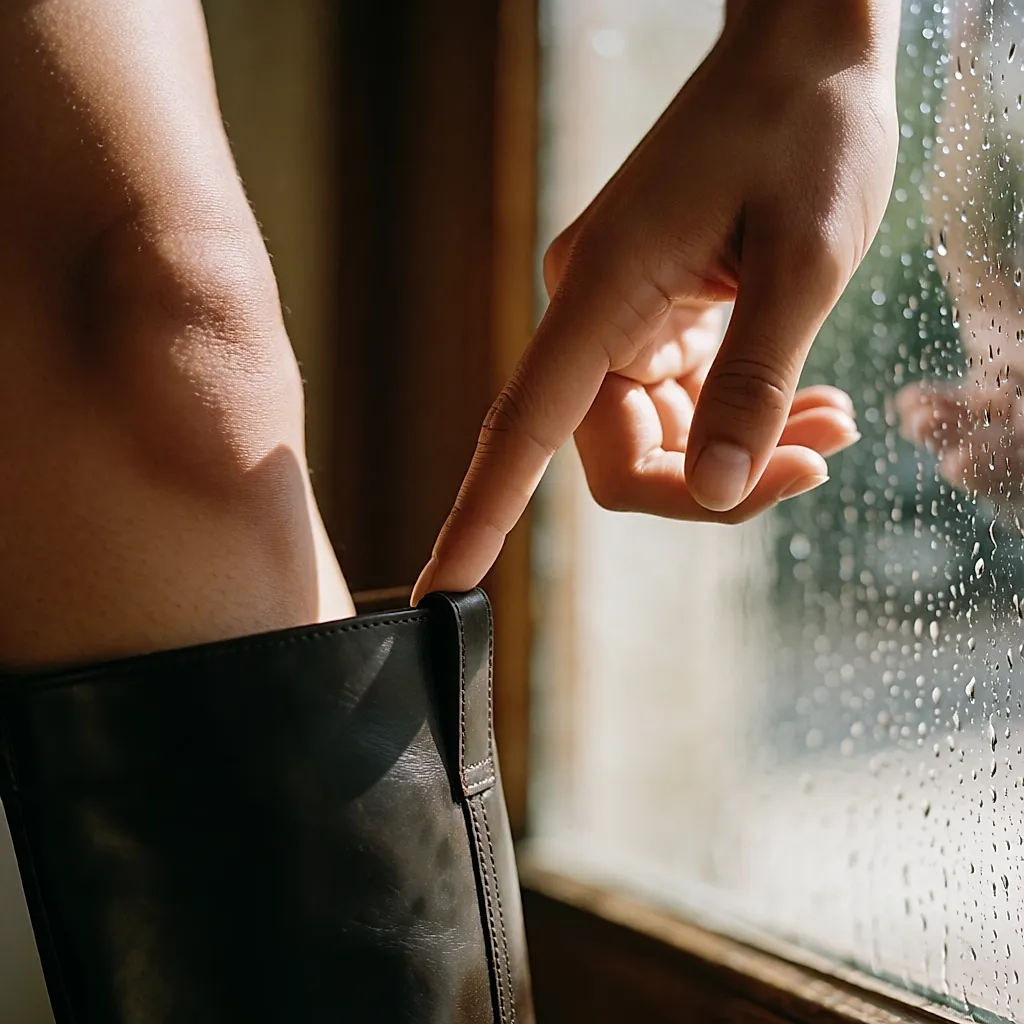
The seam on the upper is the real weak point. On leather or canvas, sealed seams — a heat-sealed tape over the stitching — hold back water that would otherwise wick up along the stitches. Run your finger along it: a soft, continuous ridge is a good sign. Bare thread along the whole length is a slow leak waiting to happen.
Surface treatment matters too. On leather, it’s what makes rain bead up; it wears away with use and is reactivated with wax or grease. On a natural rubber boot, depending on the design, waterproofing depends on the construction: some are moulded in one piece, others are assembled and then vulcanised. In that case, it’s the assembly seams and the lining you need to inspect.
The water-drop test (without soaking the shop)
You’re not going to dunk a pair you haven’t paid for, and neither is the sales assistant. But there’s a tiny trick borrowed from hikers: the water-drop test. Put a drop of water on the upper, in a discreet spot, and watch. If it beads and rolls off, the treatment is active. If it spreads and darkens the material, it’s thirsty leather — not a deal-breaker, but it will need looking after from day one.
Three checks in two minutes: bend the upper where your foot flexes as you walk (a material that whitens there will soon crack); take a few steps on a smooth floor to judge grip; and try the pair on with the thick socks you’ll actually wear. Choosing a boot in thin socks and wearing it with thick wool ones is the kind of mismatch you discover the moment you leave the house.
One last point, often misunderstood: boot height. A low boot isn’t faulty because it lets in water in a deep puddle — once water is above the boot, it comes in over the top, and no sole will change that. If your route passes through flood-prone spots, prioritise height over thickness.
Rain boots and city boots: do you really have to choose?
Rubber wins on water; leather wins on just about everything else. A rubber boot can be rinsed under the tap, left to dry in the hall and doesn’t mind a puddle; in return, it gets hot, breathes poorly and won’t pass muster under tailored trousers. If your day mixes commute, office and showers, it will stay your weekend pair — and your choice on mornings when the sky is clearly misbehaving.
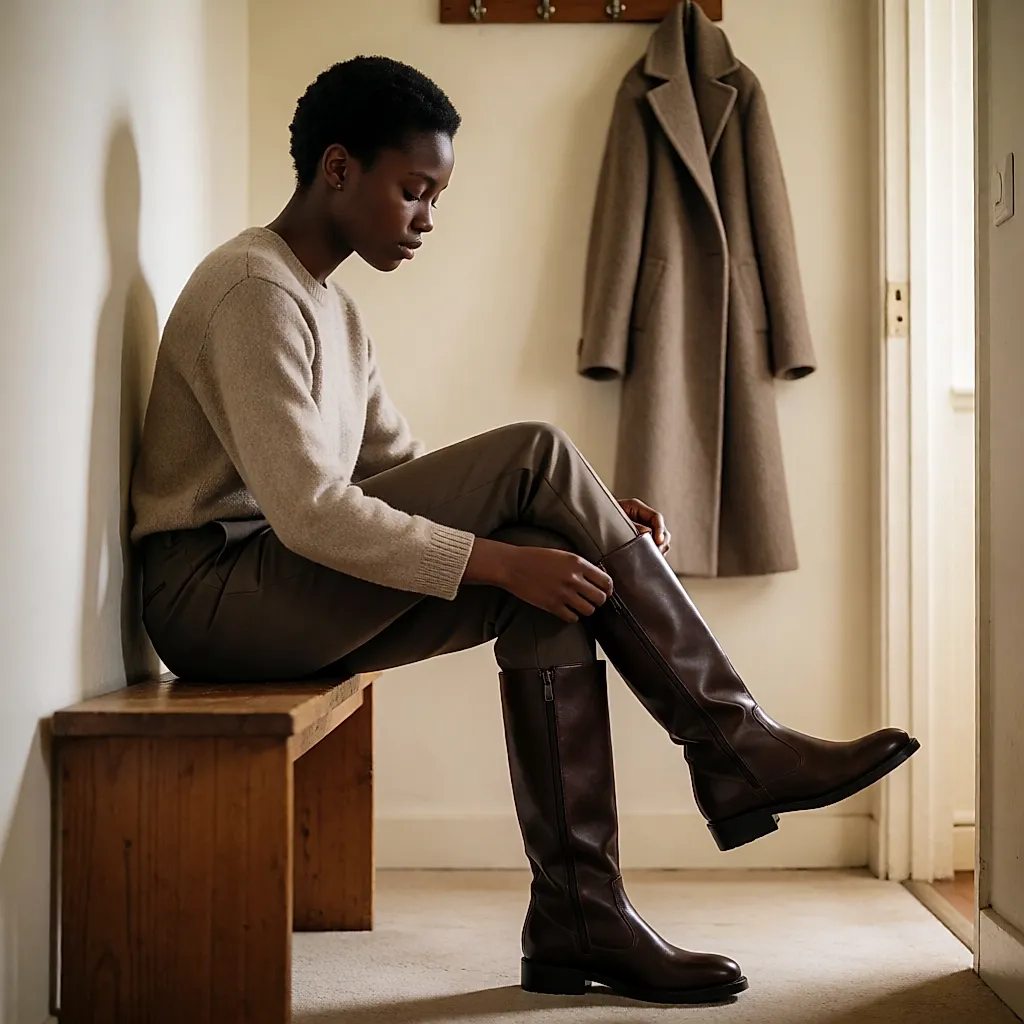
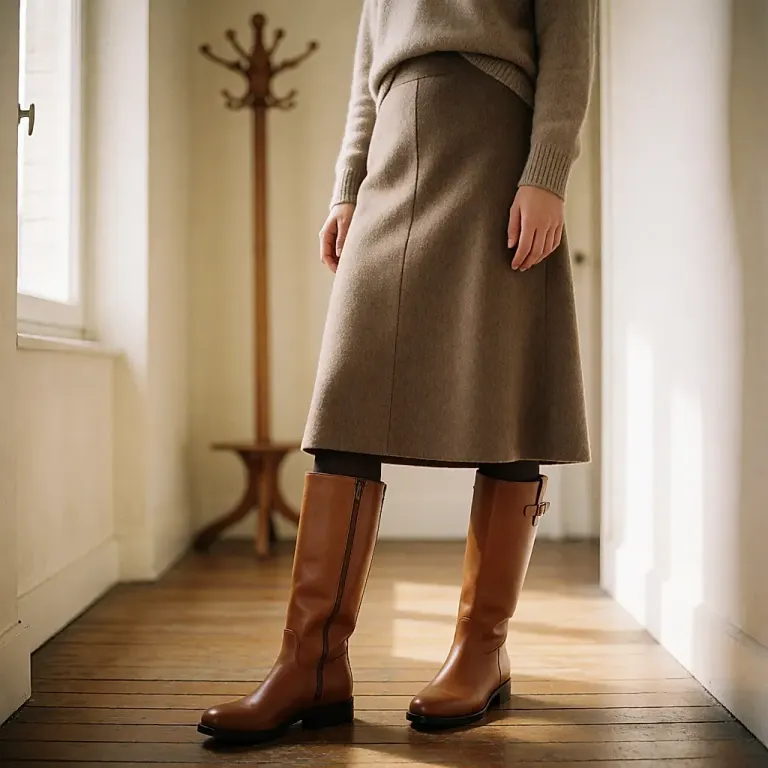
The city pair should be chosen like a wardrobe staple: thick leather — ideally vegetable-tanned leather — a shaft that rises above the ankle, and a stitched sole. It will take you from Monday to Friday if you accept the small ritual: a layer of wax or grease as soon as water stops beading. That’s the price of a silhouette that holds its own, and it’s modest.
Budget
As a rough guide, expect to pay £40–£90 for a natural rubber rain boot from a high street shoe shop or department store, and £110–£200 for a softer, more refined version, sometimes made in Europe. Brands such as Aigle and Le Chameau are safe bets here, without needing to aim at their top end.
For a leather city pair, the range rises: £120–£300 depending on brand, tanning and manufacture. Some makers still work leather in France — a useful marker, not a requirement. Add care costs (£8–£15 for a waterproofing treatment, £10–£20 for wax) and remember that a cobbler’s resole, around £40–£80, is generally cheaper than a new pair.
Boots that age well
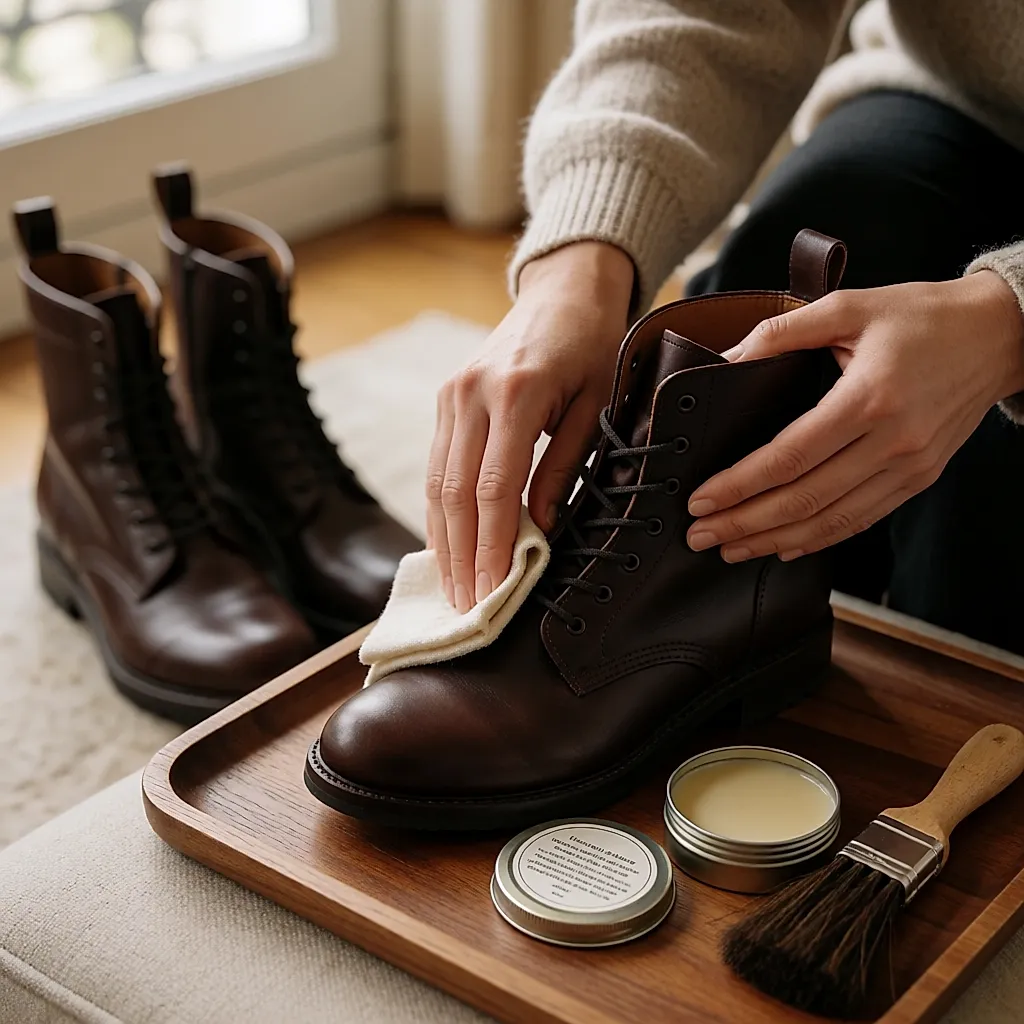
This is where it all counts. A rain boot should be rinsed, dried away from the radiator and stored without being squashed; a leather pair needs feeding, brushing and drying in the open air — never near a heat source, which hardens the material faster than a whole season. A few minutes of regular care and the same pair will see you through several winters.
So before you buy, turn the boot over, run a fingertip along the seam, put your drop of water on it and ask yourself what your commute will look like in January. The right pair here isn’t the prettiest on the shelf: it’s the one you’ll pull on without thinking when it rains, and that will still be there next year.


Comments
Your opinion matters: rate the article, react and reply to comments.
Comments are moderated; AI-assisted comments are flagged. Text emoticons (8-), :-), <3…) are automatically shown as images.