

You step out of the Tube, it's been raining for twenty minutes, and your jacket has already soaked up the rain. The water no longer beads; it soaks in. That's the sign that the water-repellent finish has gone — not the waterproofing. The distinction matters, and it's often where you get caught out when you buy.

For years, that water-repellent finish relied on PFAS, fluorinated compounds that are highly effective but persist in the environment. The European Union regulates their use, and more and more brands are now bringing out PFAS-free finishes. The good news: they hold up in autumn. Provided you know how to read the label and look after the garment.

Three layers, not one
A rain jacket is a system. The membrane blocks water, the outer fabric takes the drops, and the water-repellent finish — the famous DWR — makes them bead on the surface so the jacket doesn't get heavy. It's the DWR that wears out with washing and wearing, not the membrane. That's why a jacket can be perfectly waterproof yet cling to your skin at the first shower.
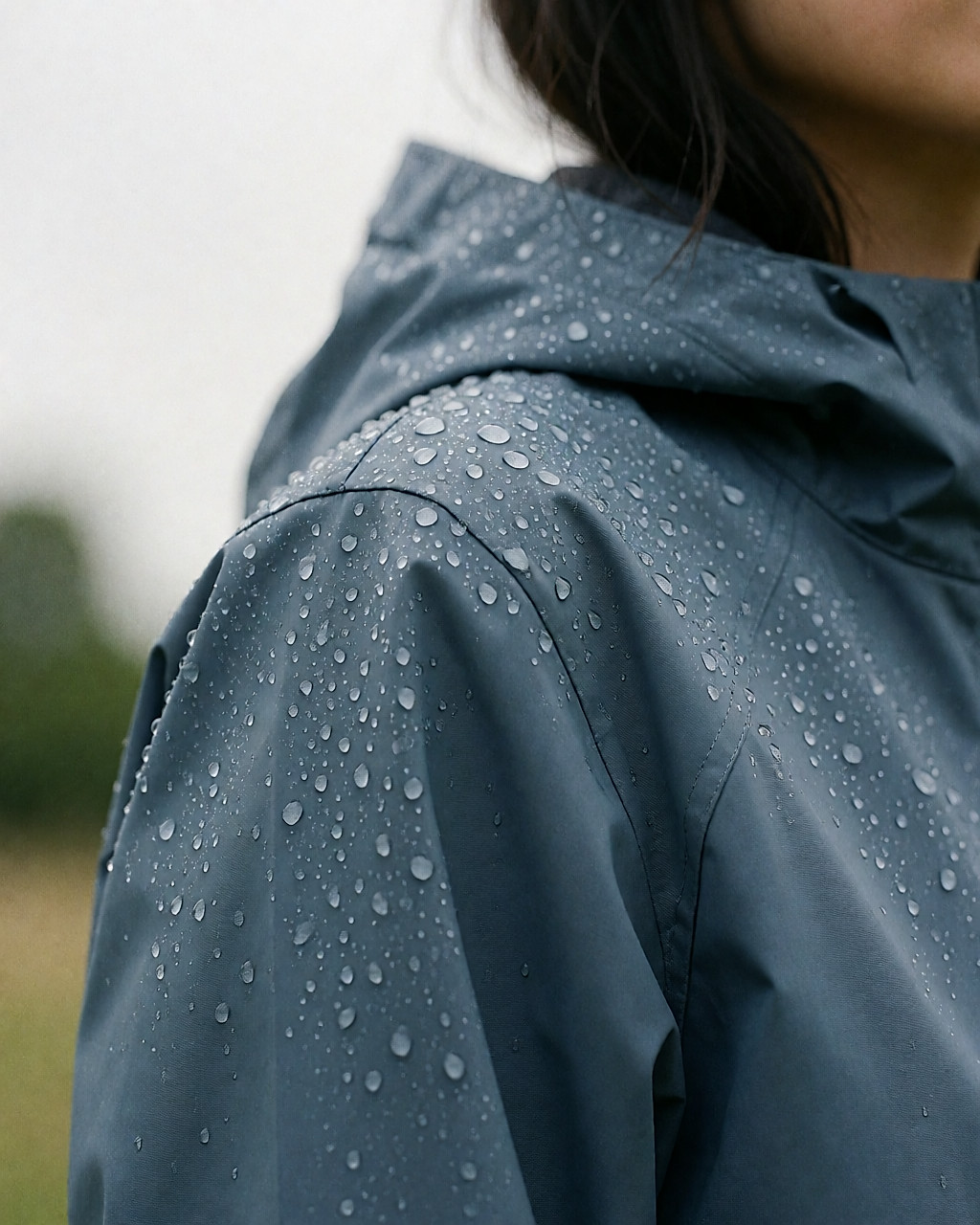
Without PFAS, brands often reformulate with plant-based waxes or silicones. Depending on the formulation, PFAS-free water repellency can be less durable and need more frequent reapplication. In practice, your jacket will need a little more attention. In return, it remains repairable and can be reproofed, and avoids persistent PFAS. Not magic, but a real step forward.

Spotting real water repellency on the label
Three things to look for. First, 'PFC-free DWR' or 'PFC-free': that's the PFAS-free formula. Next, look for 'water-repellent' and not just 'waterproof' — a waterproof jacket without water repellency is a garment that clings to your skin. Finally, a breathable membrane with a figure (often 5,000 to 10,000 g/m²/24 h): the higher the figure, the better water vapour can escape.

Watch out for a simple surface 'water-repellent treatment': that's a finish that can wash out after the first few cycles. Look instead for a serious certification, such as Bluesign or OEKO-TEX Standard 100, which certifies that substances are controlled at fabric level. Budget-wise, these criteria cost a little more upfront — but they make all the difference in use.
The fitting-room test (or in-store test)
You are allowed to test it! Spray a little water on the sleeve: the jacket should make the drops bead, not drink them. Then put it on, raise your arms, rub the inside of the underarms — if the fabric clings or feels stifling within ten seconds, it will be worse under a thick knit in January. Finally, look at the hood: removable is a real plus for wearing the jacket with the rest of your outfit the rest of the time.

And think about the silhouette: a jacket that's too wide at the shoulders ruins the line, while a cut that's too fitted will never fit over a chunky knit. The right length? One that covers your bottom without making you look like a tent. Take the time to try it over your winter coat, not a T-shirt: that's the real test.
Reproof rather than replace
Has your jacket been through two winters and no longer beads? There's no need to buy a new one! A PFAS-free reproofing spray is often enough. First wash the garment at 30°C with a mild detergent — never fabric conditioner, which destroys water repellency — then spray from 20 cm, leave to dry, and iron on a low heat, if the care label allows, to activate the formula. It's the step that makes all the difference: three minutes, and you're set for another season.
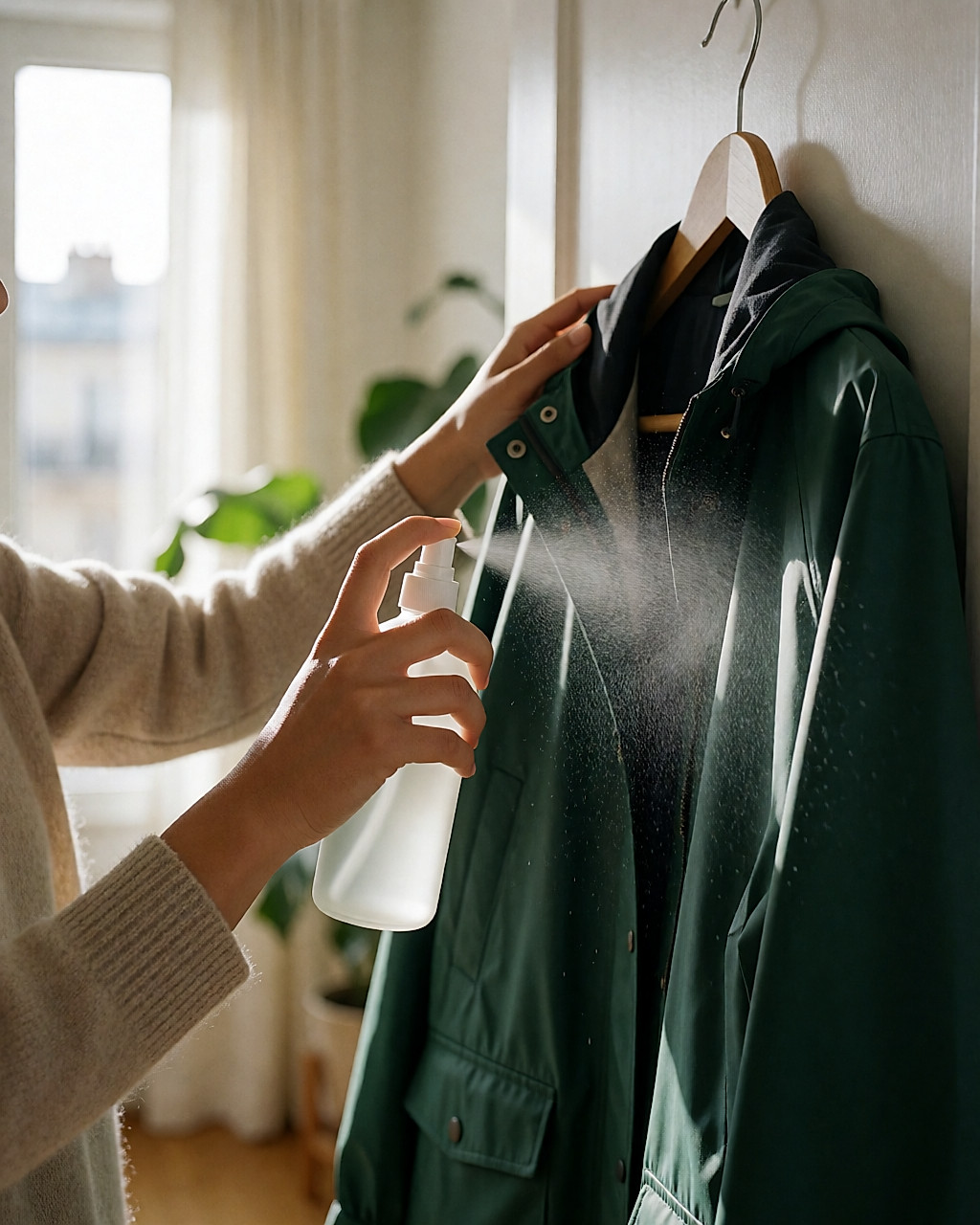
Quick water-repellency test: put a few drops on the sleeve and leave for thirty seconds. If they bead and roll off, you're fine. If they soak in and leave a dark patch, the water repellency has gone — reach for the spray, not the till.


Budget
Expect to pay around £70–£130 for an entry-level recycled-polyester raincoat (sports chains, affordable outdoor brands, online and in-store). A technical piece designed to last — quality membrane, taped seams, repairable — is more likely to be £170–£350; you can keep it for several years if you care for it. For reproofing, budget £10–£20 for a spray, or £25–£40 for a specialist dry-cleaning treatment. On the second-hand market (outdoor charity shops, resale platforms), very good jackets go for between £45 and £105: check the seams and zips before you commit. For city wear, an oversized style to layer over a chunky knit will cost more than a thin windbreaker — cut and fabric affect the price more than the brand.
Where to find it
In a specialist shop, you'll get proper advice and the chance to try the fit over your winter knit — that's where a straight or oversized cut can really be judged. Online, committed outdoor brands such as Patagonia, Finisterre, Passenger and Vaude often give more transparent product pages about composition and certifications. In larger sports chains, look at the eco-conscious ranges: less technical, but fine for city use. And don't forget second-hand: a reproofed jacket will last several more autumns.
In reality, the right question isn't 'which brand?' but 'can I repair and reproof it?'. A jacket that beads, breathes and is cared for will always beat a poorly chosen new piece.
Sources
- European Chemicals Agency (ECHA) — PFAS restriction, accessed in 2026.
- OEKO-TEX — Standard 100, harmful substance testing criteria, accessed in 2026.
- Bluesign — responsible textile production standard, accessed in 2026.
- ADEME — guides on textile care and durability, accessed in 2026.


Comments
Your opinion matters: rate the article, react and reply to comments.
Comments are moderated; AI-assisted comments are flagged. Text emoticons (8-), :-), <3…) are automatically shown as images.