
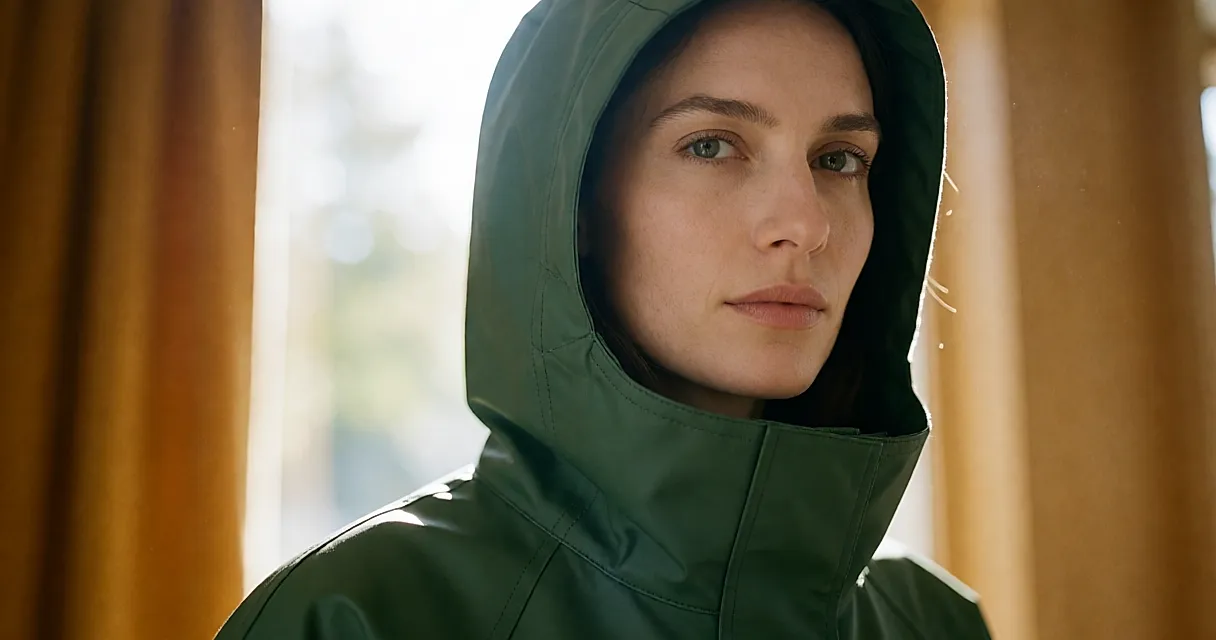
Turn a raincoat inside out and look at the back of it: along every seam there's either a soft, matte tape running over the join, or nothing at all. That few-millimetre strip is where the difference lies between a proper raincoat and fabric that gives up on your first soaked pavement. The word "waterproof" on the label never tells you any of this, and a thick-feeling fabric mostly reassures the hand that's stroking it in the shop.
The seams are the only proof that counts
A jacket can show off a dense fabric and impeccable finishing: it's the joins you need to look at first, because that's where everything is decided. Manufacturers who take rain seriously tape every seam, or only the critical seams, shoulders and hood first. A coat with bare seams isn't automatically a bad buy, but it doesn't promise you the same thing, and the price should reflect that.
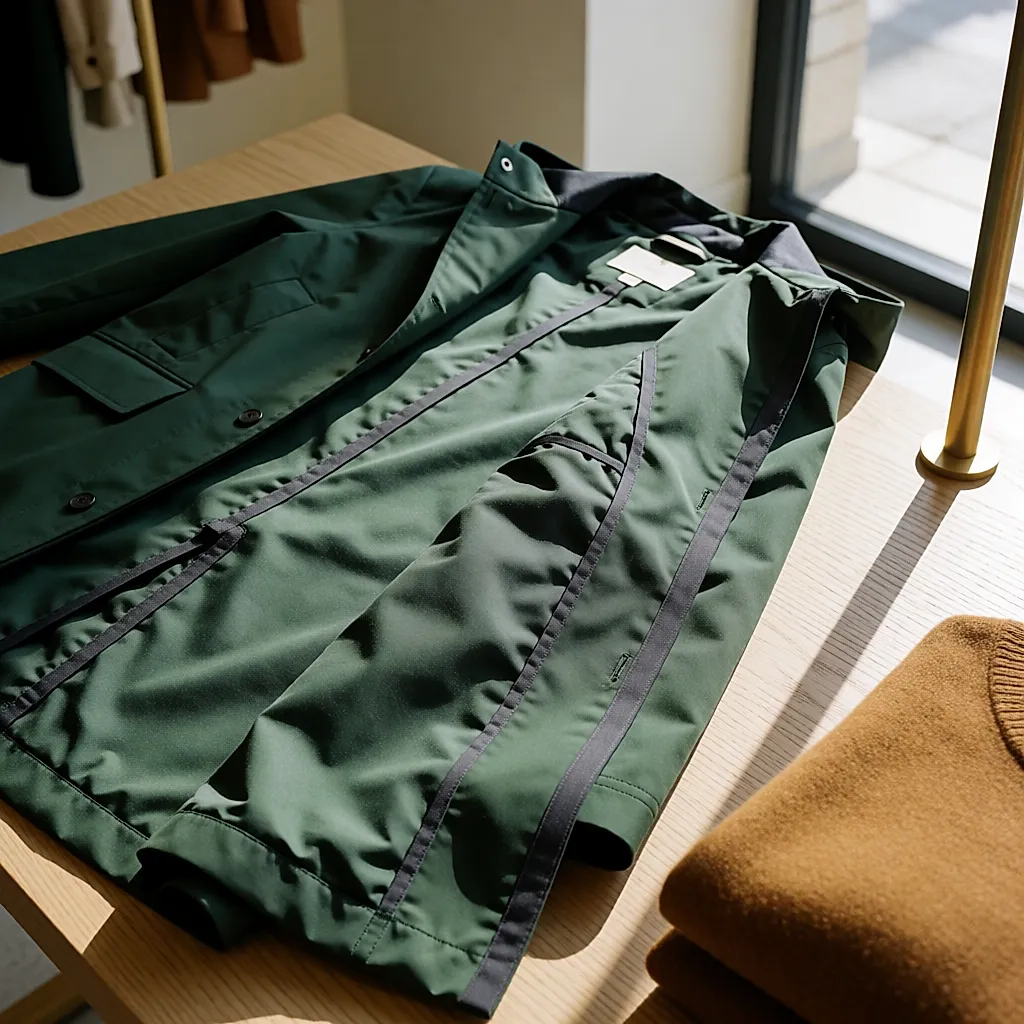
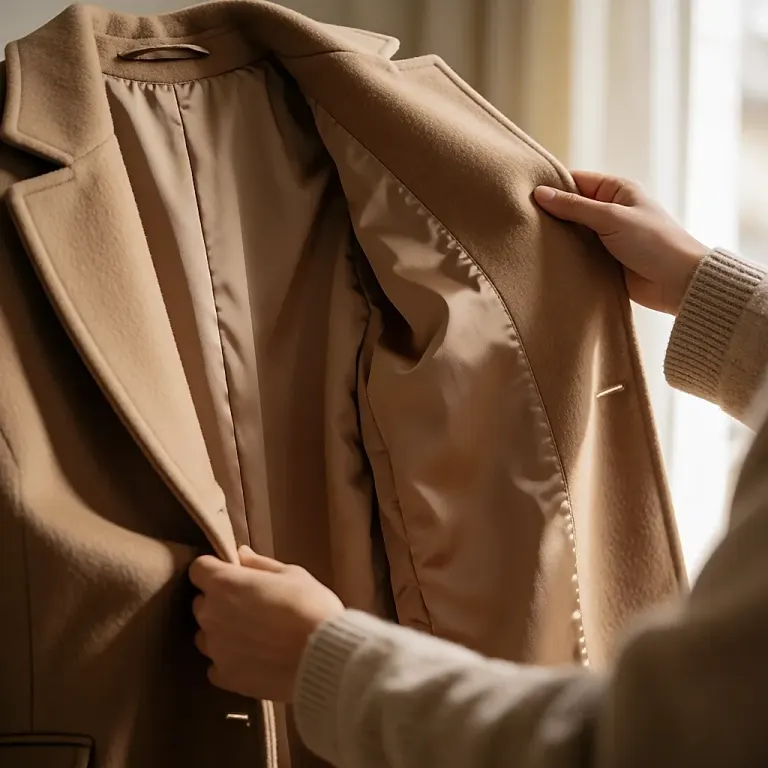
In the fitting room, then, start with the inside. Turn a sleeve out, pinch the tape between your fingertips: if it bubbles, peels away or stops dead, the piece has had a life. Then look at the lining. When it's set over the seams you won't see a thing, and you'll have to rely on what the brand states in writing. The question worth asking the sales assistant, for that matter: "Are all the seams taped, or just the main ones?" The answer often tells you more than the product page.
Zips, flaps and high-wear spots
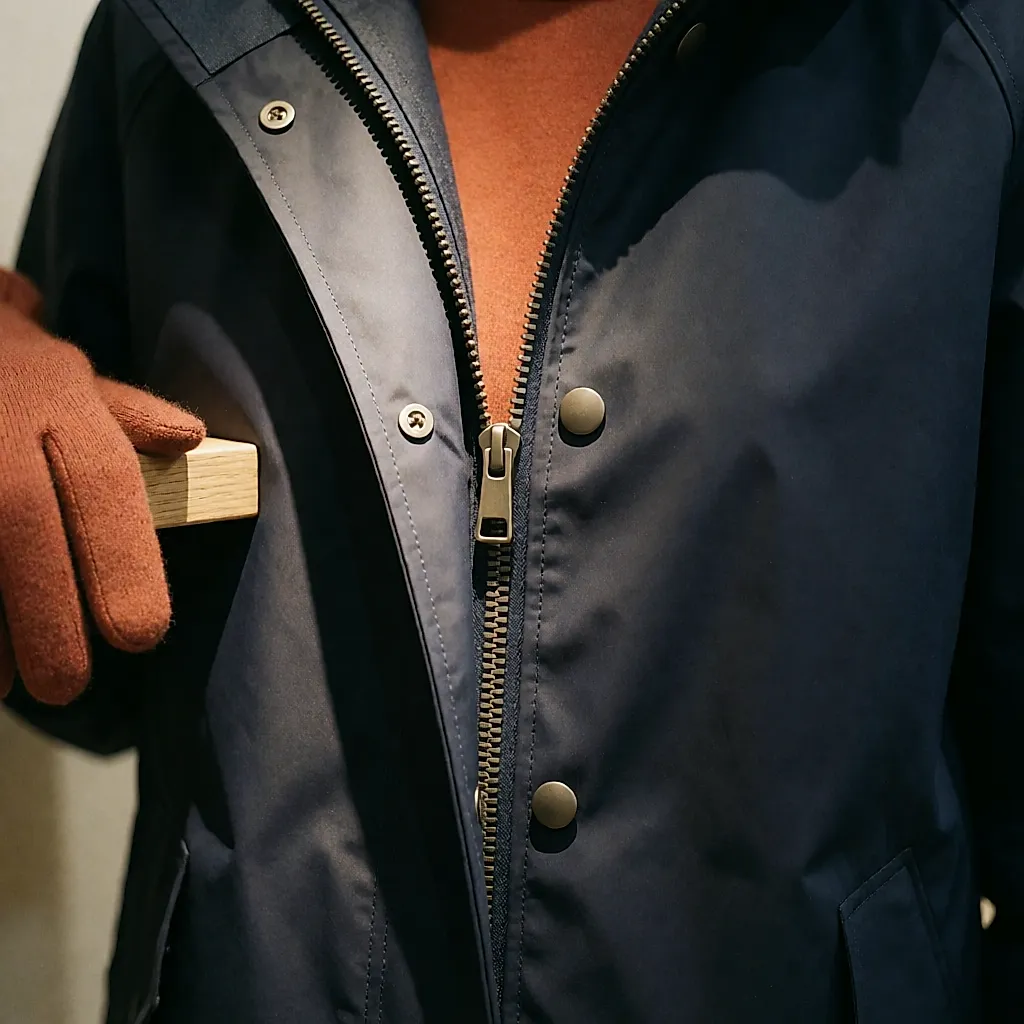
Second thing to examine: the fastening. A waterproof zip is good; a waterproof zip covered by a fabric storm flap — sometimes backed with Velcro or press studs — is noticeably better, because rain doesn't fall straight. Same logic for pockets: a flap, a hidden zip, and your hands stay dry without you thinking about it. An exposed zip on a town coat is, frankly, a giveaway.
That leaves the high-wear spots, the ones we forget to inspect: the tops of the shoulders where a bag strap sits, the inside of the forearms, the lower back when you're seated, the sides under the arms. Some pieces add a lining or a reinforced panel there, others keep the same weight throughout. On a secondhand raincoat, that's exactly where wear shows first — and where you negotiate.
The hood is the blind spot
We rarely try it on, yet it's the part we'll wear most. Look for a hood with a peak and a drawcord: without a brim it sits badly and slips at the slightest turn of the head. Try it on properly, over the high collar, and check you can turn your head without the fabric pulling at your neck. A removable hood is more versatile to wear, but its fastening needs to be covered too.

Think about the drape, finally, because a raincoat is still a coat. A long, belted cut looks sharp in town; a short version is easier on a bike and folds into a bag. Side vents, sleeves wide enough for a jumper: these are the silhouette details that will decide whether you wear it ten times or never.
Budget
Expect to pay £40 to £90 for a first raincoat from a supermarket or high-street chain, or online: at that price the seams are often left bare and the hood stays basic. From £120 to £250 you're into pieces whose seams are taped at least at the vulnerable points — the most sensible bracket for everyday wear, whether from an outdoor retailer or the brand's own site. Above £300 you're paying for longevity, repairability and sometimes waxed cotton.
On care, a reproofing kit (spray or wash-in) costs £15 to £30 and gives a second life to a jacket that "doesn't hold up any more". In charity shops and on resale apps a decent one turns up for £30 to £80: turn it inside out before you pay, and check the fibre mix on the label.
The fitting-room test in three moves: turn the jacket inside out, pinch the seam tape, try the hood. If any of the three is off, you'll know where you stand — and you can always negotiate.
At heart, the right question isn't "is it waterproof?" but "will it stay waterproof?". Turn the piece inside out, hunt down the tape, try the hood, feel the shoulders: three minutes in a fitting room that spare you months of soggy regret under a low grey sky. The rest is a matter of budget — and taste.


Comments
Your opinion matters: rate the article, react and reply to comments.
Comments are moderated; AI-assisted comments are flagged. Text emoticons (8-), :-), <3…) are automatically shown as images.