

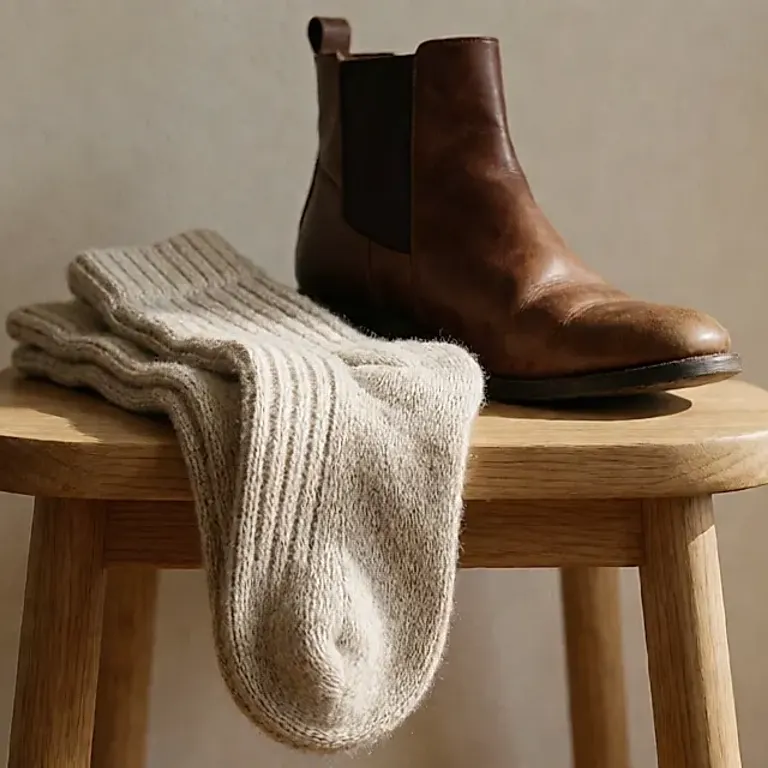
Look at the top edge of your boot: that crisp line it presses into your calf decides, with every step, whether your sock stays put or ends up concertinaed around your ankle. You hoick it up, you smooth it down, you repeat the whole performance on the pavement. By evening you're blaming the boot, the size, the maker, when the culprit is often a matter of three centimetres.
The friction comes first
When a sock's heel ends up bunched under your foot, the instinct is to go up a size or switch to another shape. In plenty of cases the cause sits lower down: the sock stops too early, and the boot's top edge presses right on it. Every time your foot flexes, that edge works like a little roller and drags the knit downwards until the heel slips away. The leather is innocent. Friction is the guilty party.
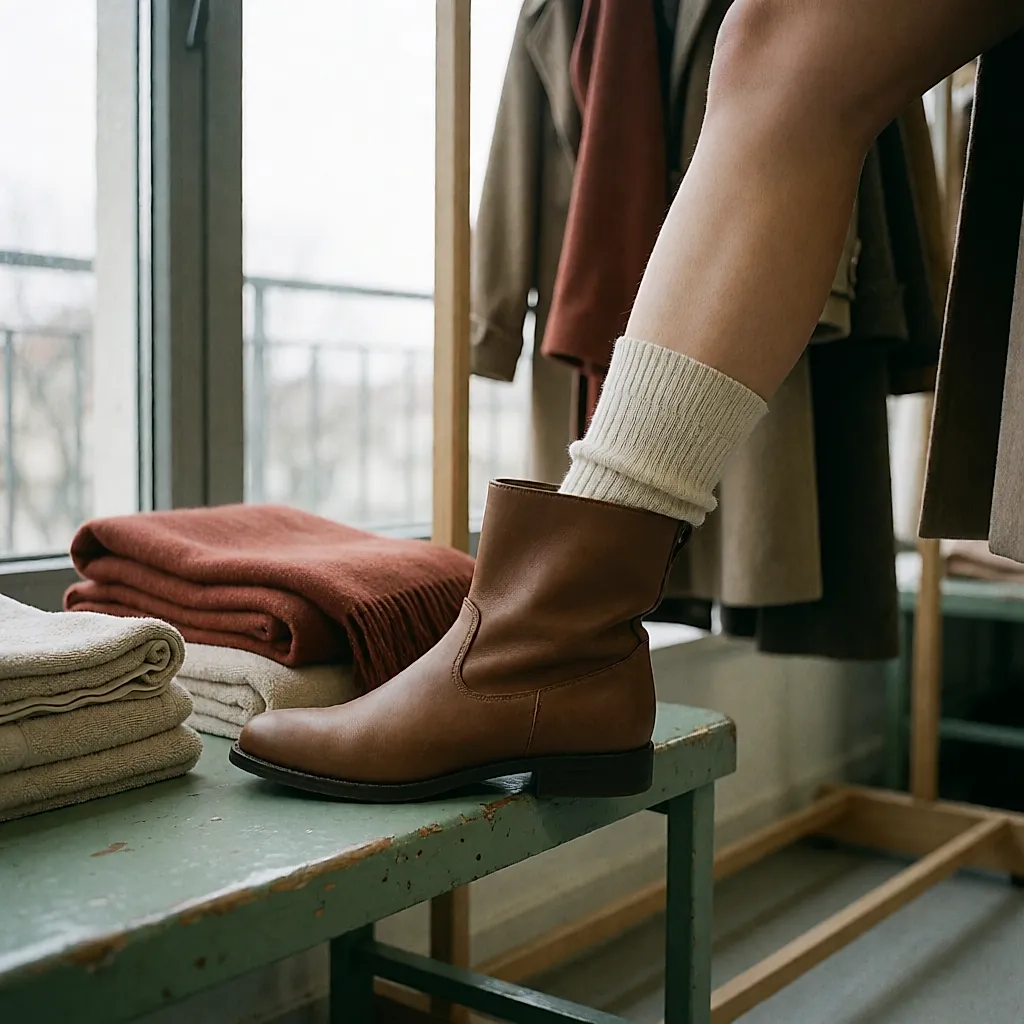
There are other suspects, of course: a knit that relaxes in the wash, a very fine cotton that slides over a smooth lining, a shaft that's a little roomy at the heel. But before you buy another pair of boots, measure the height of your socks. It's the quickest and cheapest adjustment in the whole wardrobe. The height of the sock usually tells you more than any suspicion about the boot.
Three checks, one minute in the fitting room
First, height. The sock needs to clear the boot's top edge by two to three centimetres. That's the marker worth holding on to, the one that keeps the cuff seam off the friction line. A mid-calf sock with a tall boot is the pairing that jams. Go tall and the problem disappears before it has even started.
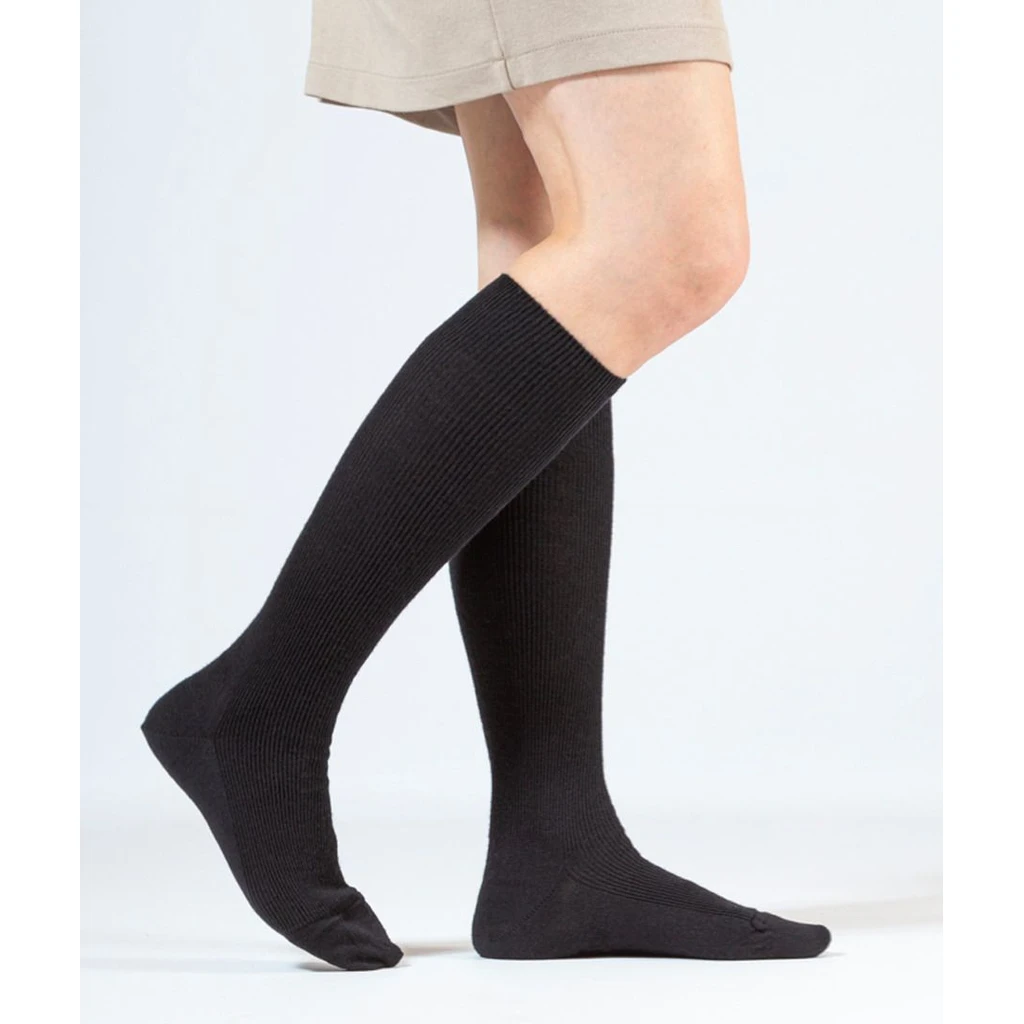
Second, the toe seam. Run your hand inside the sock at the toe end: if you feel a ridge, that's the seam, and it creates a tension point that pulls on the whole knit when the foot bends. A flat toe seam, sometimes described as smooth or low-profile, you can identify by touch alone, no jargon or label required. Third, reinforcement: a knit strengthened at heel and toe holds its shape for longer, and a sock that has relaxed slides down faster than a new one. Look at the fibre too: merino wool or a well-packed organic cotton springs back after washing, where a very fine, loose knit gives up.
The edge test: pull the boot on over the socks you'd actually wear, then bend your foot. If you can feel the boot's top edge pressing on the sock's cuff seam, it will be down around your ankle by lunchtime. Go up a sock size, not a boot size.
Try them on with the socks you'll really wear
In the fitting room you often end up wearing the protective sock provided: paper-thin, almost a second skin. The trouble is you're then trying on a boot for a foot that won't be yours in January. Try boots on with the pair you'll actually wear: sheer tights if you live in tights, wool socks if you're the layering sort. The way the shaft falls, the room over the instep and the comfort at the heel all change completely.
A tip that costs nothing: go late in the day, when your foot is a touch wider, and take a few steps on a hard floor rather than the shop carpet. If the boot already gapes without a thick sock, it will gape even more with one. And if the heel floats, no sock in the world will sort it out for long.
What to spend
On socks, expect in the region of £6 to £10 for a three-pack of cotton socks from a supermarket or high-street chain, £10 to £18 for a single taller pair with a bit more to them (haberdashery details, small online labels), and £15 to £22 a pair in merino wool from outdoor and sports retailers, where flat seams and heel-and-toe reinforcement are most often spelled out clearly. A novelty pair at £4, by contrast, is a fine weekend buy, not something for a day on your feet.
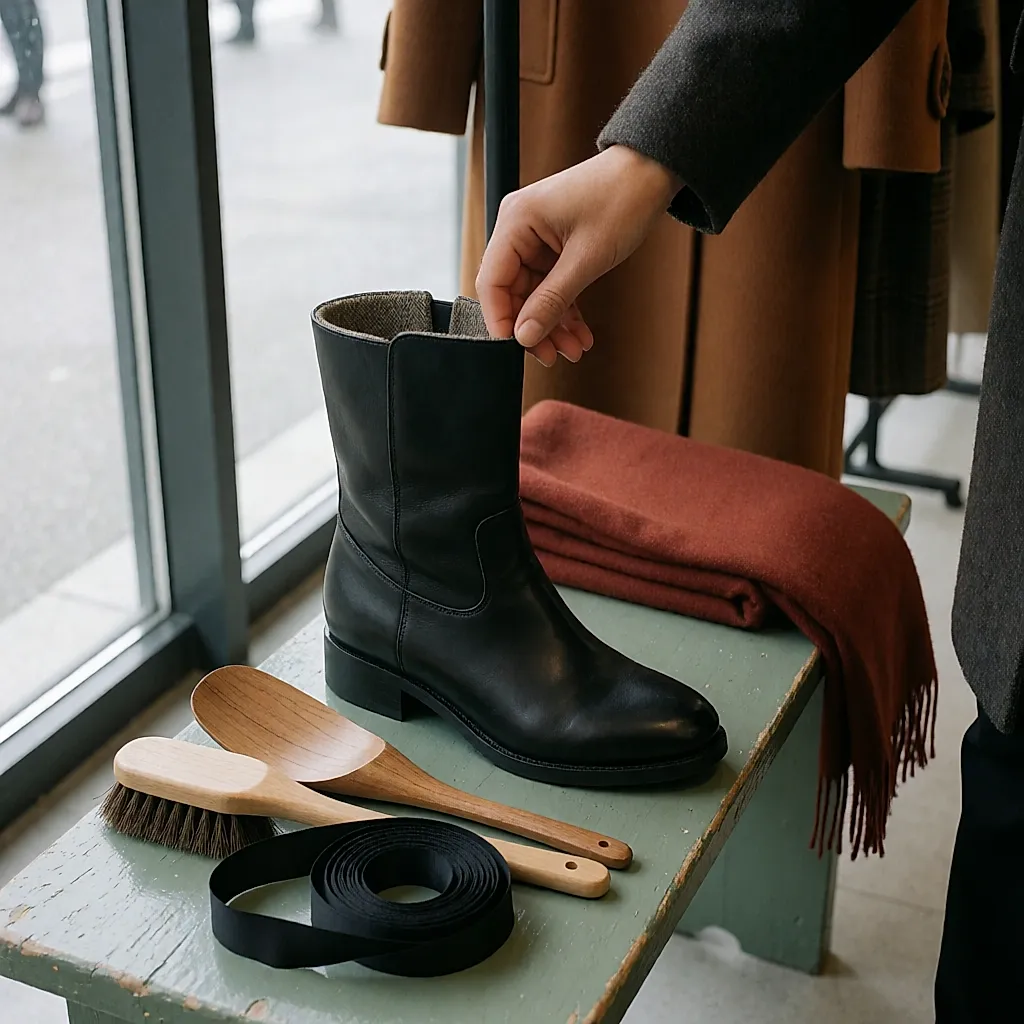
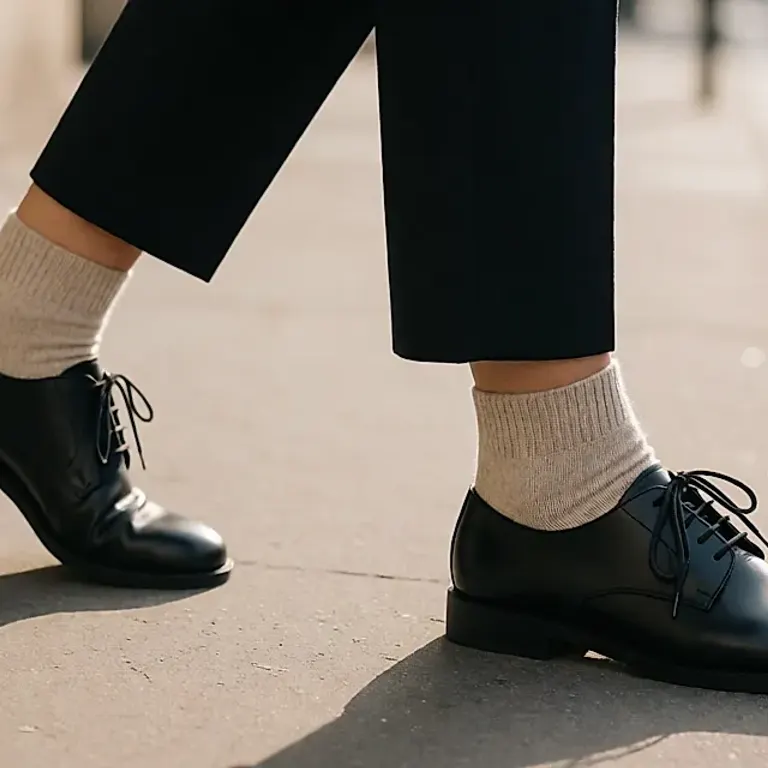
On boots, there's no need to spend £200 to solve a sock problem: start with the £15 pair of socks. If you are going to invest, look for a soft shaft at the ankle and a lining with a bit of grip, because that's what holds the knit in place. And if your favourite socks are too short, they'll come into their own with low ankle boots or high-top shoes that stop below the ankle.
Nothing ruinous in this adjustment: one tall pair, one flat toe seam, two reinforced zones, and the boot is a boot again. Next time your heel slips, look first at where the sock stops: the answer is usually in the height, not the size.

Comments
Your opinion matters: rate the article, react and reply to comments.
Comments are moderated; AI-assisted comments are flagged. Text emoticons (8-), :-), <3…) are automatically shown as images.