
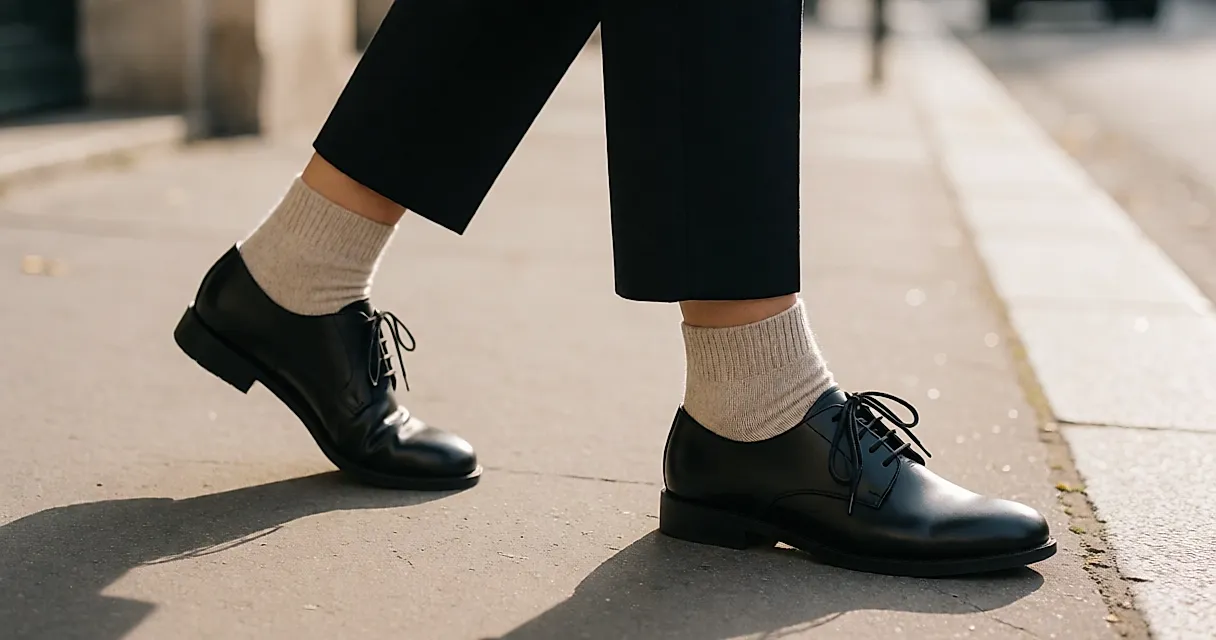
The sock drawer can look like a quiet graveyard: a mismatched pair, a hole in the heel and that half-pair that slips under your foot by the second flight of stairs. Meanwhile, at the top of the wardrobe, a hiking sock is waiting for its moment – for country trails and Sundays outdoors. So why not take it onto the pavement and see what happens?
The technical work is in the details
A flat toe seam, reinforced heel and toe, an arch support band and more breathable knit zones across the top of the foot: the hiking sock is built like a small piece of technical kit, while its city cousin often settles for being a tube. The difference isn't visible; it's felt. A bulky seam pressing on your toes can ruin a whole day; a flat seam disappears as soon as a closed shoe is on.
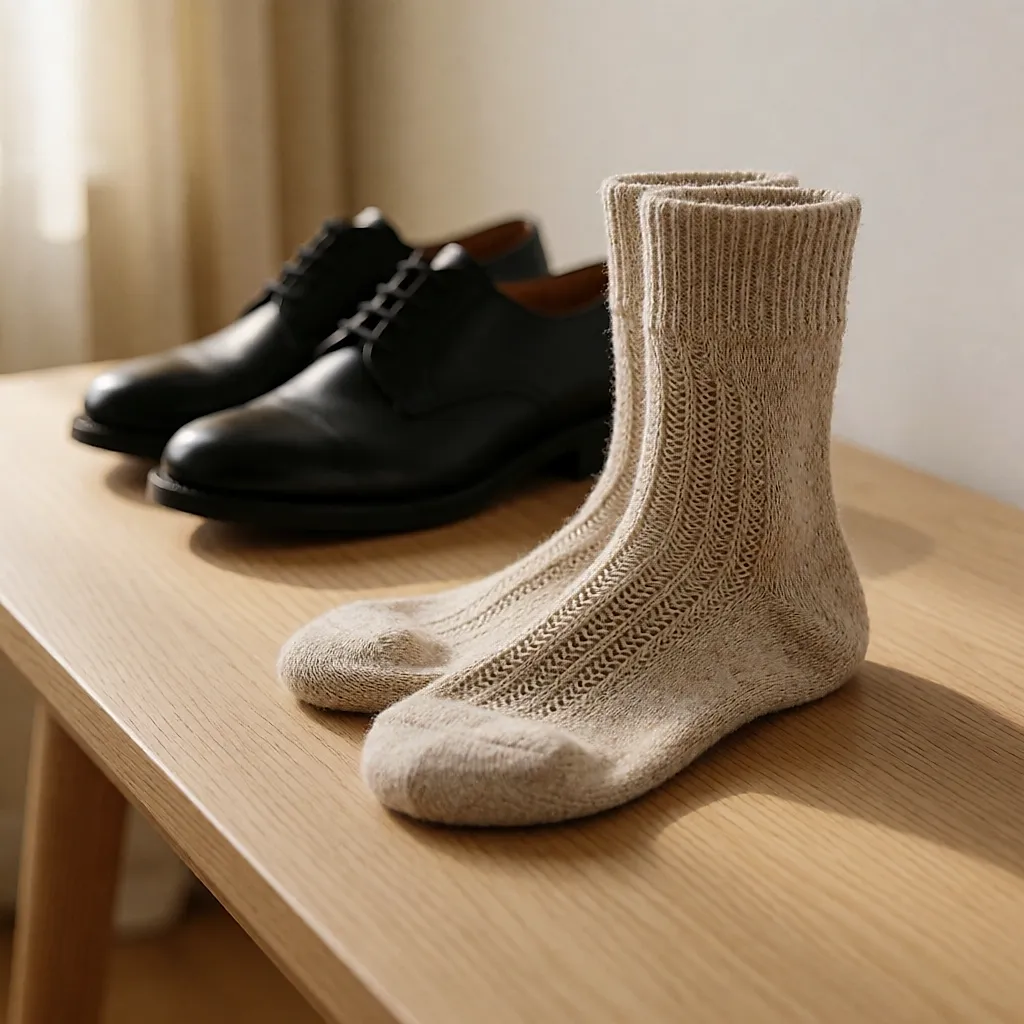
The fabric does much of the work: merino wool absorbs moisture and releases it gradually, whereas cotton holds it and can leave the foot cold and clammy. Add a knit that's close enough that the sock doesn't twist at the bottom of the shoe, and you get a fit you can't see but that changes the way you walk. A small detail? More the kind of detail that decides whether you're still comfortable at 7pm.
What really changes in city shoes
In a derby, a lace-up ankle boot or a roomy trainer, the foot slides forward with every step. With a sock that's too loose, that ends in a fold under the toes and a heel that rides up; with a well-fitted technical sock, the foot stays in place. It sounds obvious, yet we spend years buying thin pairs without asking why they fail after a few washes.

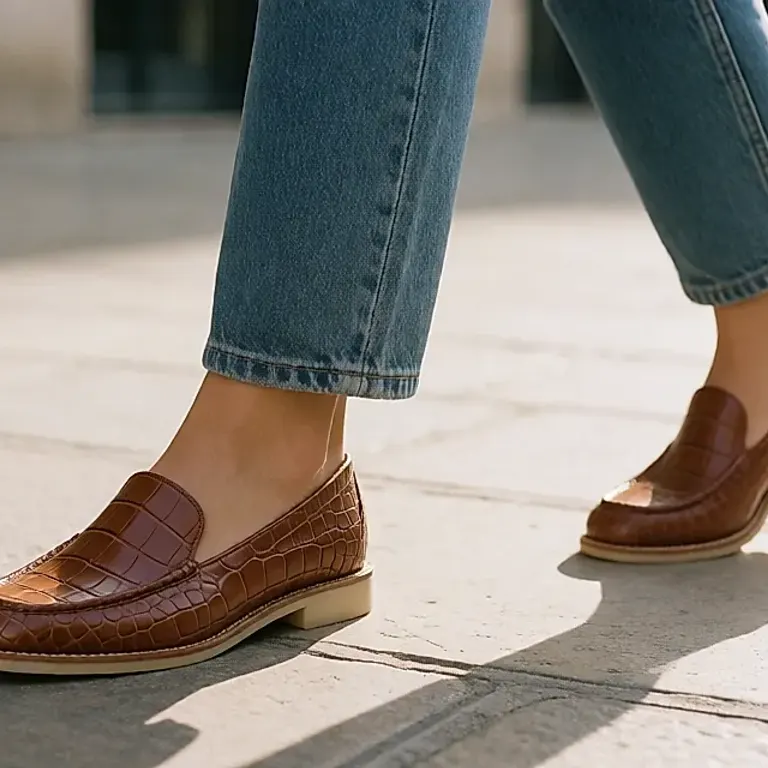
The city has its own agenda, too: Tube stairs, a twenty-minute walk to the office, a November downpour, overheated interiors. Wool tends to handle these shifts better than cotton – but don't expect heroics from a sock inside a lined, waterproof ankle boot: it regulates, it doesn't air-condition. And let's be honest: in a ballet flat, a snug loafer or a stiletto, there simply isn't room. A visible sock with a skirt can lean into a sporty palette, but that's not today's subject.
Why it costs less than a fine wool pair
In the UK, expect to pay around £16 to £28 for a merino hiking sock, compared with £22 to £40 for a fine wool dress sock. The paradox isn't really one: the sports sock is made in huge quantities, in standardised shapes, and sold on function rather than finish. No trim, no seasonal colour range, no gift box.
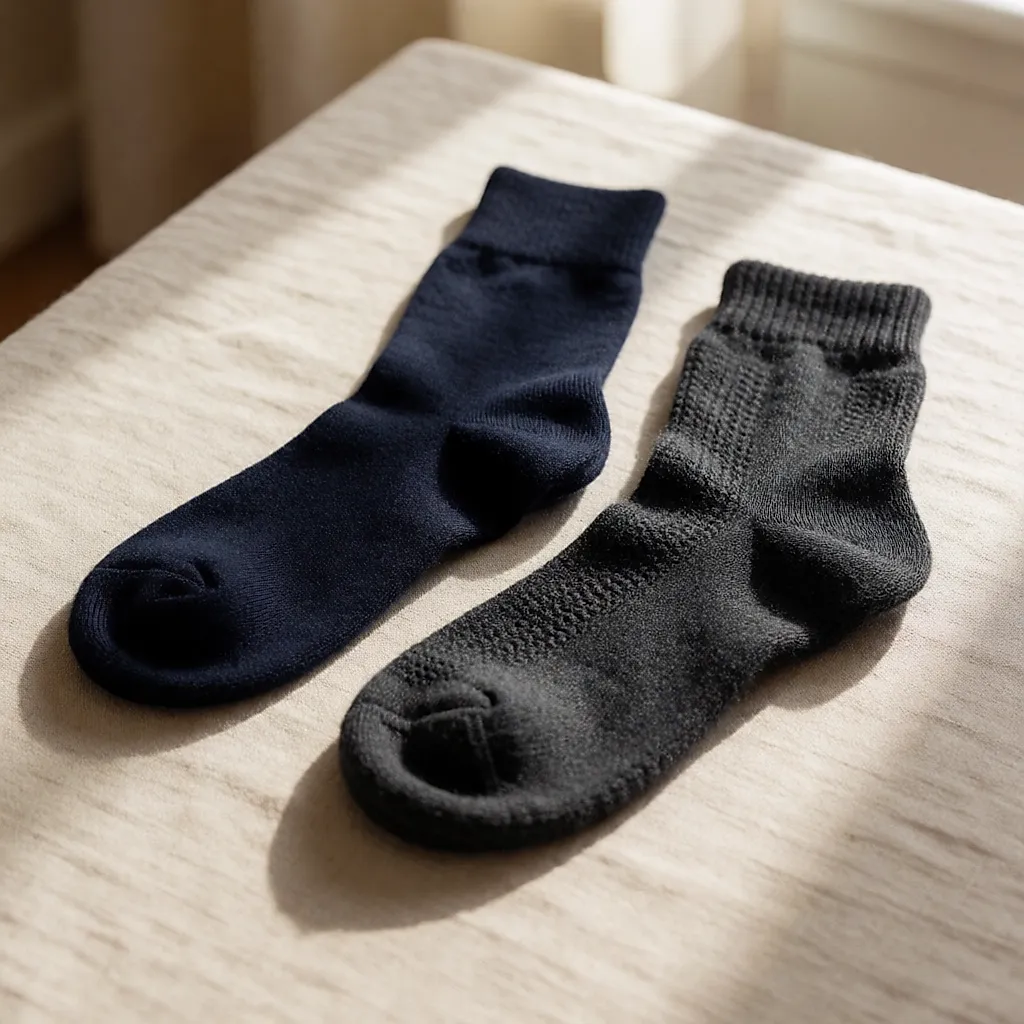
The dress sock, by contrast, pays for its fineness and colour work – and often a brand premium. In return, it tends to be less reinforced and more fragile at the heel. The hiking sock trades elegance for durability, which works well when it's destined for closed shoes. One caution: on entry-level styles, check the label for the proportion of synthetic fibres, because some cheap pairs can be mostly synthetic.
What to pay
Entry-level sport socks sit at around £7 to £14 a pair in sports shops and larger specialist retailers. Technical merino styles, finer and better finished, are more likely to cost £16 to £28 at outdoor retailers and online. For a fine wool dress pair, expect to pay £22 to £40 at a hosiery department, a department store or a shoe shop.
What moves the price: wool content, cushioning level (thin, medium, thick), country of manufacture and packaging – some brands sell in threes, which changes the price per pair.
Three checks before you buy. A flat toe seam, essential in closed shoes. Thin cushioning so the sock doesn't feel tight inside an ankle boot. And the right size: buy a hiking sock in your shoe size, not one size up. To care for it, turn it inside out, wash at 30°C, avoid fabric conditioner, which tends to coat the fibre, and dry flat, away from the radiator.
The real question remains: is it worth it? Yes, if your daily life is spent in closed shoes and on city walks. No, if you want a pair to show off. On a small budget: a technical pair at around £10 is enough to test the idea over a week on the Tube. Comfort budget: two fine merino pairs at around £18 to £22 each, rotated. And then your feet stop negotiating.

Comments
Your opinion matters: rate the article, react and reply to comments.
Comments are moderated; AI-assisted comments are flagged. Text emoticons (8-), :-), <3…) are automatically shown as images.