
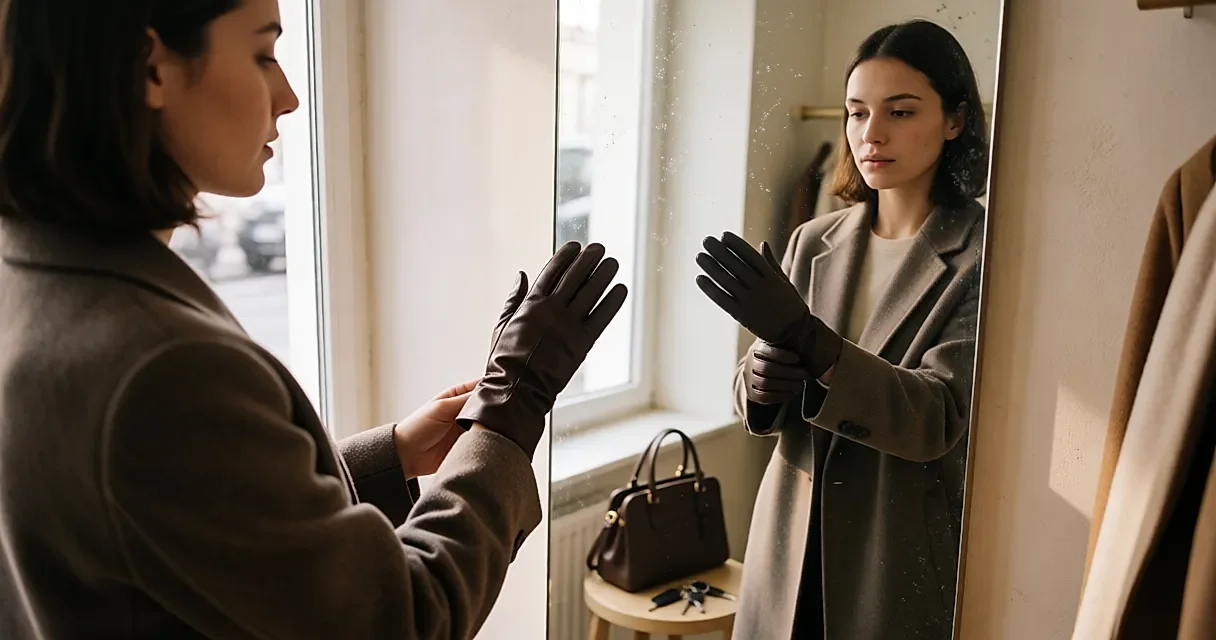
A new pair of leather gloves can feel like a misunderstanding: the palm floats, the fingers bunch and the thumb looks as if it had been sewn on by someone who had never seen a hand. You tug at the cuff, flex your fingers and look to the shop assistant for a verdict as if consulting an oracle. But the right test is not comfort in the first ten seconds; it is contact. And you can check that in three simple moves.
Both hands, never just one
Our two hands are almost never identical, and it is nearly always the larger one that decides. Many of us fall between two sizes (gloves are often sold in numbered sizes): in that case, do not choose the more comfortable pair, choose the one that makes contact. A glove that feels loose when you try it on will not tighten with wear — it will keep floating, and look more worn.
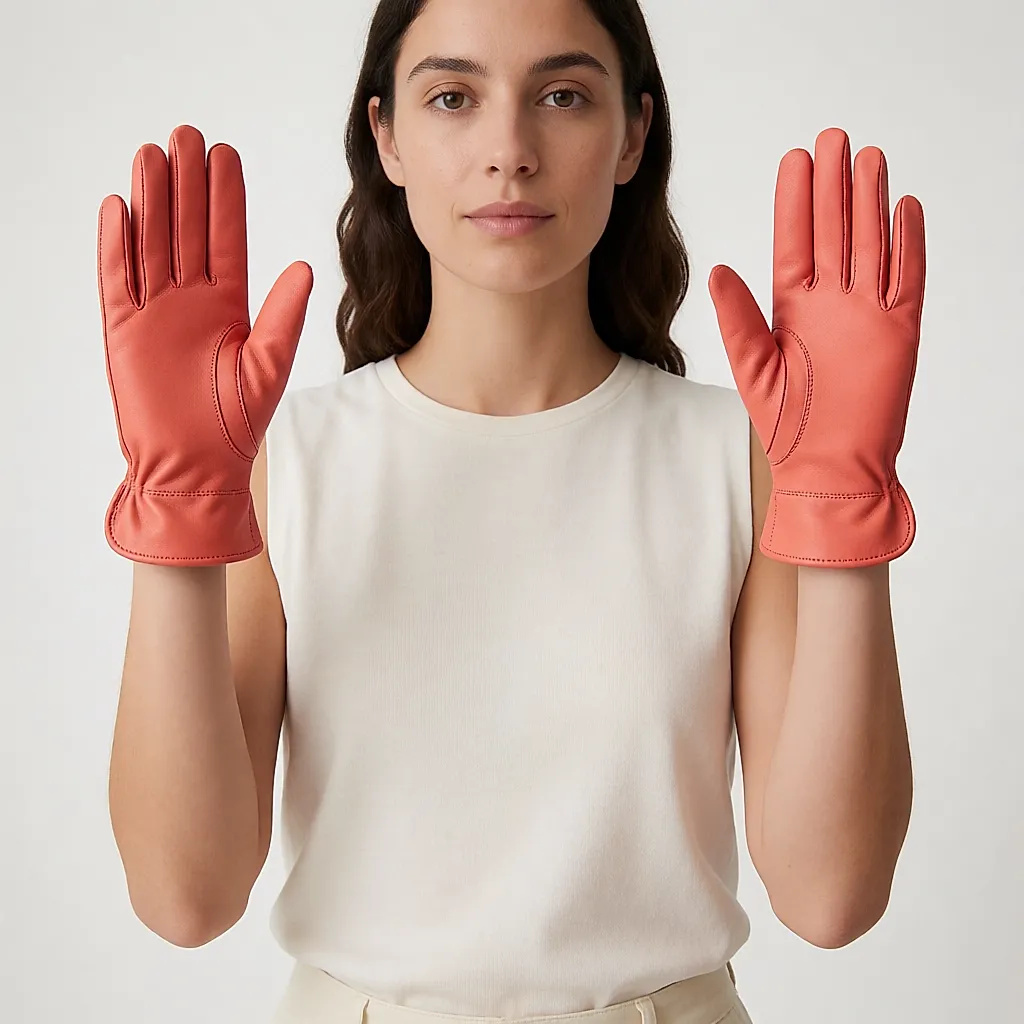
Next, put on both gloves, not just one. You will immediately see which one pulls, which one gapes at the wrist, which one has a thumb that is too short. The wrist, in particular, should be snug without digging in: it is what stops air travelling up your arm, and it is often where the cold feeling starts — the one we blame on the leather.
Close your fist, then open your hand
First check: make a fist. The leather should not strain like a drum across the back of your hand, or cut into the webbing between your fingers. If you feel the end of the glove pressing against your nails, it is too short — and it will not improve.
Second check, the one we always forget: open your hand, fingers spread, palm flat. Check that the glove does not turn into a flipper and that the leather returns into place without deep creases. A glove that is too big will slip and twist inside at that exact moment — that slight empty feeling that will make you clench your fingers all winter.
The seam between the thumb and index finger, and the lining
Look at the thumb seam, the seam that joins the thumb to the rest of the hand. It should sit just right, neither gaping nor pinching the base of your thumb. It is the area you notice first when driving or holding a glass, and it is also the one that gives away a glove cut for a wider hand than yours.
Why gloves that are too big make you colder
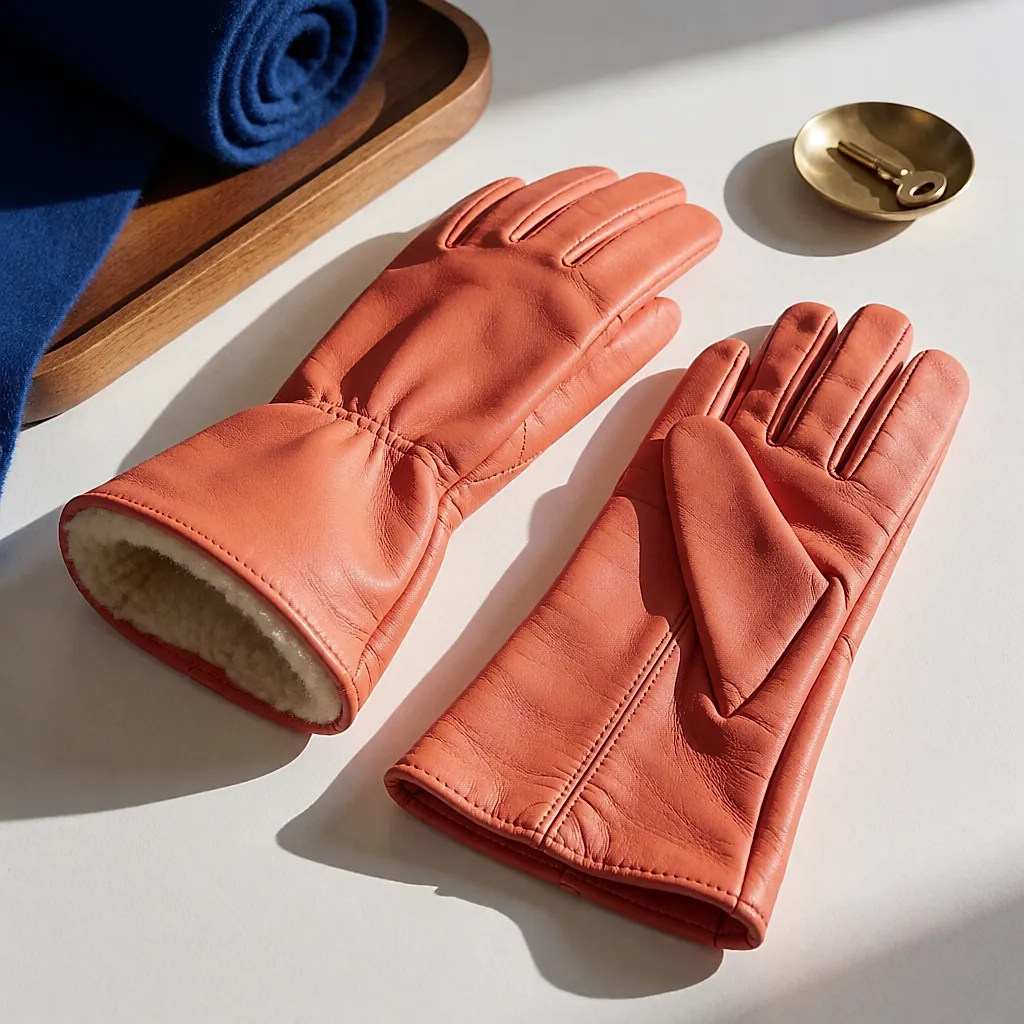
It is tempting to think a roomy glove gives warm air more space. It is the opposite: a floating palm creates a layer of air circulating between your skin and the leather, and you end up with a glove you do not really feel on your hand. You curl your fingers, close your fist and search for warmth that does not come.
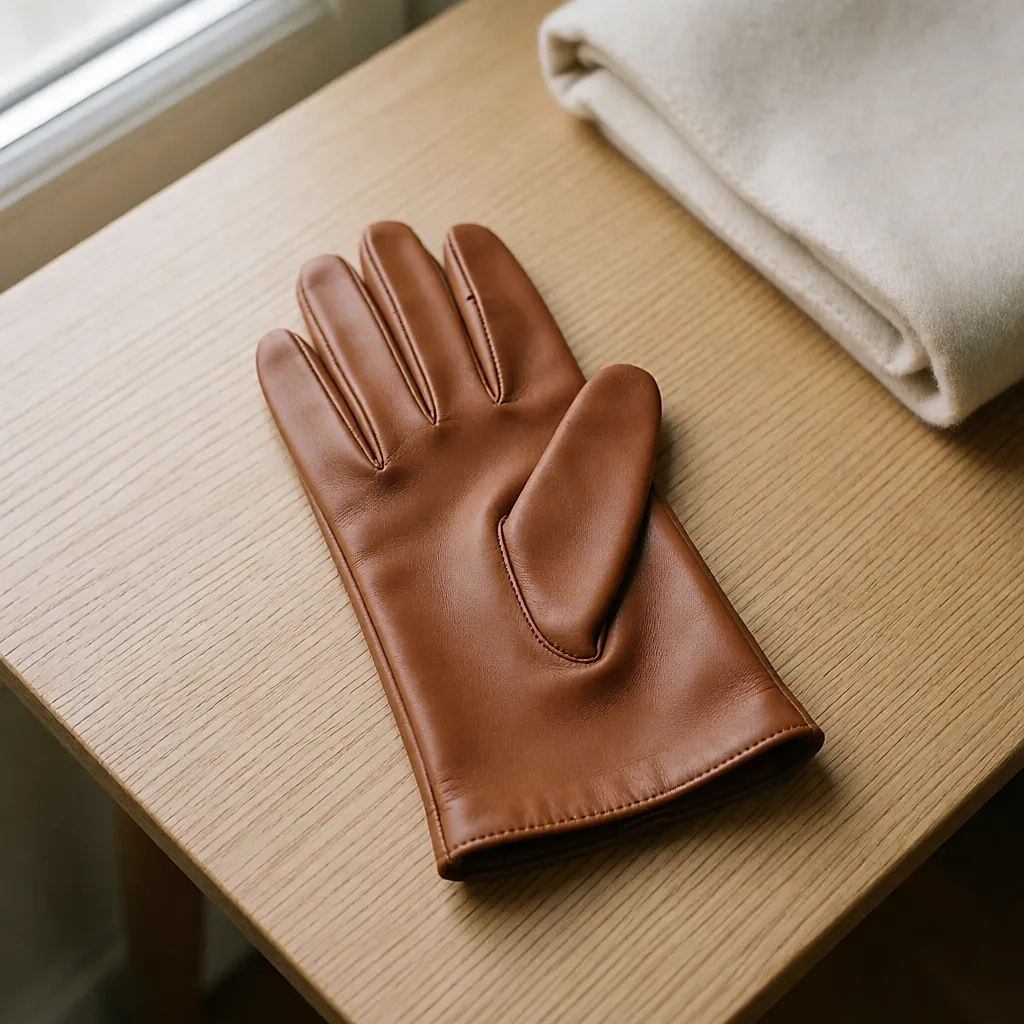
A well-fitting glove stays put. You forget you are wearing it. That is the best compliment you can pay it, and it is also what lets you keep your hands still in the cold instead of fidgeting in your pockets.
What leather will forgive (and what it won't)
Leather relaxes a little in width, at the joints and across the back of the hand: a glove that feels a touch firm when you try it on will become comfortable after a few wears. But length does not change. Fingers that are too short will stay too short, and there is no fixing that — it is the only real reason to reject a pair.
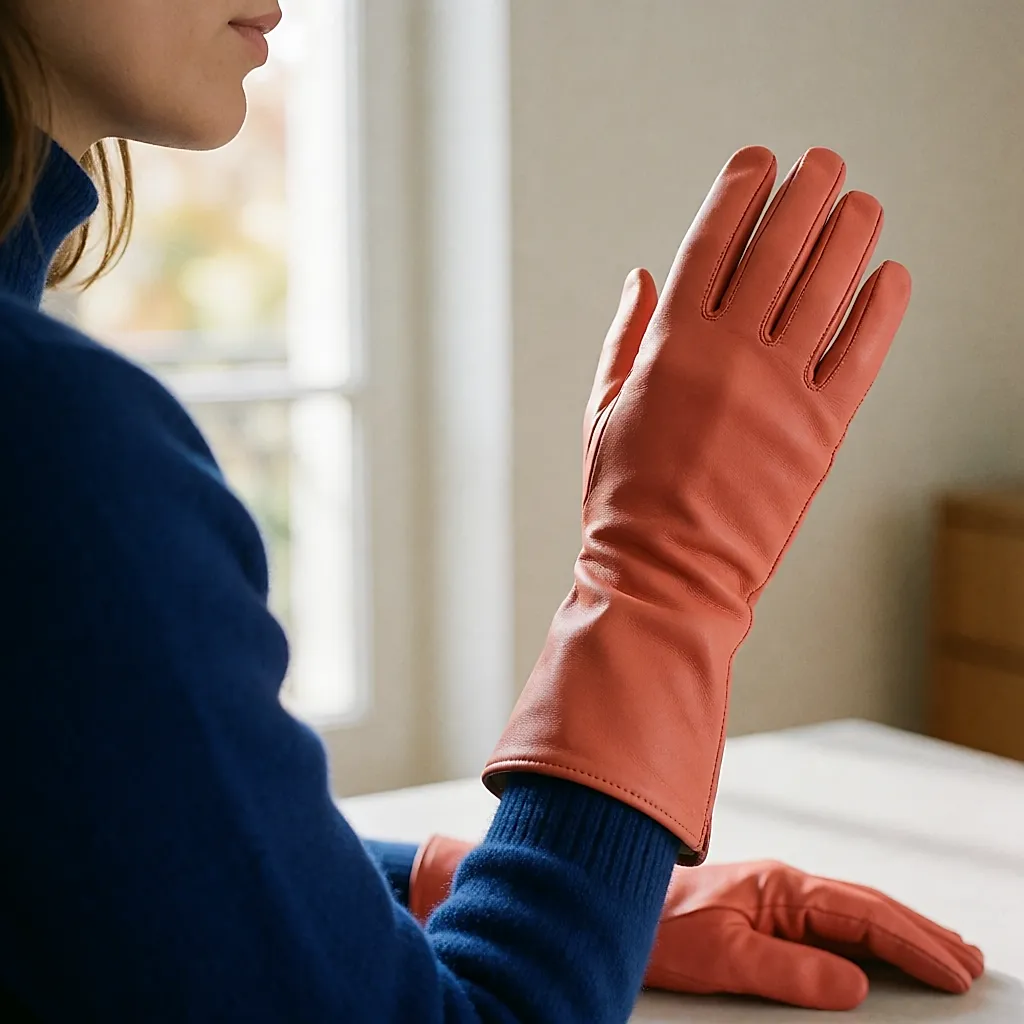
The fitting, in order: both gloves on, make a fist (nothing pulls), open your hand (the glove returns into place), then check the thumb seam with a fingertip. If any of the three checks catches a problem, put the pair back.
What to pay
Prices vary widely: expect around £20 to £45 for a wool-lined pair from a supermarket or high-street chain, £60 to £130 at a leather goods retailer for properly cut lambskin, and £150 to £300 from a specialist glovemaker, with hand stitching and finer leather. What pushes the price up: the tanning, the cutting, the lining (cashmere rather than wool) and hand finishing.
Second-hand is still an excellent route — often £10 to £30 in charity shops or online — as long as you check the inside: a torn lining or cracked leather at the creases cannot be repaired. And before buying new, dig out last year's pair: a good-quality glove can last several winters.
A good pair of gloves, then, is not the pair you put on with relief in the fitting room; it is the pair you forget you are wearing as you leave. Close your fist, open your hand, check the thumb seam: three checks, and you will stop hunting for warmth at the bottom of your pockets.

Comments
Your opinion matters: rate the article, react and reply to comments.
Comments are moderated; AI-assisted comments are flagged. Text emoticons (8-), :-), <3…) are automatically shown as images.